Showing posts with label IIT Roorkee. Show all posts

Amazon India Teams with IIT Roorkee to Curb Stubble Burning Through Crop-Waste Packaging

Amazon India Teams with IIT Roorkee to Curb Stubble Burning Through Crop-Waste Packaging
  • Research collaboration develops strong, durable paper mailers from agricultural waste to reduce reliance on virgin wood pulp and address stubble-burning challenges
Amazon India today announced a collaboration with the Indian Institute of Technology (IIT) Roorkee to develop innovative packaging materials from agricultural waste. This project aims to create non-wood paper technology that diverts agricultural waste from burning while reducing pressure on virgin wood pulp. These lightweight yet strong packaging materials offer recyclable and home-compostable alternatives to traditional wood pulp paper or plastic bags.

The research will focus on converting crop residues such as wheat straw and bagasse into high-quality pulp for paper mailers with performance comparable to conventional paper packaging. This helps reduce stubble burning in India by turning agricultural waste into valuable packaging material. It also reduces dependency on imported virgin wood pulp and could create additional income for farmers by providing a market for agricultural residues.

The collaboration with IIT Roorkee’s Department of Paper and Packaging Technology will begin with lab-scale development and testing over a 15-month period. Subject to successful performance tests, Amazon will provide support to progress to industrial trials, process validation, and commercial production by mid to late next year.

Abhinav Singh, Vice President of Operations at Amazon India said “At Amazon, we are building and managing India’s fastest, safest, and most reliable operations network, and we’re committed to making it more sustainable. As part of this effort, we’re partnering with IIT Roorkee to develop innovative packaging from crop residue. India generates nearly 500 million tons of this waste annually, and by repurposing it into packaging, we can support a more circular economy while reducing reliance on conventional materials."

Prof. Kamal Kishore Pant, Director IIT Roorkee said, "Sustainability is no longer a choice, it is an urgent national priority. This collaboration between IIT Roorkee and Amazon is a step towards realizing India’s vision of a circular economy, aligned with government missions such as Swachh Bharat, Startup India, and the National Resource Efficiency Policy. By transforming agricultural residues into biodegradable packaging materials, we are addressing the twin challenges of stubble burning and a reliance on virgin materials in India, while creating scalable solutions that can benefit industries, farmers, and society at large. This initiative showcases how academic research and industry partnerships can accelerate India’s journey towards a more sustainable, and self-reliant future.”

Dr. Anurag Kulshreshtha from the INNOPAP Lab (Innovations in Paper and Packaging) at the Department of Paper and Packaging Technology at IIT Roorkee, Saharanpur Campus will be leading this research project.

As part of its ongoing efforts to reduce packaging, Amazon ships more than 50% of all customer orders in India either in their original packaging or with reduced packaging. The company ships customer orders in product packaging to more than 300 cities across the country. Since 2019, Amazon India has eliminated 100% of single-use plastic from its packaging across fulfillment centers.

Amazon India is committed to powering our operations more sustainably. The Climate Pledge is Amazon’s goal to reach net-zero carbon across our operations by 2040. We’ve worked fast and made impactful progress over a short period of time, including through investments in carbon-free energy, packaging innovations, electrification of our transport network, circularity improvements, and AI. Amazon has set a goal to return more water to communities in India than it uses in its direct operations by 2027.

About Amazon

Amazon is guided by four principles: customer obsession rather than competitor focus, passion for invention, commitment to operational excellence, and long-term thinking. Amazon strives to be Earth’s Most Customer-Centric Company, Earth’s Best Employer, and Earth’s Safest Place to Work. Customer reviews, 1-Click shopping, personalized recommendations, Prime, Fulfilment by Amazon, AWS, Kindle Direct Publishing, Kindle, Career Choice, Fire tablets, Fire TV, Amazon Echo, Alexa, Just Walk Out technology, Amazon Studios, and The Climate Pledge are some of the things pioneered by Amazon. For more information, visit aboutamazon.in and follow @AmazonNews.

CWC and IIT Roorkee Forge Pioneering Partnership for Water Resources and Urban Flood Management

Two MoUs Signed to Enhance Water Resources Management and Urban Flood Resilience

Joint Efforts to Address Irrigation Efficiency, Climate Change, and Advanced Flood Risk Management

Combining Expertise to Develop Data-Driven Solutions for Water and Flood Challenges

Focus on Innovative Research and Technological Solutions for Societal Benefit

Today, two significant Memorandums of Understanding (MoUs) were signed between the Central Water Commission (CWC) and the Indian Institute of Technology Roorkee (IIT Roorkee). These MoUs aim to address critical challenges in Water Resources Management and Urban Flooding, leveraging the combined expertise of both institutions.

The agreements were signed by Shri Kushvinder Vohra, Chairman, CWC, and Prof. Kamal Kishore Pant, Director, IIT Roorkee, in the presence of key officials and dignitaries from both organizations. The collaboration underscores a mutual commitment to develop innovative solutions for efficient water management and urban flood resilience.

CWC and IIT Roorkee Forge Pioneering Partnership for Water Resources and Urban Flood Management

The collaboration between the Central Water Commission (CWC) and IIT Roorkee in Water Resources Management will address critical areas such as irrigation efficiency assessment with actionable suggestions for improvement, comprehensive water accounting studies, and detailed cropped area mapping under the Pradhan Mantri Krishi Sinchai Yojana (PMKSY).

Additionally, the partnership will develop a certificate program for Water Auditors and assess the impact of climate change on the water resources sector. These initiatives align with government efforts to enhance water management practices and bolster agricultural productivity. Leveraging IIT Roorkee's 176-year legacy of excellence and innovation in technological education and research, this collaboration aims to deliver robust, data-driven solutions that will benefit society by ensuring sustainable water resource management and resilience against environmental challenges.

The collaboration between the Central Water Commission (CWC) and IIT Roorkee in Urban Flooding encompasses pivotal areas such as urban flood forecasting, numerical urban flood inundation and hazard mapping, and urban flood risk management. This partnership also focuses on leveraging data analytics, artificial intelligence, and machine learning for precise flood susceptibility mapping in urban areas, as well as developing robust urban flood resilience mechanisms. These efforts align with government initiatives aimed at enhancing urban infrastructure and disaster preparedness.

IIT Roorkee, with its excellence in technological education and research, brings unparalleled expertise to this collaboration, promising innovative, data-driven solutions that will significantly benefit society by improving urban flood management practices and safeguarding communities against the increasing threat of urban flooding.

Reflecting on the significance of the MoUs, Prof. Ashish Pandey, Bharat Singh Chair Professor for Water Resources (MoJS, DoWR, GR&RD, GOI), Department of Water Resources Development and Management said, "expertise of water resources management of IIT Roorkee in water sector may be helpful in Irrigation efficiency assessment, Water accounting studies, training for Water Auditors and Impact of climate change on the Water Resources Sector. It will also promote collaboration in Urban Flood Forecasting studies employing Artificial Intelligence and Machine Learning for Flood susceptibility mapping in Urban areas. Collaborating with Central Water Commission and leveraging the expertise of IIT Roorkee, we can foster a culture of innovation that drives efficient water resources management".

Shri Kushvinder Vohra, Chairman, Central Water Commission, remarked, "These MoUs with IIT Roorkee mark a significant advancement in our efforts to manage water resources and urban flooding effectively. By combining CWC's extensive experience in water resources management with IIT Roorkee's cutting-edge research capabilities, we aim to develop solutions that will benefit society and improve resilience against natural disasters."

Prof. Kamal Kishore Pant, Director, IIT Roorkee, added, "We are excited to collaborate with the Central Water Commission on these crucial issues. Our interdisciplinary research approach, coupled with the practical insights provided by CWC, will enable us to create robust, data-driven strategies for water management and urban flood mitigation. This collaboration highlights our commitment to leveraging technology for societal benefit and advancing the nation's preparedness against environmental challenges."

IIT Roorkee, one of the foremost institutes of national importance in India's higher technological education and engineering, is dedicated to fostering the growth of intellectually capable, innovative, and entrepreneurial professionals. Through this collaboration, IIT Roorkee aims to contribute significantly to the development of science and technology, benefiting the nation's welfare and humankind.

The Central Water Commission (CWC) and IIT Roorkee have signed agreements to work together for five years, potentially longer, on improving water management and urban flood control in India. They will focus on key areas like making irrigation more efficient, studying water usage, mapping crop areas, and understanding the effects of climate change. They will also work on predicting urban floods, mapping flood risks, and using advanced technology to make cities more resilient to flooding. This partnership aims to support government initiatives and use IIT Roorkee's expertise to create solutions that benefit society by better managing water resources and protecting against floods.

A Snake's Fossil Found in Gujarat is of Largest Snake Ever Existed on the Planet

A Snake's Fossil Found in Gujarat is of Largest Snake Ever Existed on the Planet

A remarkable discovery has been made in India. Paleontologists have unearthed a fossil of a massive snake in Gujarat, which they claim could be the largest snake to have ever existed. Named Vasuki Indicus, this prehistoric serpent is estimated to have been 11 to 15 meters (~ 36 to 49 Foot) long.

This discovery challenges the previous record-holder, Titanoboa, for the title of the biggest snake known.

To give an another perspective, the snake fossil estimated at up to 15 metres (~ 50 Foot) in length – longer than a T rex. 

The fossil was found in the lignite mines of Gujarat and is believed to have lived around 47 million years ago in the marshy swamps of Kutch. Despite its enormous size, the snake is thought to have had a surprisingly gentle demeanor, suggesting it was a swamp-dwelling giant.

Geological map of Kutch Basin showing fossil locality
Geological map of Kutch Basin showing fossil locality 

This discovery not only provides insight into the past ecosystems of India but also adds a significant chapter to the history of these fascinating reptiles. The Vasuki Indicus could have been an ambush predator, similar to modern-day pythons, relying on constriction to subdue its prey. The research and findings regarding this giant snake have been published and are contributing to our understanding of prehistoric life on Earth.

The size of Vasuki Indicus was estimated using predictive regression equations based on the dimensions of the snake's vertebrae.

Anterior trunk vertebrae of Vasuki indicus.


The researchers analyzed 27 well-preserved vertebrae from the specimen to estimate these sizes. The vertebrae measured between 37.5 and 62.7 millimeters in length, which indicated a large-bodied snake. This method is a standard approach in paleontology for estimating the size of extinct animals when complete skeletons are not available.

These estimations suggest that Vasuki Indicus could have been longer than the previously known largest snake, Titanoboa.

Story behind the discovery

The discovery of Vasuki Indicus is quite an interesting story. The initial fossil remains were found in the Panandhro Lignite Mine in Kutch, Gujarat, almost two decades ago, around 2005. At that time, the fossils were believed to belong to a prehistoric species of crocodile and were stored away without further examination.

It wasn't until 2024 that the true nature of the fossils was realized. Debajit Datta, a postdoctoral fellow at the Indian Institute of Technology Roorkee (IITR), began examining the fossils and noticed anatomical features that were not crocodilian but rather snakelike. This led to a more detailed investigation, where Datta, along with IITR paleontology professor Sunil Bajpai, cleaned and identified 27 relatively preserved vertebrae. These vertebrae ranged between roughly 1.5 and 2.5 inches long and 2.5 and four inches wide, which suggested they belonged to an adult snake of considerable size. 

The researchers' analysis revealed that these remains were from a previously unknown species of snake, which they named Vasuki Indicus after the mythological serpent king associated with the Hindu deity Lord Shiva. This discovery has shed light on the ancient biodiversity of India and contributes significantly to our understanding of the evolution and distribution of large snake species during the Eocene period.

Study published at – Nature

IIT Roorkee and IIT Bhilai Forge Alliance for Tribal Research and Preservation of Indian Knowledge Systems

IIT Roorkee and IIT Bhilai Forge Alliance for Tribal Research and Preservation of Indian Knowledge Systems

IIT Roorkee and IIT Bhilai signed an MoU on 29th December,2023 to strengthen the academic and research collaboration between the two institutions. The MoU was signed at IIT Bhilai by the heads of both institutions i.e. Prof K K Pant, Director IIT Roorkee and Prof Rajiv Prakash, Director IIT Bhilai.

This strategic partnership aims to preserve and promote Indian Knowledge Systems (IKS) and seeks to contribute to socio-economic development in tribal areas, emphasizing research on traditional medicinal plants, tribal culture studies, agricultural practices in tribal regions, and financial literacy among tribal populations.

IIT Roorkee and IIT Bhilai Forge Alliance for
IIT Roorkee and IIT Bhilai ink MoU

This collaboration represents a significant stride towards fostering awareness among the youth about Indian culture and heritage, aligning with the Government of India's ambitious vision of Viksit Bharat@2047. Moreover, the partnership will actively support the objectives outlined in the National Education Policy (NEP) 2020, emphasizing the integration of Indian Knowledge Systems into the education system. IKS includes “Knowledge of India” from ancient India and its contributions to modern India and its successes and challenges, and a clear sense of India’s future aspirations with regard to education, health, environment, etc. This collaboration also aligns with Honorable Prime Minister's vision of Ek Bharath Shreshtha Bharat.

“IIT Roorkee is glad to collaborate with IIT Bhilai, and this MoU reflects our commitment to fostering groundbreaking solutions for today’s education system. Through this collaboration, we aim to bridge the gap between ancient and modern education, facilitating both basic and translational research, and contributing to our shared vision of 'Viksit Bharat' – a developed India," said Prof K K Pant, Director, IIT Roorkee.

Prof Rajiv Prakash, Director IIT Bhilai said, “this partnership will create new opportunities for research and development. It will also promote our ancient knowledge and our heritage.”

Both institutions commit to exchange knowledge and promote Indian culture, Indian Knowledge systems and develop projects on sustainable & rural development, Ancient Indian science, Fintech, Health Science, Agriculture, Artificial Intelligence, Complementary and Alternative Medicine, Life Management, Environment, Renewable Energy, Food Processing, Tourism Management, Languages, Peace and Conciliation, Music, Humanities and common interest.

They have also agreed to jointly organize Seminars/ symposiums/ conferences/ workshops/ short term training programs.

Both Prof K K Pant and Prof Rajiv Prakash expressed their happiness on the addition of this new chapter in the partnership of IIT Roorkee and IIT Bhilai, and also offered full support from their side in fostering long lasting and mutually beneficial collaborations between the two institutions. Prof. Akshay Dvivedi, Dean, Sponsored Research & Industrial Consultancy, IIT Roorkee, Prof. Anil Kumar Gourishetty, IKS Coordinator, IIT Roorkee, Prof. Harshit Sosan Lakra, Assistan Professor, Department of Architecture and Planning IIT Roorkee and Prof. Santosh Biswas Faculty-in-charge, DoRD IIT Bhilai were also present. 

IIT Roorkee and IIRS Dehradun Join Hands to Elevate Space Science and Technology in India

IIT Roorkee and IIRS Dehradun Collaborate to Elevate Space Science and Technology in India

IIT Roorkee's Commitment to Space Science

Collaborative Initiatives for Enhanced Learning

The Indian Institute of Technology (IIT) Roorkee and the Indian Institute of Remote Sensing (IIRS), ISRO, Dehradun, marked a significant milestone, with the signing of a Memorandum of Understanding (MoU). This historic agreement is poised to bolster academic collaboration and propel advanced research and education in the field of Space Science and Technology, showcasing India's commitment to innovation in the realm of space exploration.

The signing ceremony, held at IIT Roorkee, brought together key figures from both institutions, underlining the importance of this collaboration. Notable attendees from IIT Roorkee included Prof. K. K. Pant, Director of IIT Roorkee, who expressed his enthusiasm for the partnership, saying, "This MoU represents a crucial step towards expanding the horizons of space science and technology in India. It underscores our commitment to pioneering research and education in this field, which is integral to the nation's technological advancement and space endeavors. Through this collaboration, we look forward to joint Ph.D. programs, joint research initiatives, student exchange programs, and supporting academic programs, which will undoubtedly enhance the capabilities of our students and researchers."

IIT Roorkee and IIRS Dehradun Join Forces to Elevate Space Science and Technology in India

On behalf of IIRS Dehradun, Dr. R.P. Singh, Director of IIRS, Dr. Pramod Kumar, Dean of Academics, Shri. Rathin Sengupta, Head of P&GA, and Dr. Praveen Thakur, Head of WRD, were present to witness this momentous occasion.

This collaboration is set to strengthen the space science and technology domain in India and further India's position on the global stage in space-related endeavors. It paves the way for joint Ph.D. programs, joint research projects, student exchange programs, and support for academic programs, enriching the educational experience for students and researchers in this field.

IIT Roorkee, an institution that has securely positioned itself in the dynamic field of space research, now proudly boasts the "Centre for Space Science & Technology (CSST)." This academic center embodies IIT Roorkee's steadfast commitment to advancing space science and technology, in alignment with the objectives of the Department of Space and ISRO. The CSST, a hub of innovation and interdisciplinary collaboration, will drive targeted research and development, support national space goals and missions, and cultivate a new generation of skilled professionals ready to meet the burgeoning demands of India and the global space and allied sectors. This collaboration with IIRS Dehradun heralds a transformative partnership, cementing IIT Roorkee's pivotal role in shaping the future of space exploration. 

IIT Roorkee and Power Firm THDC Collaborate for R&D in Energy, Green Hydrogen and Climate Change among Others

IIT Roorkee and Power Firm THDC Collaborate for R&D in Energy and Energy Storage
THDC India Limited and IIT Roorkee inks MoU for Collaborative Translational Research and Development

In a significant milestone, THDC India Limited (THDCIL), a renowned power generation company, and the prestigious Indian Institute of Technology (IIT), Roorkee have come together to embark on a collaborative journey in advancing research and development endeavors in the realms of Science, Engineering, and Technology.

The Memorandum of Understanding (MoU) signed on October 2023 outlines the commitment of both institutions to engage in a wide array of research activities, encompassing domains such as Energy Conservation, Alternatives to Li-Ion Storage Batteries, Nano Technology for Electric Vehicle Battery, Green Hydrogen, Geo-Thermal Technology, Climate Change, waste management and recycling, water management and conservation, Vortex induced vibrations, Tunnelling techniques, Bio Fuels, Grid Stability Improvements, and various other pertinent fields, aligned with the United Nations Sustainable Development Goals (SDGs).

Mr. R. K. Vishnoi, Chairman and Managing Director of THDCIL, expressed that this collaboration is geared towards both fundamental and translational research, with the overarching goal of bridging the gap between industry and academia, in alignment with the vision of 'Viksit Bharat' - a developed India.

Sh. Vishnoi added that this engagement is aimed at both basic and translational research solutions and bridging the gap between industry and academia to support the vision of ‘Viksit Bharat’.

Talking on the pivotal areas of collaboration envisioned in this MoU, Sh. R. K. Vishnoi, further stated, “This collaborative venture between THDC India Limited and IIT Roorkee represents a significant step forward in the fields of research, innovation, and technological advancement, with the potential to yield groundbreaking solutions for various industries and domains.”

Prof. K. K. Pant, Director, IIT Roorkee highlighted, “IIT Roorkee is proud to collaborate with THDC India Limited in a transformative partnership that signifies a major leap forward in research, innovation, and technological advancement. This MoU reflects our commitment to fostering groundbreaking solutions for various industries and domains. Through this collaboration, we aim to bridge the gap between academia and industry, facilitating both basic and translational research, and contributing to our shared vision of 'Viksit Bharat' – a developed India."

Prof. Akshay Dwivedi, Dean Sponsored Research and Industrial Consultancy, IIT Roorkee said, “Joining hands with THDC India Limited for collaborative research and development is a testament to IIT Roorkee's enduring commitment to advancing knowledge and innovation. This partnership will allow us to leverage our technical expertise and research facilities to drive progress in vital fields of study. We are excited to recognize and build on each other's strengths, facilitating pioneering solutions in research and development."

The MoU was signed by Sh. S. K. Chauhan, HoD(R&D) from THDCIL and Professor Akshay Dwivedi, Dean Sponsored Research & Industrial Consultancy, IIT, Roorkee.

THDCIL is one of the premier power generators in the country with installed capacity of 1587 MW with commissioning of Tehri Dam & HPP (1000MW), Koteshwar HEP (400MW) in Uttarakhand, Wind Power Projects of 50MW at Patan & 63MW at Dwarka in Gujarat, 24MW Dhukwan Small Hydro Project, Jhansi, Uttar Pradesh and 50 MW Solar Power Project at Kasaragod, Kerala to its credit. And IIT Roorkee, a leading institute in technological education and research, is renowned for its contributions to academia and industry alike. This collaboration reflects IIT Roorkee's commitment to advancing knowledge, fostering innovation, and bridging the gap between academia and industry to contribute to India's development vision of 'Viksit Bharat.'

During the event, Mr. Sunil Chandra, Mr. Bubai Ghosh, Mr. Shekhar Chauhan from THDC and Prof. Vivek Kumar Malik, Associate Dean (Innovation and Incubation), Prof. Pravindra Kumar, Head, Department of Biosciences and Bioengineering, Prof. Manish Shrikhande, Head, Department of Earthquake Engineering, Prof. Prakash Biswas, Head, Department of Chemical Engineering, Prof. Ramesh Chandra, Head, Institute Instrumentation Centre, Prof. Shailly Tomar, Prof. Ashwini Kumar Sharma, Prof. Prince Tiwari, Prof. Ashish Yadav, Prof. Hari Prakash Velluswamy, Prof. Sushil Kumar, Prof. N. Siva Mohanreddy, Prof. Deepak Ojha, Prof. Ashwini Kumar, Prof. Sohom Ray, Prof. Varun Kumar Singla and Mr. Vishal Tiwari were also present during the collaboration event.

IIT Roorkee is an institute of national importance imparting higher education in engineering, sciences, management, architecture and planning, and humanities and social sciences. Since its establishment in 1847, the Institute has played a vital role in providing technical human resources and know-how to the country.

IIT Roorkee Researchers Contribute to Unveiling the Humming of Our Universe Observed Through Low-Frequency Gravitational Waves

IIT Roorkee Researchers Contribute to Unveiling the Humming of Our Universe Observed Through Low-Frequency Gravitational Waves
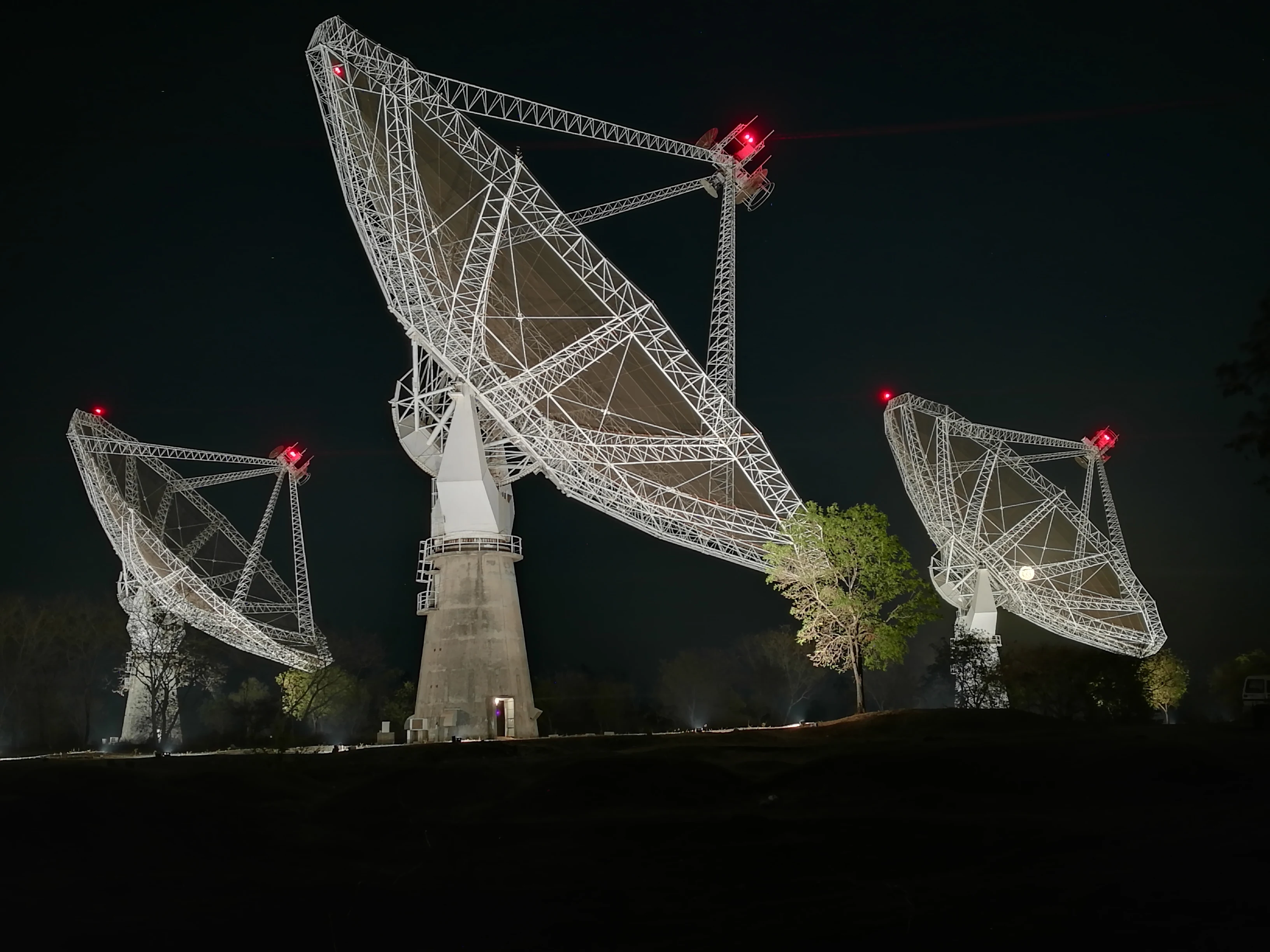
The uGMRT telescope 
Astronomers Discover Evidence of Ultra-Low Frequency Gravitational Waves from Dancing Monster Black Hole Pairs

IIT Roorkee's ongoing support for collaborative research by astronomers from India, Japan, and Europe

An International team of astronomers from India, Japan and Europe has recently published the results from monitoring nature’s best clocks, pulsars using six of the World's most sensitive radio telescopes, including India’s largest telescope, uGMRT. These results provide scintillating evidence for the relentless vibrations of the fabric of our universe caused by ultra-low frequency gravitational waves. Such waves are expected to originate from a large number of dancing monster black hole pairs, crores of times heavier than our Sun. The team’s results are a crucial milestone in opening a new, astrophysically-rich window in the gravitational wave spectrum.

Such dancing monster Black Hole pairs, expected to lurk in the centers of colliding galaxies, create ripples in the fabric of space-time, which the astronomers call nano-hertz gravitational waves. The relentless cacophony of gravitational waves from a large number of supermassive black hole pairs create a persistent humming of our universe. The team, consisting of members of the European Pulsar Timing Array (EPTA) and Indian Pulsar Timing Array (InPTA) consortia, published their results in two seminal papers in the Astronomy and Astrophysics journal, and their results hint at the presence of such gravitational waves in their data set. Prof. P. Arumugam and his senior PhD student, Mr. Jaikhomba Singha, are part of these ground-breaking results.

Image - InPTA Collaboration Meeting held at IIT Roorkee on August 2022
 InPTA Collaboration Meeting held at IIT Roorkee on August 2022

Image - A few InPTA members visiting the PARAM Ganga Facility at IIT Roorkee
A few InPTA members visiting the PARAM Ganga Facility at IIT Roorkee

“These results have culminated due to years of efforts of many scientists, including early career researchers and undergraduate students. I am very grateful that IIT Roorkee has been able to constantly contribute in various ways in achieving these results. The NSM facility, PARAM Ganga, installed at IIT Roorkee, among various other facilities, has played a crucial role in this global effort. I hope IIT Roorkee will continue to support the various efforts of this stellar collaboration,” states Prof. Arumugam, Department of Physics, IIT Roorkee.

These light-year-scale ripples can only be detected by synthesizing a galactic-scale gravitational-wave detector using pulsars-the only accessible celestial clocks for humans. Pulsars are a type of rapidly rotating neutron stars that are essentially embers of dead stars, present in our galaxy. Fortunately, a pulsar is a cosmic lighthouse as it emits radio beams that flashes by the Earth regularly, just like a lighthouse near a harbor. Astronomers monitor these objects using the best radio telescopes of the world, including India’s premiere radio telescope, the uGMRT, situated near Pune.

“According to Einstein, gravitational waves change the arrival times of these radio flashes and thereby affect the measured ticks of our cosmic clocks. These changes are so tiny that astronomers need sensitive telescopes like the uGMRT and a collection of radio pulsars to separate these changes from other disturbances. The slow variation of this signal has meant that it takes decades to look for these elusive nano-hertz gravitational waves,” explains Prof. Bhal Chandra Joshi of NCRA Pune and Adjunct Faculty, IIT Roorkee, who founded the InPTA collaboration during the last decade.

Scientists of the EPTA in collaboration with the Indo-Japanese colleagues of the InPTA, have reported detailed results of analysing pulsar data collected over 25 years with six of the world’s largest radio telescopes. This includes more than three years of very sensitive data collected using the unique low radio frequency radio telescope, the uGMRT. The analysis of this unique data set has revealed that the measured rate of ticking of these cosmic clocks has characteristic irregularities common across the twenty-five pulsars that have been monitored. This is consistent with the effect produced by gravitational waves at ultra-low frequency (waves that oscillate with periods between one and ten years). Not surprisingly, nano-hertz frequency gravitational waves will unravel some of the best-kept secrets of the Universe. The cosmic population of black hole pairs with masses that are ten-to-hundred crores times more than the mass of our Sun are expected to be formed when their parent galaxies merge and such a population emits gravitational waves at these frequencies. Further, various other phenomena that may have taken place when the Universe was in its infancy, just a few seconds old, also produce these waves at these astronomically long wavelengths. According to Prof. A. Gopakumar, TIFR, Mumbai, and Chair of the InPTA consortium, “The results presented today mark the beginning of a new journey into the Universe to unveil some of these mysteries. More importantly, this is the first time that an Indian telescope’s data is used for hunting gravitational waves”.

To detect these gravitational-wave signals, astronomers in a "Pulsar Timing Array" (PTA) collaboration exploit many ultra-stable pulsar clocks distributed across our Milky Way galaxy to create a “galactic-scale gravitational-wave detector”. Measurements of the exact arrival times of the pulsars, which have been going on for decades, are being compared with each other to study the influence of gravitational waves. As radio signals travel through space and time, the presence of gravitational waves affects their path in a characteristic way: some pulses will arrive a little (less than a millionth of a second) later, some a little earlier. This gigantic galactic-scale GW detector synthesised by incorporating 25 meticulously chosen pulsars in our Milky Way Galaxy makes it possible to access the variations in the pulse arrival times created by gravitational waves with a frequency of oscillation 10 billion times slower than those first observed in 2015 by the two ground-based LIGO detectors in the United States of America.

The current results are based on a coordinated observing campaign using the five largest radio telescopes in Europe, complemented by the observations with the upgraded Giant Metrewave Radio Telescope in India. The analysis of the European and Indian Pulsar Timing Array (EPTA+InPTA) data which is presented today has revealed the presence of a common signal across the pulsars in the array which is broadly in agreement with being due to gravitational waves. The EPTA+InPTA results are complemented by the coordinated publications made by other PTAs across the world, namely the Australian (PPTA), Chinese (CPTA) and North-American (NANOGrav) pulsar timing array collaborations. This same evidence for gravitational waves is seen by NANOGrav and consistent with results reported by the CPTA and PPTA.

Mr. Singha, a senior PhD scholar from IIT Roorkee, says, “This is an extremely exciting time for early career researchers. We are in an era where an international team of researchers across the globe are all collaborating and trying to listen to the humming of our universe. The present results will open a plethora of exhilarating science for us in future."

Importantly, work is already in progress where scientists from the four collaborations – EPTA, InPTA, PPTA and NANOGrav – are combining their data sets under the auspices of the International Pulsar Timing Array (IPTA) to create an array consisting of over 100 pulsars that may allow them to reach this goal in the near future. This combined IPTA data set is expected to be more sensitive, and scientists are excited about the constraints they can place on the GWB along with understanding various other phenomena that may have taken place when the Universe was in its infancy, just a few seconds old, which can also produce gravitational waves at these astronomically long wavelengths.

The InPTA experiment involves researchers from NCRA (Pune), TIFR (Mumbai), IIT (Roorkee), IISER (Bhopal), IIT (Hyderabad), IMSc (Chennai) and RRI (Bengaluru) along with their colleagues from Kumamoto University, Japan.

Prof. K K Pant, the Director of IIT Roorkee, said, “Congratulations to the InPTA team and our esteemed researchers from IIT Roorkee for their remarkable findings and impactful research. I am delighted to learn about the utilization of IIT Roorkee's cutting-edge facilities, such as PARAM Ganga, in this endeavor. This achievement exemplifies the power of international collaborations in attaining greater scientific goals and significantly contributing to our understanding of the universe."

IIT Roorkee is an institute of national importance imparting higher education in engineering, sciences, management, architecture and planning, and humanities and social sciences. Since its establishment in 1847, the Institute has played a vital role in providing the country with technical human resources and know-how.

IIT Roorkee Researchers Develop Coating for Disposable Paper That is Water Soluble, Promoting Sustainability and Waste Management

IIT Roorkee Researchers Develop Coating for Disposable, e Paper That is Water Soluble, Promoting Sustainability and Waste Management
IIT Roorkee Licenses technology for Environment-Friendly coating for Disposable Paper to Promote Sustainability and Waste Management

A Step Towards a Cleaner and Greener Future

IIT Roorkee Addressing Recycling Challenges and Environmental Concerns and Contributing to Clean India and Make in India Initiatives

The Indian Institute of Technology, Roorkee (IIT Roorkee), has committed to protecting the environment through new technological development. A team of researchers at IITR developed a coating for disposable paper that is water soluble and will be used in various applications with requirements of food freshness retention and replace plastic coatings commonly used in food-grade packaging papers and paperboards. The innovative coating formulation aims to eliminate the use of plastic in disposable paper and paperboard products, contributing to a cleaner and more sustainable society. By enabling the recycling of disposable products, this technology has a significant positive impact on the environment, improving waste material collection and reducing the burden on landfill sites.

IITR transferred the technology to M/s M S Papers, New Delhi, for commercial application. Mr Gurmeet Singh, MD of the company, stated, "This is an intrinsic part of the technological innovation process, and we are thankful to IIT Roorkee for the technology transfer. The demand for 'sustainable paper and paperboard packaging' has exerted substantial pressure on producers to eliminate barrier coatings that employ polyethene, paraffin-based waxes, silicones, and fluoro-chemicals, and switch to more environmentally friendly options." Mr. Singh expressed confidence in collaboration with IIT Roorkee, highlighting the local availability of coating materials, in-house technical capabilities to address customer challenges, and the ability to meet end-user’s requirements”.

IIT Roorkee Licenses technology for Environment-Friendly coating for Disposable Paper to Promote Sustainability and Waste Management

During the agreement signing ceremony, Prof K K Pant, Director of IIT Roorkee, expressed, "We are delighted to transfer this breakthrough technology for an environment-friendly coating for the disposable paper to M/s M S Papers. This collaboration reflects our commitment to protecting the environment and supporting the Micro, Small, and Medium Enterprises (MSME) sector. By eliminating the use of plastic in disposable paper products, we are contributing to a cleaner and more sustainable society. This technology addresses environmental concerns and transforms disposable paper waste into recyclable materials, reducing solid municipal waste and promoting a circular economy. This transfer will significantly impact society, aligning with our vision of a cleaner and greener India."

Researchers, including Prof Dharam Dutt, Prof Millie Pant, Prof Akshay Dvivedi, Dr Anurag Kulshreshtha and Mr Brahma Prakash, explained the features of the technology. This breakthrough technology will be a significant milestone in reducing solid municipal waste and transforming disposable paper and paperboard materials into recyclable ones, which is currently a considerable challenge. The technology addresses environmental concerns and resolves recycling issues associated with disposable paper waste, converting it into value-added products. Considering the environmental hazards, many countries, including India, have taken steps to ban "Single-Use Plastics." While the laws have been formalized and implemented, there is a need for greater momentum in executing this ban to achieve visible results. The development of water-soluble coating by IIT Roorkee significantly contributes to Clean India and Make in India initiatives, becoming a game-changer.

Prof Rajat Agrawal, Associate Dean of Innovation and Incubation at IITR, informed that the IIT Roorkee campus has one of the most vibrant Innovations and Entrepreneurship Ecosystems. IIT Roorkee offers help to researchers to improve their Technology Readiness Level for better commercialization of technologies, providing support to faculty members for starting their scientific spin-offs.

In this context, developing the water-soluble coating by IIT Roorkee emerges as a game-changer. It significantly contributes to Clean India and Make in India initiatives to promote sustainable practices and domestic manufacturing. By eliminating the need for plastic coatings in disposable paper products, this technology aligns with the goals of creating a cleaner and greener India. It demonstrates a great step forward in advancing environmental sustainability and positively impacting waste management practices.

Overall, the technology transfer of the water-soluble coating for disposable paper has the potential to bring about a significant positive impact on society by promoting sustainability, reducing plastic waste, improving waste management, and supporting the growth of the MSME sector.

About IIT Roorkee

IIT Roorkee is an institute of national importance imparting higher education in engineering, sciences, management, architecture and planning, and humanities and social sciences. Since its establishment in 1847, the Institute has played a vital role in providing the country with technical human resources and know-how.


Adani Group Acquires IIT Roorkee Alumni's Online Train Booking Platform Trainman

Adani Group Acquires IIT Roorkee Alumni's Online Train Booking Platform Trainman

Adani Digital Labs, a wholly owned subsidiary of Adani Enterprises Limited (AEL), has agreed to buy Trainman, an online train booking and information platform, for an undisclosed amount.

In a regulatory filing, AEL informed that its wholly-owned subsidiary, Adani Digital Labs Private Limited, has signed a share purchase agreement in relation to its proposed acquisition of 100 per cent stake in Stark Enterprises Private Limited (SEPL), also known as Trainman, an online train booking and information platform.

Under this agreement, Adani Digital Labs Private Limited will acquire 100% of online train booking startup Trainman. Adani Digital Lab signed the deal with Trainman's founders and the shareholders. However, the company has not informed on any of the financial terms of this agreement.

Following this acquisition, Trainman will be a part of Adani Group's subsidiary company — Adani Digital Lab.

Founded in 2016, by Vineet Chirania and Karan Kumar — both IIT Roorkee graduates, Trainman is an IRCTC authorized online train ticket booking platform, operated by Gurgram based company Stark Enterprise. Apart from booking train tickets through this platform, one can get information like PNR status, coach position, live status of train and seat availability.

The startup had raised a total of $744,000 in funding from venture capital investors  including GoodWater Capital, Ivy Growth Associates, and angel investors like Vijay Aggarwal, Former CTO of BharatPe, Nitin Gupta, Chief Executive Officer of Mall 91 and Vishal Kanodia, Director of Kanodia Cement Ltd, among others.

To recall, Adani Group had earlier acquired 50% equity stake in agricultural drone start up General Aeronautics, a Bangalore based start-up specializes in developing robotic Drones. Adani acquired the drone startup through its subsidiary — Adani Defence & Aerospace, in late May of last year. 

IIT Roorkee Professor Felicitated for Outstanding Contributions Towards Developing Technology for DRDO

IIT Roorkee Professor Felicitated for Outstanding Contributions Towards Developing Technology for DRDO
IIT Roorkee serve as an important center of excellence in developing technology for DRDO to address critical technological challenges

Indian Institute of Technology Roorkee (IIT Roorkee) achieves another milestone. Prof Ramesh Chandra, Institute Instrumentation Centre, IIT Roorkee was honoured at the recent DRDO-Academia Conclave organized by Defence Research and Development Organizations (DRDO) on May 25 – 26, 2023 at DRDO Bhawan New Delhi. During the event, Hon'ble Raksha Mantri Shri Rajnath Singh felicitated the Professor from IIT Roorkee for his outstanding contributions to developing technology for DRDO. Prof. Ramesh Chandra and his group designed and developed hydrophobic, optically transparent, hard and corrosion-resistant coatings to improve the service life of structural components used in the Naval submarines, which will significantly help the Indian Naval Forces.

His project titled, "Development of Corrosion Resistant Hydrophobic Coatings for the Protection of structural components under saline water applications" focuses on the development of corrosion-resistant hydrophobic coatings that will prevent degradation and improve the durability of Defence equipment in submarines, among others. He and his research team conducted extensive electrochemical and morphological studies at facilities of the institute to ensure and develop effective hydrophobic coatings with excellent corrosion resistance capabilities.

Moreover, IIT Roorkee conducts Directed Research in research verticals with the DRDO and the institute has multiple Centre of Excellence established for the purpose. Research areas include Smart Infrastructure and Hardened Structwes for Defence Application; Energy Storage Devices; Landslide, Snow and Avalanche Studies; Pulsed Laser and Specialty Fiber; Shock and Detonics; Thermal Management and other-identified verticals for critical and futuristic defence technological requirements of DRDO. IIT Roorkee also has centres for Design (Matheatical modelling and simulation of Elastomer based shock absorption system, fabrication of High Quality Nanostructured Piezoelectric Thin Films for MEMS Devices, and optimizing the number of fire detectors in crew compartment of Armoured fighting vehicles (AFVs), among others. The total number of Research Projects that IIT Roorkee had with DRDO in the last five years is 44 out of which 21 Projects are ongoing and the rest 23 are having completed status. The total number of Consultancy Projects with DRDO in the last five years is 7.

On the auspicious occasion, Prof K K Pant, Director, IIT Roorkee, congratulated Prof. Chandra and stated, "Majority of industries are inherently faced with the problem of corrosion and steps for protection of materials from corrosion has been a topic of large interest to them. The advanced coating techniques developed by Prof. Chandra and his team have the potential to benefit multiple industries such as marine, pipeline, aerospace, automobiles, chemical, biotechnology processing plants, and construction. This recognition further emphasizes the importance of their research in addressing the pressing issue of corrosion and its implications for industry and national development."

Prof Ramesh Chandra, Institute Instrumentation Centre, IIT Roorkee, highlighted, "Hydrophobic coatings have been proven to significantly increase the life span of materials prone to oxidation/corrosion, resulting in huge material and cost savings. Such advanced coatings technologies have immense market potential for various applications such as marine, pipeline, aerospace, automobiles, chemical, biotechnology processing plants, and construction industries."

The recognition bestowed upon IIT Roorkee highlights the institutes exceptional achievements and contributions to developing technology for national defense, specifically in the context of the Defence Research and Development Organizations (DRDO). By designing and developing hydrophobic coatings to enhance the service life of structural components in Naval submarines, Professor Chandra has made significant strides in improving the durability and corrosion resistance of defense equipment.

Furthermore, this recognition also sheds light on the crucial role played by academic institutions, in this case, IIT Roorkee in advancing technology for national defense and industrial development. Institutes like IIT Roorkee serve as important centers of excellence, nurturing talented individuals, conducting cutting-edge research, and collaborating with defense organizations to address critical technological challenges. Their efforts contribute not only to the defense sector but also to various industries that can benefit from advancements in materials, coatings, and related technologies.

By acknowledging Professor Ramesh Chandra's achievements and the role of IIT Roorkee, the recognition emphasizes the importance of collaboration between academia and defense organizations in driving innovation, fostering technological advancements, and ultimately strengthening the nation's defense capabilities and industrial growth. 

About IIT Roorkee (https://www.iitr.ac.in/)

IIT Roorkee is an institute of national importance imparting higher education in engineering, sciences, management, architecture and planning, and humanities and socialsciences. Since its establishment in 1847, the Institute has played a vital role in providing technical human resources and know-how to the country. 

IIT Roorkee and Indian Oil (IOCL) Join Hands For The Promotion Of Education, Research, and Innovation

IIT Roorkee And IOCL Join Hands For The Promotion Of Education, Research, and Innovation
The cooperation aims to provide a model for the academia-industry partnership

CSIR/UGC-NET/GATE qualified students will get an opportunity to employ their skills to industry-specific technology and its deployment

Indian Institute of Technology Roorkee (IIT Roorkee) and Indian Oil Corporation Ltd (IOCL), a company duly registered under the Companies Act, 1956, come together to collaborate for the promotion of education, research, and innovation by offering IndianOil-IIT Roorkee (IOIITR) research fellowships to Ph.D students of IIT Roorkee to pursue their Ph.D. research work under the joint supervision of IIT Roorkee and IOCL on a topic of industrial importance. The MoU ensuing the cooperation aims to provide a model for the academia-industry partnership for directing Research and Development on projects relevant to the industry and with high prospects of commercialization.

The IOIITR research fellows will receive monthly fellowships from IOCL. This MoU also provides an opportunity for the M.Tech students of IIT Roorkee to choose their major research project of industrial relevance, which will be executed under the joint guidance of IIT Roorkee and IOC. The internship program will provide opportunities for students to combine their technical skills and innovative approaches for industry-specific requirements and deployment of developed solutions.

The MoU was duly signed by Dr C Kannan, ED (CT&TPF), IOCL and Prof K K Pant, Director, IIT Roorkee at Greater Noida Extension Center of IIT Roorkee.

On the occasion, Prof. K K Pant, Director, IIT Roorkee, highlighted, "We are delighted to partner with IOCL to carry collaborative research of industrial importance. We believe that having industry experts as joint supervisors of Ph.D and M. Tech students will ensure that research outcomes are directly useful to our Industry. At the same time, the student also gets academically trained to deal with industrial problems and technology deployment”.

In his address, Dr C Kannan, ED (CT&TPF), IOCL, said, "IIT Roorkee is among the foremost Institutes of National Importance in higher technological education and in engineering, basic and applied research. Thus this cooperation will allow for practical training and specialised expertise to work on pertinent technologies and problems."

IIT Roorkee Celebrates Yuva Sangam-II: Youth from Uttarakhand to Visit Telangana

IIT Roorkee Celebrates Yuva Sangam-II: Youth from Uttarakhand to Visit Telangana
An initiative by the Government of India to strengthen people-to-people connections, especially among youth across the Nation.

Celebrating the Yuva Sangam-II, the Indian Institute of Technology Roorkee (IIT Roorkee) is all set to welcome the youth from various districts of Uttarakhand who are going to visit Telangana under the Yuva Sangam-II program. This would provide Telangana with a unique opportunity to interact with the rural public of Uttarakhand and learn about their cultural practices, food, way of living, and customs. Yuva Sangam is an initiative of the Government of India under Ek Bharat Shrestha Bharat, which focuses on conducting exposure tours of the youths comprising mainly students studying in Higher Educational institutions (HEIs) & some off-campus youths from one state to another state and vice versa. The students from Uttarakhand will visit various places in Telangana and will be acquainted with various facets of the state’s culture, tourism and development. It provides an immersive experience of numerous facets of life, development landmarks, recent achievements, and a youth connection in the host state. During their visits, the youth will have a multi-dimensional exposure under five broad areas – Paryatan (Tourism), Parampara (Traditions), Pragati (Development) and Paraspar Sampark (People-to-people connect), Prodyogik. (Technology).

The Uttarakhand team constitutes of 23 boys and 22 girls studying in various colleges and universities. The inauguration of the event was held at IIT Roorkee on 14th May 2023. The inaugural event was attended by Prof. K K Pant, Director, Prof. M K Barua, Dean of Student’s Welfare, Prof. M V Sunil Krishna Associate Dean of Student’s Welfare, among others. The event saw the welcoming of the Uttarakhand delegates and several cultural performances highlighting the state’s cultural heritage.

IIT Roorkee Celebrates Yuva Sangam-II: Youth from Uttarakhand to Visit Telangana

IIT Roorkee Celebrates Yuva Sangam-II: Youth from Uttarakhand to Visit Telangana
The Government of India, under the leadership of Prime Minister Narendra Modi conceptualized the Yuva Sangam-II program. He had envisioned ‘One India, Best India’; to make it come true, this special campaign is being run by the Ministry of Education, Government of India. The second phase started after the stupendous success of the first phase.

IIT Roorkee Celebrates Yuva Sangam-II: Youth from Uttarakhand to Visit Telangana

On the occasion, Prof K K Pant, Director, IIT Roorkee, said, " This programme allows students from all walks of life to immerse themselves in different cultures around India and build a base for United India and Ek Bharat Shrestha Bharat concept along with the promotion of culture and societal values among youths. It aims to provide young people with a platform for interacting with experts from various fields and learning about career opportunities, skill development, and entrepreneurship."

Prof Mukesh Kumar Barua, Dean of Students' Welfare, IIT Roorkee, highlighted, "Yuva Sangam aims to develop skills and capabilities in leadership, communication, critical thinking, and problem-solving. As part of the programme, the youth are encouraged to cultivate a culture of innovation and expose them who embody talent, global knowledge, and creativity to cultural values that reflect the country’s humane philosophy."

IIT Roorkee Inaugurates “Centre of Space Science & Technology” and “ISRO-IITR Space Technology Cell” to Contribute to India’s Space Industry’s Growth

Image - IIT Roorkee inaugurates “Centre of Space Science & Technology”
  •  Shri Somanath S., Secretary, Department of Space & Chairman, Indian Space Research Organisation (ISRO) Government of India, graced the event as Chief Guest
  • This partnership will create new opportunities for research and development, promote innovation and entrepreneurship, and contribute to India’s space industry’s growth
  • An initiative under the space policy of 2023, which aims to expand the academic reach and grow the economy while making space activity more accessible to the common people
On 8th May 2023, the Chairman of the Indian Space Research Organisation (ISRO) and Secretary of the Department of Space (Govt. of India), Shri S. Somanath, visited IIT Roorkee, inaugurated the Center for Space Science and Technology, released the book “Research Area in Space 2023” and the Atlas (from IIRS Dehradun): Exploring Footprints of the Past Heritage Documentation – A Geospatial Approach. He also inaugurated the Office premises for ISRO-IITR Space Technology Cell.

Prof. K. K. Pant, Director, IIT Roorkee; Prof. Apurba Kumar Sharma, Dean Academics Affairs, IIT Roorkee; Prof. Sanjay Upadhyay, Head, CSST & Coordinator, ISRO-IITR Space Technology Cell, Shri Sudheer Kumar N, Director, CBPO, ISRO, Dr. M. A. Paul, Associate Director, RESPOND & AI, CBPO, ISRO, Dr. Dipankar Banerjee, Director, Aryabhatta Research Institute of Observational Sciences (ARIES), Dr. R.P. Singh, Director, IIRS, ISRO Dehradun, Dr. Anil Bhardwaj, Director, PRL Ahmedabad, Dr. Pramod Kumar, Dean (A) and GD, Water Resources and Urban Studies, IIRS , Dr. Arijit Roy, Head Disaster Management Studies, IIRS & Programme Coordinator, CSSTEAP, Dr. Prakash Chauhan, Director, NRSC, ISRO Hyderabad, Dr. Rajashree Bothale, Deputy Director, NRSC, ISRO, Shri Vinod M Bothale, Retd. Asso. Director, NRSC, ISRO, Dr. S C Sharma, Retd. Deputy Director, VSSC ISRO, Dr. Bhanu Pant, Retd. Group Director, VSSC, ISRO, Shri A C Mathur, Retd. Group Director, SAC, ISRO, and other dignitaries were present during the inauguration event.

Chairman Indian Space Research Organization (ISRO), and Secretary Department of Space (Govt. of India), Shri S. Somanath, interacted with research scholars and Faculty Members during the poster presentation and discussed the 21 ongoing projects activities under ISRO-IITR Space Technology Cell.

Image - IIT Roorkee inaugurates “Centre of Space Science & Technology”
Image - IIT Roorkee inaugurates ‘ISRO-IITR Space Technology Cell’

Image - IIT Roorkee inaugurates “Centre of Space Science & Technology”

Image - IIT Roorkee inaugurates “Centre of Space Science & Technology”
 IIT Roorkee inaugurates “Centre of Space Science & Technology”


Also, Prof. Sanjay Upadhyay, Head, CSST & Coordinator, ISRO-IITR Space Technology Cell, briefed about the research activities under the cell.

During his welcome address, Prof. Sanjay Upadhyay expressed his gratitude towards the Chairman for his presence and expertise in space science and technology, which would benefit the academic centre, the "Centre for Space Science and Technology," and help it achieve greater heights.

Chairman ISRO emphasized “the need for research scholars and faculty members to work on various opportunities available in the space sector, which would prove fruitful for various applications, businesses, and diverse benefits from this sector. He urged them to focus on applications with the ability to manufacture and startups, in line with the "Make in India" initiative. He also highlighted the importance of the space policy of 2023, which aims to expand the academic reach and grow the economy while making space activity more accessible to the common people. He encouraged the audience to work for the entire ecosystem and make use of the various opportunities available in the space sector.”

Prof. K. K. Pant, Director, IIT Roorkee, said: “The inauguration of the Center for Space Science & Technology and ISRO-IITR Space Technology Cell is an important milestone in the journey towards a strong and fruitful partnership between communities that share a passion for learning and for the advancement in the field of space science and technology.”

This partnership will create new opportunities for research and development, promote innovation and entrepreneurship, and contribute to India’s space industry’s growth. With the support of ISRO and IIT Roorkee, the centre is expected to emerge as a hub for cutting-edge research, development, and innovation in space science and technology.

Prof. Apurba Kumar Sharma, Dean Academics Affairs, IIT Roorkee, briefed about the academic activities at IIT Roorkee and delivered the vote of thanks.

About IIT Roorkee (https://www.iitr.ac.in/)

IIT Roorkee is an institute of national importance imparting higher education in engineering, sciences, management, architecture and planning, and humanities and social sciences. Since its establishment in 1847, the Institute has played a vital role in providing the country with technical human resources and know-how


IIT Roorkee Gets New Renewable Grid Integration and Green Hydrogen Labs at the Deptt of Hydro and Renewable Energy

IIT Roorkee Gets New Renewable Grid Integration and Green Hydrogen Labs at the Deptt of Hydro and Renewable Energy
Director IIT Roorkee Inaugurates Renewable Grid Integration and Green Hydrogen Laboratories at the Department of Hydro and Renewable Energy

The two labs demonstrate the commitment of IIT Roorkee and the Department of Hydro and Renewable Energy to meet India's Energy Independence and Net Zero Carbon Energy Systems Goals.

Prof. K.K. Pant, Director, IIT Roorkee, inaugurated two new labs – Renewable Grid Integration Laboratory and Green Hydrogen Laboratory at the Department of Hydro and Renewable Energy. HRED has developed these labs to ensure that the Department and IIT Roorkee continue to play a major role in reliable, resilient, and Atmanirbhar transition to a clean energy grid in India.

The director also visited laboratories of HRED that are pursuing transformative research in all aspects of renewable energy, including hydropower, energy storage, solar energy, biomass energy, management of water bodies, and energy systems modelling. Prof Arun Kumar and Prof Sunil Singhal also showed other various labs to the Director - Prof. KK Pant and Dy. Director - Prof. UP Singh, and had discussions.


Addressing the faculty and students, Prof. Pant said, "Establishment of the labs aims to significantly reduce carbon emissions and increase the use of renewable energy sources and envisages making India a global hub for green hydrogen production and export. Achieving net zero carbon goals requires decarbonization of the electric grid. Variable renewable energy will be deployed at large scale to develop resilient and renewable energy-based power systems.”

Prof. Mukesh Singhal, Head HRED, said that the Department is geared up and committed to carrying out research and development work in all areas of renewable energy in a sustainable manner. We already have laboratories for this purpose, and adding these two labs will strengthen the department's capabilities.

Regarding the objective and capabilities of the Renewable Grid Integration Laboratory, Prof. Himanshu Jain, Faculty Incharge of the lab, said that the lab had been developed to pursue cutting-edge research in ensuring the high reliability and resilience of the renewable energy-dominated electric grid of India. It is equipped with hardware and software to pursue research in areas including stability analysis of India’s grid, pumped storage hydropower, development of inverter controls, cybersecurity, and wireless charging of electric vehicles. He also mentioned that one research fellow, six PhD students, including one PMRF, and five M.Tech students are using the laboratory to pursue research in grid integration of renewable energy.

Prof. Amit Bhosale, Faculty Incharge of Green Hydrogen Laboratory, highlighted the significance of the lab to envisage developments in electrochemistry, viz., fuel cells and electrolysers. The laboratory is also aligned towards catering to the goals of the prestigious National Hydrogen Mission launched by Govt. of India recently. Necessary equipment and software are also installed to research domains such as stack development, contact resistance management, and hydrogen production. Currently, the laboratory is handled by an Institute Post-Doctoral Fellow, 6 PhD students including one PMRF, 4 M.Tech. Students.

The Department of Hydro and Renewable Energy (HRED) at IIT Roorkee was established in 1982 and will complete its Ruby Jubilee this year. The vision of the Department is to tap the huge renewable energy potential available in the country and build up the expertise and power generation capacity through research and development in hydropower and other renewable energy sources.

About IIT Roorkee (https://www.iitr.ac.in/)

IIT Roorkee is an institute of national importance imparting higher education in engineering, sciences, management, architecture and planning, and humanities and social sciences. Since its establishment in 1847, the Institute has played a vital role in providing the country with technical human resources and know-how. 

Join IIT Roorkee on Twitter: www.twitter.com/iitroorkee

Join IIT Roorkee on Facebook: https://www.facebook.com/IITRoorkee.ICC/

Join IIT Roorkee on LinkedIn: https://www.linkedin.com/school/157269/admin/

IIT Roorkee Website: https://www.iitr.ac.in/

Thermocol Could Be Future Material for Constructing Earthquake-Resistant Buildings


Thermocol could be the material of the future for construction of earthquake-resistant buildings, with thermal insulation and could also save energy required to develop construction materials.

Researchers at IIT Roorkee have found that thermocol or Expanded Polystyrene (EPS) is used as a composite material in core of reinforced concrete sandwich, could resist earthquake forces on up to four-storey buildings.

The researchers tested a full-scale building and a number of wall elements constructed with thermocol sandwiched between two layers of concrete at the National Seismic Test Facility (NSTF) of the Department of Earthquake Engineering, IIT Roorkee, developed under Fund for Improvement of S&T Infrastructure (FIST) programme of Department of Science & Technology (DST), Government of India. Mr Adil Ahmad, the research Scholar who conducted the tests, evaluated the behaviour of the constructions under lateral forces, as earthquake causes a force predominantly in lateral direction.

Factory made EPS core panel

Welded wire mesh reinforcement

Building skeleton made of factory-made EPS core panels

The investigation was supplemented with detailed computer simulation of a realistic 4-storey building. Prof. Yogendra Singh, supervising the research, informed that the analysis shows that a four-storey building constructed with this technique is capable of resisting earthquake forces, even in the most seismic zone (V) of the country, without any additional structural support.

They have attributed this earthquake resistance capability to the fact that the EPS layer is sandwiched between two layers of concrete having reinforcement in the form of welded wire mesh. The researchers said that the force being applied on a building during an earthquake arises due to the inertia effect and hence depends on the mass of the building. Thermocol resists earthquakes by reducing the mass of the building.

In this technique, the EPS core and the wire mesh reinforcement is produced in a factory. The building skeleton is first erected from the factory-made core and reinforcement panels, and then concrete is sprayed on the skeleton core. This technique does not require any shuttering and hence can be constructed very fast.

Spraying and pouring of concrete over the EPS core skeleton (Top) and finished building model (Bottom)

Besides resisting earthquakes, the use of expanded polystyrene core in concrete walls of a building can result in thermal comfort. The core provides the necessary insulation against the heat transfer between building interior and exterior environment. This can help in keeping the building interiors cool in hot environments and warm during cold conditions. India suffers a large variation of temperature in different parts of the country and during different seasons of the year. Therefore, thermal comfort is a crucial consideration along with structural safety.

The technology also has the potential of saving construction material and energy, with an overall reduction in carbon footprint of buildings. It replaces a large portion of concrete volume from the walls and floor/roof. This replacement of concrete with the extremely lightweight EPS not only reduces mass, thereby decreasing the earthquake force acting on a building but also diminishes the burden on the natural resources and energy required to produce the cement concrete.

Testing of the full-scale building model in the NSTF and strain pattern obtained using the contactless Digital Image Correlation system procured through DST-FIST support


Market Reports

Market Report & Surveys
IndianWeb2.com © all rights reserved