Showing posts with label Extended Reality. Show all posts

Disney Forms New Division for Emerging Tech Including AI and XR

Disney Forms New Division for Emerging Tech Including AI and XR

Disney has recently established a new division called the Office of Technology Enablement (OTE) to oversee the company's use of emerging technologies, including artificial intelligence (AI) and extended reality (XR).

The announcement was made by Disney Entertainment Co-Chairman Alan Bergman, who emphasized the importance of exploring the opportunities and navigating the potential risks associated with these advanced technologies.

This initiative aims to streamline the integration of Al and XR across Disney's diverse portfolio, enhancing innovation and customer experiences. 

Initially reported by Reuters, the OTE will be led by Jamie Voris, who previously served as the Chief Technology Officer for Disney's Studios Technology division. The unit will initially start with a core team and is expected to grow to about 100 employees.

The unit will initially start with a core team and is expected to grow to about 100 employees.

This strategic move underscores Disney's dedication to staying at the forefront of technological advances while ensuring responsible use and best practices.
Tata Elxsi Launches XR Platform 'Coalesce' Powered by Qualcomm's Snapdragon Spaces XR Platform

Tata Elxsi Launches XR Platform 'Coalesce' Powered by Qualcomm's Snapdragon Spaces XR Platform

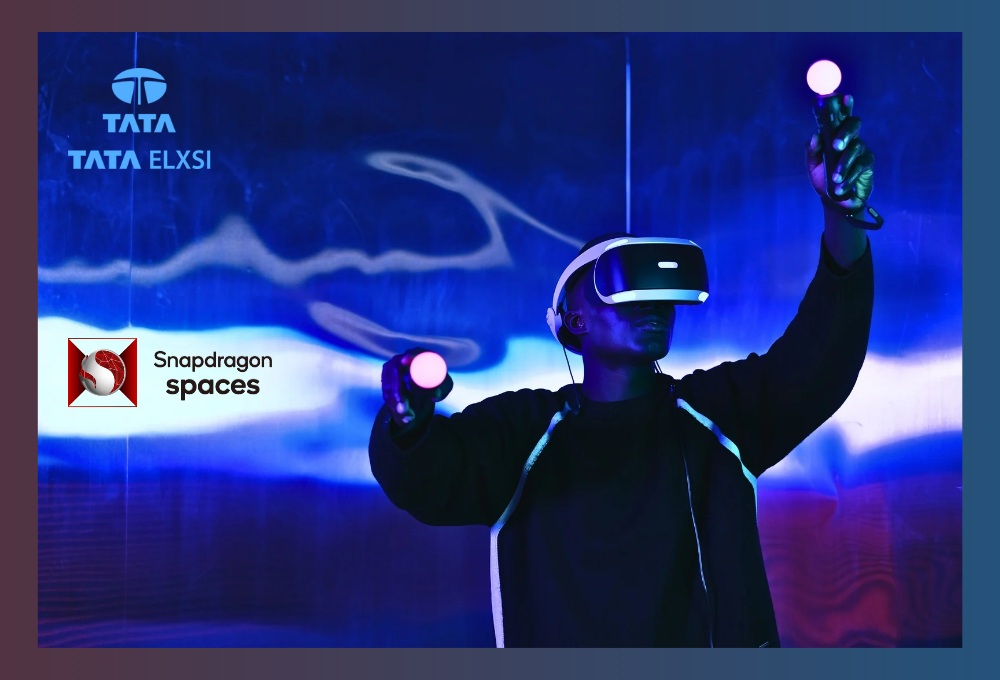
Tata Elxsi recently launched Coalesce, an innovative XR platform powered by the Snapdragon Spaces XR Platform from Qualcomm Technologies Inc.

An Immersive Collaboration, Coalesce facilitates immersive collaboration by bringing together spatial computing, digital twins, and simulations.

The Snapdragon Spaces XR Platform is an integrated platform and ecosystem developed by Qualcomm Technologies Inc. for creating immersive experiences on XR (Extended Reality) devices. The platform enables spatial computing experiences, allowing users to interact with digital content in a 3D space. It supports a wide range of XR devices, including VR (Virtual Reality), AR (Augmented Reality), and MR (Mixed Reality) headsets.

Coalesce, the newly launched platform, supports reviews of product models, allowing teams to interact with 3D models in a virtual environment. It includes features for sharing text, audio comments, notes, and screen recordings with globally dispersed teams.

Coalesce offers a 360-degree review for immersive interaction, enhancing the collaborative experience.The platform is device-agnostic and web-based, making it accessible across various XR devices.

This solution is designed to help businesses create transformative spatial computing experiences, making remote collaboration more efficient and engaging.

Aditya S Chikodi, Vice President & Head - Industrial Design, Engineering, & XR, said, “Product design and engineering are taking a leap forward with augmented virtual reality and spatial computing. Coalesce introduces a revolutionary approach to digital twins and performance simulation, pushing the boundaries of XR in the product development process.

Per Neilson, Senior Director, Product Management at Qualcomm Technologies, Inc., added, “Tata Elxsi is working to bring the Coalesce platform to market, empowering industries and executive workforce to collaborate and make real-time decisions in product design and enterprise simulated environments. We are excited to see this platform brought to Snapdragon Spaces.”

Govt Approves NCoE for Animation, Visual Effects, Gaming, Comics and Xtended Reality

Govt Approves NCoE for Animation, Visual Effects, Gaming, Comics and Xtended Reality

The Indian government has recently approved the establishment of the National Centre of Excellence (NCoE) for Animation, Visual Effects, Gaming, Comics, and Extended Reality (AVGC-XR). This initiative aims to position India as a global hub for content creation and attract foreign investments.

The NCoE will be set up in Mumbai, Maharashtra, and will function as a Section 8 Company under the Companies Act, 2013. It will offer specialized training programs, foster research and development, and support startups in the AVGC-XR sector.

This move is expected to significantly boost the media and entertainment industry, creating numerous job opportunities and enhancing India's soft power globally.

AVGC-XR sector today plays an indispensable role in the entire realm of Media and Entertainment including filmmaking, Over The Top (OTT) platforms, gaming, advertisements and several other areas including health, education and other social sectors thereby encompassing the overall structure of the country’s growth story. With rapidly evolving technology and increasing internet penetration all across the country, coupled with one of the cheapest data rates, the usage of AVGC-XR globally is poised to grow at an exponential Pace.

Ashwini Vaishnav, Minister of Information and Broadcasting, said on a social media post, "Films like RRR, Baahubali, The Lion King and Avatar have demonstrated the immense potential of animation and immersive technology!"

"India’s Animation, Visual Effects, Gaming and Comics (AVGC) sector is poised for explosive growth, with vast opportunities for employment and innovation.," the Minister said.

NCoE will also foster research and development and will bring together experts from various fields like computer science, engineering, design and art that can lead to major breakthroughs in the field of AVGC-XR.

This Centre will also extensively focus on creation of India’s IP for both domestic consumption and global outreach, overall leading to creation of content based on India’s rich historical and cultural heritage.

Further, the NCoE will function as an incubation centre by providing resources for nurturing startups and early-stage companies in the AVGC-XR field. Also, NCoE will serve not only as an academic accelerator but also a production/ industry accelerator.

The key goals of NCoE

The National Centre of Excellence (NCoE) for Animation, Visual Effects, Gaming, Comics, and Extended Reality (AVGC-XR) has several key goals:

1. Skill Development: Providing specialized training programs to develop a skilled workforce in the AVGC-XR sector.

2. Research and Development: Fostering innovation and research in emerging technologies related to animation, visual effects, gaming, comics, and extended reality.

3. Industry Support: Supporting startups and small businesses in the AVGC-XR sector through incubation, mentorship, and funding opportunities.

4. Global Competitiveness: Positioning India as a global hub for AVGC-XR content creation and attracting foreign investments.

5. Job Creation: Generating employment opportunities in the media and entertainment industry.

6. Cultural Promotion: Enhancing India's soft power by promoting Indian culture and creativity globally through high-quality content.

The NCoE for AVGC-XR will also position India as a content hub for providing state-of-the-art content thereby enhancing India’s soft power globally and attracting foreign investment into the Media & Entertainment Sector.

Sony Announces Metaverse Technologies and Hardware to Empower 3D Content Creators

Sony Announces Metaverse Technologies and Hardware to Empower 3D Content Creators

Sony Corporation Announces Development of Spatial Content Creation System, Equipped with High-Quality XR Head-Mounted Display and Controllers Dedicated to Interaction with 3D Objects

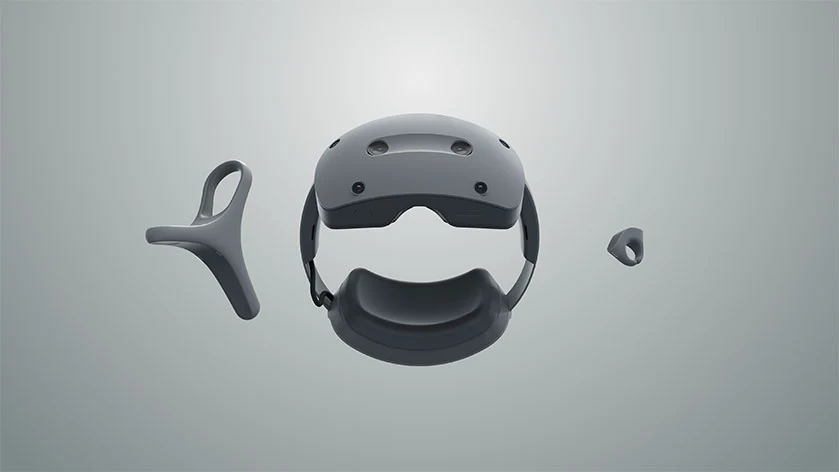
Sony Corporation announced development of an immersive spatial content creation system, which includes an XR head-mounted display equipped with high-quality 4K OLED Microdisplays*² and video see-through function, and a pair of controllers optimized for intuitive interaction with 3D objects and precise pointing. The system is aimed at supporting creators in sophisticated 3D content creation. Sony plans to collaborate with developers of a variety of 3D production software, including in the entertainment and industrial design fields. At launch, Sony is exclusively partnering with Siemens, a leader in industrial technology, to introduce a new solution for immersive design and collaborative product engineering using software from the Siemens Xcelerator open digital business platform.

The system will be available later in 2024. Sony and its partners will announce further details including specs, launch date and regions, pricing, sales channels, and software compatibility.

This spatial content creation system, equipped with an XR head-mounted display with 4K OLED Microdisplays and Sony's proprietary rendering technology, enables real-time, high-definition and realistic rendering of textures of 3D objects and facial expressions of human characters. In addition to video see-through functionality and spatial recognition with six cameras and sensors in total, the system features a ring controller that allows users to intuitively manipulate objects in virtual space, as well as a pointing controller that enables precise pointing, allowing creators to craft in virtual space with controllers and keyboards, all while wearing the head-mounted display. Creators will not only be able to see real-scale 3D models in an Extended Reality (XR) environment with the high-definition display, but also create and modify 3D models in it. Through integration with third-party 3D creation applications, it also supports remote, real-time review between locations, making this an intuitive and immersive tool for the entire process of spatial content creation.

The device features Snapdragon® XR2+ Gen 2 Platform, the latest XR processor by Qualcomm Technologies, Inc. The processor unlocks the power of the 4K OLED Microdisplays to deliver stunning image quality, as well as provides user and space tracking for seamless XR experiences, offering creators a high-performance platform for their creative Workflow.

Sony has released technologies that support workflow and quality of spatial content creation and facilitate use of 3D CG in various creative fields. Mobile motion capture system "mocopi™," with small and lightweight sensors and a dedicated smartphone app, enables full-body motion tracking, using Sony's proprietary technologies. Spatial Reality Displays provide highly realistic, three-dimensional content without the use of special glasses or Virtual Reality (VR) headsets, for spatial content creation and review process. By introducing this system and collaborating with 3D creation software developers, Sony aims to further empower spatial content creators to transcend boundaries between the physical and virtual realms for more immersive creative experiences.

Sony Announces Metaverse Technologies and Hardware to Empower 3D Content Creators
System in use for 3D CG creation

Sony Announces Metaverse Technologies and Hardware to Empower 3D Content Creators
System in use for film production with 3D technologies

Siemens partnering Sony 

"Siemens is partnering with Sony to enable immersive engineering, a critical building block for the industrial metaverse. Together, we are creating an environment where it will be possible to experience the realities of physics, without the bounds of time to profoundly improve how our customers work and collaborate," said Cedrik Neike, Member of the Managing Board of Siemens AG and CEO of Siemens Digital Industries.

"We designed our Snapdragon XR2+ Gen 2 to deliver 4K display resolution, cutting-edge graphics, and unparalleled performance to enable creators to build innovative spatial content that will transform all industries for the better," said Said Bakadir, Senior Director, Product Management of Qualcomm Technologies, Inc. "It's exciting to see Sony enter the enterprise space with their spatial content creation system and utilize Snapdragon XR technologies
to unleash more realistic, detailed, and precise Mixed Reality (MR)/VR experiences that will help developers and creators push forward an even more immersive future.
"

Main Features

High-Quality XR Experience for Creative Uses

The head-mounted display is equipped with large-size, high-definition 1.3-type OLED Microdisplays with 4K resolution and a wide color gamut that covers up to 96% of DCI-P³*³*⁴. Detailed and realistic rendering of textures of 3D objects and facial expressions of human characters allows creators to go through the whole process of modeling to review, all while wearing the head-mounted display.

By supporting split rendering*5, which distributes the rendering load between computers and the head-mounted display, the system is capable of stable and high-definition rendering of large-size 3D models.

Through our collaboration with Qualcomm Technologies, Inc., Sony is among the first to adopt their latest Snapdragon XR2+ Gen 2 platform. The processor unlocks the power of the 4K OLED Microdisplays to deliver stunning image quality, while on-chip AI enables enhanced user and space tracking for seamless XR experiences, merging physical and digital spaces for easy navigation and intuitive interaction within the XR creative spaces.

Controllers that Provide Intuitive Spatial Content Creation Experiences

The system includes a ring controller that allows users to intuitively manipulate objects in virtual space. It also comes with a pointing controller that enables stable and accurate pointing in virtual spaces, with optimized shape and button layouts for efficient and precise operation. By holding the pointing controller in the dominant hand and attaching the ring controller to the fingers of the other hand, creators can model 3D objects using both controllers and a keyboard, while wearing the head-mounted display.

The pointing controller enables accurate pointing in virtual spaces

Intuitive manipulation of an object with the ring controller

Designed with Comfort, for Seamless XR Creative Experiences

The head-mounted display provides comfort and stability required for extended creative use, by fine-tuning the balance of the device's center of gravity, and the design and material for pads that come into direct contact with the user's head. Additionally, the flip-up mechanism of the display part allows creators to easily and seamlessly move between physical and virtual spaces, without having to recalibrate the device when removing and wearing the entire device.

Sony Announces Metaverse Technologies and Hardware to Empower 3D Content Creators
Optimal balance for extended creative uses

Sony Announces Metaverse Technologies and Hardware to Empower 3D Content Creators
Flip-up mechanism of display part

Immersive Creative Experience Through Integration with 3D Creation Software

Sony seeks to collaborate with various 3D production software developers, in both entertainment and industrial design fields. At launch, Sony will exclusively partner with Siemens to bring innovative immersive engineering capabilities to the manufacturing industry, through integration with the new NX™ Immersive Designer software, a product engineering solution from the Siemens Xcelerator portfolio of industry software. The integration of powerful hardware and software will empower creators in industrial design and product engineering field, by providing a more immersive design, review, and collaboration tools. The video showing immersive spatial content creation experience, enabled through thise partnership, is are available on the following webpage. The link will be moved to official YouTube channel of Siemens Digital Industries Software.


*1: The images shown are for illustration purposes only and may not be an exact representation of the final product.
*2: As capability of the device. Actual resolution varies depending on application and type of usage.
*3: DCI-P3: An RGB color space standard established by Digital Cinema Initiatives, an American consortium that works on standardizing digital cinema systems.
*4: Actual color space usable depends on application and type of usage.
*5: Only works with compatible applications, when used in tethered mode. (wired and wireless) Resolution, refresh rate and color space may differ depending on application.

China's Largest City To Generate $6.9 Bn By Infusing Tourism with Metaverse and Web3 Technologies

China's Largest City To Generate $6.9 Billion By Infusing Tourism with Metaverse and Immersive Experience

China’s largest city and the country’s financial capital — Shanghai, has recently released a plan to build out its culture and tourism metaverse projects into an industry generating an annual revenue of 50 billion yuan (US$6.9 billion) by the end of 2025.

Last year in July, Shanghai named metaverse technology as one of three “new tracks” in its economic development, along with intelligent terminals and low-carbon industries.

Shanghai plans to launch around three dozen metaverse projects in two years, leveraging web3 technology to promote tourism and cultural activities.

In a release it said – In order to thoroughly implement the "Shanghai City's Action Plan for Cultivating "Metaverse" New Competitions (2022-2025)", this plan is specially formulated to better stimulate the vitality of innovation, and help the main body of the cultural and tourism industry enter the new track of the Metaverse.

According to the plan by the city’s municipal administration of culture and tourism, Shanghai aims to build 30 culture and tourism metaverse projects by the end of 2025 to focus on what it calls smart tourism, as well as virtual performances, digital artwork, and others.

The metaverse technology will be integrated into the Shanghai’s real-world tourist attractions, enabling visitors to interact with the sites through augmented reality and have avatars as tourist guides.

As part of the plan, museums, art galleries, and commercial blocks in Shanghai city will be encouraged to apply virtual reality technologies such as Xtended Reality (XR), autostereoscopy, holographic projection, and smart sensing equipment to present immersive cultural and tourism experiences for visitors.

In addition to these, interactive tour routes featuring a mixture of virtual and real-life elements will be developed at historical conservation zones and blocks, the waterfront of the Suzhou Creek and Huangpu River, and smart tour guide services.

The city authorities will also promote the construction of AIoT (Artificial Intelligence Internet of Things) infrastructure in digital cultural venues, digital scenic spots, and digital hotels, and promote the deployment of intelligent vision, infrared and other sensing terminals.

By 2025, the brand of "Cultural Tourism Yuan Universe" in Shanghai will be launched initially, the level of development will be in the forefront of the country, the industrial scale will exceed 50 billion yuan, and 2-3 new content creation industry cluster development zones will be formed.

In order to accomplish all these infrastructure resources will be needed, and for the same Shanghai city authorities will encourage the deployment of new computing platforms with spatial computing and real-time cloud rendering capabilities, combined with high-speed networks to achieve ultra-low latency in the entire process of spatial recognition, content generation, rendering, interaction, and transmission, and build an on-demand cloud computing capability system for cultural tourism.

Construction of edge computing capabilities in public libraries, cultural centers, museums, Meihe Museum, scenic spots, hotels and other cultural and tourism venues will also be promoted by the authorities.

Several other Chinese cities and provinces, including Nanjing, Zhengzhou, and Hangzhou, have also released plans or policies this year for metaverse developments.

MetaStudios and AjnaLens Join Hands to Reinvent Learning with Extended Reality

MetaStudios and AjnaLens Join Hands to Reinvent Learning with Extended Reality

AjnaLens, India’s premier Extended Reality Hardware manufacturing company and MetaStudios, one of the leading Metaverse and Gaming Studio today announced their partnership for building immersive experiences and training programs targeted at upskilling the global youth and adult fraternity, making them competent, capable and self-sustainable.

AjnaLens aims to solve the problem of unemployment at grassroot level in India through the world of AR & VR Technologies. With their new AjnaXR Glasses and immersive learning platform AjnaVidya, users can learn all kinds of skills inside the virtual space. They also allow every user to interact seamlessly with each other and provide leaderboards that measure learning performances and outcomes.

MetaStudios is a pioneer in building immersive experiences that delivers deeper engagement, and higher retention rates with the end users. By harnessing the principles of humanising virtual experiences, MetaStudios curates content that foster active participation, and enhances knowledge and learning. It is a part of the MetaEngine group - the team behind building the infrastructure layer for over 500+ games for the last 20 years (hosting over 30+ Million MMO users till now).

Together we make differences!

Currently, the world is plagued with high unemployment among the youth with an estimated 73 million people facing this obstacle. The new innovations in the digital age, including these immersive training programs produced from the MetaStudio and AjnaLens partnership will provide new avenues for development of a skilled and employed pool of individuals , irrespective of their economic situation

Pankaj Raut, CEO of AjnaLens commented, “Our vision is to make India a nation of creators instead of just consumers when it comes to immersive technologies. We are empowering India’s XR developers and creators to build immersive experiences from India, for the world. MetaStudios has a strong team with deep expertise and a focus on ROI for their customers. By combining their superior quality training experiences and our Made-in-India XR headsets, we are aiming to revolutionise learning and human development across industries.”

Kapil Dhiman, CEO of MetaStudios added, “Our Partnership with AjnaLens is a big step towards reshaping the way we imagine education and training. The world is changing faster than ever, and there is a strong need to upgrade the content and platform for providing skill based training to our youth - make them future ready. With the combined strength of AjnaLens’ hardware and MetaStudios’ immersive content, we are stepping on an ambition to build a skilled workforce from India, for the world.”

About MetaStudios:

MetaStudios is a cutting-edge Metaverse and game development studio focused on building innovative immersive experiences. With a team of experts in Art, design, programming, and AI, MetaStudios is on a journey to push the boundaries of what's possible in the industry to define the future of the Metaverse. Our state of the art Metaverse Studio is specialised in strategising, designing and developing immersive digital environments that aims to humanise the experience and create seamless integration between physical and virtual realities, allowing users to interact with each other real-time.

For more visit: https://www.metastudios.gg/

About AjnaLens:

Founded in 2014, AjnaLens is a pioneer of XR in India and a Human-First Organization, building AI-powered wearable technologies to upgrade the skill development ecosystem. The impact-driven startup is on a mission to create a skill-first world with equal economic opportunities by redefining learning and human development.

Over the years, AjnaLens has built state-of-the-art immersive learning solutions to help governments, education institutes and fortune 500 companies in their digital transformation journey. They have deployed the world’s largest Metaverse for Vocational Training across 300+ industrial training institutes in India, transforming the lives of 18000+ students every year.


MeitY and Meta Shortlist 120 Startups, Innovators for the XR Startup Program

MeitY and Meta Shortlist 120 Startups, Innovators for the XR Startup Program
More than 30% Startups in the Accelerator are from Tier II & III cities across India

40% of the selected Innovators and Startups in Grand Challenge belong to tier II & III parts of the country

Women led/co-led Startups and Innovators form over 20% of the cohort

MeitY Startup Hub (MSH), an initiative of the Ministry of Electronics & Information Technology (MeitY), and Meta have announced the list of 120 startups and innovators for the XR Startup Program, in Delhi today.

As announced in September 2022, XR Startup Program is a collaboration between MSH and Meta to discover, nurture, and accelerate Extended Reality (XR) technology startups and innovators across India.

The XR Startup Program includes an Accelerator and a Grand Challenge, aimed towards boosting the emerging tech ecosystem in the country, was kicked-off close on the heels of the recent National Startup Day.

Out of the startups selected in the Accelerator Program, over 30% are from tier 2/3 cities across India. Also, 40% of the selected innovators and startups in the grand challenge are from tier 2/3 cities. Further, more than 20% of the cohort has women innovators and startups with women founders/ co-founders.

Speaking on the occasion, Shri Jeet Vijay, CEO of MeitY Startup Hub (MSH), said, “Emerging technologies like XR will have a significant impact on the digital ecosystem. Indian startups and innovators, especially from non-metros, will play a key role in shaping technologies like the metaverse and the future of the internet. The collaboration with Meta will provide the necessary impetus in supporting and scaling up such startups.”

Speaking on the kick-off of XR Startup Program, Shri Shivnath Thukral, Director Public Policy, Meta India, said, “India is undergoing a significant digital transformation backed by immersive technologies across sectors like education, healthcare, agritech and tourism. Combined with a robust startup ecosystem and a strong tech talent pool, the startups and innovators from tier II & III towns are well poised to shape the digital future of the country. Initiatives like the XR Startup Program with MeitY Startup Hub, will further act as a catalyst to the growth of technology startups and innovators across India.”

The Accelerator Program is supporting 40 early-stage start-ups working in XR technologies with a grant of Rs. 20 lakhs each. Further, the Grand Challenge will encourage early-stage innovators in sectors like Education, Learning and Skills, Healthcare, Gaming and Entertainment, Agritech & Climate Action and Tourism & Sustainability.

The innovators will be provided support to upscale from the R&D phase to developing workable products and services. At first 80 innovators will attend a bootcamp, out of which, a total of 16 innovators will be provided grants of Rs 20 lakhs each and further support to help them develop Minimum Viable Product (MVP)/ prototypes.

The Accelerator and Grand Challenge are also supporting start-ups and innovators with establishing customer connections, partnership opportunities and fundraising among other things.

The program is being executed in partnership with implementation partners including, Foundation for Innovation and Technology Transfer (FITT) at IIT Delhi (North Zone), Centre for Innovation and Entrepreneurship (CIE) at IIIT-H (South Zone), Atal Incubation Centre (AIC) at SMUTBI (East Zone), and Gujarat University Startup and Entrepreneurship Council (GUSEC) (West Zone).

Full list of selected startups and innovators here

MeitY Startup Hub (MSH), is an initiative of MeitY has been focused on building and strengthening the startup ecosystem across India via the launch of new funding schemes, corporate startup programs, and international expansion programs for startups among other activities. We host 4000+ startups, 51 supported and 476 registered Incubators, 26 Centres of Entrepreneurship (CoEs), 22 Accelerators and 400+ Mentors in our network.

Meta builds technologies that help people connect, find communities, and grow businesses. When Facebook launched in 2004, it changed the way people connect. Apps like Messenger, Instagram and WhatsApp further empowered billions around the world. Now, Meta is moving beyond 2D screens toward immersive experiences like augmented and virtual reality to help build the next evolution in social technology.


Unlocking New Dimensions of Online Gaming with XR Technology

Unlocking New Dimensions of Online Gaming with XR Technology

XR technology is a combination of virtual reality (VR), augmented reality (AR) and extended reality (XR). It is quickly becoming the new norm in the world of online gaming. With the help of XR technology, players are able to experience gaming in ways that have never been possible before. In this blog post, we'll discuss what makes XR technology stand out from other technologies, how it is changing the online gaming industry, and where it will likely take us in the next 10 years.

What Makes XR Stand Out?

The main difference between XR and other technologies is its ability to combine both physical and digital elements. This allows players to interact with digital elements in a more realistic way. For instance, when playing a VR game, players can interact with objects as if they were actually part of the environment. Similarly, when playing an AR game, players can see their surroundings and interact with them as if they were part of a real-world environment. The use of XR technology also allows for more immersive experiences that can encourage social interaction among players - something that is difficult to achieve with traditional gaming platforms.


The Benefits Of Using XR Technology In Online Gaming

XR technology offers a variety of benefits for both developers and gamers alike. For developers, using XR technology can significantly reduce development costs while providing more realistic experiences for gamers. Furthermore, because XR provides more natural interactions with objects within a game, developers can create more complex environments than ever before – allowing for richer gameplay experiences for players. Additionally, this type of technology also allows for increased accessibility since users don’t need any special equipment to play games on these platforms – just their current device or computer.

XR Gaming and Betting Market In 10 Years

It’s no secret that the online gambling and betting industry is growing at an unprecedented rate due to technological advancements like mobile devices and various online payment methods. It’s clear that the market will continue its growth over the next decade as more people become familiar with new technologies like XR techology – making it easier than ever before to access games from anywhere around the world.


This means that by 2030 there will be far more opportunities available for gamblers looking to try their luck at different kinds of games while taking advantage of exciting new features such as enhanced audio-visuals and realistic interactions within virtual worlds created through XR technology.

Conclusion

As you can see from this blog post, XR technology has already revolutionized online gaming by providing an unprecedented level of immersion for gamers worldwide. Not only does this type of tech provide improved visuals and audio but also allows developers to create complex environments that offer users realistic interactions within digital worlds – all without requiring any additional equipment or software installations on your device! As we move forward into the next decade, expect even bigger changes in terms of how we experience our favorite games on smartphones, tablets or computers as this amazing technology continues to evolve. As always stay tuned here at MetricMarketingfor all your updates on how emerging technologies are impacting our lives!


MeitY Startup Hub and Meta Selects IIIT Hyderabad Foundation (CIE) as the Implementation Partner From the Southern Zone for the XR Startup Program

IIIT Hyderabad Foundation (CIE) is the Implementation Partner From the Southern Zone for the XR Startup Program
  • Hon'ble Union Minister of State Shri. Rajeev Chandrasekhar launched the program
  • XR Startup program will have an Accelerator and a Grand Challenge. Focusing on startups in gaming and entertainment using XR technologies
  • 10 early-stage startups will receive INR 20 Lacs each as grant through the accelerator program
  • 20 innovators will receive INR 50K each, top 4 among that will receive INR 20 Lacs each as grant through the grand challenge
MeitY Startup Hub (MSH), an initiative of the Ministry of Electronics & Information Technology, GoI, and Meta, on 14 Sept 2022, announced the launch of XR Startup Program to support and accelerate XR technology startups across India. This initiative, focuses on skilling and building technological capabilities for the metaverse and will help shape the ecosystem for the emerging technologies, including Augmented Reality (AR) and Virtual Reality (VR) in the country.

IIIT Hyderabad foundation (CIE) is selected as one of the 4 implementation partners for the program across the country. Earlier this week, Gujarat's GUSEC also selected as one of the implementation partners for the Program.

The Accelerator Program will support 40 early-stage start-ups working in XR technologies with a grant of Rs 20 lakhs each. Further, the Grand Challenge will encourage early-stage innovators in sectors like Education, Learning and Skills, Healthcare, Gaming and Entertainment, Agritech & Climate Action and Tourism & Sustainability. For the grand challenge the innovators will be provided support to upscale from the R&D phase to developing workable products and services. At first 80 innovators will be shortlisted to attend a bootcamp, out of which, a total of 16 innovators will be provided grants of Rs 20 lakhs each and further support to help them develop Minimum Viable Product (MVP)/ prototypes.

Head of the Incubator with Union MoS Shri. Rajeev Chandrashekar
Speaking on the occasion, the Union Minister of State for Electronics & Information Technology, and Skill Development & Entrepreneurship, Shri Rajeev Chandrasekhar said, “It is an important day in terms of achieving Prime Minister Shri Narendra Modi’s vision of making the next 10 years as India’s Techade - full of opportunities for young Indians. It is also an important milestone in area of Metaverse which is an important part of emerging future of the internet. I look forward to the collaboration with Meta and I hope it provides the necessary impetus towards fueling the growth of investments in future technologies in line with the government vision for making India a trillion-dollar economy by 2025.”

Speaking on how the Digital India Programme launched in 2015 has transformed citizens lives, governance & democracy, catalyzed India’s Digital economy & created significant capabilities in emerging technologies, the Minister said “According to PM’s Digital India vision, it is clear that India is no longer going to be a consumer of Technology but become a leader in producing emerging technologies”.

Emphasizing on the potential of Indian Startups from tier 2/3 cities & how the Narendra Modi government is committed in encouraging them, the Minister further added, “Young Indian Startups, especially from tier 2/3 cities, will play a significant role in emerging tech areas like Web 3.0, blockchain, AI, Metaverse etc. and will shape the future of technology and the internet for India and the world.

Sharing his views on the collaboration, Mr. Joel Kaplan, Vice President, Global Policy, Meta, said, “India will play a pivotal role in defining future technologies. Decisions and investments made here in India now shape global discussions on how technology can deliver more economic opportunity and better outcomes for people. It is critical that we help to create an ecosystem that will enable India's tech startups and innovators to build the foundations of the metaverse.”

The use cases that IIITH will be focusing are from gaming and entertainment domains. Startups will be benefited with mentorship by industry expert, IIITH technology support and research connect as well as opportunity to present at industry events. Extended Reality comes from the combination of AR, VR and MR technologies. Gaming in the metaverse helps the user experience the game in real time while also allowing them to interact better with other gamers in a multiplayer environment. VR also helps the gamer control the playable characters better unlocking the complete potential of gaming.

“The XR startup program could be a breakthrough to the quicker integration of AR and VR technologies in the entertainment and gaming industry. This will give lot of boost to early stage companies since they will be getting help from their established counterparts through funding and mentoring,” said Anubhav Tiwari (Head DeepTech and MedTech Incubator, CIE, IIIT Hyderabad Foundation)

XR technologies are set to redefine how we see the entertainment industry. Users can join virtual concerts or host virtual parties. Movies can be made much more immersive with the XR technologies. Sports broadcasting can be completely reinvented with people being able to actually visit stadiums virtually. The use cases of this technology go much beyond what we can imagine. Classrooms can be brought to life with simulations of what is being taught and social media can go as far as letting people meet in the virtual world and allow first person interaction with each other.

For the XR Startup Program, other implementation partners along with IIITH Foundation (CIE) are AIC SMU Technology Business Incubation Foundation (AIC-SMUTBI), Rangpo, Sikkim; Gujarat University Startup and Entrepreneurship Council (GUSEC), Ahmedabad, Gujarat and Foundation for Innovation and Technology Transfer (FITT), IIT Delhi, New Delhi.

About CIE@IIITH

CIE@IIITH, also known as CIE (Centre of Innovation and Entrepreneurship) is a DST approved incubator operational since 2009. CIE@IIITH has so far supported around 160 startups and has seed- funded 18 startups, 80% of which are cash positive. CIE@IIITH was also instrumental being the kiln of the initiatives that culminated into the foundation of T-Hub. Along with developments in AVISHKAR, CIE@IIITH is also focusing on turning a new leaf in terms of infrastructure facilities, programmes and startup engagements focusing towards building a deep tech startup ecosystem. New working spaces are launched, seed funding programmes, structured workshops and mentoring opportunities and technology transfer facilitation are also being deployed now. Visit https://cie.iiit.ac.in/index.html for more details.


GUSEC to Implement Meta’s XR Startup Program, A Collaboration with MeitY Startup Hub

GUSEC to Implement Meta’s XR Startup Program, A Collaboration with MeitY Startup Hub

The program aims to accelerate India’s contribution towards building the foundations of the metaverse and nurturing the development of Extended Reality (XR) technologies in India

Meta and MeitY Startup Hub (MSH) today announced the launch of the “XR Startup Program” in the presence of Mr Rajeev Chandrasekhar, Hon’ble Minister of State for Electronics & Information Technology, and Skill Development & Entrepreneurship in New Delhi. The program has been designed to act as a platform to identify and foster startups working on the XR (Augmented Reality, Virtual Reality & Mixed Reality) technologies. The program includes an Accelerator Program and a Grand Challenge.

GUSEC is one of the implementation partners for the Program, and will focus on the Western Indian region for the Accelerator, and Pan India for the Grand Challenge in Education, Learning and Skills.

Under the Accelerator program, GUSEC will support 10 startups working with XR technologies through a 6-month acceleration program with benefits including a grant worth Rs. 20 Lakhs (each), mentorship by industry experts, access to a network of potential strategic partners and investors, technology and infrastructure support, and opportunities to participate and present at industry events. The grand challenge will encourage early-stage XR innovators in the Education, Learning and Skills sector to upscale from the R&D phase to developing workable products and services. At first 20 innovators will be shortlisted to attend a bootcamp and get a shortlist grant of Rs 50,000, out of which, a total of 4 innovators will be provided grants of Rs 20 lakhs each and further support to help them develop Minimum Viable Product (MVP)/ prototypes.

Rajiv Aggarwal, Director and Head of Public Policy, India, Facebook India (Meta), said, “We are excited to launch the XR Startup Hub in collaboration with MeitY Startup Hub. We hope that it will provide a stimulus to India’s vibrant tech ecosystem in creating strong foundations for the immersive technologies across sectors like education, healthcare, agritech and tourism.”

Jeetendra Vijay, Chief Executive Officer, MeitY Startup Hub, said “GUSEC is one of India’s leading startup support systems, which has carved a niche for itself by facilitating startup support at zero-cost. We are delighted to have them onboard as one of the Implementation Partners under the XR Startup Program launched in conjunction with Meta. The program aims to accelerate India’s contribution towards building the foundations of the metaverse and nurturing the development of Extended Reality (XR) technologies in India.”

Rahul Bhagchandani, Group CEO, GUSEC said "GUSEC has played a pivotal role in shaping and nurturing the startup ecosystem of Gujarat since its inception. As an implementation partner of the XR Startup Program, we aim to continue supporting the youth towards creation of future technologies in India, contributing to the dream of a self-reliant country."

Other implementation partners institutions for the XR Startup Program are FITT, IIT Delhi for the accelerator in the north, and for the grand challenge in Healthcare; Sikkim Manipal University for the accelerator in the east, and for the grand challenge in Agritech, Climate Action, Tourism and Sustainability; and CIE-IIIT Hyderabad for the accelerator in the south, and for the grand challenge in Gaming and Entertainment.

Applications for the accelerator program are open until September 28, 2022 and for the Grand Challenge until October 13, 2022. Applications can be made at gusec.edu.in/xr. Applications for other partners can be accessed through this link: https://meitystartuphub.in/public/xr-startup-program.

MeitY Startup Hub and Meta (Facebook) Collaborate to Accelerate XR Technology Startups in India

MeitY Startup Hub and Meta (Facebook) Collaborate to Accelerate XR Technology Startups in India

MeitY Startup Hub (MSH) in collaboration with Meta (formerly Facebook) will launch a program to support and accelerate XR technology startups across India. XR is an  umbrella term that covers virtual reality (VR), augmented reality (AR), mixed reality (MR).

Extended reality (XR) is a term referring to all real-and-virtual combined environments and human-machine interactions generated by computer technology.

The program will be announced tomorrow (on 13 September 2022). Mr. Rajeev Chandrasekhar, Hon’ble Minister of State for Electronics & Information Technology, and Skill Development & Entrepreneurship and Joel Kaplan, Vice President, Global Policy, Meta, will be present on the occasion.

This collaboration is part of the Government’s efforts for skilling in emerging and future technologies.

India is uniquely placed to play a pivotal role in the metaverse with a large talent pool of creators, developers and a vibrant technology ecosystem. The world looks to it for supply technology, innovation and talent to cater to the greater demand for digital products.

The MeitY Startup Hub, an initiative of MeitY, is a national platform focused on promoting technology innovation, start-ups, and the creation of intellectual properties. Today, it has around 3000+ tech startups supported, with a vision to ramp it up to more than ten thousand startups in the next three to five years.

Besides MeitY, another ministry, Ministry of Tribal Affairs, has also partnered with Meta (formerly Facebook) for training tribal youth in digital skills and technology.

Ajnalens and Tata Technologies Redefine the Future of Industrial Training, Virtually ‘Teleport’ Trainees to Job Sites

Ajnalens and Tata Technologies
A trainee using AjnaXR Station for spray painting simulation

Largest implementation of a VR based trade skilling simulator in the world - Upgraded 150 ITIs across Karnataka

Introducing AjnaXR Station, Phygital (Physical + Digital) VR training solution for skill development

Taking a giant leap to bridge the demand for skilled workforce, AjnaLens, Mumbai-based XR hardware and software company, joined hands with Tata Technologies to digitize 150 ITIs in Karnataka. The initiative equips ITIs with AjnaXR stations, the VR-based Phygital Training Simulator that provides immersive skill training to drive performance and reduce training cost. The Karnataka ITI Upgrade into Industry 4.0 aims to upskill more than 9,000 students this year as part of this initiative. By far, this is the largest implementation of a VR based trade skilling simulator in the world.

AjnaXR Station is a made-in-India, highly scalable VR training simulator for Industrial trainings

  • One-stop solution for diverse set of trainings
  • Virtually teleports trainee to an actual job site/paint shop/welding workshop
  • Unlimited practice on industry-graded tools to build muscle memory
  • Multilingual training that gives immediate ROI

Performance assessment report of the activity

"Skilling will drive India through the Industrial Revolution 4.0. Enabling and empowering the grassroots is pivotal to bridge the skill gap. AjnaLens has successfully transformed the ITIs in Karnataka and is ready to create more ripples by cascading the impact to other states of India. It is a well-equipped workforce that will truly harbour India’s future and meet the growing demand of the industry.” says Sushil Kumar, Global Head, Govt Projects & Skill Development at Tata Technologies.

AjnaLens has been working towards creating a tangible impact in the training sector with their innovative ideas backed by cutting-edge technology.

Abhijit Patil, Co-founder & COO, AjnaLens says, “Collaboration is key to bringing an inclusive and lasting change. We thank Tata Technologies for making us a part of this impactful initiative. Aligned with our vision of Make in India and creating a positive impact at the grassroots, this partnership is a key milestone towards upskilling the current and future workforce of India. Combining immersive virtual experience with the actual industry-graded tools paves the most effective and sustainable way to make India’s youth job-ready. Going forward, we plan to multiply the impact by expanding the training module across other states.”

AjnaXR Station is a scalable VR training solution which is manufactured and assembled in India. Each station is equipped to provide training across multiple modules by representing the real world in the virtual world, making training effective and engaging while reducing the training time and cost.

"Upgrading the skilling ecosystem of the country, AjnaXR station provides scalable, data-driven training to the youth.  While we are progressing on multiple development indices, the rate of unemployment and skill gap in India is glaring. Our goal is to encourage youth to gain hands-on experience and help them increase their earning potential by becoming employable.” he adds.

Enabling the trainees to practice the skills for long hours, the company has built one of the world’s most lightweight VR Glasses which weigh only 153 gms, as compared to the popular international brands which weigh around 500 gms. In order to help students build muscle memory, AnjaLens has built an innovative tracking system to track real-life tools in the virtual environment, making the product highly scalable for training.

The initiative will empower youth at the grassroots by exposing them to upskilling opportunities which AjnaXR Station brings to their nearest ITI. The impact-driven startup, AjnaLens, has successfully created direct and indirect employment for students, especially for female ITI students by engaging them to assemble and deliver 300 units of AjnaXR Station. The trained students play the role of peer-facilitators, encouraging more students to join and create scalable impact by bridging the skill gap.

AjnaLens is trusted by prominent clients including the Indian Army, Navy, Ministry of Defence, DRDO, Government of Maharashtra, Vedanta and supported by Forge Accelerator, a leading startup incubator, through every stage of its journey.

About Ajnalens - 

Named after ‘Ajna’, the sixth chakra or the third eye which activates ‘intuitive vision’, AjnaLens is a Mumbai-based company making immersive augmented, virtual and mixed reality devices and software solutions for Defence, Enterprise and Skilling sectors. It is the first and only XR hardware OEM to manufacture AR/VR glasses in India.

The impact-driven startup is on a mission to unlock human potential by empowering them with augmented intelligence. In November 2014 at IIT Bombay, AjnaLens was established with a purpose to foster inclusive development in society by empowering people at the grassroots with the right tool for this decade - a ‘holographic computer’. It empowers and enables humans into perceiving and doing what is beyond their capabilities by seamlessly connecting the digital world with reality.

AjnaLens is currently helping India’s government and fortune 500 companies in their digital transformation journey by providing end-to-end solutions such as Enterprise Metaverse, VR training simulators, AR-based remote assistance, Digital twin as well as providing indigenous defence solutions like see-through armour to Indian Defence forces.

AjnaLens has filed 15+ National and International patents in augmented reality and allied fields. The company has won accolades like the Most promising startup by ECLINA Defennovation for cutting-edge innovations. AjnaLens is a growing family of 50 people, inviting bright minds to join their vision.

How Immersive Technologies are Empowering the Fight Against COVID-19

“I feel like I’m playing PAC-MAN,” IEEE Member Todd Richmond told a grocery store employee when food shopping recently. “I turn down a row, see people, turn back around and immediately head for another aisle.”

The grocery shopping experience, like the rest of the world, has been turned upside-down by the COVID-19 pandemic. But as we navigate through this unprecedented crisis, many technologists like Richmond have one eye on the future.

“I can imagine an augmented reality app being developed in the future that helps people deal with social distancing more efficiently,” says Richmond. “In theory, such an app would essentially map out where a user is in relation to where other users are – it would pull data on higher risk areas based on population density and other factors, enabling the user to navigate around a particular area more safely.”

The world, as we know it has changed forever and is going through a transformational phase. It has fundamentally changed the way we operate. In the past couple of weeks, the pandemic has not only brought about uncertainty but has disrupted businesses across sectors, especially Healthcare. Today the virtual environment has taken center-stage. People have had to go on an overdrive to quicken the pace of adaptation to new-age technologies in order to fight against the pandemic. 

Uniquely challenging times call for uniquely innovative solutions, such as the one Richmond outlined. Here are some other ways that augmented reality and virtual reality (AR/VR) technologies can help combat COVID-19 and other challenges moving forward.

VR is empowering doctors and care providers


One thing that sets COVID-19 apart from other viruses impacting the respiratory system is the damage it can do to the lungs of those infected.

Healthcare experts have found that those infected with the virus sometimes have difficulty breathing, and in serious cases, run the risk of their lungs becoming inflamed. If the respiratory illness worsens, a pneumonia can develop that affects all areas of the lungs.

“Virtual reality and 3D imaging technologies can be leveraged to better spot the unique characteristics associated with COVID-19,” IEEE Senior Member Jacob Scharcanski explains. “By making this data – focusing on lung imagery for COVID-19 and other viral infections – available to physicians, we might be able to do a better job of spotting the virus and its impact on patients earlier, which would be extremely beneficial in terms of activating on an appropriate treatment.”

IEEE Member Anderson Maciel notes that immersive technologies have been utilized in medical education for over two decades now.

“Immersive technologies have been leveraged in medicine for some time now,” says Maciel. “Applications range from helping educate physicians prior to delicate surgeries to enabling patients to virtually interact with doctors in an appointment.”

Moving forward, AR/VR technologies are poised to potentially augment care providers’ ability to understand specific illnesses, such as COVID-19, providing unprecedented insight into how to combat them.

Educating and enabling the public


“In my opinion, the best application for AR/VR in terms of combatting new, still rather unknown infectious diseases is focused on improving the behaviors that lead to infection and spread,” says Maciel.

“Virtual reality in particular is ideally suited to train average citizens – who don’t have any medical experience and are most likely to unknowingly spread a virus – in everyday behaviors because of the feeling of presence that it provides,” explains Maciel. “People immersed in virtual scenarios tend to behave as they would in the real world, which is not true with other educational methods, such as public service announcements and digital campaigns focusing on informing the public on best practices. Short of placing a citizen in an actual dangerous scenario, virtual reality is the best there is for accurately providing experiential knowledge.”

Beyond education, Maciel highlights how immersive technologies are supporting citizens throughout the COVID-19 pandemic by enabling a sense of normalcy. For those practicing social distancing and remaining home, Maciel says AR/VR can also be used to augment fitness-focused games, enable virtual travel, optimize social gatherings and more.

Richmond also shines a light on AR/VR as a tool to help manage future disruption. “Once multi-person VR and telepresence-focused technologies are further along, the ability to connect in shared virtual spaces will be a massive shift in how we connect remotely.”

With social distancing measures still firmly in effect, the type of multi-person VR platform Richmond outlined would go a long way in keeping us connected – yet apart.

Extended Reality (VR, MR, AR) Startup HoloSuit Raises Funding for its Full Body Motion Tracker Suit

San Fransico and Mysuru-based Extended Reality (XR) startup, HoloSuit Pte Ltd, has got funding from Singapore and India-based investors. The three investors include Shabir Momin, MD and CTO of Zenga TV; Rohit Nanda, who's Singapore based established infrastructure sector-focused equity investor; and Mohammed Sirajuddin, Co-Founder of Creators Gurukul & Partner at Catapooolt .

Extended Reality (XR) refers to all real-and-virtual combined environments and human-machine interactions generated by computer technology and wearables, and includes all its descriptive forms like the Augmented Reality (AR), Virtual Reality (VR) and Mixed Reality (MR). Mixied Reality is merging of real and virtual worlds to produce new environments and visualizations where physical and digital objects co-exist and interact in real time

With the raised amount, the startup aims to take Extended Reality aka XR (VR, MR, AR) to the next level and enhance user’s virtual experience even more. The startup recently unveiled the world’s first bi-directional full-body motion controller/tracker with haptic feedback. Haptic is the process of recognizing objects through touch.

Founded in 2016 by Harsha Kikkeri, HoloSuit started in Silicon Valley, California and expanded to Mysuru, India. Its team is comprised of 15+ stellar AR/VR, loT, and Robotics experts dedicated to developing precision motion capture solutions for immersive VR applications, film production, education and mission critical applications. The team also includes Sneha Khanwalkar as the Chief Idea Generator. Sneha is bollywood music director famed for her music in popular flick Gangs of Wasseypur.

[caption id="attachment_125748" align="aligncenter" width="661"]Sneha Holosuit Filmfare awardee Sneha Khanwalkar ,Chief Idea Generator of Holosuit., working on the HoloSuit Entertainment and Experiences division [Image -
Facebook.com/HoloSuit][/caption]

HoloSuit has launched its two versions of a suit that let you feel the virtual experience via the use of sensors and haptic feedback devices. These send vibrations to your body, which give you the feeling of virtual reality. Interestingly, HoloSuit was a part of a competition, where it was spotted by the investors. HoloSuit was part of Product Innovation Hunt, which started in January and reached the finale.

As part of the deal, the investors will also advise the start-up on its global strategy and growth. Shabir Momin, on of the investors, said that the virtual experience is not only limited to gaming but can also be used for real-life experiences such as health care, military, industrial purpose, training, and other sports activities.

Rohit Nanda, another investor, said that Artificial Intelligence is going to be the next cool thing. He said that it has already become the most exciting field of robotics.

With over three-dozen patents issued, HoloSuit's core team spent more than five years developing the HoloSuit hardware, software and SDK HoloSuit will soon release an SDK to app developers that are interested in integrating HoloSuit into their applications as the universal controller.

Sourced from - Economic Times

[Top Featured Image - Harsha Kikkeri of Kaayatech debuts their haptic full-body motion capture holosuit at Augmented World Expo 2018 | Via - Twitter/Farseer ]

Market Reports

Market Report & Surveys
IndianWeb2.com © all rights reserved