‏إظهار الرسائل ذات التسميات Digital Twin. إظهار كافة الرسائل

BQP Raises $5 Mn Seed to Scale Quantum-Powered Digital Twins for Aerospace and Semiconductor

BQP Raises $4.9 Mn Seed to Scale Quantum-Powered Digital Twins for Aerospace and Semiconductor

BQP, a dual-use quantum-accelerated simulation software company, has raised an oversubscribed $4.9 million seed round to expand its unified digital twin platform, BQPhy®, for mission-critical industries, including aerospace, defense (A&D), and semiconductor. The raise follows a strategic collaboration with the Air Force Research Laboratory Aerospace Systems Directorate (AFRL/RQ) under a Cooperative Research and Development Agreement (CRADA) to accelerate mission-critical modeling and simulation capabilities with quantum computing.


Our quantum-inspired solvers are setting a new benchmark in simulation technology, bridging today’s computational limits and the quantum-ready future,” said Abhishek Chopra, BQP’s Founder, CEO, and Chief Scientific Officer. “The traction we're experiencing from AFRL/RQ and industry-leading design partners validates the immediate impact and substantial ROI our platform delivers today. We're also making significant R&D progress in quantum-native solvers for Computational Fluid Dynamics (CFD) and Machine Learning (ML), paving the way for future simulation workload for the next generation of data centers where HPC and quantum computers operate side by side.”

The round was led by Monta Vista Capital, with participation from Empire State Development’s New York Ventures, New York State’s venture capital arm, Arc Ventures, Armory Square Ventures, Emergent Ventures, Alumni Ventures, Arka Venture Labs, Transpose Platform, Gainangels, and Pranatech Venture Capital. The round also saw participation from key angel investors and existing investors, including Paradigm Shift Capital and Griffiss Institute, as part of the Mojave Aerospace Accelerator Fund. Chopra added, “We’re grateful to those who believed in us and our vision! This funding enables us to accelerate the development of our quantum-powered digital twin framework with these design partners and further expand our footprint in A&D and semiconductor industries.”

Total funding raised by the company now stands at $6.6 million.“BQP directly tackles critical bottlenecks in the rapidly evolving $22 billion simulation industry, where conventional technologies have struggled to keep pace with innovation demands in sectors like Aerospace & Defense, Semiconductor, and Energy,” said Roger Krakoff, Partner at Monta Vista Capital. “Their quantum-powered framework is positioned to become foundational infrastructure in the simulation ecosystem.”

Built for hybrid architectures - CPUs, GPUs, and quantum computers - BQPhy’s current version relies on quantum-inspired solvers, enabling a 10X performance boost today on existing CPU/GPU. With their future quantum-native solvers, the customers can experience up to 1000X gains on forthcoming quantum computers.

In addition to the AFRL/RQ, BQP’s design partners include three major Aerospace and Defense companies, including the largest Tier-I Aerospace manufacturer, the Indian Ministry of Heavy Industries, ABB, and major aerospace players.

BQP's solvers can be utilized independently or in a unification as a Digital Twin framework as part of its platform. BQP’s overarching vision is to make BQPhy "the BlackRock of the simulation world," acting as the backend platform that seamlessly integrates into existing simulation workflows and software, as well as optimized for the hybrid computing architectures—CPUs, GPUs, and Quantum Computers—that define the future of data centers.

BQP is actively working with leading quantum ecosystem partners, including Intel, IBM, Classiq, Strangeworks, and members of the NORDTECH Hub. The company will also appear at AIAA Aviation in Las Vegas and ASME Fluids Engineering in July, where Chopra will speak on quantum applications in simulation.

To explore BQP’s quantum-accelerated Digital Twin platform or request a demo, visit bqpsim.com.

ABOUT BQP

BQP (BosonQ Psi) is a quantum-first simulation company building the next generation of digital twin platforms for mission-critical applications. Headquartered in Syracuse, NY, with a technology hub in Bangalore, India, BQP supports faster, more efficient engineering decisions across aerospace, defense, semiconductors, and energy.

Its core platform, BQPhy, integrates into existing engineering workflows and runs on today’s infrastructure - no quantum hardware required. By combining probabilistic algorithms from quantum information science with proprietary solvers, BQPhy enables breakthroughs in optimization, machine learning, and physics-based (CFD) simulations.

BQP works closely with leading partners, including the Department of Defense, Air Force Research Laboratory, IBM, Intel, Moog, and IAI North America.

Learn more at https://www.bqpsim.com

CGDT of IIT Hyderabad and Goa Shipyard Ink MoU to Revolutionize Shipbuilding With AI and Digital Twin Technologies

  • CGDT of IIT Hyderabad and Goa Shipyard Limited Forge Alliance to Transform Shipbuilding with AI & Digital Twin Technologies
  • The collaboration will position India at the forefront of AI-driven maritime innovation.
The Centre for Geospatial AI and Digital Twins (CGDT) of IIT Hyderabad (IITH) and Goa Shipyard Limited (GSL) have signed a ground breaking Memorandum of Understanding (MoU) to revolutionize shipbuilding through Artificial Intelligence (AI) and Digital Twin technologies. This strategic collaboration, undertaken in association with Neer Interactive Solutions Pvt Ltd and Andhra Mahila Sabha (AMS) Arts & Science College, will leverage the expertise of CGDT of IITH to enhance efficiency, security and sustainability in maritime operations.

CGDT of IIT Hyderabad and Goa Shipyard Ink MoU to Revolutionize Shipbuilding With AI and Digital Twin Technologies
Representative Image

The partnership will drive innovation by optimizing vessel design, strengthening shipyard security, and implementing advanced 360-degree surveillance solutions powered by Geospatial AI and Object Detection AI. By integrating Generative AI and Digital Twin technologies, this initiative aims to set new global standards in India's shipbuilding sector.

Prof BS Murty, Director, IIT Hyderabad emphasized the significance of safety in industrial operations, stating, “While Digital Twin technology is redefining industrial operations, yet safety remains an underexplored area. Through CGDT-IIT Hyderabad, in collaboration with Neer Interactive and Andhra Mahila Sabha, we are pioneering a holistic Geospatial AI model with 360- degree maritime security solutions. This initiative is the first of its kind in India and across Asia.”

Shri BK Upadhyay, CMD GSL expressed his happiness on the collaboration between GSL and IITH in improving maritime safety through digital technologies.

Sri Dittakavi Chakrapani, IAS (Retd.), Chairman, AMS, highlighted the urgency of safety in shipbuilding, saying, “Manufacturing and shipbuilding safety cannot be delayed. This partnership brings cutting-edge geospatial digital twin technology to industries that need it most. We commend GSL for its visionary leadership in driving this transformation.”

Sri Jai Sankar Aluru, CEO, Neer Interactive Solutions underscored the transformative impact of Digital Twin technology, noting, “Digital Twins are reshaping industrial processes, and when integrated with Geospatial AI and Object Detection AI, their impact is even more significant. At CGDT, we have cultivated an ecosystem blending expertise from law enforcement veterans, leading faculty, and top researchers to create validated, future-ready AI solutions for the maritime sector.”

A Landmark Advancement for India's Maritime Industry

Led by Prof BS Murty, Director, IIT Hyderabad, Shri. B.K. Upadhyay, CMD, GSL, Cmde. A. Vasudevan (Retd.), GM(TS), GSL, Sri Jai Sankar Aluru, CEO, Neer Interactive Solutions, and Sri Dittakavi Chakrapani, IAS (Retd.), Chairman, AMS, this collaboration marks a major milestone in India’s AI-driven shipbuilding journey. By integrating Geospatial AI, Digital Twin, and Industry 4.0 technologies, this alliance is set to redefine ship design, manufacturing, and security standards— positioning India at the forefront of global maritime innovation.

TCS Unveils the ‘TCS Digital Twindex Report for Future-Ready Manufacturing’


  • Launched at Hannover Messe 2025 in Germany (March 31-April 4), the report features insights from clients, industry partners, futurists, and TCS executives and offers a strategic blueprint for AI & Digital Twin-Powered Manufacturing
  • The ‘TCS Digital Twindex Report for Future-Ready Manufacturing’ is part of a cross-industry series
Tata Consultancy Services (TCS) (BSE: 532540, NSE: TCS), ), a global leader in IT services, consulting, and business solutions, launched the TCS Digital Twindex report for the manufacturing industry at Hannover Messe 2025 in Germany — one of the world’s leading industrial technology trade fairs. The report reveals how AI-powered digital twins are transforming manufacturing, driving efficiency, adaptability, and resilience.

Drawing on insights from industry pioneers and technology leaders such as Siemens, Schneider Electric, NVIDIA, and JLR, alongside TCS executives and futurists, the report presents an in-depth view of digital twin technology adoption, and the rise of AI-powered anticipatory ecosystems. Through qualitative research, it captures curated, future-focused conversations and insights from interviews with industry leaders. TCS' multi-decade presence in the manufacturing industry, deep domain expertise, advanced digital twin solutions, and cutting-edge Generative AI capabilities further lend depth to the report and credibility to shape the dialogue on adaptive, AI-first enterprises.

Anupam Singhal, President – Manufacturing, TCS, said, 
We stand at the threshold of a new manufacturing era, driven by digital twins, Generative AI, quantum-powered advancements, and a deep commitment to everything from safety to sustainability. The ‘TCS Digital Twindex Report for Future-Ready Manufacturing’ encapsulates our vision for building intelligent, future-ready, and adaptive enterprises—redefining industry competitiveness and enriching the lives of citizens and communities around the globe.

Amid the rising need for automation and sustainability, the report offers a strategic blueprint for manufacturers to thrive in an AI and digital twin-driven era. It highlights how AI-powered digital twins, collaborative robots (Cobots), agentic AI, physical AI, and edge computing are converging to create smarter, more sustainable, and human-centric manufacturing ecosystems—enabling the shift toward anticipatory, AI-first enterprises.

TCS Unveils the ‘TCS Digital Twindex Report for Future-Ready Manufacturing’

Overall, the TCS Digital Twindex report identifies five key trends shaping the future of manufacturing:
  • Industry 4.5 and Beyond: The next phase of manufacturing evolution, where AI, automation, and digital twins converge to enable anticipatory, adaptive enterprises.
  • Digital Twins as Real-Time Data Fabric: Acting as the connective tissue for enterprise intelligence—synchronizing data in real time to drive predictive insights and operational resilience.
  • AI as Orchestrator of Intelligence: AI systems are evolving beyond narrow use cases to orchestrate decisions, simulations, and optimizations across the manufacturing value chain.
  • Modular and Intelligent Manufacturing: The shift toward decentralized, plug-and-play production models powered by AI and digital twins, enabling hyper-localized, responsive, and intelligent manufacturing at scale.
  • The Human-AI Symphony in Manufacturing: AI will play a growing role in enhancing human capabilities, supporting better decision-making, improving safety, and enabling seamless collaboration between people and intelligent systems on the factory floor.
Rev Lebaredian, VP of Omniverse and Simulation Technology at NVIDIA
Physical and Industrial AI are born in simulation, where they can be tested and validated before being deployed in the real world. By bridging the gap between the digital and physical, the world's heavy industries are paving the way for software-defined manufacturing and intelligent, autonomous systems.

As manufacturers embrace AI and automation, experts underscore that digitization is the essential first step. Without digitized processes, true automation and intelligence deployment remain out of reach.

Helenio Gilabert, Global Head of Offer Creation, Industrial Automation Services, Schneider Electric, said,
If it’s not digitized, you cannot automate it. If you cannot automate it, you cannot deploy intelligence on top of it. To fully harness AI and digital twins, start with a clear digitization strategy—only then can you move toward AI-driven optimization.

The report emphasizes that virtual first testing through digital twins is critical to building resilient, autonomous systems. By refining AI-powered processes in the virtual environment, manufacturers can reduce errors and improve efficiency when scaling to real-world production.

Paulina Chmielarz, Director, Digital & Innovation, Industrial Operations, JLR, said, “Digital twins are a game-changer in our AI journey. They unlock vast amounts of new data, introduce fresh categories of insights, and open entirely new scenarios for exploration and innovation.”

The report also reinforces that human expertise must remain central to decision-making, even as AI takes on a larger role in data analysis and process optimization. It envisions a future where AI augments, rather than replaces, human capabilities. At the same time, the report cautions that delayed AI and digital twin adoption could undermine manufacturers’ competitiveness. Those that fail to embrace these transformative technologies risk falling behind.

Zvi Feuer, Senior Vice President, Digital Manufacturing Software, and CEO Siemens Digital Industries Software in Israel, said, "Imagine a situation within the next decade where AI agents could be helping us make better decisions...help us identify problems before they happen. We can go and fix these problems (and) keep the production running smoothly... We can make sure all the logistics arrive to the right spot at the right time. This is where I see a big, big change."

TCS is participating in Hannover Messe 2025 (March 31–April 4, Hannover, Germany), at Hall 17, Booth G16, showcasing innovative solutions across AI-powered digital twin platforms, generative AI, agentic AI, physical AI, IoT and digital engineering, cybersecurity, and sustainable manufacturing—empowering manufacturers to become adaptive, future-ready enterprises positioned for a new era of industry leadership.

For more details about our participation, please visit: https://www.tcs.com/who-we-are/events/hannover-messe-2025.

Accenture Acquires Digital Twin Platform Developed by Singapore-based Percipient

Accenture Acquires Digital Twin Platform Developed by Singapore-based Percipient

Accenture has acquired a digital twin technology platform from Percipient, a Singapore-based fintech company.

The platform acts as a virtual duplicate of banks' legacy and modern systems, integrating and unifying data into a single real-time hub.

Percipient’s platform serves as a digital twin—or virtual duplicate—of banks’ legacy and modern systems, integrating and unifying the data from each one into a single-real time hub. This can reduce the challenges that many banks face around core modernizations by simplifying the application of data and enabling faster development of new products and services, all without overhauling existing systems or disrupting operations.

This technology helps financial services clients in the Asia Pacific region accelerate the reinvention of their core systems, fostering innovation and driving growth.

The acquisition complements Accenture's existing banking modernization capabilities, enabling banks to move away from legacy systems and adopt cloud and AI-led services.

Banks transitioning to a modern, cloud-enabled digital core could see up to a 60% increase in revenue growth rates and a 40% rise in profits, according to Accenture's research.

Navin Suri, the founder and CEO of Percipient, along with the company’s core technology leadership team, will join Accenture.

Masashi Nakano, Accenture’s Financial Services lead for Asia Pacific, emphasized the urgent need for transformation in banks' core systems, which are often decades old and costly to maintain.

Navin Suri highlighted the shared vision to reinvent digital transformation at financial institutions, enabling banks to seamlessly transform their legacy systems with greater agility and speed.

This acquisition is expected to significantly enhance Accenture's capabilities in helping banks modernize their core systems and unlock new opportunities for growth.

Hyderabad Airport Become India's First to Implement AI-powered Digital Twin Platform

Hyderabad Airport Become India's First to Implement AI-powered Digital Twin Platform

Rajiv Gandhi International Airport (RGIA) in Hyderabad has become the first airport in India to implement an Al-powered digital twin platform with a predictive operation center (APOC). This innovative system uses real-time data from over 40 parameters to optimize operations and enhance the passenger experience.

The AI-powered digital twin platform at Rajiv Gandhi International Airport in Hyderabad was developed by GMR Airports. They collaborated with various technology partners to integrate advanced digital technologies, including AI, IoT, and real-time analytics, to create this innovative system.


Key Features:
  • Integration: Combines airside, landside, and terminal operations into a unified system.
  • Real-Time Data: Uses IoT and sensors to collect data for quick decision-making and seamless operations.
  • Predictive Analytics: Employs Al and prescriptive analytics to proactively address operational challenges. 
  • Enhanced Passenger Experience: Reduces wait times, optimizes passenger flow, and ensures personalized services.
Union Civil Aviation Minister Kinjarapu Ram Mohan Naidu praised the initiative, calling it a potential model for other airports nationwide. The technology is expected to be deployed at other GMR-operated airports, including Delhi Airport, in the coming months.

GMR Airports Limited, formerly known as GMR Airports Infrastructure Limited, is a leading global airport platform company. They have over two decades of experience in designing, constructing, and operating world-class sustainable airports.

In India, GMR Airports operates several key airports including Indira Gandhi International Airport in Delhi, Rajiv Gandhi International Airport in Hyderabad, and Goa International Airport.

GMR Airports also operates Mactan Cebu International Airport in the Philippines and Kualanamu International Airport in Indonesia.

Accenture To Enhance PUMA's Supply Chain/ Distribution Network in India

Accenture To Enhance PUMA's Supply Chain/ Distribution Network in India

Accenture and PUMA India have teamed up to enhance PUMA's supply chain and distribution network in India. By leveraging Accenture's expertise in digital twin technology, the collaboration aims to drive faster fulfillment and reduce operational costs.

Accenture’s solution, set to be implemented across PUMA India’s eCommerce and offline channels, aims to increase the order speed of delivery by up to 70%, and is expected to reduce supply chain costs by up to 10%.

The solution will redesign PUMA India's supply chain and distribution model, improving material flow and enabling faster dispatches.

The collaboration will also help PUMA India achieve its sustainability goals faster by reducing carbon emissions and implementing sustainable infrastructure in fulfillment centers. This partnership is set to significantly improve PUMA's operational efficiency and customer satisfaction.

Puma India leverages major e-commerce platforms like Myntra, Amazon, and its own online store to reach a wide audience.

India is the first market globally where Puma launched its shopping app, allowing customers to purchase merchandise directly through the app.

Puma India's revenue grew by 46% in FY22, highlighting the country's importance as a key market.

Puma India employs a multi-channel strategy, combining both online and offline sales to maximize reach and customer satisfaction. It has over 577 stores across the country, the highest among international sports brands.

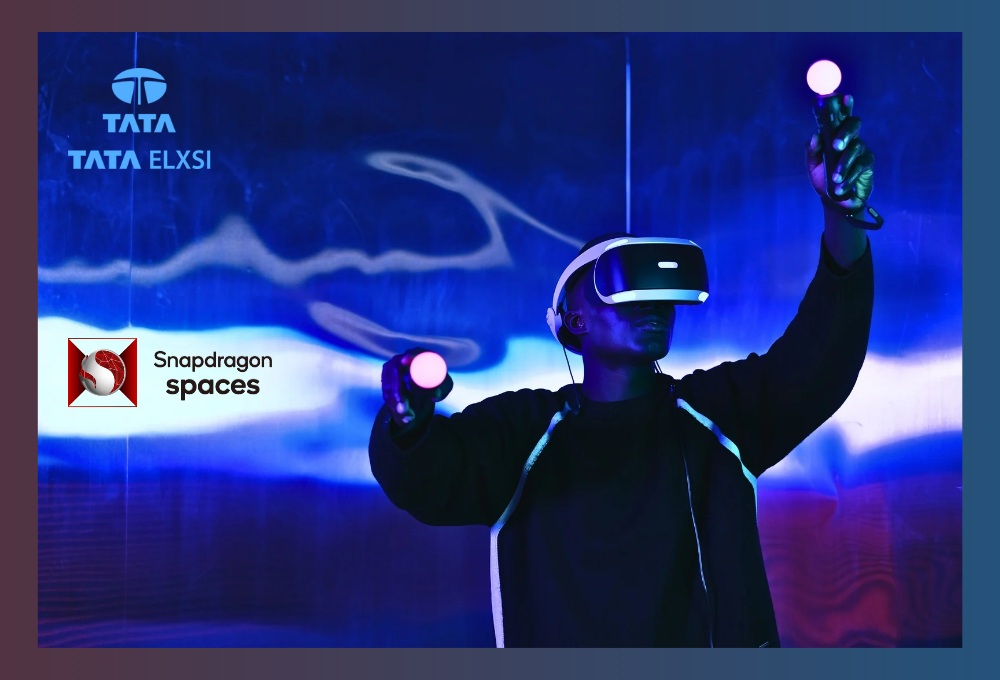
Tata Elxsi Launches XR Platform 'Coalesce' Powered by Qualcomm's Snapdragon Spaces XR Platform

Tata Elxsi Launches XR Platform 'Coalesce' Powered by Qualcomm's Snapdragon Spaces XR Platform

Tata Elxsi recently launched Coalesce, an innovative XR platform powered by the Snapdragon Spaces XR Platform from Qualcomm Technologies Inc.

An Immersive Collaboration, Coalesce facilitates immersive collaboration by bringing together spatial computing, digital twins, and simulations.

The Snapdragon Spaces XR Platform is an integrated platform and ecosystem developed by Qualcomm Technologies Inc. for creating immersive experiences on XR (Extended Reality) devices. The platform enables spatial computing experiences, allowing users to interact with digital content in a 3D space. It supports a wide range of XR devices, including VR (Virtual Reality), AR (Augmented Reality), and MR (Mixed Reality) headsets.

Coalesce, the newly launched platform, supports reviews of product models, allowing teams to interact with 3D models in a virtual environment. It includes features for sharing text, audio comments, notes, and screen recordings with globally dispersed teams.

Coalesce offers a 360-degree review for immersive interaction, enhancing the collaborative experience.The platform is device-agnostic and web-based, making it accessible across various XR devices.

This solution is designed to help businesses create transformative spatial computing experiences, making remote collaboration more efficient and engaging.

Aditya S Chikodi, Vice President & Head - Industrial Design, Engineering, & XR, said, “Product design and engineering are taking a leap forward with augmented virtual reality and spatial computing. Coalesce introduces a revolutionary approach to digital twins and performance simulation, pushing the boundaries of XR in the product development process.

Per Neilson, Senior Director, Product Management at Qualcomm Technologies, Inc., added, “Tata Elxsi is working to bring the Coalesce platform to market, empowering industries and executive workforce to collaborate and make real-time decisions in product design and enterprise simulated environments. We are excited to see this platform brought to Snapdragon Spaces.”

Infosys and The FT Unveil the ‘FT Money Machine’ for Apple Vision Pro Headset

Infosys and The FT Unveil the ‘FT Money Machine’ for Apple Vision Pro Headset
  • A digital twin of the landmark economic simulator ‘The Moniac’
  • The FT Money Machine leverages Apple Vision Pro to deliver an immersive and interactive experience making economics education more effective and accessible
Infosys and The Financial Times have launched the ‘FT Money Machine’, an immersive extended reality experience that revives the historic Monetary National Income Analogue Computer (MONIAC). This innovative project uses Apple Vision Pro to create an interactive and educational tool for learning about economics.

The FT Money Machine allows users to explore and manipulate economic scenarios using intuitive gestures like eye tracking, hand movements, and voice commands. This experience bridges the gap between historical analog computing and modern digital learning, making economics education more engaging and accessible.

It leverages the creative design and build expertise from WongDoody, Infosys’ human experience agency, where WongDoody helped ensure that the FT Money Machine app exceeds user expectations in a seamless blend of historical significance and cutting-edge technology.

Infosys and The Financial Times have taken economist Bill Phillips’ original invention, a hydraulic analog computer created in 1949 that used water to model and study economic systems, as the foundation for a unique Extended Reality (XR) project which revolutionizes how we learn about economics and ensures education at scale.
 
Hydraulic Analog Computer Created in 1949
Bill Phillips' Hydraulic Analog Computer Created in 1949


Emphasizing on 'learning by doing', the new XR app, accessible through Apple Vision Pro and available in the Apps Store, faithfully recreates the Moniac’s functionality while adding new, interactive features. This approach bridges the gap between historical analogue computing and modern digital learning, offering an unparalleled educational experience to the global student community.

Users of The FT Money Machine will not only experience the full operation of The Moniac but also can explore and create their own economic scenarios in free play mode. They will be able to interact with the machine using intuitive gestures such as eye tracking, hand movements, and voice commands, allowing them to adjust variables like consumption, taxation, and investment to see real-time impacts on the economy, as well as understand complex economic interactions, predict outcomes of various policy decisions, and enhance economic modelling techniques.

To try out the FT Money Machine, you'll need access to an Apple Vision Pro headset, as the experience is designed specifically for this device. Here are the steps you can follow:

1. Acquire an Apple Vision Pro: Ensure you have the Apple Vision Pro headset, which is required for the immersive experience.

2. Download the Experience: If available, download the FT Money Machine application or experience from the App Store or the respective website.

3. Set Up the Experience: Follow the instructions provided to set up the FT Money Machine on your Apple Vision Pro.

4. Engage with the Experience: Use the intuitive gestures like eye tracking, hand movements, and voice commands to explore and manipulate economic scenarios.

Keep an eye on any updates or announcements from Infosys and The Financial Times for more detailed instructions and availability.

Industrial Metaverse, A Game-Changing Tech Helping Companies Cut Cost and Reduce Carbon Footprint

Industrial Metaverse, A Game-Changing Tech Helping Companies Cut Cost and Reduce Carbon Footprint

The industrial metaverse refers to the application of metaverse technologies in industrial settings. It's a blend of the digital and physical worlds that accelerates efficiency through engineering, manufacturing, and field service. The vision for the industrial metaverse is to enable real-time collaboration, connectivity, and spatially-aware context within industrial environments.

It's a transformative catalyst for innovation, redefining how people and machines collaborate to design, build, operate, and optimize physical systems using immersive technologies in the cloud. This includes process optimizations, modeling, digital analysis, and AI-based predictions to improve sustainability and efficiency.

Companies are using the industrial metaverse to transform their operations with digital twins and virtual collaboration, adding predictability and resiliency to the supply chain. For example, Coca-Cola Hellenic Bottling Company and Mercedes-Benz are leveraging these technologies to empower their factory employees and drive process innovation through data insights.

The industrial metaverse is evolving and capturing the scope of every industry, including manufacturing, healthcare, retail, energy, and sustainability, enhancing visibility, flexibility, contingency planning, and risk management. It's a game-changer for operational technology, with digital twins being one of its key applications.

Reducing Carbon Emissions

The industrial metaverse can help in reducing carbon emissions in several ways, as following:

Remote Operations: By enabling remote monitoring and repair of facilities, the industrial metaverse reduces the need for emissions-intensive travel.

Efficiency in Manufacturing: It helps manufacturers prevent machine downtime, which cuts the emissions associated with building and operating backup machines¹.

Optimized Logistics: Transport companies can use the metaverse to model their networks more efficiently, keeping unnecessary trucks and planes from operating, thus reducing emissions¹.

System Modeling: Companies can map out their industrial systems in the metaverse to determine the most efficient ways to operate them, which can lead to significant energy savings and emission reductions¹.

These applications of the industrial metaverse contribute to sustainability by improving operational efficiency and productivity, which are closely linked to reducing environmental impact.

Companies Utilizing Industrial Metaverse

Here are some examples of how the Industrial Metaverse is being utilized:

1. Siemens: The German engineering firm is focusing on transport, infrastructure, and energy verticals within the metaverse. Siemens is leveraging digital twins for development, particularly in these industrial areas.

2. Ford: This leading automaker has been using the metaverse for R&D in vehicle design, safety testing, and manufacturing optimization. Ford employ virtual reality (VR) simulations to create virtual prototypes and conduct tests.

3. Coca-Cola Hellenic Bottling Company: The beverage company is transforming its operations with the industrial metaverse, utilizing digital twins and virtual collaboration to add predictability and resiliency to their supply chain.

These examples illustrate the diverse applications of the Industrial Metaverse across different sectors, enhancing efficiency, innovation, and collaboration.

Key Players

Some of the key players in the industrial metaverse space include:

Siemens AG: A leader in industrial automation and digitalization, Siemens is actively involved in the development of the industrial metaverse.

Microsoft Corporation: Known for its Azure cloud computing platform and mixed reality technologies like HoloLens.

NVIDIA Corporation: The semiconductor giant specializes in AI and graphics processing, contributing to the metaverse with its powerful GPUs and AI platforms.

PTC Inc: Provides software solutions that aid in the creation of digital twins and immersive virtual environments.

Bentley Systems, Inc: Offers comprehensive software solutions for advancing infrastructure, including digital twin technologies.

Dassault Systèmes SE: Known for its 3D design software, 3D digital mock-up, and product lifecycle management (PLM) solutions.

HTC Corporation: Develops virtual reality devices and platforms that can be used within the industrial metaverse.

Magic Leap, Inc: Focuses on proprietary wearable technology that enables users to interact with digital content in the real world.

These companies are at the forefront of integrating digital twin technology, AI, extended reality, and other advanced technologies to create the industrial metaverse.

How A Company Utilised Industrial Metaverse to Improve Its Operations

One example of a company using industrial metaverse technology to enhance their operations is Jakruv Heavy Equipment Inc.. They employed the industrial metaverse to address common challenges in their business. Here's how Jakruv did it:

Digital Twins: Jakruv created digital twins of their heavy machinery which allowed for real-time monitoring and simulation. This helped in predictive maintenance, reducing downtime and extending the life of their equipment.

Virtual Prototyping: Before building physical prototypes, Jakruv used the metaverse to test designs and functionalities in a virtual environment, saving time and resources.

Remote Collaboration: By leveraging AR and VR, engineers and technicians from different locations could collaborate in the metaverse, leading to improved problem-solving and innovation.

Training and Safety: The company developed virtual training programs for their employees, enhancing their skills in a safe and controlled environment.

These applications of the industrial metaverse enabled Jakruv to streamline their design processes, improve operational efficiency, and reduce costs while also fostering a culture of continuous learning and safety.

The Industrial Metaverse is considered a game-changing technology because it represents a significant evolution in how industries operate and innovate. It merges the physical and digital worlds, enabling businesses to create, test, and manage products and processes in a virtual environment before they are implemented in the real world. This approach can lead to increased efficiency, reduced costs, and improved safety.

The Industrial Metaverse is still emerging, but its potential impacts on business efficiency, innovation, and sustainability make it a technology that could revolutionize various industries.

Siemens and NVIDIA Deepens Collaboration for Industrial Metaverse

Siemens and NVIDIA Deepens Collaboration for Industrial Metaverse
  • New product connects Siemens Xcelerator with NVIDIA Omniverse Cloud APIs to build collaborative, real-time, physically based visualization driven by generative AI
  • At NVIDIA GTC, Siemens and NVIDIA will join with HD Hyundai to highlight how integrated visualization helps offer greater understanding and insights
Siemens has just announced that it will deepen its collaboration with NVIDIA to help build the industrial metaverse. The industrial metaverse is the concept of a digital world to mirror and simulate real machines and factories, buildings and cities, grids and transportation systems. By seamlessly integrating technologies like cloud and edge computing, industrial AI and digital twins, the industrial metaverse can optimize processes and drive sustainable practices, ultimately shaping the future beyond simulation.

Siemens is bringing immersive visualization powered by new NVIDIA Omniverse Cloud APIs to the Siemens Xcelerator platform, driving increased use of AI-driven digital twin technology. At the NVIDIA GTC, Siemens and NVIDIA demonstrated how generative AI can revolutionize the visualization of complex data, making photorealism possible, and showcased how sustainable shipbuilder HD Hyundai can use it to develop new products.

Siemens and NVIDIA Deepens Collaboration for Industrial Metaverse

“We will revolutionize how products and experiences are designed, manufactured and serviced. On the path to the industrial metaverse, this next generation of industrial software enables customers to experience products as they would in the real world: in context, in stunning realism and – in the future – interact with them through natural language input,” said Roland Busch, President and CEO of Siemens AG. “In collaboration with NVIDIA, we will bring accelerated computing, generative AI, and Omniverse integration across the Siemens Xcelerator portfolio.”

Omniverse and generative AI are driving massive transformation for industrial enterprises,” said Jensen Huang, founder and CEO of NVIDIA.Siemens is bringing NVIDIA platforms to their customers and opening new opportunities for industry leaders to build the next wave of AI-enabled digital twins at every scale.”

In the next phase of this collaboration, Siemens will release a new product later this year for Teamcenter® X, Siemens’ industry-leading cloud-based Product Lifecycle Management (PLM) software, part of the Siemens Xcelerator platform. Powered by NVIDIA Omniverse technologies, it will provide engineering teams with the ability to create an Ultra-intuitive, photorealistic, real-time, and physics-based digital twin that eliminates workflow waste and errors.

Setting up and adjusting details in photorealistic renderings – such as material definitions and lighting environments, along with other supporting scenery assets – will be accelerated dramatically using generative AI. Tasks that previously took days can be completed in hours, with engineering data contextualized as it would appear in the real world. In addition to engineering, other stakeholders – from sales and marketing teams to decision-makers and customers – will benefit from the deeper insight and understanding of real-world product appearance, enabling more informed and quicker decision-making.

In collaboration with NVIDIA, Siemens demonstrated the creation of real-time, photorealistic visualization for HD Hyundai, a market leader in sustainable ship manufacturing. HD Hyundai has been developing ammonia- and hydrogen-powered ships, a complex process requiring oversight of ships that can contain over seven million discrete parts. HD Hyundai can use the new product to unify and visualize these massive engineering datasets interactively.

“We have long trusted Siemens Teamcenter for product lifecycle management. Based on this trust and through this new collaboration, we will be able to visualize and interact with the digital twin of ships while utilizing generative AI to create objects and HDR backgrounds for better understanding of projects in context. This will be beneficial in many ways, as it will reduce errors, improve customer experience, and also save time and cost,” said Taejin Lee, Chief Information Officer & Chief Digital Officer, HD Hyundai.


Capgemini to Acquire Unity’s Digital Twin Professional Services Arm

Capgemini to Acquire Unity’s Digital Twin Professional Services Arm

Capgemini to Acquire Unity’s Digital Twin Professional Services Arm to Accelerate Enterprises’ Digital Transformation Through Real-time 3D Technology

Capgemini and Unity (NYSE: U), San Francisco, US-based platform for creating and growing real-time 3D (RT3D) content, have announced an expansion of their strategic alliance that will see Capgemini take on Unity’s Digital Twin Professional Services arm. Per the agreement, Unity’s Digital Twin Professional Services team will join and embed within Capgemini, forming one of the largest pools of Unity enterprise developers in the world. The transaction will accelerate the iteration and implementation of the market leading real-time 3D (RT3D) visualization software for the industrial application of digital twins. It will allow end users to envision, understand, and interact with physical systems – a key enabler for intelligent industry. The deal is expected to close in the second quarter of 2024.

Unity’s Digital Twin Professional Services team has worked with many companies over the past five years to develop real-time 3D solutions to drive business results. As more and more enterprises seek to combine the physical and digital worlds, clients are looking for the RT3D software capabilities coupled with business transformation, design, and engineering expertise to realize value from the industrial application of digital twins at scale. Today’s agreement will extend the reach and scale of Unity’s software through Capgemini, allowing more organizations to further push the boundaries of this technology through the acceleration, adoption, and application of RT3D to build and scale immersive experiences.

“Unity’s real-time 3D technology is the unequivocal industry standard for visualization across platforms and devices. As such, it is a key component that will impact the value-chain of intelligent products – from R&D to manufacturing, operations, and services,” comments William Rozé, CEO of Capgemini Engineering and Group Executive Board member. “This new agreement with Unity will allow Capgemini to embed 3D visualization software capabilities into our end-to-end business transformation services, to help clients realize the immediate and longer-term benefits of intelligent industry.”

“Unity has reached a point in its growth where the opportunity for us in the enterprise market has outpaced our ability to scale fast enough to meet client demand,” explains Jim Whitehurst, CEO, Unity. “With its scale and breadth of services – from design and engineering to business transformation and data expertise, Capgemini is well placed to unleash the full potential of Unity technology for enterprise clients across industries with specific use cases.”

As part of this agreement Capgemini plans to scale a range of sector-specific solutions that are currently in high demand. Particularly relevant for automotive, consumer products & retail, energy & utilities, aerospace & defense, healthcare & life sciences, and industrial products/manufacturing, tailored offerings are expected to include:
  • Simulation: A digital representation of an asset, facility or product that emulates its real-world counterpart through advanced modeling to provide real-time insights and simulate future scenarios.
  • Human Machine Interfaces: Interactive experiences for in-vehicle infotainment (IVI), meters (gauge clusters), and additional screens.
  • Immersive Training: Engaging training experiences in interactive 3D or augmented or virtual reality (AR and VR) to enable better knowledge transfer and safer workplaces.
About Capgemini

Capgemini is a global business and technology transformation partner, helping organizations to accelerate their dual transition to a digital and sustainable world, while creating tangible impact for enterprises and society. It is a responsible and diverse group of 340,000 team members in more than 50 countries. With its strong over 55-year heritage, Capgemini is trusted by its clients to unlock the value of technology to address the entire breadth of their business needs. It delivers end-to-end services and solutions leveraging strengths from strategy and design to engineering, all fueled by its market leading capabilities in AI, cloud and data, combined with its deep industry expertise and partner ecosystem. The Group reported 2023 global revenues of €22.5 billion.

About Unity

Unity is the world’s leading platform for creating and growing interactive, real-time 3D (“RT3D”) content and experiences. Our comprehensive set of software and AI solutions supports content creators of all sizes through the entire development lifecycle as they build, run, and grow immersive, real-time 2D and 3D content and experiences for mobile phones, tablets, PCs, consoles, and augmented and virtual reality devices. For more information, visit Unity.com.

Accenture Invests in Vū Technologies, the World's 1st Virtual Studio Network for Filmmaking

Accenture Invests in Vū Technologies, A Virtual Studio Network for Filmmaking

Accenture Invests in Vū Technologies to Help Companies Use Virtual Production to Create New, Immersive Experiences

Vū Technologies, a virtual production company and World's first & North America’s largest network of virtual studios, has received an undisclosed amount of investment from global professional services provider Accenture, through the company’s global investment and engagement program through Accenture Ventures.

Vū helps companies create immersive, engaging experiences through a combination of real-time computer-generated imagery and live-action filming.

Vū is the latest company to join Project Spotlights initiative of Accenture Ventures, an engagement and investment program focused on working with companies that create or apply disruptive enterprise technologies.


Vū helps companies visualize and transform creative production at pace and scale. Vū also uses a proprietary generative AI workflow tool called Vū.ai that augments pre-built virtual environments and designs workflows based on image and text prompting.

The client list of Vū include Amazon, CBS Sports and Disney, among others.

Vū’s immersive studio network and technology platform are well-positioned to help meet the needs of Accenture clients seeking innovative ways to create branded film and video content.

Companies using virtual production studios can save up to 40% in travel time and transportation costs, leading to a reduced carbon footprint. Virtual production can also offer greater control of the creative process, mitigating such disruptive factors as times of day, weather conditions, and difficult-to-access locations.

The virtual studio network recently launched – Vū One, an innovative all-in-one production studio solution that removes the complexity of virtual production. Fueled by cutting-edge Virtual Studio technology, Vū One is engineered to make virtual production accessible to all. It brings an entire ecosystem of creative tools and applications, including Vu.ai, the company’s own generative AI workflow tool that enhances pre-built virtual environments and creates workflows based on image and text prompting.

Massive potential exists for companies to combine virtual production and state of the art technologies to create shared, immersive experiences for customers, employees, and other key stakeholders,” said David Treat, co-lead of Accenture’s Metaverse Continuum business group. “With technologies such as digital twin environment simulation, volumetric video capture and motion control robotics, Vū’s end-to-end capabilities can help our clients create powerful new experiences that attract and engage audiences.”

Accenture’s investment in Vū represents a significant milestone in our journey to democratize creative content production,” said Tim Moore, CEO of Vū. “We are excited to work with Accenture and leverage their global reach to bring the benefits of virtual production and large format simulation to their clients and partners. By combining cutting-edge technology with immersive creative techniques, we aim to empower Accenture’s clients to create engaging experiences while optimizing production costs and reducing environmental impact. This collaboration reinforces Vū’s dedication to exploring new horizons of creativity and innovation in an ever-evolving, competitive landscape.”

IIT Kanpur Enters Into 6G Research Partnership with US-based InterDigital Inc

IIT Kanpur Enters Into 6G Research Partnership with US-based InterDigital Inc
  • 6G research partnership includes Extreme MIMO advancements for future wireless networks
  • These advancements are critical for enabling 6G networks to scale and meet increased bandwidth and coverage demands of advanced applications such as metaverse, holographic communications, and digital twins
  • InterDigital maintains a long heritage of technology innovation and collaboration and recognizes India’s leadership and significance in the global 6G wireless research and standards ecosystem
The Indian Institute of Technology, Kanpur (IITK) has announced a bilateral research partnership to develop 6G enabling technologies that impact future wireless standards with InterDigital, Inc. (Nasdaq: IDCC), a mobile and video technology research and development company. As part of the partnership, InterDigital will sponsor research and innovation at IIT-K in advancing Extreme MIMO (Multiple-Input, Multiple-Output) systems to achieve higher spectrum efficiency and larger network coverage required for 6G network deployments. These advancements are critical for enabling 6G networks to scale and meet increased bandwidth and coverage demands of advanced applications such as metaverse, holographic communications, and digital twins.

Prof. S Ganesh, Officiating Director, IIT Kanpur said, "The partnership comes at an opportune moment when India has released the Bharat 6G Vision Document and has laid the foundation to becoming a world leader in 6G technology and has launched the 6G R&D Test Bed. The academia has a major role to play both in terms of advanced research leading to 6G standardization as well as developing technology components of the 6G."

This partnership is aligned with the growing collaboration between India and the United States around 6G research and standardization and follows a joint statement between the two countries at the recently-concluded G20 summit. The statement highlights the importance of joint research and development in 6G technologies and also acknowledges IIT Kanpur as a key collaborator.

We are proud to formalize our partnership with IIT-K to explore and expand our expertise in the advanced technologies that will define our 6G future,” said Milind Kulkarni, VP and Head of Wireless Labs, InterDigital. “Collaboration adds fuel to our innovation and InterDigital’s commitment to collaborating with world-leading universities and institutions across India will positively impact our shared contributions to wireless standards bodies like 3GPP and TSDSI.”

InterDigital maintains a long heritage of technology innovation and collaboration and recognizes India’s leadership and significance in the global 6G wireless research and standards ecosystem. Most recently, India has displayed its influential contributions to global wireless evolution through the publication of the Bharat 6G Vision document, the launch of India’s 6G research and development test bed, and the visionary 6G standards being collaborated upon by Telecommunications Standards Development Society, India (TSDI) and other global standards organizations.

In addition to leading 6G road mapping efforts around the globe, InterDigital has a history of partnership in India spanning a decade, including collaborative research on cellular modem and IoT design centers. In 2021, InterDigital became a member of TSDSI to support the development of India’s wireless and video markets, the region’s upgrades to 5G and beyond, and migration to high-definition mobile video.

InterDigital® develops mobile and video technologies that are at the core of devices, networks, and services worldwide. We solve many of the industry’s most critical and complex technical challenges, inventing solutions for more efficient broadband networks, better video delivery, and richer multimedia experiences years ahead of market deployment. InterDigital has licenses and strategic relationships with many of the world’s leading technology companies. Founded in 1972, InterDigital is listed on Nasdaq.

InterDigital is a registered trademark of InterDigital, Inc

For more information, visit: www.interdigital.com.

Indian Institute of Technology (IIT) Kanpur was established on 2nd November 1959 by an Act of Parliament. The institute has a sprawling campus spread over 1055 acres with a large pool of academic and research resources spanning across 19 departments, 22 centres, and 3 Interdisciplinary programs in engineering, science, design, humanities, and management disciplines with more than 540 full-time faculty members and approximately 9000 students. In addition to formal undergraduate and postgraduate courses, the institute has been active in research and development in areas of value to both industry and government.

Digital Twin Market Expected to Generate Revenue of $284 Billon by the End of 2035, by Growing at CAGR of 44.2% Over 2023-35

Digital Twin Market Expected to Generate Revenue of $284 Billon by the End of 2035, by Growing at CAGR of 44.2% Over the Forecast Period, I.e., 2023-2035
Digital Twin Market to Receive Overwhelming Hike In Revenues By 2035

Research Nester has released a report titled “Digital Twin Market: Global Demand Analysis & Opportunity Outlook 2035” which also includes some of the prominent market analyzing parameters such as industry growth drivers, restraints, supply and demand risk, along with the impact of COVID-19 and a detailed discussion on the latest trends and future opportunities that are associated with the growth of the market.

The global digital twin market is expected to generate a revenue of USD 2,84,519.3 Million by the end of 2035, by growing at a CAGR of 44.2% over the forecast period, i.e., 2023-2035. The growth can primarily be attributed to the increase in adoption of digital twin in manufacturing industry. By 2022, at least one digital twin will be in use at more than two-thirds of the IoT-enabled businesses.

The global digital twin market is segmented by technology into augmented reality & virtual reality, IoT & IIoT, artificial intelligence & machine learning, big data analytics, and others. Out of which, the augmented reality & virtual reality segment is expected to generate the most revenue of USD 62,512.3 million by the end of 2031. Furthermore, the segment generated USD 1,437.1 Million in revenue in 2021.

The global digital twin market is geographically segmented into five key regions including North America, Europe, Asia Pacific, Latin America, and the Middle East & Africa. The market in Asia Pacific is anticipated to generate the highest revenue among these regions, at USD 88,485.5 Million. Additionally, in 2021, the market in Asia Pacific generated a revenue of USD 1768.6 Million.

The research is global in nature and covers detailed analysis on the market in North America (U.S., Canada), Europe (U.K., Germany, France, Italy, Spain, Hungary, Belgium, Netherlands & Luxembourg, NORDIC [Finland, Sweden, Norway, Denmark], Poland, Turkey, Russia, Rest of Europe), Latin America (Brazil, Mexico, Argentina, Rest of Latin America), Asia-Pacific (China, India, Japan, South Korea, Indonesia, Singapore, Malaysia, Australia, New Zealand, Rest of Asia-Pacific), Middle East and Africa (Israel, GCC [Saudi Arabia, UAE, Bahrain, Kuwait, Qatar, Oman], North Africa, South Africa, Rest of Middle East and Africa).

In addition, analysis comprising market size, Y-O-Y growth & opportunity analysis, market players’ competitive study, investment opportunities, demand for future outlook etc. has also been covered and displayed in the research report.

Moreover, concerns about cyber security, high costs, and the need for significant investment are expected to be major restraints on the growth of the global digital twin market over the forecast period.

This report also provides the existing competitive scenario of some of the key players of the global digital twin market, which includes company profiling of Accenture plc, IBM Corporation, Atos SE, General Electric, Microsoft Corporation, DXC Technology Company, Infosys Limited, SAP SE, SAS Institute Inc., Gemini Digital Technologies, Tata Consultancy Services Limited, ANSYS Inc., Toshiba Digital Solutions Corporation, Matterport, Inc., Oracle Corporation, Honeywell International Inc., and Dassault Systemes S.A.

The profiling enfolds key information of the companies which comprises of business overview, products and services, key financials and recent news and developments. Conclusively, the report titled “Global Digital Twin Market: Global Demand Analysis & Opportunity Outlook 2035”, analyses the overall global digital twin market to help new entrants to understand the details of the market. In addition to that, this report also guides existing players looking for expansion and major investors looking for investment in the global digital twin market in the near future.

Source: https://www.researchnester.com/reports/digital-twin-market/4226

MG’s Metaverse Platform ‘MGverse’ Goes Live with Auto Expo 2023’s Digital Twin

MG’s Metaverse Platform ‘MGverse’ Goes Live with Auto Expo 2023’s Digital Twin
  • MG’s Auto Expo Pavilion is virtually available on the MGverse for visitors at:https://mgverse.metadome.ai/metadome-metaverse-web/links/main/3348/index.html
  • A social, interactive digital twin of the MG Pavilion – first of its kind – is a living world built from the architectural files of the site and enriched with content and experiences
  • Comes with a fully Integrated Explorer & Creator Zone with car booking, Avatar Shop, and MG Arena with all the products available
  • 3D and photorealistic technology enabled in partnership with Metadome.ai for real effects
Committed to consistent innovation for new-age buyers, MG Motor India today announced that its MGverse, future-ready Metaverse Platform, was now live. From today, anyone can experience the magic of the MG Pavilion at the Auto Expo 2023 with friends and family from anywhere. MG has teamed up with Metadome to offer an enriching digital experience for remote visitors. MGverse sets a new standard for accessibility and inclusivity and expands the brands vision of ‘Enabling Exciting Experiences Every time’ into the virtual world of Metaverse. This 3D, virtual reality-based immersive can be experienced at Auto Expo virtually which goes live on Jan 11, 2023, the opening day of the Auto Expo.

The MGverse has been launched with an integrated ‘Explore & Creator’s center, a virtual experience zone with extended customer experience touchpoints, the MG Arena including an Avatar Shop, as well as other options, which enable customers and visitors to personalize, accessorize, build, and even buy their favourite MG vehicle in the Metaverse itself.
 
MG’s Metaverse Platform ‘MGverse’ Goes Live with Auto Expo 2023’s Digital Twin

Commenting on the occasion of the MGverse going live, Gaurav Gupta, Chief Commercial Officer, MG Motor India, said, “With the automotive buying journey moving online and new-age customers demanding digital products and brand experiences more than ever, MGverse, the first of its kind is creating a new era of immersive customer experiences. It is indeed a matter of pride, as we have made it possible through technology, the advantages of even greater human interactivity.”

MG Motor is one of the leading innovators in the automotive space, and their appetite for immersive technology is an exciting proposition for Metadome.ai. We look forward to a successful collaboration in empowering the brand’s ecosystem of immersive customer experiences with our proprietary 3D & XR platform for the automotive industry,” said Kanav Singla, Founder & CEO, Metadome.ai.

Customers can visit the MGverse to get a fully immersive, real-time experience of the Auto Expo 2023. People who log on to the platform will be able to not only take a virtual tour of the expo, which is mirrored here, but also be present, virtually, at the expo's MG Pavilion.

Customers can virtually view their realistic Avatar by entering MG's expo pavilion and experiencing interactive engagement features while conversing with other Avatars. Customers visiting the Auto Expo virtually in MGverse can also get themselves clicked at the MGverse booth and take a selfie.

The MGverse was announced earlier as a platform that would combine multiple virtual spaces into a single continuum to allow MG's stakeholders to work, play, engage, collaborate, co-create, socialise, and shop. The MGverse is intended to eventually provide five different experience zones, namely the Explore & Creator's Center, NFT Gallery, MG Car Club, Gaming Arena, and MG Knowledge Center. The Explore & Creator's Centre has already been launched as part of the MGverse, with the remaining zones expected to follow soon.

About MG Motor India

Founded in the UK in 1924, Morris Garages vehicles were world-famous for their sports cars, roadsters, and cabriolet series. MG vehicles were much sought after by many celebrities, including the British Prime Ministers and even the British Royal Family, for their styling, elegance, and spirited performance. The MG Car Club, set up in 1930 at Abingdon in the UK, has thousands of loyal fans, making it one of the world’s largest clubs for a car brand. MG has evolved into a modern, futuristic, and innovative brand over the last 98 years. MG Motor India’s state-of-the-art manufacturing facility in Halol, Gujarat, has an annual production capacity of 1,25,000 vehicles and employs nearly 2,500 workers. Driven by its vision of CASE (Connected, Autonomous, Shared, and Electric) mobility, the cutting-edge automaker has augmented across-the-board ‘experiences’ within the automobile segment today. It has introduced several ‘firsts’ in India, including India’s first Internet SUV – MG Hector, India’s first Pure Electric Internet SUV – MG ZS EV, India’s first Autonomous (Level 1) Premium SUV – MG Gloster and MG Astor- India’s first SUV with personal AI assistant and Autonomous (Level 2) technology.

About Metadome.ai

Metadome.ai is an immersive 3D & XR technology company that enables cloud-based photorealistic & captivating customer experiences.

The company’s technology adapts to a spectrum of use cases entailing automotive, home décor, fashion, cosmetics & accessories. Their flagship platform for the automotive industry – Autodome, enables unprecedented photorealistic, cloud-based immersive 3D & XR applications with omnichannel deployment across both in-store and digital and over a multitude of devices. These applications cover the entire pre-retail funnel, empowering brands to launch their products virtually and drive awareness, engagement, and bookings among modern automotive consumers.

With Autodome, the company has achieved stunning graphics quality & photorealism in 3D, cloud-based streaming that enables consistent experiences on the web, and a flexible project pipeline that gives control to the automaker in deciding their cloud service, how they want to develop the 3D content, animations, and the interface design. The platform is compatible with all file formats and is created to ensure maximum utilization of existing content on the client’s end while giving the expert services in creating it ourselves if the need be.


Gamification of Education: Digital Twin Technology Is Set to Turn Over New Leaf in Learning

Gamification of Education: Digital Twin Technology Is Set to Turn Over New Leaf in Learning

The article is authored by Dr. Nachiket Bhatia, CEO, Dr. Bhatia Medical Coaching Institute & E-Gurukul

Gamification of Education

Elements of games added to conventional learning to make it more engaging is the gamification of education. These elements could be point systems, challenges, social connections, player control, goals, rewards, feedback, etc. They are applied while teaching to increase student engagement.

Gamification of education allows for “fun while you learn”. The way players interact in virtual gaming is one of the key motivations for the education industry to implement gamification in education. Games trigger emotions and engage us better. Such learning relieves the pressure on learners and simultaneously encourages them to participate.

Games are also effective because they are competitive and competition gives rise to mental toughness, better collaboration, and enhanced social and emotional learning. Efficiency is gained through such learning because the learner is in charge of their own learning journey.

Digital twin technology

A digital twin is a ‘virtual clone’ of any real-world object. It makes real-time judgments using real-time data, simulations, algorithms, and machine learning. Students can walk through the universe from the ease of their schools or homes. The use of this technology can help in better understanding of Model building, surgical training, and other practical instructions. Whereas real-world simulations can replace chemical labs and hands-on dissection labs.

The use of digital twin technology in education will allow students to participate, compete and learn in a simulation environment. Also, combining and visualising data using digital twin technologies will improve decision-making, give rise to immersive learning experiences and enable effective planning as well as action. Its use will also allow us to correct any shortcomings of a decision before making it a reality.

How will gamification of education using digital twin technology benefit learners?

Having disrupted learning all over the world, the pandemic has led us to not only rethink how education could be improved in isolation but also how we can foster immersive learning experiences. Virtual reality has answers to it.

Self-learning apps are already using gamification to engage the learners. But, a nascent idea of gamifying digital twins is gaining momentum. Digital twin technology is one of the growing technologies related to industry 4.0. It paves way for experiential learning by combining game elements, data and technology and is especially relevant to higher engineering, manufacturing and medical education.

Today, the use of simulations is common in education. But now, more and more simulations are being upgraded from static scenarios to real-world scenarios. Simulators alone aren’t as effective as they are with the use of gamification techniques because gamification engages the learners for a longer time and motivates them to get more involved. Therefore, gamification approaches such as the liberty to make mistakes, practice, repeat and collect awards are also getting integrated into simulations.

Universities like Stanford and Copenhagen school have already adopted this technology in higher education. Researchers suggest virtual game-based learning encourages immersive learning, cognitive development, creativity and better decision making. Even NASA used digital twin technology to explore the unexplored in space. Similarly, a platform named digital twin studios designs safety training video games using digital twin technology for the workers in the Oil and Gas industry.

The use of digital twin technology has recently also aroused the interest of healthcare practitioners as a possible solution to overcome healthcare limitations and expand the possible treatment options. Researchers at the University of Miami Miller School of Medicine, for example, are working on a project to create a "digital twin" of an individual using data collected from in-home and on-body sensors. Its development will enable future health care practitioners to employ artificial intelligence for evaluating various treatments and their potential outcomes on a patient's digital twin before executing them in the physical world.

The digital twin reform in healthcare is still underway but soon, it is likely to revolutionize the ways of treating and diagnosing the patients. It has high potential in higher education as well. Medical students will be able to use digital twins of animal and human dead bodies to perform dissections and analyses. Concepts of virtual organs, genomes, anatomy and medical procedures can also be well understood with its use.

According to research, games can help to develop complex cognitive skills and metacognitive skills for deep learning. Simulators assist students to relate theoretical topics to real-world events and improve analytical abilities by allowing them to compare different points of view, build arguments, reflect, and evaluate circumstances. Their combined use in education can become a powerful learning tool.

Conclusion

Gamification of digital twins for an enhanced learning experience will allow the learners to take lead in experiential learning. However, this concept has a lot of scope that is yet to be explored. It is a viable option because it is sustainable and effective. Large-scale application is important to turning digital twins' potential into genuine impact. It aims to reform the understanding of complex systems and subjects that need practical learning. Technology is all into our lives. We have adopted technology to make our lives easy. There are challenges to this but with its help, the students will be better prepared for real-life situations in near future.

What Is Digital Twin Technology- And Why It Matters Most Now

Sometimes all one needs is a second chance at success. The same thing happened with the digital twin technology. Though the technology came into our lives about 15 years ago in the year 2002, it's only recently that it has started gaining traction. This sudden burst of interest in the technology is courtesy another technology, Internet of Things. It is the IoT that has provided digital twin technology a new lease of life by making it cost-effective to implement.

The technology has now become such an imperative part of the business world that it had found a place in the top 10 Strategic Technology Trends for the year 2017 which were announced by Gartner’s Vice President and a Gartner fellow himself David Cearley at the Gartner Symposium/ITxpo held in Orlando, Florida last year.

What Is A Digital Twin?


Simply put, a digital twin can be best described as a virtual model of a product, service or a process. This innovative paring of the physical and virtual worlds together opens doors for monitoring of systems and analysis of data that help in warding off glitches/problems even before they occur. This further results in preventing downtime, development of new opportunities and even plan for the future ahead by making use of simulations.

The technology has become imperative to the business industry as it is an efficient way of working that involves a cloud-based virtual image of an asset maintained throughout its lifecycle and easily accessible at any time of the day. It also allows all experts to come together under one platform and work cost-effectively, reduce errors and improve efficiency. All this ultimately results in a more safe, profitable and sustainable operation environment.

How Does A Digital Twin Work?


From the definition above, we can come to the conclusion that a digital twin is a bridge between the digital and physical world, the two worlds known to the humankind.

The first step involves smart components that make use of sensors to gather data about real-time status, working condition, or position being integrated with a physical item. The components are then connected to a cloud-based system that has the responsibility of receiving and processing all the data that the sensors monitor. This input is then analysed against business and other contextual data.

The virtual environment can prove to be a great space to test existing learnings and uncover new ones, which can then be applied to the physical world and ultimately lead to transforming businesses.

NASA-The Pioneer of Digital Twin


It was NASA which first tried it hands at pairing technology, which is the precursor to today’s digital twin. This was during the early days of space exploration.

During those days, NASA’s research department faced a huge challenge in how they would operate, maintain, or repair systems when they will not be in physical proximity to them. This is when the digital twin technology came to their rescue. In fact, during the unfortunate Apollo 13 in incident, it was the innovation of mirrored systems still on earth that gave engineers and astronauts a chance to determine how they could bail the mission out of the problem.

NASA is now using the digital twins technology to develop new recommendations, roadmaps, and next-generation aircraft and vehicles.

According to a statement given by John Vickers, NASA’s leading manufacturing expert and manager of NASA’s National Center for Advanced Manufacturing, the ultimate vision that they have for the digital twin is to create, test and build our equipment in a virtual environment. “Only when we get it to where it performs to our requirements do we physically manufacture it. We then want that physical build to tie back to its digital twin through sensors so that the digital twin contains all the information that we could have by inspecting the physical build," he said.

Why is Digital Twin Important?


Today, machine intelligence and connectivity to the cloud presents mankind with an unprecedented potential for large-scale implementation of digital twin technology across a number of companies in a variety of industries.

The Digital twins are being helmed as a powerful masterminds that will drive innovation and performance in the world. According to IDC, by the year 2018, companies investing in the digital twin technology will witness almost 30 per cent improvement in cycle times of their critical processes.

In the next 5 years, mankind will see billions of things being represented by digital twins. The technology will give birth to a sea of new collaboration opportunities among the physical world data scientists and product experts whose duty is to make out what data is telling us about operations.

The digital twin technology helps the companies in understanding customer needs, developing enhancements to their existing products, operations and, services, and thus significantly improve customer experience. It can even extend a helping hand in driving the innovation of new business.

So, one can conclude that we are currently on the brink of a digital twin technology explosion and the companies who don't catch on the trend soon, will be left behind.

[Top Image: imeche.org]

What Is Digital Twin Technology and Why It Matters Most Now

What Is Digital Twin Technology and Why It Matters Most Now

Sometimes all one needs is a second chance at success. The same thing happened with the digital twin technology. Though the technology came into our lives about 15 years ago in the year 2002, it's only recently that it has started gaining traction. This sudden burst of interest in the technology is courtesy another technology, Internet of Things. It is the IoT that has provided digital twin technology a new lease of life by making it cost-effective to implement.

The technology has now become such an imperative part of the business world that it had found a place in the top 10 Strategic Technology Trends for the year 2017 which were announced by Gartner’s Vice President and a Gartner fellow himself David Cearley at the Gartner Symposium/ITxpo held in Orlando, Florida last year.

What Is A Digital Twin?

Simply put, a digital twin can be best described as a virtual model of a product, service or a process. This innovative paring of the physical and virtual worlds together opens doors for monitoring of systems and analysis of data that help in warding off glitches/problems even before they occur. This further results in preventing downtime, development of new opportunities and even plan for the future ahead by making use of simulations.

The technology has become imperative to the business industry as it is an efficient way of working that involves a cloud-based virtual image of an asset maintained throughout its lifecycle and easily accessible at any time of the day. It also allows all experts to come together under one platform and work cost-effectively, reduce errors and improve efficiency. All this ultimately results in a more safe, profitable and sustainable operation environment.

How Does A Digital Twin Work?

From the definition above, we can come to the conclusion that a digital twin is a bridge between the digital and physical world, the two worlds known to the humankind.

The first step involves smart components that make use of sensors to gather data about real-time status, working condition, or position being integrated with a physical item. The components are then connected to a cloud-based system that has the responsibility of receiving and processing all the data that the sensors monitor. This input is then analysed against business and other contextual data.

The virtual environment can prove to be a great space to test existing learnings and uncover new ones, which can then be applied to the physical world and ultimately lead to transforming businesses.

NASA-The Pioneer of Digital Twin

It was NASA which first tried it hands at pairing technology, which is the precursor to today’s digital twin. This was during the early days of space exploration.

During those days, NASA’s research department faced a huge challenge in how they would operate, maintain, or repair systems when they will not be in physical proximity to them. This is when the digital twin technology came to their rescue. In fact, during the unfortunate Apollo 13 in incident, it was the innovation of mirrored systems still on earth that gave engineers and astronauts a chance to determine how they could bail the mission out of the problem.

NASA is now using the digital twins technology to develop new recommendations, roadmaps, and next-generation aircraft and vehicles.

According to a statement given by John Vickers, NASA’s leading manufacturing expert and manager of NASA’s National Center for Advanced Manufacturing, the ultimate vision that they have for the digital twin is to create, test and build our equipment in a virtual environment. “Only when we get it to where it performs to our requirements do we physically manufacture it. We then want that physical build to tie back to its digital twin through sensors so that the digital twin contains all the information that we could have by inspecting the physical build," he said.

Why is Digital Twin Important?

Today, machine intelligence and connectivity to the cloud presents mankind with an unprecedented potential for large-scale implementation of digital twin technology across a number of companies in a variety of industries.

The Digital twins are being helmed as a powerful masterminds that will drive innovation and performance in the world. According to IDC, by the year 2018, companies investing in the digital twin technology will witness almost 30 per cent improvement in cycle times of their critical processes.

In the next 5 years, mankind will see billions of things being represented by digital twins. The technology will give birth to a sea of new collaboration opportunities among the physical world data scientists and product experts whose duty is to make out what data is telling us about operations.

The digital twin technology helps the companies in understanding customer needs, developing enhancements to their existing products, operations and, services, and thus significantly improve customer experience. It can even extend a helping hand in driving the innovation of new business.

So, one can conclude that we are currently on the brink of a digital twin technology explosion and the companies who don't catch on the trend soon, will be left behind.

[Top Image: imeche.org]

Market Reports

Market Report & Surveys
IndianWeb2.com © all rights reserved