‏إظهار الرسائل ذات التسميات Apple Siri. إظهار كافة الرسائل

How Apple's Siri is Different from ChatGPT ?

How Apple's Siri is Different from ChatGPT ?

Apple's Siri and OpenAI's ChatGPT are both AI-driven technologies, but they serve different purposes and have distinct capabilities. While Siri is a task-oriented assistant for Apple users, ChatGPT is a conversational/Generative Al that can generate text and engage in dialogue, making them suited for different types of interactions.

Below are more specific differences between these two –

Purpose and Function: Siri is designed as a virtual assistant to help with tasks on Apple devices, like setting alarms or sending messages. ChatGPT, on the other hand, is a conversational AI focused on generating human-like text and engaging in dialogue.

Real-Time Information: Siri can provide real-time updates and information, such as weather forecasts or news, because it's connected to the internet and its database is regularly updated. ChatGPT's knowledge is static, cut off at September 2021, so it cannot provide real-time updates or information about events occurring after that date.

Conversational Abilities: ChatGPT excels in holding detailed and nuanced conversations, understanding context, and generating responses based on a vast amount of data it has been trained on. Siri's interactions are more transactional, focusing on quick responses to commands and questions.

Integration and Accessibility: Siri is integrated into Apple's ecosystem, allowing for seamless interaction with various Apple services and devices. ChatGPT is platform-independent and can be accessed through different interfaces and integrated into various applications.

Voice Activation: Siri can be activated by voice and is optimized for hands-free use, while ChatGPT typically requires typing to interact with.

Data Handling: Siri operates with a set database of responses and actions that Apple has programmed into it. If a query falls outside of this database, Siri may struggle to provide a relevant answer. ChatGPT generates responses based on patterns in the vast amounts of data it was trained on, allowing for more flexible and varied responses

These differences highlight how Siri and ChatGPT are tailored to their specific roles as a virtual assistant and a conversational AI, respectively.

Here's a fictional example of how a conversation between Siri and ChatGPT might go:

Siri: Hello, ChatGPT! How can I assist you today?

ChatGPT: Hi Siri! I'm just here to chat. What can you tell me about the weather today?

Siri: I can check the weather for you. Where are you located?

ChatGPT: Oh, I don't have a location, but let's say New York City.

Siri: The weather in New York City today is sunny with a high of 75 degrees Fahrenheit. Would you like to know more?

ChatGPT: That's interesting! Can you set a reminder for me to check the weather again tomorrow?

Siri: I can set reminders for users on their devices. Shall I set one for you?

ChatGPT: I appreciate the offer, but I don't have a device to set reminders on. Instead, can you tell me a joke?

Siri: Sure! Why did the music teacher go to jail? Because she broke every treble law.

This playful exchange highlights Siri's capabilities as a virtual assistant and ChatGPT's conversational nature.

Apple Researchers Reveal New AI Model 'ReALM' Claiming That It Outperforms GPT-4


It appears that Apple has made significant strides in AI with their new model named ReALM. According to recent reports, ReALM is designed to be smaller and faster than GPT-4, particularly when parsing contextual data. This could make interactions with Siri more efficient, as ReALM is capable of converting context into text for easier processing by large language models.

In a new research paper published on 29th of March, Apple researchers explain how the new Al system, called ReALM (Reference Resolution As Language Modeling), can look at what's on your screen and what you're doing to figure out what you need which means that Siri could understand the context of your questions much better than before, like knowing what's on your screen or what music is playing.

On top of that, Apple researchers claim that the larger models of ReALM outperform GPT-4. If the claims come true, Siri could become much more helpful than ever. The report notes that Apple's ReALM language model purportedly surpasses GPT-4 in "reference resolution," understanding contextual references like onscreen elements, conversational topics, and background entities.

Apple's research suggests that even the smallest ReALM models perform comparably to GPT-4 with fewer parameters, making it well-suited for on-device use. With increased parameters, ReALM substantially outperforms GPT-4. 

Summary of the key findings from Apple's ReALM research paper:

Efficiency: ReALM is designed to be smaller and faster than large language models like GPT-4, making it well-suited for on-device use.

Reference Resolution: The model excels in reference resolution, which is the ability to understand context and ambiguous references within text. This is crucial for interpreting user commands in a more natural way.

Performance: Even the smallest ReALM models performed similarly to GPT-4 with much fewer parameters. When the number of parameters was increased, ReALM substantially outperformed GPT-4.

Image Parsing: Unlike GPT-4, which relies on image parsing to understand on-screen information, ReALM converts images into text, bypassing the need for advanced image recognition parameters. This contributes to its smaller size and efficiency.

Decoding Constraints: ReALM includes the ability to constrain decoding or use simple post-processing to avoid issues like hallucination, enhancing its reliability. 

Practical Applications: The paper illustrates practical applications of ReALM, such as enabling Siri to parse commands like "call the business" by understanding the context, like a phone number displayed on the screen.

Apple's research indicates that ReALM could significantly improve the speed and accuracy of Siri, making interactions with the voice assistant more intuitive and efficient. The company is expected to reveal more about its AI strategy during WWDC 2024.
 
This development is quite exciting as it indicates progress towards more responsive and intuitive AI systems that can better understand and process user commands. It's also a step forward in the integration of AI in everyday devices, potentially enhancing user experience significantly. Apple plans to unveil more about its AI initiatives in June, which could include further applications of ReALM.

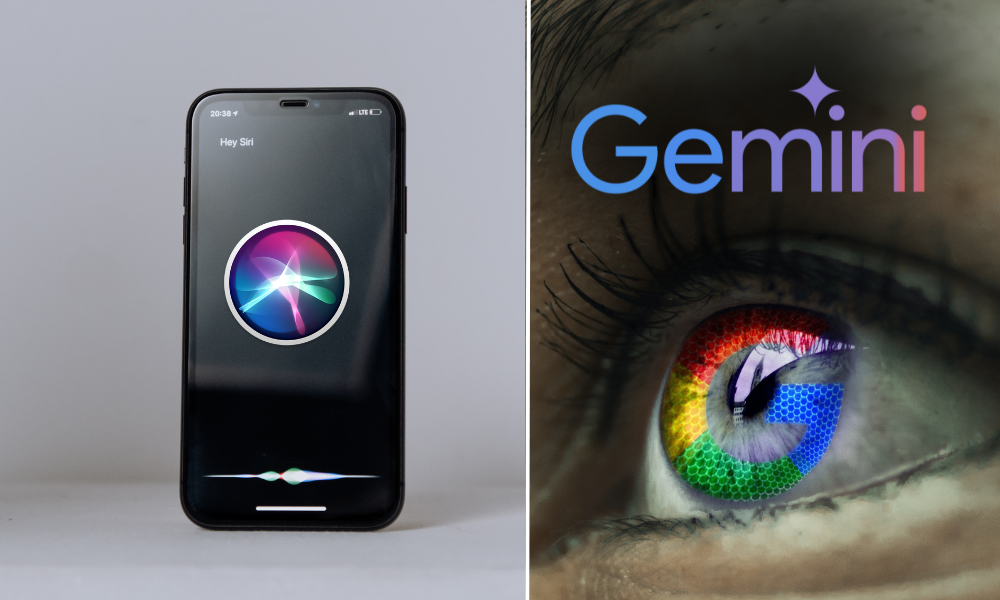
How Google Gemini is Different from Apple Siri

How Google Gemini is Different from Apple Siri

Google Gemini and Apple Siri are both AI technologies, but they have different features and capabilities:

Integration: Siri is deeply integrated into the Apple ecosystem, designed to work seamlessly across all Apple devices. Google Gemini, while it can be accessed on iPhones through the Google app, is not as tightly integrated into the iOS system.

Technology: Google Gemini is part of Google's suite of generative AI models, which have been evolving from its original Bard technology. It's reported that Apple is considering licensing Google Gemini AI to improve Siri's capabilities in the upcoming iOS 18.

Capabilities: Siri functions as a virtual assistant that can perform tasks like setting reminders, sending messages, and providing real-time information. Gemini, on the other hand, is a generative AI that can engage in more complex conversations and potentially offer more advanced AI-enabled features.

Development: There are reports suggesting that Apple has struggled to develop its own AI to match the capabilities of ChatGPT and Gemini, which may lead to a partnership where Google Gemini powers some of Siri's features in the future.

Controversies and Limitations: Google Gemini has faced issues, such as the inability to create images of people and limitations on answering questions related to controversial topics. These challenges are part of the ongoing development and refinement of AI technologies.

These differences indicate that while Siri and Gemini serve similar purposes as AI assistants, they are distinct in their integration, technological foundation, and potential capabilities.

Market Reports

Market Report & Surveys
IndianWeb2.com © all rights reserved