Showing posts with label Agribusiness. Show all posts

Compass Group India and Global Food Partners Drive Cage‑Free Egg Production and Farmer Training

Compass Group India and Global Food Partners Drive Cage‑Free Egg Production and Farmer Training

Global Food Partners (GFP), a global consultancy helping food businesses achieve higher animal welfare standards in their supply chains, today announced it has supported Compass Group India, a leader in food services, to drive cage-free egg production and support local farmers in India.

According to the Release of Basic Animal Husbandry Statistics 2025 (2024–25) published by the Ministry of Fisheries, Animal Husbandry & Dairying, Government of India, the country is the world’s second-largest producer of eggs, with total production estimated at 149.11 billion eggs in 2024–25, reflecting steady year-on-year growth. However, an Ernst & Young report titled Transitioning to Cage-Free: A Roadmap for Corporates in the Egg Supply Chain highlights that a significant share of this production still relies on conventional battery cage systems, underscoring both the urgency and the opportunity to transition towards higher-welfare egg production practices.

Due to limited cage-free supplies and regional market gaps, Compass Group India is using cage-free credits to offset a portion of its caged egg purchases. GFP administers the Impact Incentives programme; cage-free credits enable food businesses to directly support egg farmers making a sustainable transition to cage-free production—while helping to build and secure future supply.

Compass Group has initially purchased around 4,000 cage-free credits in India, with each credit offsetting the purchase of 1,000 caged eggs—a total of four million eggs. The funds for this credit purchase go directly to three farms in India—U and V Agro, Hensway India, and Happy Hens Farm—to expand their cage-free capacities and invest in their logistics networks.

Via Compass Group Foundation, Compass Group India and other partners have also launched a new cage-free and free-range training centre with GFP as technical partner. The training centre, located outside of Bangalore, will support local farmers in their transitions to cage-free systems, teach best practices in egg production and management, and help farmers achieve long-term sustainability and profitability in their industry.

Compass Group India has shown enormous leadership and innovation in not only their own cage-free commitments, but also in driving substantial, foundational change in how eggs are produced and supplied throughout India,” said GFP CEO Elissa Lane.Their commitment to responsible sourcing extends to the new training centre that meaningfully supports farmers and strengthens the nation’s food system.”

Compass Group has published a complete Animal Welfare Progress Report for 2026 with more details.

Other industry giants that have adopted Impact Incentives as part of their cage-free strategy include Kellanova, Best Western Hotels, Lagardère Travel Retail, and PizzaExpress. By sourcing cage-free eggs whenever possible, and using cage-free credits to address any supply-chain shortfalls, companies can report 100 percent compliance with cage-free mandates. GFP currently focuses on egg production throughout Asia, and has capabilities in Europe, North America, the Middle East, and Latin America.

About Compass Group India

Compass Group India is a subsidiary of Compass Group PLC, the world’s leading provider of contract food and support services. Compass Group India has been serving the Indian Workplace, Education and Healthcare market needs since 2008 through corporate cafeterias, global capability centres (GCCs), manufacturing-led demand, and technology-led services. Its sector-focused businesses give its clients access to unrivalled experience, global best practices, and market-leading innovations.

About Global Food Partners

Global Food Partners (GFP) is a Singapore-based consulting company dedicated to helping food and hospitality businesses achieve cage-free sourcing, and egg producers to implement and optimise cage-free production practices. GFP operates across Asia, including in China, Vietnam, Indonesia, Japan, Philippines, Singapore, Thailand, Malaysia, and India.

BL Agro To Set Up World-Class Agro-Processing Plant in Bareilly; Plans to Invest ₹1,660 crores

BL Agro To Set Up World-Class Agro-Processing Plant in Bareilly; Plans to Invest ₹1,660 crores
  • A large-scale Green Field integrated agro-processing project- fully automated rice milling unit, edible oil extraction and refining plant will be set-up in Bareilly, UP.
  • The project will create 3,500 direct and indirect employment opportunities.
  • The company signs MoU with Ministry of Food Processing Industries (MoFPI).
BL Agro, India’s leading FMCG player inked a Memorandum of Understanding (MoU) with the Ministry of Food Processing Industries (MoFPI), Government of India, which is a strategic and investment B2G partnership to build an export-oriented integrated agro-processing hub, advancing India’s food security and global trade leadership.

The MOU was signed between Mr Ashish Khandelwal, Managing Director, BL Agro Group and Hon'ble Shri Preet Pal Singh, Joint Secretary, Ministry of Food Processing Industries, Government of India, in the presence of Shri A.P. Das Joshi, Secretary and Shri Shyam Singh Negi, Senior Economic Advisor, Ministry of Food Processing Industries (MOFPI), GoI.

As a part of this MOU, BL Agro will be investing Rs. 1,660 crore (USD 200 Mn) over the next 5 years in establishing a large-scale green field integrated agro-processing project in Bareilly, Uttar Pradesh. This would include setting up of a fully automated rice milling unit for premium basmati rice varieties, a 500 TPD edible oil extraction and refining plant under the renowned Bail Kolhu and Nourish brands, advanced packaging lines, sugar storage and sourcing solutions, and 40,000 MT grain storage capacity to support food security and exports.

Construction will begin in 6 months with Phase I completion targeted for 2027. The unit would be generating over 3,500 direct and indirect employment opportunities, significantly boosting rural livelihoods and driving inclusive economic growth.

Speaking on the occasion, Ashish Khandelwal, Managing Director, BL Agro Industries Ltd, said, "This collaboration with MoFPI reflects BL Agro’s commitment to building world-class agro-processing infrastructure in India. The partnership between BL Agro and MoFPI is designed to enhance food security, increase exports and also create sustainable value chains for farmers and rural communities. We would be integrating circular economy practices into our operations—such as utilizing by-products in cattle feed and renewable energy systems. This would set new benchmarks in sustainable food processing."

Commenting on the MOU, Shri Preet Pal Singh, Joint Secretary, A.P. Das Joshi, Secretary, Ministry of Food Processing Industries (MoFPI), said, “We are extremely delighted to say that this initiative underscores the Government of India’s focus on attracting large-scale private investment into food processing and agri-value chains. By promoting modern infrastructure and sustainable practices, the collaboration will enable greater farmer linkages, expand export opportunities, and reinforce India’s position in global agri-trade.

The Ministry of Food Processing Industries (MoFPI) will extend facilitation support for statutory clearances and approvals to expedite project execution, with construction expected to commence within six months and Phase I completion targeted for 2027. This partnership is an excellent step towards boosting agro-processing infrastructure, creating robust linkages between farmers and rural enterprises, and driving export growth.

About BL Agro Group

The BL Agro Group is a diverse conglomerate driving quality and sustainability across food products, agri-tech, earth sciences, and agri-genetics innovation. BL Agro Group includes BL Agro Industries, Leads Connect, Leads NexTech, and Leads Agri Genetics.

BL Agro Industries Ltd, its flagship company, was originally a mustard trading business. Now, it is a major FMCG with one of India’s biggest networks for edible oils and food products, known by their brand names Bail Kolhu and Nourish.

Leads Connect is an agri-technology firm specializing in data analysis, risk management, and creating a sustainable agri-business ecosystem. Leads NexTech, a leader in EarthTech Analytics, offering human-centric, sustainable solutions through next-gen technologies. Leads Agri Genetics is committed to strengthening the agricultural ecosystem through advanced science and technology, driving innovation in both crop improvement and cattle genetics.

Together, BL Agro Group is committed to revolutionizing the agri-food ecosystem and making the entire food journey profitable.

Visit for more details: https://blagro.org/

Transforming Agri-Markets: Odisha Unveils ₹300-Cr Plan with 38 Smart Mandis

Transforming Agri-Markets: Odisha Unveils ₹300-Cr Plan with 38 Smart Mandis
Odisha is embarking on a transformative ₹300-crore initiative to modernize its agricultural marketing infrastructure by developing 38 'Model Mandis' across all 30 districts in the first phase. Here's a detailed breakdown of the plan:

Key Objectives

  • Create an efficient, transparent, and farmer-friendly agri-marketing ecosystem.
  • Provide integrated infrastructure for farmers, traders, and stakeholders.
  • Enable direct market linkages to help farmers secure better prices.

Implementation Details

Phase Mandis Developed Funding Sources Timeline
First Phase 38 Model Mandis (14 large, 17 medium, 7 small) ₹150 Cr from RMCs + ₹150 Cr from State Plan 2025–2027
Second Phase 62 additional mandis (site identification underway) To be announced Post-2027

  • ₹50 crore allocated by the Cooperation Department for FY 2025–26.
  • Executing agency: Odisha Bridge and Construction Corporation (OBCC).
  • Monitoring: Odisha State Agricultural Marketing Board (OSAM Board).

Infrastructure Highlights

  • Modern storage and drying platforms
  • Covered sheds and cooling chambers
  • Quality testing kiosks
  • Farmers’ rest areas and women-friendly amenities
  • Toilets, canteens, vending zones
  • Bank branches, ATMs, and parking
  • Electronic weighbridges
  • Retail outlets for agri-inputs
  • Waste disposal systems
  • Eateries and vending zones operated by women SHGs
  • Raised concrete drying platforms

Localized Design 

  • Mandis will be tailored to the scale and type of marketing operations in each locality.
  • Focus on paddy and other agricultural produce, with infrastructure designed to meet specific regional needs.

Expected Impact

  • Streamlined paddy procurement and reduced farmer grievances.
  • Enhanced transparency and efficiency in agricultural trade.
  • Boosted income opportunities for farmers through better market access.

Coromandel International To Acquire Crop Protection Firm NACL Industries

Coromandel International To Acquire Crop Protection Firm NACL Industries

Coromandel International Limited (BSE: 506395, NSE: COROMANDEL), one of India’s leading agri-solutions provider, today announced the signing of definitive agreements to acquire majority stake in NACL Industries Limited (NACL).

NACL is an India based Crop Protection player having strong branded formulation business in domestic markets, exports Technicals in key global geographies and has presence in contract manufacturing operations with global multinational agrochemical companies. Coromandel is set to acquire 53% shareholding in NACL industries, for consideration of Rs 820 Crores at Rs 76.7/- price per share from the current promoter KLR Products Limited. Coromandel also proposes to make an open offer to the public to acquire upto 26% of the equity share capital of the company as per the SEBI Takeover Regulations. The proposed transaction is subject to regulatory approvals and is likely to be consummated over next few months.

The proposed acquisition will position Coromandel as one of the leading players in the Indian Crop Protection industry with a wide range of technicals and pan India presence in domestic formulation business. This will also help in expanding Coromandel’s scale, accelerating its entry into contract manufacturing business, fast-tracking new product commercialization and expanding its product portfolio.

NACL Industries operates Technical and Formulation plants in Andhra Pradesh, besides having centralized R&D facility near Hyderabad. NACL’s subsidiary has also recently invested in Technical grade facility at Dahej, capable of manufacturing Active Ingredients. It has established formidable partnerships with key global players, offering contract manufacturing services for over two decades. The company has strong brand presence in domestic formulations segment with pan India footprint.

Reflecting on the transaction, Coromandel’s Executive Chairman Mr. Arun Alagappan stated, "This is a defining moment for Coromandel International’s Crop Protection business. Coromandel’s long-term strategy has always been centered on driving sustainable growth and market leadership. The decision to acquire NACL Industries is a natural extension of company’s growth vision. By combining our extensive distribution network and deep industry expertise with NACL’s manufacturing capabilities, diversified product portfolio and large formulations presence, we are setting the stage for a significant increase in operational scale. The acquisition not only expands our scale but also enables us to tap into critical customer segments and secure strategic CDMO relationships.”

Coromandel’s Managing Director and Chief Executive Officer, Mr Sankarasubramanian added, "This acquisition will strengthen Coromandel’s presence in Crop protection business both in domestic and export markets. Coromandel will leverage its management expertise, credit access, sourcing capabilities, and diversified presence in international markets to strengthen NACL’s operations in a short period and create value for the shareholders. With the combined synergies in R&D and manufacturing, we can accelerate our Go to market strategy for new products and intermediates, thereby increasing our product offerings in domestic and global markets.”

JM Financial Limited acted as exclusive financial advisor to Coromandel for this transaction and is also Manager to Open Offer. AZB & Partners acted as Company’s Legal Counsel, E&Y acted as financial diligence and tax diligence advisor and SSPA & Co. Chartered Accountants acted as independent valuers.

About Coromandel

Coromandel International Limited is amongst India's pioneers and leading Agri solutions provider, offering diverse products and services across the farming value chain. It operates in two major segments: Nutrient and other allied businesses and Crop Protection. These include Fertiliser, Crop Protection, Bio Products, Specialty Nutrients and Organic businesses. The Company is 2nd largest manufacturer and marketer of Phosphatic fertiliser in India. The Company's Crop Protection products are marketed in India as well as in international geographies, offering wide range of technical and formulation products. The Specialty Nutrients business of the Company focuses on water soluble fertiliser, secondary & micronutrients and nano fertiliser products. The Company is leading marketer of Organic fertiliser in India. The Bio Products business of the company focusses on plant extractions for various applications. It also operates a network of around 750+ rural retail outlets across Andhra Pradesh, Telangana, Karnataka and Tamil Nadu. Through these Retail outlets, the Company offers agri inputs and farming services including crop advisory, soil testing and farm mechanization to around 3 million farmers. The Company has 7 R&D centers and a strong Regulatory setup, supporting the businesses in process development and new product introduction. The Company has 18 manufacturing facilities, spread widely across India, producing wide range of Nutrient and Crop Protection products, which are marketed through an extensive network of dealers and its own retail centers.

The Company clocked a turnover of Rs. 22,290 Crores during FY23-24. Its efforts towards environment have been well recognized by international organizations like UNDP and has also been voted as one of the ten greenest companies in India by TERI. Coromandel is a part of the INR 778 billion (INR 77,881 Crores) of the Murugappa Group.

For more details, visit www.coromandel.biz

About Murugappa Group

A 124-year-old conglomerate with presence across India and the world, the INR 778 billion (77,881 crore) Murugappa Group has diverse businesses in agriculture, engineering, financial services and more.

The Group has 9 listed companies: Carborundum Universal Limited, CG Power & Industrial Solutions Limited, Cholamandalam Financial Holdings Limited, Cholamandalam Investment & Finance Company Limited, Coromandel International Limited, E.I.D. Parry (India) Limited, Shanthi Gears Limited, Tube Investments of India Limited and Wendt India Limited. Other major companies include Cholamandalam MS General Insurance Company Limited and Parry Agro Industries Limited. Brands such as Ajax, Hercules, BSA, Montra, Montra Electric, Mach City, Chola, Chola MS, CG Power, Shanthi Gears, CUMI, Gromor, Paramfos, Parry’s are part of the Group’s illustrious stable.

Abrasives, technical ceramics, electrominerals, electric vehicles, auto components, fans, transformers, signalling equipment for railways, bicycles, fertilisers, sugar, tea and several other products make up the Group’s business interests.

Guided by the five lights — integrity, passion, quality, respect and responsibility — and a culture of professionalism, the Group has a workforce of over 83,500 employees.

For more details, visit www.murugappa.com

India’s Seaweed Sector Estimated ₹200 Cr in 2022, Could Surge to ₹3,277 Cr Within the Next 10 Years: Report

India’s Seaweed Sector Estimated ₹200 Cr in 2022, Could Surge to ₹3,277 Cr Within the Next 10 Years: Report
  • Seaweed farming could yield up to ₹13.28 lakh per hectare annually for farmers.
  • Urgent development of seed banks, processing units, and streamlined policies is recommended to support industry growth.
  • Industry experts highlight the vast potential of regions like Lakshadweep for high seaweed production efficiency.
  • Initiatives like the Pradhan Mantri Matsya Sampada Yojana are in place to promote seaweed farming, aiding over 4,00,000 families.

Primus Partners has released a comprehensive report titled “Seaweed Farming can touch a million lives”, highlighting the immense potential of seaweed farming to transform India’s coastal economy. The report projects that India’s seaweed sector, currently valued at ₹200 crore, could surge to ₹3,277 crore within the next decade, positively impacting 1.6 million lives and creating sustainable livelihoods for 4,00,000 families.

India’s vast coastline, spanning states like Maharashtra, Tamil Nadu, Gujarat, and regions such as Lakshadweep and the Andaman & Nicobar Islands, offers untapped opportunities for large-scale seaweed farming. With rising demand across industries such as food, pharmaceuticals, cosmetics, and agriculture, seaweed farming is poised to become a key driver of India’s blue economy.

However, despite its potential, India currently contributes less than 1% to global seaweed production. The report identifies key challenges, including inconsistent seed quality, logistical bottlenecks, and limited market linkages, which hinder the sector’s growth.

Key Insights from the Report:

Economic Impact: Seaweed farming could generate significant revenue, with farmers earning up to ₹13.28 lakh per hectare annually from high-value species like Kappaphycus alvarezii.

Challenges for Buyers: Buyers face issues such as inconsistent supply, poor logistics, and lack of contract farming policies, leading to a reliance on imported seaweed.

Farmer Challenges: Coastal farmers struggle with low awareness of farming techniques, environmental risks, and weak market linkages, limiting their adoption of seaweed farming.

Government Initiatives

The Indian government has taken several steps to promote seaweed farming, including budget allocations under the Pradhan Mantri Matsya Sampada Yojana (PMMSY) and initiatives to provide Kisan Credit Cards (KCC) and Mudra Loans to farmers. However, the report emphasizes the need for a concrete roadmap focusing on:
  • Infrastructure Development: Establishing onshore and offshore seed banks, micropropagation facilities, and processing units near cultivation hubs.
  • Policy Support: Streamlining land leasing and contract farming policies to ensure stable incomes for farmers and reliable supply chains for buyers.
  • Market Access: Encouraging private investments through fiscal incentives and Public-Private Partnerships (PPPs) to strengthen the seaweed value chain.
Dr. Stefan Kraan, Chief Scientific Officer of TSC-Purple Pvt. Ltd., Tuticorin, Tamil Nadu, highlighted the extraordinary potential of Lakshadweep, where seaweed production per unit of seeds has reached up to 15X in some regions.

Mr. Abhiram Seth, Managing Director of Aquaagri Processing Pvt. Ltd., emphasized the need to resolve concerns around Kappaphycus, stating, “If the perception issue of Kappaphycus can be solved, seaweed farming can provide livelihood to a million lives.”

Ramakrishnan M, MD, Primus Partners, Author of this report, commented, "Seaweed farming represents a tidal shift in sustainable agriculture, promising not only to bolster India's blue economy but to fundamentally transform coastal livelihoods. By embracing this untapped resource, we are paving a path towards economic resilience and environmental stewardship for millions.”

The report calls for collaborative efforts between the government, private sector, and coastal communities to unlock the full potential of seaweed farming. By addressing challenges and implementing the recommended strategies, India can position itself as a global leader in the seaweed industry, driving sustainable economic growth and empowering coastal communities.

About Primus Partners Pvt Ltd

Primus Partners Pvt Ltd is a leading management consulting firm based in New Delhi, with offices across India and a growing presence in the UAE. Specializing in sectors such as technology, public policy, and impact advisory, Primus Partners provides innovative solutions to drive sustainable growth for both public and private sector clients. With its expertise in Idea Realisation and sectoral leadership, the firm is at the forefront of consulting in India’s rapidly evolving economy.

Arya.ag and Bioseed Collaborate to Cultivate ‘Efficiencies of Business’ in Agriculture

Arya.ag and Bioseed Collaborate to Cultivate ‘Efficiencies of Business’ in Agriculture
Arya.ag partners with Bioseed to revolutionise seed research through advanced satellite surveillance and AI-powered technology.

Arya.ag, India’s largest and only profitable grain commerce platform, announced its collaboration with Bioseed, a visionary player in the agriculture sector. This partnership ushers a new era in farm surveillance and data-driven decision-making with Arya.ag's satellite surveillance product, Prakshep, combined with the power of Artificial Intelligence 'VaMa'.

Bioseed's subscribed farms are poised to benefit from Arya.ag's state-of-the-art data-rich datasets, enriched APIs, and dynamic maps. This collaboration carefully informs how seeds perform in various agroclimatic zones and prepares a suitable package of practice, assuring the utmost quality and dependability of data outputs.

"This partnership underscores our steadfast commitment to harnessing satellite technology for climate resilience. Bioseed stands out in biotechnology, and we are happy to partner with them to offer data-driven insights through farm monitoring. Our unified vision is to empower farmers to make informed decisions and fortify them against climate uncertainties," remarked Anand Chandra, Executive Director and co-founder at Arya.ag.
 
Arya.ag and Bioseed Collaborate to Cultivate ‘Efficiencies of Business’ in Agriculture

Arya.ag uses various data sources, including satellite imagery, weather data, market trends, and ground images, to monitor thousands of demo plots and observe crop growth and biotic and abiotic stress. As part of the partnership, Arya.ag will link farm and village analytics to provide users with in-depth insights into farm performance including, Vegetation Maps, Moisture Maps, Biotic Stress Maps, Abiotic Stress Maps, Nutrient Stress Maps, and targeted surveys for early control, irrigation management, and soil sampling locations.

"Arya.ag's AI-driven platform, paired with our deep-rooted expertise in the agricultural field, promises a more informed future for Indian farmers. Physical Monitoring is often time-consuming and expensive, and there also exists a challenge of human bias. We are impressed with how Arya.ag has aligned their technology to integrate our strengths," said Mr. Sreekanth Chundi, Executive Director & Business Head, Shriram Bioseed Genetics.

This collaboration aims to stir up the agri ecosystem through remote farm scouting, anomaly detection, and robust growth tracking using Arya's web and mobile application. Arya.ag's adherence to data privacy ensures that Bioseed's sensitive farm data remains secure and private.

A unified goal of technological development and sustainability in the agricultural industry results from the collaboration.

About Arya.ag:

Arya.ag, India's largest and fastest-growing integrated grain commerce platform, eliminates the trust deficit in the grain commerce value chain. Its disruptive integrated PAN India platform delivers value to all stakeholders by enabling access to high-quality produce, products, and services. Powered by an exponentially growing layer of visibility and control currently stretching across 425 districts in 21 states, 10,000 warehouses, and USD 2 billion of grain, Arya.ag offers the assurance of quality supply to buyers and on-time fair payment for their produce and allied services to sellers. It seamlessly embeds finance to maximize value for both sellers and buyers, and the platform facilitates over USD 1.3 Bn of finance annually. More at www.arya.ai

About Bioseed:

Bioseed, a trailblazing force in the agricultural domain, stands at the forefront of innovation with its unwavering commitment to transforming farming practices. Through pioneering research and cutting-edge technology, Bioseed is dedicated to empowering farmers with holistic solutions that optimize productivity and sustainability. With a keen focus on harnessing data-driven insights, Bioseed leverages advanced techniques to enhance crop management, mitigate challenges, and maximize yields. As a driving force in the agri ecosystem, Bioseed's vision extends beyond traditional boundaries, ushering in a new era of agricultural excellence that places farmers at the heart of its mission.

Over 1,000 Future Leaders of Indian Agriculture and Agribusiness to Be Honored by Indian Agribusiness Leaders

Over 1,000 Future Leaders of Indian Agriculture and Agribusiness to Be Honored by Indian Agribusiness Leaders

The Future of Agriculture Leaders in India (FALI), an initiative supported by leading agribusiness entities – Godrej Agrovet Ltd., UPL, Jain Irrigation, StarAgri, Rallis etc. –to make agriculture attractive for the next generation today kickstarted its 9th Annual Convention at Jalgaon’s Jain Hills. Bringing together over 1,000 school children and grooming them into the future leaders of Indian agriculture and agribusiness, the convention which is hosted by Jain Irrigation will be held over two days. These standard 8 and 9 students from 155 government-aided rural schools in Maharashtra and Gujarat are the winners of business plan and tech innovation contests in their schools. The convention marks the culmination of a highly effective programme.

Having empowered over 13,000 students, the goal of FALI and the programme is to make agriculture attractive to the next generation. As part of the programme, rural students participate in interactive classroom sessions and practicums. They have regular field visits, webinars and FALI Innovation films to expose them to innovations in agriculture and agro-enterprise; and they compete in business plan and innovation contests, with the winners getting to go to the annual FALI Convention.

The Association for Future Agriculture Leaders of India is a Section 8 company. Its directors are: Nadir Godrej, Chairman & MD of Godrej Industries Ltd and Chairman, Godrej Agrovet Ltd.; Rajju Shroff, Chairman of UPL; Anil Jain, Deputy Chair and CEO of Jain Irrigation which hosts the annual FALI Conventions; and Nancy Barry, President of NBA Enterprise Solutions to Poverty. The major CSR contributors to FALI are Godrej Agrovet Ltd, UPL, Jain Irrigation, StarAgri, Rallis and Omnivore, with several other leading agribusinesses and banks likely to join in supporting FALI this fiscal year.

Nadir Godrej, Chairman & MD of Godrej Industries Ltd and Chairman, Godrej Agrovet Ltd., who led the Working Group which created FALI and served as the Founding Chair, says: “Last year, when Godrej Agrovet Ltd. pioneered the FALI alumni internships, our managers were deeply impressed with the knowledge, maturity and passion of alumni who had just completed 12 standard, most exceeding performance of university students who have been interns at our company. We would be interested in hiring most of these interns when they complete their higher education.”

Over 95% of past students and their parents say that FALI already has transformed their attitudes toward agriculture as a career. They now see modern agriculture and agro-enterprise as an attractive future and they say that FALI has given them the tools that they need to succeed. Most students pursue higher education, mainly in agriculture, science and engineering, while continuing to influence practices on their family farms.

Rajju Shroff, who chaired the FALI 8 Convention, says, “I am deeply impressed with the knowledge of FALI students, the quality of their business plans and their passion for modern agriculture. With FALI growing by 25% a year, we will have over 250,000 alumni by 2031. These graduates will transform Indian agriculture.”

With over 33,000 alumni, this organisation has built internship, scholarship and venture funding programs for alumni which most companies that support the core FALI program fund directly. This encourages FALI students at critical points in their young lives to reinforce their knowledge of and commitment to agriculture and agro-enterprise.

Anil Jain, CEO of Jain Irrigation, says, “We are thrilled to be hosting once again the annual FALI Convention. It is truly rewarding to provide through FALI a unique opportunity to these young leaders to build their passion and commitment to transforming Indian agriculture and agro-enterprise. Our father went from a small village to build Jain Irrigation, and these students can do the same or more."


Agro-Biz Startup Greenikk Floats India’s First End-to-end Supply Chain for Bananas

Initiative aims to boost banana exports, farmers to get higher returns

A Kerala-based agro business startup has launched a pioneering venture to build India’s first full-stack supply chain connecting banana cultivators, traders and exporters on a single platform, tapping into the country’s surging exports of the nutrient-rich fruit with the potential for a strong global brand for its value added products.

Greenikk

Greenikk, a startup co-founded by young techies Fariq Naushad and Previn Jacob, will seamlessly connect banana farmers, dealers, wholesalers, and B2B buyers in the country, the world’s largest banana producer.

Greenikk has built Enablement Centres (EC) in the major banana producing agri-belts, in Kerala, Tamil Nadu and Karnataka. These ECs provide the farmers with required supports such as finance, seeds, crop advisory, insurance coverage, agri inputs, including weather tips, and market connect, covering the entire gamut of production and marketing both inside the country and outside. Similar ECs are planned in other south Indian states of Andhra Pradesh and Telangana and further scaling across the whole of India.

Also, the platform, an innovative and promising initiative, will help farmers convert stems of the post-harvest banana plants into natural fibre and re-purpose the other leftovers as manure or poultry feed.

Noting that almost 20 crore post-harvest plant stems are being burnt or wasted every year, the Greenikk promoters said their aim is to ensure supplementary income for farmers through value addition of the wasted materials, besides helping curb air pollution.

“While venturing into this uncharted territory, the question that we often confronted was what made us to choose bananas, of all fruits available in the country. Having worked closely with some banana farmers, dealers, and buyers, we realised that it has the maximum potential among the fruits grown in India, if linked to a strong and reliable value chain that would scale up exports,” said Fariq and Previn, who were earlier promoters of an East Africa-based IT software startup.

India accounts for around 25 per cent of the world’s banana production, and the country’s exports of this fruit have grown eight-fold in the last nine years.

The National Research Centre for Banana (NRCB) has reported that India produced 32.6 million tons of bananas in 2020 with a land area of 9.6 lakh hectares under cultivation. There are more than 10 million stakeholders too. The domestic market size is pegged at around $18 billion.

“Though countries like USA and the UK have just one-third of India’s production, they own most of the popular global brands of value-added banana products. India, with a huge capacity for banana exports, is yet to capture the huge global market for banana-based snacks, health and nutrient supplements. What we are looking at is to place Indian banana on a strong supply chain with global reach, which will ultimately benefit our farmers” the Greenikk founders pointed out.

“The shortcomings in the country’s agro system have prevented the realisation of the enormous export potential of bananas. We have launched this technology-driven platform to remove the inefficiencies in the banana value chain besides addressing the problems of various stakeholders,” they said.

Fariq and Previn, driven by the passion to promote green and clean agro-based products that would replace plastic, successfully came up with the idea of a sustainable alternative to plastic and paper straws – papaya straws made out of waste petioles. This product won them an award at the TATA Social Enterprise Challenge in January 2020, on becoming the first team from Kerala to reach the finals of the challenge.

During the pandemic-induced lockdown, they launched a truck store (Farmy) that delivered fruits and vegetables, directly sourced from farms, at the doorsteps of apartments and various housing societies in the city.

PAISALO and UCO Bank to Enable AGRI and Allied AGRI with Small Ticket Size Income Generation Loans

PAISALO and UCO Bank to Enable AGRI and Allied AGRI with Small Ticket Size Income Generation Loans

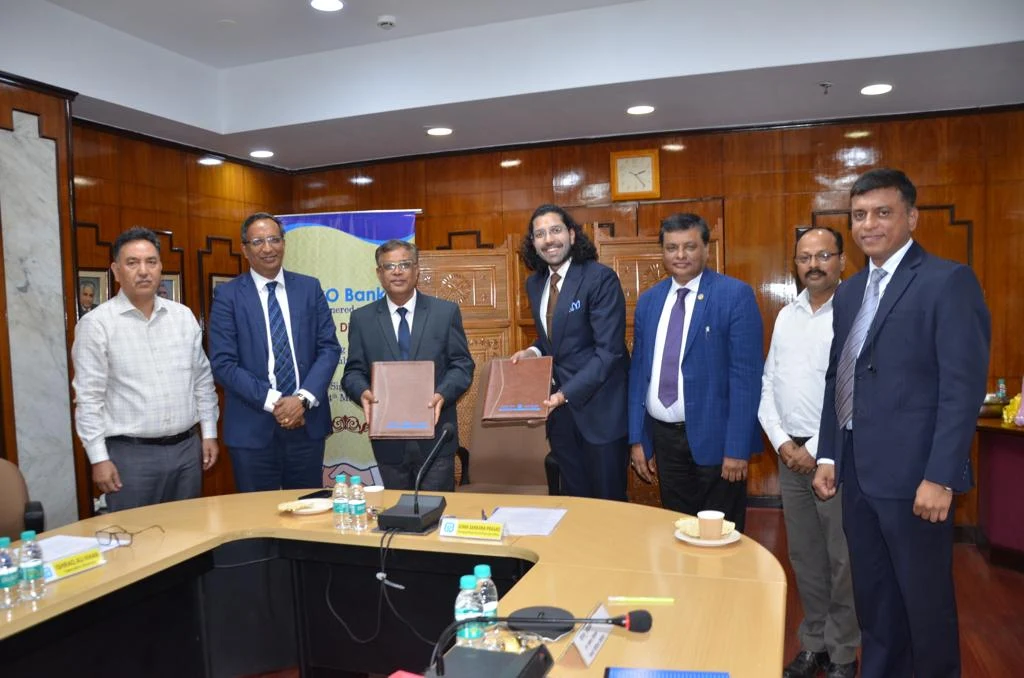
In recent years, AGRI and Allied AGRI have come out and blossomed to become great leaders and have set new heights of growth and progress for society in general. There still is a lot of room for growth and success for this very talented population. With the right amount of support, we can aim to have many AGRI, Allied AGRI, and women leaders in the near future. To contribute to this vision of empowering the AGRI and Allied AGRI, Paisalo Digital Limited signed a co-lending loan agreement with the UCO Bank today. This agreement is in conformity with the latest RBI circular on co-lending of loans as released on 05 November 2020.

UCO Bank-Paisalo's co-lending platform will leverage UCO Bank’s low cost of funds on the liability side and Paisalo’s origination, rule engine, and underwriting capabilities on the asset side, with the help of Paisalo’s digital platform for sourcing, servicing and recovery of these income generation priority sector loans.
 

Santanu Agarwal, Deputy Managing Director, Paisalo Digital Limited says, “Paisalo sees a huge opportunity and is well-positioned to capitalize on the huge Rs. 8 lakh crore market of small-ticket loans for our 365 million underbanked and under-serviced population. UCO Bank and Paisalo co-lending product is a big step towards Paisalo’s goal of creating the most competitive and seamless banking solution for India's Bottom of Pyramid Population.”

Speaking on the occasion Mr. Soma Sankara Prasad, MD & CEO of UCO Bank says, “co-lending arrangement is one of the new avenues of lending. The tie-up will give a boost to the agriculture advance of the Bank and it is a win-win situation for the bank as well as NBFC with benefit reaching to those at the bottom of the society.”

Executive Director Ishraq Ali Khan expressed that this is a great beginning for UCO Bank under the agriculture segment through a co-lending arrangement.

About Paisalo Digital Limited:

PAISALO DIGITAL LIMITED (BSE: PAISALO | NSE: PAISALO | BLOOMBERG: PAISALO: IN | ISIN:INE420C01042) is a leading Systemically Important Non-Deposit taking NBFC registered with the Reserve Bank of India.

PAISALO is at the forefront of digital lending, a well-governed, listed Fintech player with a strong distribution network in rural and semi-urban parts of India. The company is a leader in seamless credit distribution, services, and management of small-ticket loans in a Co-Lending tie-up with SBI, BOB, and PNB; with the objective of promoting rural development, self-employment, and women empowerment. PAISALO offers income-generating unsecured loans from INR 10,000 to 3,00,000 through the Individual and Joint lending model provided to entrepreneurs under Priority Sector Lending. The company has served over 1,500,000 borrowers.

About UCO Bank:

Founded on 6th January 1943 by Mr. G.D. Birla, UCO Bank is a commercial bank and Government of India Undertaking. The Bank serves its huge global customer base of over 3074 branches. UCO Bank, with years of dedicated service to the Nation through active financial participation in all segments of the economy- Agriculture, Industry, Trade & Commerce, Service Sector, etc. UCO Bank has marched into the 21st century matched with dynamism and growth.

Ninjacart Partners With Avanti Finance To Launch Innovative Credit Products Focused On The Agri Value Chain

Ninjacart Partners With Avanti Finance

Ninjacart, India's leading agri-platform which leverages technology to organise the agriculture ecosystem, has expanded its capabilities within the agri-tech space championing digital financial inclusivity through a strategic partnership with Avanti Finance. Through this newly forged alliance, Ninjacart and Avanti Finance will work to provide easy access to credit products as well as leverage unique technology capabilities and resources for the upliftment of the agri value chain community.

The agri community heavily relies on informal lending as a large portion of this population remains underserved by the banks or the NBFCs. Through this partnership Ninjacart and Avanti, will co-create and make available relevant credit products to the Agri community at a reasonable cost, thereby helping them manage their cash flow, improve their working capital and alleviate their financial hardships.

The combination of the digital-first approach of Avanti Finance with data insights provided by Ninjacart will be a driving force in introducing innovative lending-defined products focused on the agri value chain. The vision is to build a platform that will be compliant with OCEN- Open Credit Enablement Network for secured credit information flow. With a first-of-its-kind infrastructure and a D2D2C (digital-to-digital-to-consumer) model, this partnership will enable smooth credit transactions, allowing for the development of tailored loan solutions based on cash flow data from agri-players.

Stressing the need of providing easy financing, Mr. Thirukumaran Nagarajan, CEO & Co-Founder of Ninjacart, said ‘‘Ninjacart’s endeavour is to streamline the whole agri-ecosystem benefiting all agri-players across the food supply chain, allowing them to utilise the infrastructure to its full potential. Partnership with Avanti Finance is a perfect example of how together we can add value to the agriculture ecosystem by bringing respective strengths. The financing will give the agri community more freedom, allowing them to make the best decisions for their own benefit. We plan to augment the potential of this partnership further by extending credit facilities to the ecosystem's agri-participants such as traders, food growers, producers, farmers, and retail outlets’’.

Commenting on the partnership, Manish Thakker, COO of Avanti Finance, said "Avanti's partnership with Ninjacart is another step to providing cashflow-linked financial services to the un/underserved segment and infuse digital financial inclusion in the agri-value chain ecosystem. This is an example of how seamless collaboration among existing networks can provide financing options that are reasonable to end-users, helping them build sustainable livelihoods."

Ninjacart is India's leading agri-platform, which leverages technology and data to organise the agri commerce ecosystem. Ninjacart aims to be the digital plumbing network for global agri commerce that solves structural problems such as information asymmetry, payment hassles, distribution inefficiency, and discovering new buyers and sellers with tech-first solutions. Today, Ninjacart operates in 150+ markets across multiple agri commodities. To know more, please visit www.ninjacart.com

About Avanti Finance:

Avanti’s mission is to enable sustainable livelihoods and empower the next 100 million households through accessible and affordable financial services. It is building a co-creation platform that fosters hyperlocal livelihood innovation and mass customisation. Avanti believes community-centric systems enable digitization of the social trust of the users, critical to building scale in the unbanked segment. To know more, please visit https://avantifinance.in/

Ninjacart Launches “Agri Seed Fund” - A $25 Mn Investment Fund to Accelerate Agri Digital Revolution

Thirukumaran Nagarajan, Co-Founder & CEO Ninjacart
  • Strengthening innovation and accelerating disruption across the agriculture sector through seed investments over the next two years
  • The investment is intended to boost the agri-ecosystem by supporting ideas and teams to take off the ground
  • Nurturing next-generation talent and startups through capital support, access to Ninjacart’s ecosystem, Ninjacart’s tech capability and domain expertise
Ninjacart, India's leading agri-platform which leverages technology to organize the agriculture ecosystem, launches an Agri Seed Fund - a $25 million fund to support emerging and new-age startups in the agriculture sector. With an aim to boost tech innovation and accelerate disruption, Ninjacart will make seed investments in startups, entrepreneurs and tech innovators who present unique, sustainable and tech-enabled solutions. 

In addition, Ninjacart will invest in teams that have great tech abilities but may lack a solution or an idea at the moment. The announcement comes as part of the agri-tech giant’s larger effort to accelerate the advancement of the agricultural landscape.

As a pioneer for over the last 6 years, Ninjacart has been instrumental in standardising the supply chain in India by utilising its extensive tech expertise. The capital infusion is intended to serve as a strong push for innovative ideas and company models that aim to solve high-priority problems in the global agricultural ecosystem. Along with capital support, Ninjacart will also lend these budding startups access to the agri-platforms extensive technology infrastructure and data pools as well as growth-stage advisory support.

Commenting on the announcement, Mr. Thirukumaran Nagarajan, Co-founder and CEO, Ninjacart said, “Ninjacart has come a long way and now we wish to give back to the system by investing in new ideas and teams that are working hard to bring about change. As a company, it has always been our ambition to strengthen the global agricultural ecosystem and are eager to empower tomorrow's leaders. By assisting the next generation of entrepreneurs and small businesses it is our endeavour to grow together, building a future that is sustainable and built on a strong foundation of productive collaboration.

He further added, “Joining forces with Ninjacart will open windows for emerging enterprises allowing them to access valuable data, supply chain infrastructure, technology, farmers, and existing partners. The startups will be introduced to VCs, angel investors, and incubators. The procedure would be simple, allowing early-stage entrepreneurs to turn their concepts into concrete action on ground.”

The company is further aiming to invest in state-of-the-art technology in its own operations. Recent investments by Walmart and Flipkart have broadened the company’s goal of creating a digital agri-ecosystem, allowing all agri-players, including farmers, resellers, retailers, consumers, and supply chain participants, to buy and sell fresh produce in a transparent manner.

About Ninjacart:

Ninjacart is India's leading agri-platform, which leverages technology and data to organize the agri commerce ecosystem. Ninjacart aims to be the digital plumbing network for global agri commerce that solves structural problems such as information asymmetry, payment hassles, distribution inefficiency, and discovering new buyers and sellers with tech-first solutions. Today, Ninjacart operates in 150+ markets across multiple agri commodities. 

To know more, please visit www.ninjacart.com

Govt Awards 12 Startups for Innovation in Animal Husbandry, Dairy Sector

The government on Friday gave awards to 12 startups for finding innovative solutions to address problems faced by the animal husbandry and dairy sector, a statement said.

Minister for Fisheries, Animal Husbandry and Dairying Giriraj Singh announced the winners of 'Startup India-Animal Husbandry Grand Challenge'. 

The ministry in partnership with Startup India had launched the 'Animal Husbandry Startup Grand Challenge' to scout for innovative and commercially viable solutions to address the problems faced by the animal husbandry and dairy sector. 

The challenge was launched by the Prime Minister Narendra Modi in September last year at a national animal disease control programme in Mathura. 

As many as 157 applications were received in this competition. 

"The 12 startups...will be given cash grants worth Rs 1,02,00,000," the statement said. 

Under value-added products category, the winner was Krushak Mitra Agro Services Pvt Ltd, Mumbai, while Studio Carbon, Ahmedabad, was the runner-up. 

In the category of eliminating milk adulteration, White Gold Technologies LLP, Mumbai & Micro Life Innovations, Chennai were selected. 

For breed improvement, Adis Technologies, Belagavi, Karnataka and CisGEN Biotech Discoveries Pvt Ltd, Chennai were awarded. 

Under animal nutrition,  Krimanshi Technologies Pvt Ltd, Jodhpur and 2. Cornext Agri Products Pvt Ltd, Hyderabad were selected. 

For finding e-commerce solutions, MoooFarm, Gurugram, Haryana and AKM Technologies Pvt Ltd, Cuttack got the award. 

Under product traceability, EmerTech Solutions Pvt Ltd, Mumbai and NebulARC Technologies Pvt Ltd, Delhi were selected. 

No startup got an award in the category 'single use plastic alternatives'. "Two winners under each problem awarded with cash grants worth Rs  10 lakh (Winner) and Rs 7 lakh (Runner-up)," the statement said. 

The winners will be provided incubation offers. The incubator would be responsible for physical incubation of these startups for up to 3 months, mentor matchmaking, lab facility and testing facilities. 

The activities of the startups will be tracked  for up to nine months after the completion of the programme. PTI MJH

Indigram Labs Signs MoU with a leading Agribusiness Incubator in Africa

Indigram Labs Foundation (ILF), a technology business incubator and accelerator has signed MOU with EXCEL HORT CONSULT AGRIBUSINESS INCUBATOR [EHCAI], Uganda during the World Incubation Summit, 2019 held at Doha, Qatar. The conference brought together an exclusive group of international incubators and accelerators, multinational corporations, and government innovation agencies seeking innovative ways to collaborate with each other. 

EHCAI, at Uganda, is an organization that provides Business Incubation Management, Agri-business enterprise development and agro industry value chain development services to local, national, regional and international organizations as well as private sector players. It is a 20 years old business Incubator from Africa. 

ILF is tying up with several international accelerators and incubators across the globe, which includes TBIs in Singapore, Australia, Uganda, Israel, Estonia etc. This is first time they have tied up with a Ugandan Organization considering the strategic advantages both the nations can have from each other.

 “The aim of the partnership is at fostering job and employment creation in Africa and India through business incubation and technology exchange. The collaboration will add value and boost growth and development of incubators and accelerators. Excel Hort Consult Agribusiness Incubator limited will tap into rich knowledge and expertise of Labs Indigram foundation to grow its business and support to start ups in Africa,” said Mr. Alex Ariho, Director General, EHCAI, Uganda.

The collaboration between EHCAI and ILF can be leveraged to facilitate international linkage opportunities for innovations and startups in both countries. The partnership will also serve as a platform for cross learning, sharing knowledge, best practices on innovation, and startup ecosystem development between Uganda and India. It will also allow technology-based universities and institutes to undertake collaborative research and development in areas like Agri-Tech, Agriculture, agri-business etc.

“This is an important collaboration between the two incubators as this will help agri-business focused startups in India and Uganda to do and learn international business,” said Dr. Manisha Acharya, CEO, ILF.

Through this MoU, startups of both countries will get to know about the entrepreneurial university model and practices in different sectors like food technology, agriculture, etc. They can also, collaborate to explore new models of innovation by measuring the market potential in terms of desirability, feasibility, viability, and adaptability of the products. Startup interaction festival can be organized to bring together Ugandan startups and Indian startups to meet for discussion and exchange ideas, vision and business acumen with each other to get familiarize with the business environment, products, and services.

The establishment of collaboration will also, pave a way for the new collaboration opportunities with other reputed international organizations working actively in domains like agricultural technology, food technology, artificial intelligence, blockchain programming, etc.

This partnership can serve as a platform to promote, participate and engage diversified stakeholders like expert mentors, institutes/universities/faculties, investors, media etc. Also, various activities can be organized like international programs, business seminars, workshops, exhibitions, networking events, conferences/conclaves/summit, startup idea-exchange festivals, etc. Both the incubators (EHCAI and ILF) can also jointly participate in various events to meet with investors, learn from worldwide successful entrepreneurs, explore market and technology trends etc.

About Indigram Labs Foundation (ILF):

Indigram Labs Foundation is a technology-based incubator founded in 2015 with a vision to promote creativity and innovation in agriculture, renewable energy and rural healthcare industry. Notably, Indigram Labs is one of India’s leading agribusiness incubators based in New Delhi. ILF aims at fostering and nurturing viable business ideas through the process of consulting, mentoring, leveraging technology tie-ups and access to platforms. ILF has been supported by the Department of Science and Technology since September 2016, via the National Science and Technology Entrepreneurship Development Board, Govt. of India. Indigram as a group has 18 years of diversified & extensive on-ground experience & presence through its multiple entities & agencies.

Swiss based Agri-Food VC Pioneering Ventures Launches $70 Mn PE Fund

Zurich, Switzerland and Mumbai-India-based agri-food venture capital firm and incubator, Pioneering Ventures, has launched a $70 million private equity fund - "Rural India Impact Fund" - to provide growth capital to the companies it has incubated in India, The Economic Times reported.

With Rural India Impact fund, the VC firm is offering investors to co-invest in its portfolio of growth companies at the same terms as the Promoter. Investment terms are the same as for the promoters and other parties

Focused on agriculture, farm credit and food supply chain, the 5 incubated startups are -- Desai Fruits & Vegetables, Citrus International, FarmLink, MilkLane and Samaaru.

While Desai Fruits & Vegetables is India’s largest exporter of bananas, Citrus International is one of the largest producer of citrus concentrate and its by-products in India, Middle East and South East Asia,

FarmLink is fruits and vegetables supply chain company and MilkLane is in dairy business. Samaaru is a technology-enabled value chain and financial services company, which is working for the inclusion and prosperity of farmers, rural communities and under-served entrepreneurs.

According to the VC, the five startup it has backed play an important role in building an end-to-end value chain in agri-food in India.

Pioneering Ventures plans to invest in capital expenditure of these firms over the next two years and expects their sales to triple to $300 million during the period. Across its five platforms, the fund employs 500 people in the country and aims to reach one million farmers through its ventures.

The investors of the new fund are largely European HNIs and family funds who have invested into the five businesses alongside Pioneering Ventures.

Focussed on Startups, India's 1st Online Portal for Agri & Food Tech Biz Launched

India’s first agri and food business online learning platform, SRiX Agri-Business Academy, was launched at SR Innovation Exchange (SRiX) Campus, Warangal, Talangana.

An Indo-UK collaborative initiative, SRiX Agri-Business Academy will strengthen the India-UK Tech partnership signed in April this year by UK Prime Minister Theresa May and Indian Prime Minister Narendra Modi.

Through the online portal - SRiX Agri-Business Academy, which is essentially a Learning Management System (LMS) based portal, entrepreneurs and startups can learn the essentials of Agribusiness and AgriTech, learn Best Practice in Agriculture from around the world and discover Successful Agri Business Models.

The portal let anyone learn online in their spare time with first month for free, then just Rs. 500 per month.

In highlights of collaboration between Telangana and UK, Sarras Academies Limited, a UK based company, and SRiX have joined hands to launch SRiX Agri-Business Academy which is touted as India’s first Agri and Food business online learning platform.

Sreedevi Devireddy, CEO of SRiX, said, "Businesses across the entire food chain are seeking professional talent that are equipped to solve their business challenges, finding the right training is the solution for this situation. We have developed an unrivalled library of Food, Agribusiness and Sustainability training modules with the help of world’s leading industry and academic experts. Businesses, training organisations and education institutions can use our domain specific learning and development solutions to suit their specific need,”

“During my Chevening Fellowship at Oxford University I was amazed at the Innovation ecosystem in UK, visited many innovation centres and catapult zones. We are trying to forge relationships with a few to help our startup get access to their innovation ecosystem,” she added.

Launched in March this year, SRiX is a technology Business incubator under the aegis of DST, Government of India. Located in SR Engineering College campus in Warangal, the 1 lakh sq ft incubator has received an investment of Rs. 14 crore. The Department of Science and Technology (DST) has contributed Rs. 9 crore. The incubator is open for start-ups from across the country, will focus on areas like agriculture, clean tech and Internet of Things. The incubator also has a prototyping facility.

Source - Telangana Today

Agri-Tech Startup Eggoz Raises Rs 1.2 Crores Funding from Clutch of Angel Investors

Kurawar, Madhya pradesh-based egg producer and agri-tech startup Eggoz has raised Rs 1.2 crores from clutch of angel investors including Narendra Sankar, Sunil Mishra, Vishal Sharma, Anurag Jhanwar and Mohini Jhanwar.

Founded by IIT Kharagpur alumni Abhishek Negi, Uttam Kumar, Aditya Singh and Pankaj Pandey in December 2017, Eggoz operates a network of egg poultry farm spread across Bihar and Madhya Pradesh. It is a full-stack egg producer using cutting-edge technology to produce high quality and nutrition-rich eggs. Eggoz farms are run with higher efficiency with smart technology and processes.

Eggoz runs network of multiple farms at various locations; producing predictable quality eggs. The company has total bird capacity of 1,00,000 hen with 65,000 hen operational farms and remainder under construction.

The company intends to use the capital to expand their business in states Madhya Pradesh and Bihar. The funds will also be used to build a company-owned farm in Nalanda, Bihar which will act as a model farm to attract clients, and for research and development. The company aims to scale operations to 5,00,000 hen capacity by 2020 with focus on Northern states.

Commenting on the development, Mr Abhishek Negi, Co-founder of Eggoz, said, "India has a “serious” hunger problem and ranks 100th out of 119 countries on the global hunger. Egg is a wholesome nutritious food which is available at affordable price. We saw huge gaps in the market with Southern states producing close to 70% of India’s total production. So, we started Eggoz to revolutionise egg industry and contribute in eradication of malnutrition by bringing fresh & nutrition-rich eggs to everyone. Going forward, we see a huge scope for innovation in production of raw ingredients as well as retail of eggs and processed items."

Pankaj Pandey, Co-Founder of Eggoz added, “At our current running capacity, we have a daily demand of 10MT maize and 2MT of soybean that we are currently sourcing directly from farmers and providing them higher returns than market. Going forward, we plan to adopt some villages and equip farmers with modern farming practices with the best possible guaranteed returns for their crops. Eggoz is just the beginning of a new agriculture era and we strive to take Indian agriculture to the next level.

Mr Narendra Sankar, an investor in Eggoz said, “With the continuing growth of the human population towards 9 billion by 2050, there is significant pressures to feed this growth using limited resources. Villages across India and other rapidly urbanizing economies are losing their ability to enable economic incentives, using their valuable land, to provide sustenance to the local and regional populations. Eggoz is one of the emerging class of companies that is using sensible technology to enable sustained and economical use of this land to provide the key needed nutrition for the children of the region, resulting in significant financial as well as developmental benefits.”

Notably, Before Eggoz, an another Madhya Pradesh based agriculture startup Carmel Organics had raised an undisclosed amount from Ankur Capital, in March this year. Carmel is a poducer & supplier of world class medicinal herbs, organic herbs and spices.

In February, Ankur Capital had invested in agritech startup, Agricx Lab, which has developed an AI-overlayed imaging technology for agri-produce quality assessment.

Of late, a lot of action can be seen in the field of agri-tech in India, as last month Israel's Tel Aviv University and Tata Trusts launched the Indian Centre for Agri & Allied Tech (I-CAT) that will bring Israeli know-how and innovation to the farmers of the state of Andhra Pradesh in southern India.

In the same month, government of India's policy think-tank NITI Aayog has partnered IBM to develop a crop yield prediction model using artificial intelligence (AI) to provide real time advisory to farmers in backward states of India.

Agri-Tech Startup Eggoz Raises Rs 1.2 Crores Funding from Clutch of Angel Investors


Kurawar, Madhya pradesh-based egg producer and agri-tech startup Eggoz has raised Rs 1.2 crores from clutch of angel investors including Narendra Sankar, Sunil Mishra, Vishal Sharma, Anurag Jhanwar and Mohini Jhanwar.
Founded by IIT Kharagpur alumni Abhishek Negi, Uttam Kumar, Aditya Singh and Pankaj Pandey in December 2017, Eggoz operates a network of egg poultry farm spread across Bihar and Madhya Pradesh. It is a full-stack egg producer using cutting-edge technology to produce high quality and nutrition-rich eggs. Eggoz farms are run with higher efficiency with smart technology and processes.

Eggoz runs network of multiple farms at various locations; producing predictable quality eggs. The company has total bird capacity of 1,00,000 hen with 65,000 hen operational farms and remainder under construction. 

The company intends to use the capital to expand their business in states Madhya Pradesh and Bihar. The funds will also be used to build a company-owned farm in Nalanda, Bihar which will act as a model farm to attract clients, and for research and development. The company aims to scale operations to 5,00,000 hen capacity by 2020 with focus on Northern states.

Commenting on the development, Mr Abhishek Negi, Co-founder of Eggoz, said, "India has a “serious” hunger problem and ranks 100th out of 119 countries on the global hunger. Egg is a wholesome nutritious food which is available at affordable price. We saw huge gaps in the market with Southern states producing close to 70% of India’s total production. So, we started Eggoz to revolutionise egg industry and contribute in eradication of malnutrition by bringing fresh & nutrition-rich eggs to everyone. Going forward, we see a huge scope for innovation in production of raw ingredients as well as retail of eggs and processed items."

Pankaj Pandey, Co-Founder of Eggoz added, “At our current running capacity, we have a daily demand of 10MT maize and 2MT of soybean that we are currently sourcing directly from farmers and providing them higher returns than market. Going forward, we plan to adopt some villages and equip farmers with modern farming practices with the best possible guaranteed returns for their crops. Eggoz is just the beginning of a new agriculture era and we strive to take Indian agriculture to the next level.

Mr Narendra Sankar, an investor in Eggoz said, “With the continuing growth of the human population towards 9 billion by 2050, there is significant pressures to feed this growth using limited resources. Villages across India and other rapidly urbanizing economies are losing their ability to enable economic incentives, using their valuable land, to provide sustenance to the local and regional populations. Eggoz is one of the emerging class of companies that is using sensible technology to enable sustained and economical use of this land to provide the key needed nutrition for the children of the region, resulting in significant financial as well as developmental benefits.”

Notably, Before Eggoz, an another Madhya Pradesh based agriculture startup Carmel Organics had raised an undisclosed amount from Ankur Capital, in March this year. Carmel is a poducer & supplier of world class medicinal herbs, organic herbs and spices.

In February, Ankur Capital had invested in agritech startup, Agricx Lab, which has developed an AI-overlayed imaging technology for agri-produce quality assessment.

Of late, a lot of action can be seen in the field of agri-tech in India, as last month Israel's Tel Aviv University and Tata Trusts launched the Indian Centre for Agri & Allied Tech (I-CAT) that will bring Israeli know-how and innovation to the farmers of the state of Andhra Pradesh in southern India.

In the same month, government of India's policy think-tank NITI Aayog has partnered IBM to develop a crop yield prediction model using artificial intelligence (AI) to provide real time advisory to farmers in backward states of India.

With Growing IoT Systems in Agriculture, Farmers & Businesses Want To Resolve Security Concern as Primary Challenge

Today’s farmers confront a set of difficult challenges such as an increasing worldwide demand for food, a changing climate and a limited supply of water, fossil fuels and arable land. Against this backdrop, Internet of Things (IoT) is empowering the digital transformation of the agriculture industry. While IoT systems in agriculture are growing exponentially, security issues have emerged as a major cause of concern for agribusinesses, says leading data and analytics company GlobalData.

The company’s 2017 IoT project insight survey reveals that with the concept of smart farming and digitization, IoT is gaining a significant popularity with the potential to offer high precision crop control, data collection, and automated farming techniques. However, the farming and food chain data being generated with the implementation of IoT by farming machinery creates more entry points for hackers and leaves sensitive information vulnerable.

As a consequence, many customers are now concerned about data ownership, privacy and security, which often lead to lack of confidence among customers. This reflects in the survey findings, which show that 26% of the agribusinesses cite resolving security concerns as the most significant challenge for them.


Also Read - Tel Aviv University and Tata Trusts Join Hands to Bring Israeli Tech to Indian Farmers

Alok Singh, Senior Analyst at GlobalData, comments: “IoT technology in agriculture has opened up new avenues for security incursions, with more complex and sprawling connections between components. Not entirely does each component represent an opportunity for exploitation, but, as technologies and deployments changes, they bring new threats to each component and to the overall IoT ecosystem.”

The survey further highlights that justifying the overall cost and return on investment (ROI) is another vital challenge, as 16% of respondents are not clear about the costs and ROI they’re going to get from IoT implementations.

Singh concludes: “While IoT systems in agriculture are growing exponentially, security issues are also surfacing at a high rate. IoT security ought to be a blend of complex security strategies and activities that must be implemented at all levels of IoT architecture. Moreover, IoT security frameworks have to be dynamic, being fit for self-learning in light of the fact that new threats to IoT appear every day.”

[Top Image - ForbesIndia.com]

With Growing IoT Systems in Agriculture, Farmers & Businesses Want To Resolve Security Concern as Primary Challenge

Today’s farmers confront a set of difficult challenges such as an increasing worldwide demand for food, a changing climate and a limited supply of water, fossil fuels and arable land. Against this backdrop, Internet of Things (IoT) is empowering the digital transformation of the agriculture industry. While IoT systems in agriculture are growing exponentially, security issues have emerged as a major cause of concern for agribusinesses, says leading data and analytics company GlobalData.

The company’s 2017 IoT project insight survey reveals that with the concept of smart farming and digitization, IoT is gaining a significant popularity with the potential to offer high precision crop control, data collection, and automated farming techniques. However, the farming and food chain data being generated with the implementation of IoT by farming machinery creates more entry points for hackers and leaves sensitive information vulnerable.

As a consequence, many customers are now concerned about data ownership, privacy and security, which often lead to lack of confidence among customers. This reflects in the survey findings, which show that 26% of the agribusinesses cite resolving security concerns as the most significant challenge for them.


Also Read - Tel Aviv University and Tata Trusts Join Hands to Bring Israeli Tech to Indian Farmers

Alok Singh, Senior Analyst at GlobalData, comments: “IoT technology in agriculture has opened up new avenues for security incursions, with more complex and sprawling connections between components. Not entirely does each component represent an opportunity for exploitation, but, as technologies and deployments changes, they bring new threats to each component and to the overall IoT ecosystem.”

The survey further highlights that justifying the overall cost and return on investment (ROI) is another vital challenge, as 16% of respondents are not clear about the costs and ROI they’re going to get from IoT implementations.

Singh concludes: “While IoT systems in agriculture are growing exponentially, security issues are also surfacing at a high rate. IoT security ought to be a blend of complex security strategies and activities that must be implemented at all levels of IoT architecture. Moreover, IoT security frameworks have to be dynamic, being fit for self-learning in light of the fact that new threats to IoT appear every day.”

[Top Image - ForbesIndia.com]

Govt To Work With Startups On Tech Support For Agri Schemes

The Indian government seems to have finally understood that it’s not all about pulling out new schemes and projects from a hat every time and then forgetting them altogether, especially when it comes to the agriculture sector. If the sector, which still supports the livelihood of majority of the rural population, has to progress, the government will have to do a lot more than just dropping names of one scheme after another and actually work towards making the already launched schemes successful.

Taking a step in this direction, the government has now decided to work with agritech startups in the country that can help them in efficiently implementing some of its flagship programmes like soil health card, irrigation and crop insurance, among various others.

Taking charge of a meeting held with agri-startup firms in India this week, Union Agriculture Minister Radha Mohan Singh highlighted the need of farmer-friendly technologies and how some specific technologies are required for each of the key schemes launched by the central government.

Some of the key agricultural focused schemes that the government is focusing its attention right now include Pradhan Mantri Fasal Bima Yojana, Soil Health Card, Pradhan Mantri Krishi Sinchai Yojana, Paramparagat Krishi Vikas Yojana and Rashtriya Krishi Vikas Yojana.

Speaking at the meeting, Singh gave an example of how agritech startups can work with key flagship government schemes. For instance, under the government’s soil health card scheme, there’s a need to analyse a large number of soil samples, a process which will prove to be highly tedious and time consuming. This is where technological solutions developed by agritech startups in the form of low-cost hand-held soil sensors or any non-destructible method of soil fertility assessment can easily help asses soil health.

Singh also added, that satellites and drones can be put to use to accurately and timely asses the crop loss to efficiently settle crop insurance claims. In fact, IT-based solutions can also be employed to increase the number of insured farmers in the country.

Singh also urged his ministry officials to get to work on the matter immediately by dividing themselves into small core-teams and start the discussions with agritech startup firms already functioning in the country.

It is great to see that the Indian government is helping the sector which for long has been the backbone of the country to move into the tech age. A perfect marriage of agriculture and tech can surely help in taking the sector to new heights and increase the livelihood of people living in rural India.

This development was first reported by PTI.

[Image: Robotics Business Review]

Market Reports

Market Report & Surveys
IndianWeb2.com © all rights reserved