Showing posts with label uranium. Show all posts

India Maps 7.23 Million Tonnes Rare Earth Resources, Expands Uranium Mining and Global Lithium Ventures

India Maps 7.23 Million Tonnes Rare Earth Resources, Expands Uranium Mining and Global Lithium Ventures

India is intensifying its rare earth and uranium exploration drive, with over 300 projects launched by the Geological Survey of India (GSI) and Atomic Minerals Directorate (AMD), alongside auctions of critical mineral blocks and overseas ventures through KABIL. The government estimates 7.23 million tonnes of rare earth oxide equivalent resources, positioning India as a serious player in the global critical minerals race.

Exploration & Auctions

  • AMD (Atomic Minerals Directorate): Conducting integrated exploration for Rare Earth Elements (REE) and uranium across coastal sands, inland alluvium, and hard rock terrains.
  • GSI (Geological Survey of India):
    • Between 2021–22 and 2023–24, carried out 166 REE projects.
    • In 2024–25, completed 78 projects.
    • In 2025–26, initiated 92 projects.
  • Ministry of Mines: Auctioned 46 critical mineral blocks, including 7 REE blocks, plus 7 exploration licenses (2 for REE).

Resource Estimates (AMD)

  • 7.23 Million Tonnes (Mt) TREO Eq. in 13.15 Mt monazite, found in Andhra Pradesh, Odisha, Tamil Nadu, Kerala, West Bengal, Jharkhand, Gujarat, and Maharashtra.
  • 1.29 Mt TREO Eq. in hard rock terrains of Gujarat and Rajasthan.

Public Sector Undertakings (PSUs)

  • IREL (India) Limited: Processes rare earth-bearing minerals from beach sand materials into high-purity oxides. Operates integrated mining and refining facilities in Odisha, Kerala, and Tamil Nadu.
  • UCIL (Uranium Corporation of India Limited): Runs seven uranium mines and two processing plants in Jharkhand, plus one mine and plant at Tummalapalle, Andhra Pradesh.

Overseas Ventures

  • KABIL (Khanij Bidesh India Limited): A joint venture under the Ministry of Mines, created to secure overseas assets.
    • Signed an agreement with CAMYEN (Argentina) for exploration of five lithium brine blocks.
    • No long-term agreements yet for REEs, cobalt, or uranium.

Strategic Context

  • India launched the National Critical Minerals Mission (NCMM) in 2025, aiming to reduce import dependency and build a domestic value chain for rare earths, lithium, cobalt, and uranium.
  • GSI is evolving from a mapping agency into an investment enabler, preparing mineral assets for private and global investors.
  • Rare earths are vital for EV batteries, wind turbines, defense systems, and semiconductors, making India’s exploration crucial for energy security and technological competitiveness.

Challenges Ahead

  • Value Chain Development: India must move beyond exploration to processing, refining, and manufacturing of rare earth-based products.
  • Global Competition: China dominates rare earth supply; India’s efforts aim to diversify sources and reduce vulnerability.
  • Environmental & Social Concerns: Mining projects in Jharkhand and coastal states face challenges of land acquisition, rehabilitation, and ecological impact.

Conclusion

India’s rare earth and uranium exploration is no longer just geological—it’s strategic. With 7.23 Mt of rare earth resources identified, 300+ projects underway, and overseas lithium ventures, the country is laying the groundwork for self-reliance in critical minerals. The next step will be building a domestic refining and manufacturing ecosystem to translate exploration success into industrial strength.

New Uranium Mines and Fuel Plants to Strengthen India’s Nuclear Energy Program

New Uranium Mines and Fuel Plants to Strengthen India’s Nuclear Energy Program

The Government of India has announced a series of initiatives to boost indigenous uranium mining, nuclear fuel fabrication, and recycling facilities, marking a significant step toward self-reliance in nuclear energy under the vision of Viksit Bharat @2047.

The Uranium Corporation of India Ltd. (UCIL), a Public Sector Undertaking under the Department of Atomic Energy (DAE), is spearheading new mining projects. Plans include establishing a mine and mill with a capacity of 2,500 tonnes per day (TPD) at Rohil in Rajasthan’s Sikar district and another at the Jajwal Uranium Project in Chhattisgarh. Both projects are currently progressing through statutory clearances.

Parallelly, the Nuclear Fuel Complex (NFC), also under the DAE, continues to expand its fuel assembly fabrication capacity. NFC supplies uranium-based fuel to Nuclear Power Corporation of India Limited (NPCIL), which operates Pressurized Heavy Water Reactors (PHWRs) and Boiling Water Reactors (BWRs). The expansion aligns with NPCIL’s reactor deployment program, ensuring steady domestic fuel supply.

In the domain of recycling and waste management, the Bhabha Atomic Research Centre (BARC) and the Nuclear Recycle Board (NRB) are constructing large-scale integrated nuclear recycle facilities. The Integrated Nuclear Recycle Plant (INRP) at Tarapur and the Fast Reactor Fuel Cycle Facility (FRFCF) at Kalpakkam will handle spent fuel from domestic reactors and fabricate mixed oxide (MOx) fuels for fast breeder reactors.

According to Union Minister Dr. Jitendra Singh, these initiatives will enhance India’s indigenous capacity for uranium mining, fuel fabrication, and nuclear waste management. The commissioning of new facilities is expected to ensure continuous availability of fuel for PHWRs and fast reactors, strengthening India’s long-term nuclear energy program.

This information was given by Union Minister of State (Independent Charge) for Science & Technology and Earth Sciences, and Minister of State in the Prime Minister’s Office, Personnel, Public Grievances and Pensions, Atomic Energy and Space, Dr. Jitendra Singh, in a written reply in the Lok Sabha on Wednesday.

India, Canada Seal $1.9B Uranium Pact to Power Nuclear Future

India, Canada Seal $1.9B Uranium Pact to Power Nuclear Future

India and Canada have just struck a landmark $1.9 billion uranium supply agreement, marking a major step in strengthening their energy and strategic ties. Here are the key highlights:
  • Parties involved: India and Canadian firm Cameco Corp.
  • Value: $1.9 billion (C$2.6 billion)
  • Supply terms: 22 million pounds of uranium to India between 2027 and 2035
  • Purpose: Fuel India’s nuclear energy program, boosting its clean energy capacity

Strategic Significance 

  • Energy security: Ensures a stable uranium supply for India’s expanding nuclear power sector
  • Broader cooperation: Canada will also provide LPG under its first long-term arrangement with India
  • Defense & minerals: Establishment of an India-Canada Defence Dialogue and pacts on critical minerals
  • Economic vision: Target of $50 billion in bilateral trade by 2030 and CEPA conclusion by end-2026

Diplomatic context:

This deal represents a turnaround in relations after tensions in 2023, when ties soured over allegations surrounding the killing of Hardeep Singh Nijjar. The uranium pact is being hailed as an “important milestone” in rebuilding trust and deepening cooperation.

Cameco Corporation: Company Overview

  • Headquarters: Saskatoon, Saskatchewan, Canada
  • Founded: 1988 (formerly Canadian Mining and Energy Corporation)
  • Industry: Mining & Energy
  • Ticker: TSX: CCO, NYSE: CCJ
  • Employees: ~2,600 (2023)
  • Core Business: One of the world’s largest publicly traded uranium companies
  • Operations: Exploration, mining, refining, conversion, and fabrication of uranium
  • Global Share: Accounts for a significant portion of global uranium production
  • Strategic Position: High-grade reserves and low-cost operations
  • Investments: Stakes in Westinghouse Electric Company and Global Laser Enrichment
  • Supply Reach: Provides nuclear fuel solutions to utilities worldwide.
  • Leadership: CEO Tim Gitzel (since 2011), Board Chair Catherine Gignac
  • Notable Facts: One of Canada’s largest employers of Indigenous people
  • Revenue: CA$ 1.475 billion (2021)
  • Recent Highlight: $1.9B uranium supply deal with India

In A Historic Shift, India Opens Uranium Mining to Private Sector

In A Historic Shift, India Opens Uranium Mining to Private Sector

India is poised to make a historic shift in its nuclear energy strategy by allowing private firms to mine, import, and process uranium—ending a decades-old state monopoly, said a report by Reuters.

Key Highlights of the Policy Shift

  • Private Sector Entry: Companies can now mine, import, and supply control systems for nuclear plants.
  • State Retains Core Control: Government will manage spent fuel reprocessing and plutonium waste.
  • Timeline: Policy expected to be announced in FY26.

Nuclear Expansion Goals

Metric Current Status 2047 Target
Nuclear Power Capacity 8.8 GW 100 GW
Share of Electricity from Nuclear ~2% 5%
Uranium Demand Coverage (Domestic) ~25% Remainder to be imported

Implications for Industry & Investment

  • Legal Overhaul: Amendments needed in mining, electricity, and FDI laws.
  • Foreign Participation: Minority stakes in nuclear plants to be allowed.
  • Corporate Interest: Indian conglomerates preparing investment plans.

Global Context

Countries like Canada, South Africa, and the United States already allow private firms to mine and process uranium, offering international precedents for India’s move.

This shift is part of Prime Minister Modi’s broader Viksit Bharat 2047 vision, aiming to make nuclear energy a cornerstone of India’s clean energy and energy security strategy.

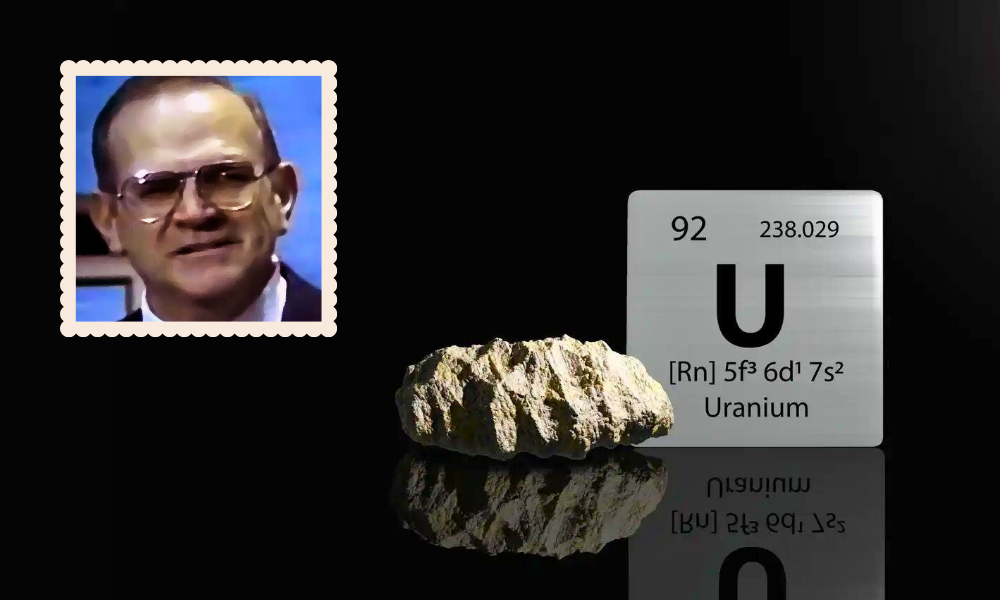
The Man Who Ate Uranium

The Man Who Ate Uranium

Galen Winsor was a notable figure in the nuclear industry, particularly known for his work as a safety officer at the Hanford Nuclear Site and his controversial claims regarding the safety of radioactive materials. He argued that the dangers of radioactive materials were overstated and he even performed risky actions to prove his point, such as swimming in a pool used for storing spent nuclear fuel rods and drinking water from it without suffering ill effects.

Winsor, a nuclear physicist, has traveled and lectured all over America, spoken on national talk radio, and made several videos exposing the misunderstood issues of nuclear radiation. He shows that fear of radiation has been exaggerated to scare people ... so a few powerful people can maintain total control of the world's most valuable power resource.

Winsor's actions and statements sparked debates on radiation safety and the handling of nuclear materials. Despite his claims, there have been concerns and compensation claims from former workers related to alleged exposure to radiation at nuclear facilities. Winsor's legacy remains a topic of discussion in the context of nuclear safety and the public perception of radiation risks.

Galen Winsor made several controversial claims regarding the safety of radioactive materials. Some of his notable assertions included:

Swimming in Spent Fuel Pools: Winsor claimed to have swum in a pool used for storing spent nuclear fuel rods and even drank water from it, suggesting that the water was not harmful.

Eating Uranium: In 1986, he also claimed to have eaten uranium and argued that it did not have any significant impact on his health due to its low radioactivity and high toxicity threshold. Winsor argued that the toxicity of uranium was a greater risk than its radioactivity, and he claimed to have ingested uranium without suffering health effects.

Winsor reportedly consumed the radioactive material in the year 1986 and died in 2008, when he was of age 86.


Drinking Radioactive Water: He also claimed to have drunk water from a spent nuclear fuel pool and to have eaten uranium, suggesting that these actions did not cause him harm.


Downplaying Radiation Dangers: Winsor frequently downplayed the dangers of radiation, asserting that the public's fear of nuclear power and radioactive materials was exaggerated.

Conspiracy Theories: He proposed that there was a conspiracy by an energy cartel to misinform the public about the dangers of radioactive materials, which he believed were largely harmless.

Three Mile Island Incident: He went as far as to claim that the 1979 partial meltdown at the Three Mile Island Nuclear Generating Station did not occur and that the event was fabricated to stoke public fears. In a 2020 video, Galen Winsor claims that the Three Mile Island event was not an accident. 

Claims of Galen Winsor were met with skepticism and criticism, as they contradicted established scientific understanding and safety protocols regarding radiation exposure. It's important to note that while Winsor's actions were meant to prove his point, they are not supported by scientific consensus and should not be replicated. Safety measures and regulations in the nuclear industry are in place to protect workers and the public from potential hazards.

It's important to note that while Winsor's actions were bold, they were also highly unconventional and not in line with standard safety practices. The handling and consumption of radioactive materials are subject to strict regulations to protect individuals from potential harm.

Winsor's demonstrations were meant to challenge regulatory measures which he considered excessive, but they should not be seen as a guideline for the safe handling of radioactive substances.

Market Reports

Market Report & Surveys
IndianWeb2.com © all rights reserved