‏إظهار الرسائل ذات التسميات lithium. إظهار كافة الرسائل

India Maps 7.23 Million Tonnes Rare Earth Resources, Expands Uranium Mining and Global Lithium Ventures

India Maps 7.23 Million Tonnes Rare Earth Resources, Expands Uranium Mining and Global Lithium Ventures

India is intensifying its rare earth and uranium exploration drive, with over 300 projects launched by the Geological Survey of India (GSI) and Atomic Minerals Directorate (AMD), alongside auctions of critical mineral blocks and overseas ventures through KABIL. The government estimates 7.23 million tonnes of rare earth oxide equivalent resources, positioning India as a serious player in the global critical minerals race.

Exploration & Auctions

  • AMD (Atomic Minerals Directorate): Conducting integrated exploration for Rare Earth Elements (REE) and uranium across coastal sands, inland alluvium, and hard rock terrains.
  • GSI (Geological Survey of India):
    • Between 2021–22 and 2023–24, carried out 166 REE projects.
    • In 2024–25, completed 78 projects.
    • In 2025–26, initiated 92 projects.
  • Ministry of Mines: Auctioned 46 critical mineral blocks, including 7 REE blocks, plus 7 exploration licenses (2 for REE).

Resource Estimates (AMD)

  • 7.23 Million Tonnes (Mt) TREO Eq. in 13.15 Mt monazite, found in Andhra Pradesh, Odisha, Tamil Nadu, Kerala, West Bengal, Jharkhand, Gujarat, and Maharashtra.
  • 1.29 Mt TREO Eq. in hard rock terrains of Gujarat and Rajasthan.

Public Sector Undertakings (PSUs)

  • IREL (India) Limited: Processes rare earth-bearing minerals from beach sand materials into high-purity oxides. Operates integrated mining and refining facilities in Odisha, Kerala, and Tamil Nadu.
  • UCIL (Uranium Corporation of India Limited): Runs seven uranium mines and two processing plants in Jharkhand, plus one mine and plant at Tummalapalle, Andhra Pradesh.

Overseas Ventures

  • KABIL (Khanij Bidesh India Limited): A joint venture under the Ministry of Mines, created to secure overseas assets.
    • Signed an agreement with CAMYEN (Argentina) for exploration of five lithium brine blocks.
    • No long-term agreements yet for REEs, cobalt, or uranium.

Strategic Context

  • India launched the National Critical Minerals Mission (NCMM) in 2025, aiming to reduce import dependency and build a domestic value chain for rare earths, lithium, cobalt, and uranium.
  • GSI is evolving from a mapping agency into an investment enabler, preparing mineral assets for private and global investors.
  • Rare earths are vital for EV batteries, wind turbines, defense systems, and semiconductors, making India’s exploration crucial for energy security and technological competitiveness.

Challenges Ahead

  • Value Chain Development: India must move beyond exploration to processing, refining, and manufacturing of rare earth-based products.
  • Global Competition: China dominates rare earth supply; India’s efforts aim to diversify sources and reduce vulnerability.
  • Environmental & Social Concerns: Mining projects in Jharkhand and coastal states face challenges of land acquisition, rehabilitation, and ecological impact.
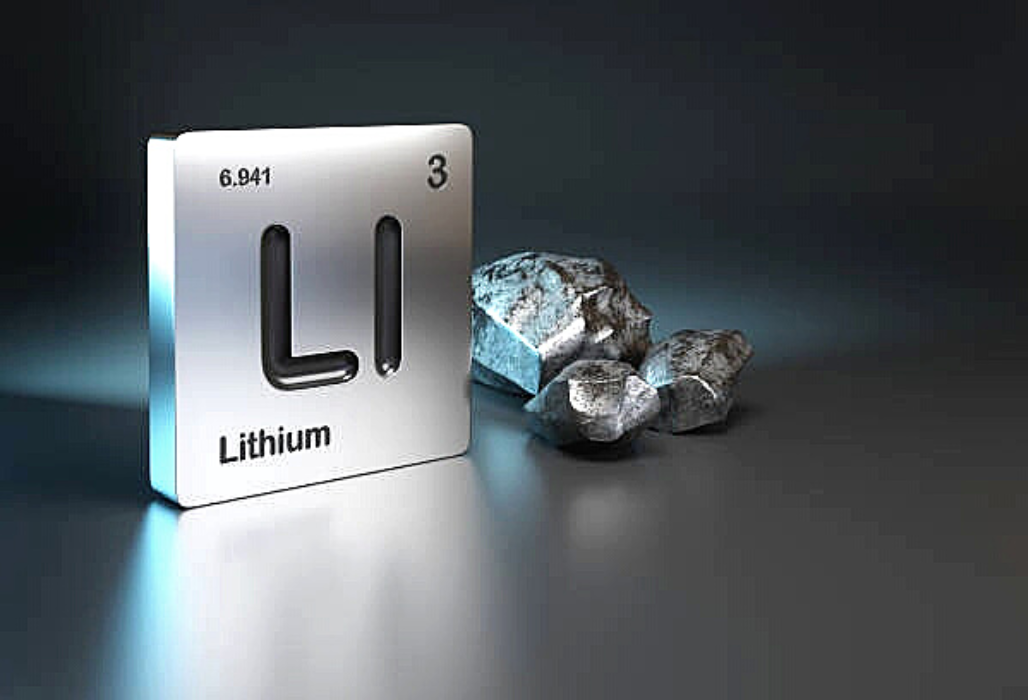
Conclusion

India’s rare earth and uranium exploration is no longer just geological—it’s strategic. With 7.23 Mt of rare earth resources identified, 300+ projects underway, and overseas lithium ventures, the country is laying the groundwork for self-reliance in critical minerals. The next step will be building a domestic refining and manufacturing ecosystem to translate exploration success into industrial strength.

World’s 7th Largest Lithium Reserve Found in Jammu-Kashmir, Crucial for EV Manufacturing

World’s 7th Largest Lithium Reserve Found in Jammu-Kashmir, Crucial for EV Manufacturing

India has announced its first significant discovery of reserves of Lithium, a rare alkali metal, in the mountains of the area of Salal-Haimana area of Reasi District of Jammu & Kashmir (UT)

The government of India announced on Thursday that 5.9 million tonnes of the lithium had been discovered in Jammu and Kashmir.

The newly discovered lithium, found by Geological Survey of India, estimated at 59 lakh tonnes and according to the current market price it is worth INR 3400 billion. Russia is believed to have invaded Ukraine to gain unbroken reserves of lithium!

In 2021, much smaller deposits of lithium were found in the southern state of Karnataka.

Lithium is a rare element crucial for manufacturing electric vehicles. It is a key component in rechargeable batteries that power numerous gadgets like smartphones and laptops, besides just electric vehicles.

With a total of 8 million tons, Chile has the largest known reserves of lithium in the world. This puts it ahead of other countries with significant reserves, such as Australia (2.7 million tons), Argentina (2 million tons), and China (1 million tons).

Pratik Kamdar, Co-Founder of Neuron Energy, a Mumbai-based startup which provides lead-acid and lithium-ion technology batteries for E-Bike, E-Rickshaws, and Golf Carts, said, "With the increased adoption of electric mobility in recent years, there is a huge demand for Li-ion batteries. The recent finding of 5.9 million tonnes of lithium in Jammu & Kashmir will significantly boost the sector. Currently, India is also progressing into cell manufacturing of batteries and it will provide the much-needed impetus to the sector as it will reduce the dependence on imports while also solving the supply-chain challenges as the country will have its own reserves of lithium. There will also be a cost impact as the cells, when manufactured indigenously, will become cheaper."

Currently, India is depended on Australia and Argentina for lithium imports.

Bolivia has by far the world’s largest lithium reserves however most of it remains in the ground as the country does not have the developed infrastructure to excavate it. Due to this, Bolivia does not rank anywhere near the top in actual lithium production.

India imports many important metals such as lithium, nickel and cobalt. With the new discovery of lithium reserves in Jammu and Kashmir, battery and EV manufacturers will not have to depend on imports. Local lithium reserves will help reduce the price of batteries in India, which will further reduce the price of EVs.

One ton of lithium is priced at INR 57.36 lakhs. India has got 59 lakh tonnes of lithium Reserves. That is, its value today will be Rs 33,84,31,021 lakh rupees (3,384 billion ) This price is at current market rate. With the global market, its price varies all the time.

Market Reports

Market Report & Surveys
IndianWeb2.com © all rights reserved