‏إظهار الرسائل ذات التسميات edge computing. إظهار كافة الرسائل

IBM Introduces New Power® S1012 Server to Run AI Inferencing Workloads in ROBO Locations Outside Mainstream Datacenter Facilities

IBM Introduces New Power® S1012 Server to Run AI Inferencing Workloads in ROBO Locations Outside Mainstream Datacenter Facilities

IBM has recently announced the expansion of its server portfolio with the introduction of the IBM Power S1012. This new server is designed to enhance AI workloads from the core to the cloud and even to the edge, providing added business value across various industries. The IBM Power S1012 is a 1-socket, half-wide system based on the Power10 processor, and it delivers up to 3X more performance per core compared to the previous Power S812 model.

The server is available in both a 2U rack-mounted and a tower deskside form factor, optimized for edge-level computing. It also offers the lowest entry price point in the Power portfolio to run core workloads for small and medium-sized organizations¹. With the ability to run AI inferencing workloads in remote office and back office locations, the IBM Power S1012 provides flexibility and direct connection to cloud services like the IBM Power Virtual Server for backup and disaster recovery.

This advancement is particularly significant for industries such as retail, manufacturing, healthcare, and transportation, where deploying workloads at the edge can capitalize on data where it originates. Real-time insights gained through edge computing can offer a competitive advantage, with applications ranging from analyzing customer behavior to monitoring production processes.

IBM Power S1012 will be generally available from IBM and certified Business Partners on June 14, 2024.

Use Case

Let's consider a retail industry scenario as an example use case for edge computing with the IBM Power S1012:

Scenario: Real-Time Inventory Management in Retail

Background:

A large retail chain is looking to improve its inventory management and customer experience by implementing AI at the edge.

Challenge:

The retailer needs to process vast amounts of data from various sources, including point-of-sale systems, online transactions, and IoT sensors on shelves. They require real-time analytics to manage stock levels efficiently and predict future demand.

Solution with IBM Power S1012:

Local Processing: The IBM Power S1012 can be deployed in individual stores to process data locally. This reduces latency, as data doesn't need to be sent to a central data center or cloud for processing.

AI Workloads: The server's AI capabilities enable it to run sophisticated algorithms that analyze purchasing patterns and inventory levels.

Predictive Analytics: By leveraging machine learning models, the Power S1012 can forecast demand and suggest optimal stock replenishment schedules.

Integration with IoT: IoT sensors on shelves send data directly to the local Power S1012 server, which can trigger alerts when items are running low or when there's a mismatch in inventory.

Benefits:

Reduced Latency: Real-time processing at the edge ensures immediate insights into inventory levels, leading to quicker decision-making.

Increased Efficiency: Automated stock management reduces overstocking and stockouts, saving costs and improving customer satisfaction.

Enhanced Customer Experience: The system can also provide personalized recommendations to customers based on their shopping history and current in-store promotions.

By utilizing the IBM Power S1012 for edge computing, the retailer can achieve a more responsive and intelligent inventory management system that adapts to changing demands and enhances the overall shopping experience for customers.
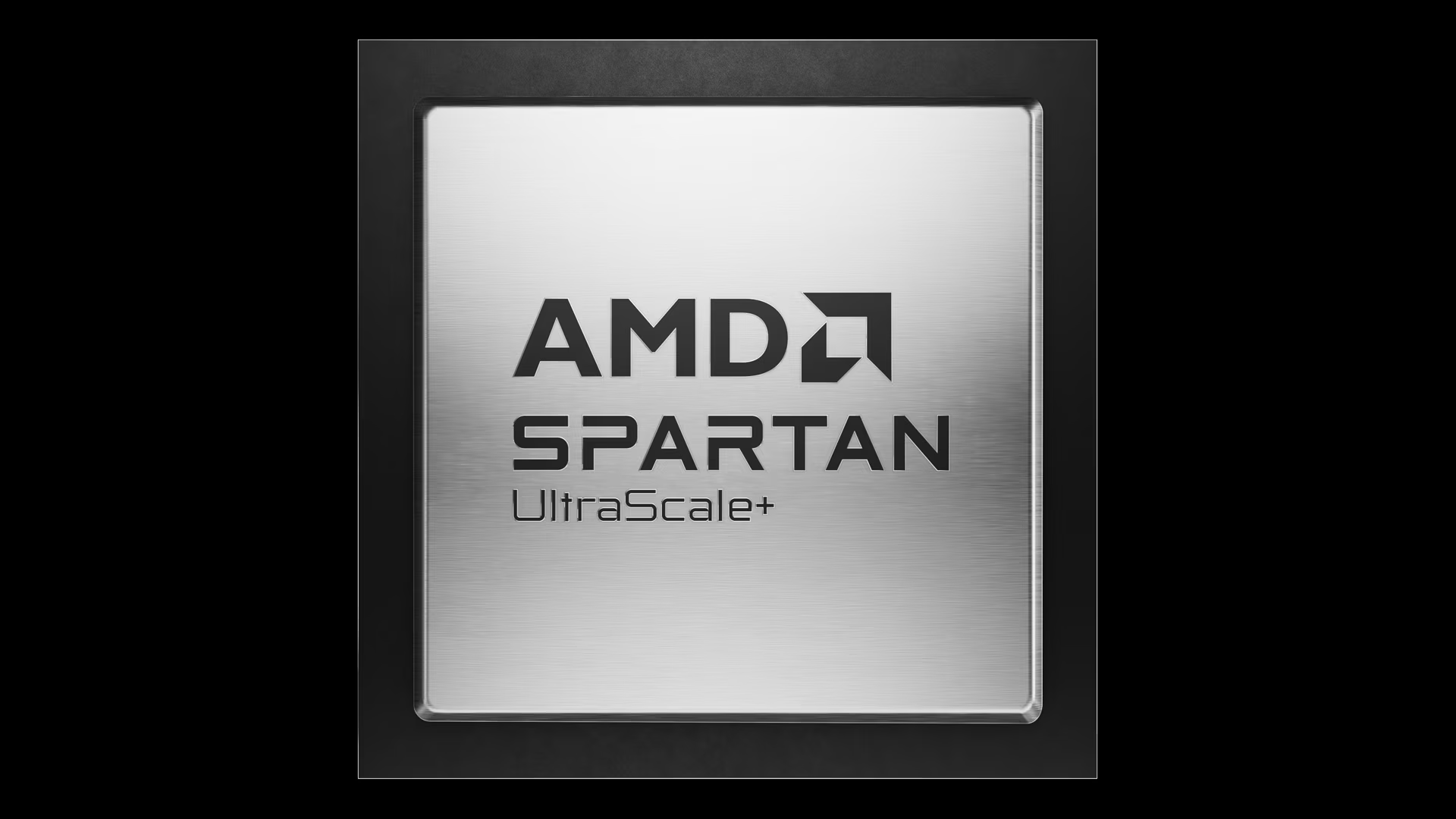
AMD Launches New Spartan UltraScale+ Family FPGAs, Built for Cost-Sensitive Edge Applications

AMD Launches New Spartan UltraScale+ Family FPGAs, Built for Cost-Sensitive Edge Applications

New FPGAs offer high I/O counts, power efficiency, and state-of-the-art security features for embedded vision, healthcare, industrial networking, robotics, and video applications


AMD (NASDAQ: AMD) has announced the AMD Spartan™ UltraScale+™ FPGA family, the newest addition to the extensive portfolio of AMD Cost-Optimized FPGAs and adaptive SoCs. Delivering cost and power-efficient performance for a wide range of I/O-intensive applications at the edge, Spartan UltraScale+ devices offer the industry’s highest I/O to logic cell ratio in FPGAs built in 28nm and lower process technologyi, deliver up to 30 percent lower total power consumption versus the previous generationii, and contain the most robust set of security featuresiii in the AMD Cost-Optimized Portfolio.

“For over 25 years the Spartan FPGA family has helped power some of humanity’s finest achievements, from lifesaving automated defibrillators to the CERN particle accelerator advancing the boundaries of human knowledge,” said Kirk Saban, corporate vice president, Adaptive and Embedded Computing Group, AMD. “Building on proven 16nm technology, the Spartan UltraScale+ family’s enhanced security and features, common design tools, and long product lifecycles further strengthen our market-leading FPGA portfolio and underscore our commitment to delivering cost-optimized products for customers.”

Flexible I/O Interfacing and Power Efficient Compute

Spartan UltraScale+ FPGAs are optimized for the edge, delivering high I/O counts and flexible interfaces which allow the FPGAs to seamlessly integrate and efficiently interface with multiple devices or systems to address the explosion of sensors and connected devices.

The family offers the industry’s highest I/O to logic cell ratio of FPGAs built on 28nm and below process technology, with up to 572 I/Os and voltage support up to 3.3V, enabling any-to-any connectivity for edge sensing and control applications. The proven 16nm fabric and support for a wide array of packaging, starting as small as 10x10mm, provide high I/O density in an ultra-compact footprint. The extensive AMD FPGA portfolio also provides the scalability to start with cost-optimized FPGAs and continue through to midrange and high-end products.

The Spartan UltraScale+ family is estimated to offer up to a 30 percent reduction in power compared to the 28nm Artix™ 7 family, through 16nm FinFET technology and hardened connectivity. They are the first AMD UltraScale+ FPGAs with a hardened LPDDR5 memory controller and PCIe® Gen4 x8 support, providing both power efficiency and future-ready capabilities for customers.

State-of-the-Art Security Features

Spartan UltraScale+ FPGAs offer the most state-of-the-art security features in the AMD Cost-Optimized FPGA portfolio.
  • Protecting IP: Support for Post-Quantum Cryptography with NIST-approved algorithms offers state-of-the-art IP protection against evolving cyber-attacks and threats. A physical unclonable function provides each device with a unique fingerprint for added security.
  • Preventing tampering: PPK/SPK key support helps manage obsolete or compromised security keys while differential power analysis helps protect against side-channel attacks. The devices contain a permanent tamper penalty to further protect against misuse.
  • Maximizing uptime: Enhanced single-event upset performance helps fast and secure configuration with increased reliability for customers.
The entire AMD portfolio of FPGAs and adaptive SoCs are supported by the AMD Vivado™ Design Suite and Vitis™ Unified Software Platform, allowing hardware and software designers to leverage the productivity benefits of these tools and included IPs via a single designer cockpit from design to verification.

AMD Spartan UltraScale+ FPGA family sampling and evaluation kits are expected to be available in the first half of 2025. Documentation is available today with tools support starting with the AMD Vivado Design Suite in the fourth quarter of 2024.

About AMD

For more than 50 years AMD has driven innovation in high-performance computing, graphics, and visualization technologies. Billions of people, leading Fortune 500 businesses, and cutting-edge scientific research institutions around the world rely on AMD technology daily to improve how they live, work, and play. AMD employees are focused on building leadership high-performance and adaptive products that push the boundaries of what is possible. For more information about how AMD is enabling today and inspiring tomorrow, visit the AMD (NASDAQ: AMD) website, blog, LinkedIn, and Twitter pages.

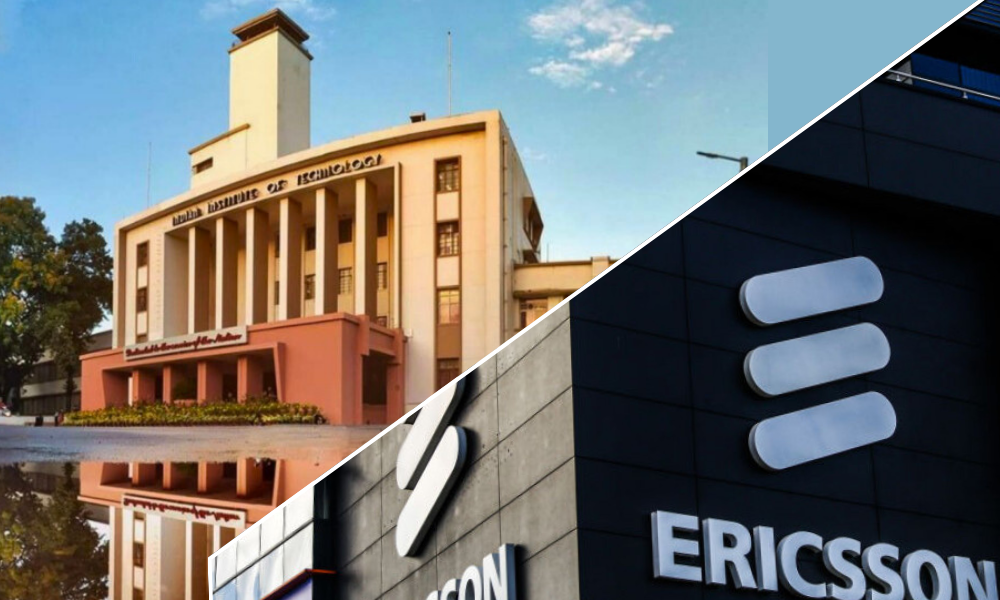
Ericsson and IIT Kharagpur Partner for Joint Research in AI and Edge Compute

Ericsson and IIT Kharagpur Partner for Joint Research in AI and Edge Compute

Ericsson (NASDAQ:ERIC) and Indian Institute of Technology Kharagpur (IIT Kharagpur announced a long-term co-operation for joint research in the area of AI, Compute and Radio.

As part of this collaboration, two milestone agreements were inked between both the organizations which will allow researchers from both organizations to collaborate towards developing novel AI and distributed compute technology towards 6G research.

A symposium on Radio and Network research was organized at GS Sanyal School of Telecommunications (GSSST) where leaders from Ericsson Research and IIT Kharagpur participated to discuss the developments and advancements for the future of networks and communication.

AI and Compute Research is instrumental to Ericsson’s 6G networks as the compute offload needs to be managed dynamically at edge and the policies would primarily be driven by AI. These themes of research are well aligned with IIT Kharagpur and both organizations view this partnership as a way to push the boundaries of fundamental and applied research in the Radio domain.

Virendra Kumar Tewari, Director of IIT Kharagpur, says: “In the commitment towards Digital India and making India the hub of technological innovation, this collaboration with Ericsson will be effective for next-generation technology significantly. 6G networks integrated with artificial intelligence will enable AI-powered applications to run faster and more efficiently. In the 6G era, IIT Kharagpur aims to contribute to Radio Access Technology and Network, Core Network, RF & Device Technologies, VLSI Design, Neuromorphic Signal Processing, Services and Applications. The institute also looks forward to participate in Telecommunications Standardization Process, Developing Test Beds, Prototype Development and Commercialization along with training and manpower development. This collaborative research partnership in fundamental areas as well as translational research will be transformational for our Future Network Platforms.”

Magnus Frodigh, Head of Ericsson Research, says: “This collaboration strengthens our R&D commitments in India and is pivotal to Radio, Compute and AI research. We are excited to partner with IIT Kharagpur and look forward to collaborative research in fundamental areas as well as translational research for our Future Network Platforms”. Dr Frodigh also presented Ericsson’s vision on 6G which aims to blend the physical and digital worlds enabling us to improve the quality of life by incorporating widespread Sensor-based communications between humans and machines through digital twins.

Nitin Bansal, Managing Director of Ericsson India, says: “Ericsson is well poised to lead 6G innovation and we are making significant R&D investments in India in line with our commitment to the country. Given our 5G and technology leadership, our research initiatives are geared to provide affordable network platforms for ubiquitous connectivity all across the country”.

The Speakers and Panellists of the Conference included Prof. Suvra Sekhar Das (Head, GSSST), Prof. Debarati Sen, Prof. Saswat Chakrabarti, Prof. Soumyajit Dey and many other faculty members from IIT Kharagpur; Dr Magnus Frodigh, Head of Ericsson Research, Dr Mikael Hook, Head of Radio Research and Dr Mikael Prytz , Head of Network Research.

Some of the key initiatives finalized by both the organizations include: Compute offload and Resource Optimization at edge compute: The project aims to explore resource optimization, dynamic observability and sustainable distributed and Edge computing technologies.

RL based Beamforming for JCAS: Safe, Causal, and Verifiable: The project aims to explore causal AI methods for joint communication and sensing (JCAS).

Netskope Scores No. 1 and No. 2 for All Use Cases in 2023 Gartner® Critical Capabilities for Security Service Edge Report

Users Looking for a Comprehensive SSE Solution Should Consider Netskope

Netskope, a leader in Secure Access Service Edge (SASE), scored highest or among the top two solutions cited in all Use Cases identified in the 2023 Gartner Critical Capabilities for Security Service Edge (SSE) report. In addition, Netskope is the only vendor named a Leader in the recently released 2023 Gartner Magic Quadrant™ for Security Service Edge that also ranked among the highest three scoring vendors for all four Use Cases in the 2023 Critical Capabilities for SSE.

In the Critical Capabilities report, Gartner evaluated the SSE offerings of 10 vendors and their ability to provide a broad set of features required to achieve SSE. Key Use Cases include:
  • Identify and Protect Sensitive Information
  • Secure Web and Cloud Usage
  • Detect and Mitigate Threats
  • Connect and Secure Remote Workers
Netskope received the highest scores among all vendors in two of four Use Cases—the Connect and Secure Remote Workers Use Case and the Identify and Protect Sensitive Information Use Case.

“As customers select SSE vendors, they should be confident with the knowledge that those vendors aren’t lagging in any key use cases,” said Jason Clark, Chief Strategy Officer, Netskope. “We are proud that Netskope has been recognized as a high-scoring vendor in the Critical Capabilities report, and is the only Leader in the Gartner Magic Quadrant for SSE that was also ranked in the top three of any and all of the Critical Capabilities Use Cases.”

The Critical Capabilities report also identifies several important trends for organizations building SSE and SASE capabilities, including the following, which are noted by Gartner as strategic planning assumptions:

By 2025, 70% of organizations that implement agent-based zero trust network access (ZTNA) will choose either a SASE or SSE provider for ZTNA, rather than a stand-alone offering

By 2026, 85% of organizations seeking to procure cloud access security broker (CASB), secure web gateway (SWG) or ZTNA access offerings will obtain these from a converged solution

By 2026, 45% of organizations will prioritize advanced data security features for inspection of data at rest and in motion as a selection criterion for SSE

For more:
For additional information regarding Netskope Intelligent SSE, visit Netskope’s SSE resources page.

Gartner Disclaimer

Gartner, Critical Capabilities for Security Service Edge, Thomas Lintemuth, John Watts, Charlie Winckless, Craig Lawson, Aaron McQuaid, 17 April 2023.

Gartner, Magic Quadrant for Security Service Edge, Charlie Winckless, Aaron McQuaid, John Watts, Craig Lawson, Thomas Lintemuth, Dale Koeppen, 10 April 2023.

Gartner does not endorse any vendor, product or service depicted in its research publications and does not advise technology users to select only those vendors with the highest ratings or other designation. Gartner research publications consist of the opinions of Gartner’s research organization and should not be construed as statements of fact. Gartner disclaims all warranties, expressed or implied, with respect to this research, including any warranties of merchantability or fitness for a particular purpose.

GARTNER is a registered trademark and service mark of Gartner, Inc. and/or its affiliates in the U.S. and internationally, and MAGIC QUADRANT is a registered trademark of Gartner, Inc. and/or its affiliates and are used herein with permission. All rights reserved.


About Netskope

Netskope, a global SASE leader, is redefining cloud, data, and network security to help organizations apply zero trust principles to protect data. Fast and easy to use, the Netskope platform provides optimized access and real-time security for people, devices, and data anywhere they go. Netskope helps customers reduce risk, accelerate performance, and get unrivaled visibility into any cloud, web, and private application activity. Thousands of customers, including more than 25 of the Fortune 100, trust Netskope and its powerful NewEdge network to address evolving threats, new risks, technology shifts, organizational and network changes, and new regulatory requirements. Learn how Netskope helps customers be ready for anything on their SASE journey, visit netskope.com

Global Edge Analytics Market to Hit $1.18 Billion by 2025, Driven by Manufacturing, Energy and Logistics Sectors

(PRNewsfoto/Frost & Sullivan)

Increasing uptake of edge solutions across industry verticals creates key growth opportunities for market participants


SANTA CLARA, Calif., Dec. 15, 2020 /PRNewswire/ -- Frost & Sullivan's recent analysis, Growth Opportunities in the Global Edge Analytics Market, Forecast to 2025, finds that dissatisfaction with Big Data Analytics (BDA) is increasing the uptake of edge analytics solutions across industry verticals. The study examines the key competitors in the edge analytics software market, revenue forecast analysis by region and industry vertical, and much more. Demand for machine intelligence(MI) and artificial intelligence (AI) applications at the edge is driving the market adoption of edge analytics. By 2025, the global edge analytics software market is estimated to witness nearly five-fold growth, garnering a revenue of $1.18 billion from $254.8 million in 2020. 

For further information on this analysis, please visit: http://frost.ly/4x6

"Businesses recognize data as a valuable asset, which they can leverage to create a competitive advantage, operational efficiencies, new revenue opportunities, customer satisfaction, and even industry disruption," said Anisha Vinny, Program Manager, Information & Communication Technologies, Frost& Sullivan. "Approximately 51% of business leaders surveyed by Frost & Sullivan claimed that investigating and utilizing data is a top business priority. Cost reduction is cited as a strategic priority by 78% of business leaders, while 72% are willing to invest in technologies that could reduce spending."

Vinny added: "By 2025, the North America and Latin America (NALA) region, led by the United States, will be a key adopter of edge analytics solutions, accounting for 59.3% of the total market revenue. Europe, Middle East, and Africa (EMEA) region is the second-largest revenue contributor in the market, followed by Asia-Pacific. In terms of industry verticals, the manufacturing sector leads the way, followed by energy and logistics."

To capitalize on the immense growth prospects, market participants should focus on the following industry verticals: 

  • Manufacturing: Predictive analytics, primarily predictive maintenance, is a critical use case in the manufacturing sector. Discrete manufacturing in the automotive and consumer packaged goods (CPG) sectors is a major revenue contributor in the United States and EMEA.
  • Energy: Edge analytics data can be utilized to make needed adjustments to optimize energy production. EMEA is the leading contributor to edge analytics software in this sector. While India is witnessing growth in government investment in edge analytics for renewable energy (mainly solar), green buildings are driving adoption in Singapore, Indonesia, Thailand, and Malaysia.
  • Logistics: Growing investment in autonomous vehicles in the transport sector impacts investment in autonomous robots on the factory floor. The use of edge analytics to automate and track the movement of raw materials and goods on the factory floor is expected to grow over the forecast period. 

Growth Opportunities in the Global Edge Analytics Market, Forecast to 2025 is the latest addition to Frost & Sullivan's Information & Communication Technologies research and analyses available through the Frost & Sullivan Leadership Council, which helps organizations identify a continuous flow of growth opportunities to succeed in an unpredictable future.

About Frost & Sullivan

For six decades, Frost & Sullivan has been world-renowned for its role in helping investors, corporate leaders and governments navigate economic changes and identify disruptive technologies, Mega Trends, new business models, and companies to action, resulting in a continuous flow of growth opportunities to drive future success. Contact us: Start the discussion

Growth Opportunities in the Global Edge Analytics Market, Forecast to 2025

GrAI Matter Labs Raises $14M to Bring Fastest AI per Watt to Every Device on the Edge


GrAI Matter Labs, a pioneer of brain inspired ultra-low latency computing, today announced its latest financing round of $14 million. The round was led by iBionext, joined by all existing investors and newly welcomed Bpifrance through the Future Investment Program and Celeste Management. The company will utilize the funds to accelerate design and market launch of its first GrAI® full-stack AI system-on-chip platform, to deliver on customer needs at the edge. 

GrAI Matter Labs’ programmable NeuronFlow™ technology enables industry-leading inference latency efficiently – more than an order of magnitude better than competing solutions. Its current accelerator chip GrAI One and the GrAI One HDK are available for product evaluation and application programming. The upcoming GrAI® full-stack AI system-on-chip platform will drive a significant step in visual inference capabilities in robotics, industrial automation, AR/VR and surveillance products and markets.

“Securing this funding round is a testament to our breakthrough innovation and market potential. We are excited to bring the fastest AI per Watt to every device on the edge,” said Ingolf Held, CEO of GrAI Matter Labs. “This funding will help us to partner with application specialists and integrators, and to deliver best-in-class visual inference performance, system-on-chip platforms and end-to-end applications to our customers.”

“GrAI Matter Labs has demonstrated a unique architecture capability with NeuronFlow and GrAI One - an industry first silicon compute and machine learning architecture based on learnings from biology and the human brain,” said Bernard Gilly, Chairman of iBionext. “We are thrilled with the prospects of GrAI Matter Labs and look forward to grow the company to become a major success.”

“GrAI Matter Labs has established a technology leadership position within the rapidly emerging edge computing market,” said Dimitri Boulanger, CEO of Celeste Management. “We expect the company to develop into a leading AI computing platform supplier across segments of this market, which is set to grow to billions of dollars over the coming years.”

“The market for edge AI inferencing is the most active segment of the AI chip market. GML has developed several innovations that combined have produced an outstanding AI accelerator,” said Michael Azoff, Chief Analyst, Kisaco Research. “It is exploiting sparsity (spatial and temporal) in the input data that is the stand-out approach taken by GML.” 

About GrAI Matter Labs 

GML’s mission is to bring fastest edge AI per Watt for sensor analytics and machine learning to every device on the edge. GrAI Matter Labs has offices in Paris / France, in Eindhoven / The Netherlands and in San Jose / Silicon Valley. It is led by a team of visionary and seasoned engineers, and is backed by leading investors including iBionext, 360 Capital Partners and 3T Finance. For more information, please visit www.graimatterlabs.ai.

90% of Industrial Enterprises will Utilize Edge Computing by 2022, Finds Frost & Sullivan

Multi-access edge computing market to reach $7.23 billion by 2024


Frost & Sullivan's recent analysis, 5G and Edge Computing—Cloud Workloads Shifting to the Edge, Forecast to 2024, finds that edge computing is a foundational technology for industrial enterprises as it offers shorter latencies, robust security, responsive data collection, and lower costs. In this hyper-connected industrial environment, edge computing, with its solution-agnostic attribute, can be used across various applications, such as autonomous assets, remote asset monitoring, data extraction from stranded assets, autonomous robotics, autonomous vehicles, and smart factories. Despite being in a nascent stage, the multi-access edge computing (MEC) market—an edge computing commercial offering from operators in wireless networks—is estimated to grow at an astounding compound annual growth rate of 157.4%, garnering a revenue of $7.23 billion by 2024 from $64.1 million in 2019.

For further information on this analysis, please visit: http://frost.ly/4f9

"The recent launch of the 5G technology coupled with MEC brings computing power close to customers and also allows the emergence of new applications and experiences for them," said Renato Pasquini, Information & Communication Technologies Research Director at Frost & Sullivan. "Going forward, 5G and MEC are an opportunity for telecom operators to launch innovative offerings and also enable an ecosystem to flourish in the business-to-business (B2B) segment of telecom service providers using the platform."

Pasquini added: "From the perspective of the MEC ecosystem, software—edge application and solutions—promises the highest CAGR followed by services—telecom operators' services, cloud providers' infrastructure-as-a-service, and edge data center colocation services."

Frost & Sullivan predicts that approximately 90% of industrial enterprises will utilize edge computing by 2022, presenting immense growth prospects for MEC market participants, including:

  • Telecom operators should work on solutions and services to meet the requirements for connected and autonomous cars.

  • System integrators should provide end-to-end solutions, which would be a significant value addition for enterprises because 5G requires specific skillsets.

  • The combination of 5G and the new specialized hardware-based mobile edge compute technologies can meet the market's streaming media needs now and in the future.

  • Telecom operators must partner with cloud providers and companies with abilities related to artificial intelligence, machine learning, and computer vision to design solutions for autonomous cars, drone delivery, and others.

  • Companies in the MEC space must capitalize on the opportunity for innovation and new developments that utilize 5G and MEC, such as augmented reality (AR) and virtual reality (VR), which can also be applied to games.


5G and Edge Computing—Cloud Workloads Shifting to the Edge, Forecast to 2024 is the latest addition to Frost & Sullivan's Information & Communication Technologies research and analyses available through the Frost & Sullivan Leadership Council, which helps organizations identify a continuous flow of growth opportunities to succeed in an unpredictable future.

About Frost & Sullivan

For over five decades, Frost & Sullivan has become world-renowned for its role in helping investors, corporate leaders and governments navigate economic changes and identify disruptive technologies, Mega Trends, new business models and companies to action, resulting in a continuous flow of growth opportunities to drive future success. Contact us: Start the discussion.

,

Market Reports

Market Report & Surveys
IndianWeb2.com © all rights reserved