Showing posts with label coca-cola. Show all posts

Infosys To Rake In $100 Mn from Coca-Cola's $1.1 Bn Cloud Migration Deal with Microsoft

Infosys To Rake In $100 Mn from Coca-Cola's $1.1 Bn Cloud Migration Deal with Microsoft

Infosys is set to rake in over $100 million as a key supporting partner in Coca-Cola's $1.1 billion cloud migration deal with Microsoft. This partnership, announced in April, involves Coca-Cola migrating its operations to Microsoft's Azure cloud platform, with Infosys playing a significant role in the process.

Coca-Cola’s $1.1 billion cloud migration deal with Microsoft is a five-year strategic partnership aims to accelerate Coca-Cola’s adoption of cloud and generative AI technologies. The collaboration will leverage Microsoft’s Azure cloud platform and its generative AI capabilities.

This deal highlights the growing importance of cloud and AI technologies for global enterprises and underscores the strategic role Indian IT service providers like Infosys play in these major technology transformations.

Coca-Cola plans to migrate its applications and workloads to Microsoft Azure. This includes exploring innovative AI use cases across various business functions, such as marketing, manufacturing, and supply chain management. The partnership will focus on developing and testing new AI-powered solutions, including the Azure OpenAI Service and Copilot for Microsoft 365. These technologies are expected to enhance workplace productivity, streamline operations, and foster innovation.

Coca-Cola's European subsidiary, Coca-Cola Euro Pacific Partners PLC, disclosed in a recent filing with the US Securities and Exchange Commission (SEC) that it has committed €25 million (approximately $27 million) to Infosys for cloud migration services in the Euro Pacific region.

Given Infosys' involvement in this and potentially other geographies, industry experts partner e the company could surpass the $100 million mark from the broader Coca-Cola–Microsoft deal.

Coca-Cola’s migration to the Azure cloud will involve its core operations and major independent bottling partners worldwide. This move is part of a broader effort to align Coca-Cola’s technology strategy with cutting-edge innovations.

Infosys is a key supporting partner in this deal, earning over $100 million for its role in the migration process. Infosys will assist with cloud strategy, migration execution, application modernization, security, and ongoing support.

Post-migration, Infosys will provide ongoing support and optimization services to ensure that Coca-Cola’s cloud environment remains efficient, secure, and cost-effective.
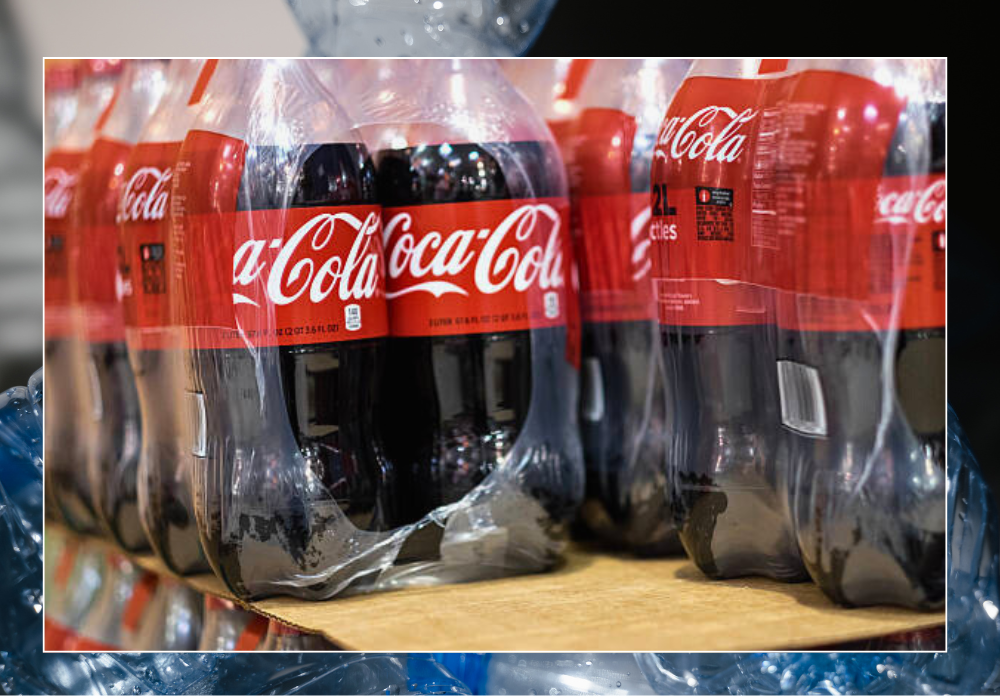
Coca Cola, PepsiCo and Nestle, Top 3 Contributors of Plastic Pollution Globally

Coca Cola, PepsiCo and Nestle, Top 3 Contributors of Plastic Pollution Globally

Global producer responsibility for plastic pollution is a concept that focuses on the role of producers in managing the environmental impact of their products throughout their lifecycle. This approach, known as Extended Producer Responsibility (EPR), encourages manufacturers to design products with minimal environmental impact and take responsibility for the collection, recycling, or disposal of their products once they become waste.

The United Nations Environment Programme (UNEP) has been working on enhancing national and local capacity to implement EPR to reduce plastic pollution and improve resource efficiency. This includes developing global EPR guidelines and supporting toolkits to harmonize EPR approaches.

A recent study highlighted that fewer than 60 multinational companies are responsible for more than half of the world's plastic pollution. It was found that the top five brands globally, including The Coca-Cola Company, PepsiCo, Nestlé, Danone, and Altria, accounted for 24% of the total branded count of plastic pollution. This data underscores the importance of EPR schemes to hold companies accountable for the environmental impact of their products.

Notably, from 2018 to 2022, brand audit events were conducted across six continents with over 100,000 volunteers following a consistent protocol. These audit events have suggested that the largest companies in the food and tobacco sectors were the largest polluters in their region.

Global producers of branded plastic pollution identified

Thirteen companies have an individual contribution of 1% or more of the total branded plastic observed in the audit events. All 13 companies produce food, beverage, or tobacco products. The top company, The Coca-Cola Company, was responsible for 11%, significantly greater than any other company.

The top 5 companies were responsible for 24% of the branded plastic; 56 companies were responsible for greater than 50% of the branded plastic; and 19,586 companies were responsible for all of the branded plastic. It is important to note that the contributions of the top companies may be an under-estimation because there were brands that were not attributed to a company, and there were many unbranded objects.

Branded plastic pollution and production relationship

To understand the relationship between producer plastic production and pollution, the researchers compared two independently collected datasets — the audit event dataset — and — the plastic production dataset derived from the Ellen MacArthur Foundation.

These datasets suggests that larger companies are not doing any better or worse than smaller companies at preventing the plastic they produce from entering the environment. The relationship between production and pollution, production (%) = pollution (%), suggests that production is a very strong lever on pollution. Alternative scenarios could exist where larger companies are doing much worse.

This data underscores the importance of EPR schemes to hold companies accountable for the environmental impact of their products.

EPR policies are being developed and implemented globally to address the urgent issue of plastic pollution. These policies are designed to improve the efficiency and transparency of data management, financing, collection, and recycling of plastics. The United Nations Environment Programme (UNEP) has partnered with various organizations to increase capacity to develop and implement EPR approaches for plastic products, aiming to harmonize these approaches globally. 

EPR policies are based on the "polluter pays" principle and are generally implemented by governments through a set of rules and targets. These policies aim to hold manufacturers accountable for the end-of-life impacts of their plastic products and packaging, and to encourage eco-design in the business sector.

The concept is gaining support from global companies and organizations as a mechanism to provide dedicated funding to increase recycling rates and reduce plastic pollution. Phasing out single-use and short-lived plastic products by the largest polluters could greatly reduce global plastic pollution.

Extended Producer Responsibility (EPR) in India

Extended Producer Responsibility (EPR) in India is a significant environmental policy that mandates producers, importers, and brand owners to manage the disposal of plastic packaging waste. This initiative is part of the Plastic Waste Management Rules, 2016, and aims to ensure that plastic packaging waste is processed through recycling, reuse, or end-of-life disposal methods such as co-processing, waste-to-energy, plastic-to-oil, road making, or industrial composting.

In India, the 2022 Brand Audit analysis by 'Break Free From Plastic' found that PepsiCo, CG Foods India Pvt Ltd, and Perfetti Van Melle were the top three plastic polluters in 2022. The audit events documented more than two lakh (201,543) plastic items, with PepsiCo contributing 19,093 pieces of plastic waste. In previous years, other companies like the Karnataka Milk Federation and Tamil Nadu Co-operative Milk Producers' Federation Ltd were identified as the biggest plastic polluters in India.

These findings underscore the importance of implementing effective Extended Producer Responsibility (EPR) policies to hold companies accountable for the environmental impact of their products. EPR policies in India are designed to ensure that producers are responsible for the lifecycle management of their products, including the collection and recycling of plastic waste. The Central Pollution Control Board (CPCB) has developed an online portal for the registration of producers, importers, and brand owners to improve accountability and transparency in fulfilling EPR obligations. 

While companies like Coca-Cola have pledged to make all packaging recyclable globally by 2025 and Nestlé is said to be working to reduce virgin plastic usage, the study suggests that these measures alone are insufficient. The strong linear relationship between plastic production and pollution indicates that reducing plastic production is pivotal in curbing plastic pollution. Therefore, a fundamental change in regulating plastic producers is crucial in addressing the issue of plastic pollution in India and globally.

The Ministry of Environment, Forest and Climate Change of India has taken steps to streamline the implementation process of EPR by notifying 'Guidelines on Extended Producer Responsibility for Plastic Packaging' in the Schedule II of the Rules on February 16, 2022. These guidelines are designed to strengthen the circular economy of plastic packaging waste, promote the development of new alternatives to plastics, and provide a roadmap for businesses to move towards sustainable plastic packaging.

The Central Pollution Control Board (CPCB) has developed an online centralized portal for the registration of Producers, Importers, and Brand Owners (PIBOs) who operate in more than two states, while those operating in one or two states/UTs are registered with the concerned State Pollution Control Boards (SPCBs). The portal is intended to improve accountability, traceability, and transparency in fulfilling EPR obligations.

The EPR regime in India also includes a market mechanism for the sale and purchase of surplus extended producer responsibility certificates, which is a significant step in formalizing and developing the plastic waste management sector. The implementation of EPR is supported by a customized online platform that acts as the digital backbone of the system, allowing for tracking and monitoring of EPR obligations and reducing the compliance burden for companies through online registration and filing of annual returns.

Overall, EPR in India is a comprehensive approach to tackling plastic pollution by involving producers in the lifecycle management of their products, thereby contributing to environmental sustainability.

Coca-Cola Launches Its Marketplace on ONDC – 'Coke Shop'

Coca-Cola Launches Its Marketplace on ONDC 'Coke Shop'

American beverage giant Coca-Cola's India unit has announced that it has joined the government-initiated Open Network for Digital Commerce (ONDC), while also launching its own marketplace, the 'Coke Shop', on the platform.

The initial association with ONDC is being supported through SellerApp, which will help the company leverage the ONDC network with its data-driven insights, market intelligence, and strategies.

Through the ‘Coke Shop’ marketplace model, Coca-Cola is benefitting retailers by enabling them with another channel to sell their products whilst simultaneously facilitating multiple touchpoints for consumers to purchase from. Retailers who have not been able to access major e-commerce platforms will now have an opportunity to regain customers and cater to a wider audience,” the beverage major said in a statement.

The company joins a slew of FMCG companies that have come onboard ONDC. The other FMCG brands that have joined ONDC include Hindustan Unilever, Polycab,Me n Moms, Mama feast, BRBChips, Ustraa, Sublime, Fackelman, Keventer, Brill, Hyderabad Foods, Healthkart, Nourish Mantra, Buy One Gram, Selzer, and Dugar Oversees.

Coca-Cola rival PepsiCo had already joined ONDC in August this year.

Coca-Cola's bottling partner in India, Moon Beverages Limited, will be the ‘Network Participant’ for its offerings on the platform, ensuring consumers have seamless access to its beverage portfolio, said the company in a release.

"We are happy to see Coca-Cola join onto our network on this transformative journey and give consumers an exceptional shopping experience while offering expanded choices for buyers on the network,” said T Koshy, managing director and chief executive officer, ONDC.

Coca Cola India currently has a strong network of close to ~ 4 million retail outlets across the country.

Coca-Cola Small World Machines is Really Interesting

Coca-Cola, a renowned soft-drink maker world-wide has come up with new marketing gimmick which is really interesting and beautifully give an effort to bring two nations together and when the nations are India & Pakistan it become much more interesting - two siblings tear apart in year 1947 and now used to live with conflicts.

Coca-Cola Small World Machines is Really Interesting

Coca-Cola devised a high-tech vending machines installed in two popular shopping malls in Lahore city of Pakistan and New Delhi of India, two cities separated by only 325 miles. These machines are called - "Small World Machines" which provides a live communications portal (live streaming video) with 3D touchscreen technology to project a streaming video feed onto the vending machine screen while simultaneously filming through the unit to capture a live emotional exchange such as - wave, touch hands, draw a peace sign or dance along with of-course sharing Coca-Cola.


This Small World machines project a streaming video feed onto the vending machine screen while simultaneously filming through the unit to capture a live emotional exchange.

People from both the countries are liking it and sharing peace & love messages despite of their political conflicts.

Via - coca-colacompany.com

Market Reports

Market Report & Surveys
IndianWeb2.com © all rights reserved