‏إظهار الرسائل ذات التسميات Sri Lanka. إظهار كافة الرسائل

Renault India Resumes Exports to Sri Lanka, Expands Global Footprint to 16 Countries

Renault India Resumes Exports to Sri Lanka, Expands Global Footprint to 16 Countries

First shipment of 100 Made-in-India vehicles dispatched from Chennai; New Duster planned for Sri Lankan market

Renault India, a wholly owned subsidiary of Renault Group, has resumed exports to Sri Lanka, taking its international export footprint to 16 countries. The first shipment of 100 vehicles, comprising the all-new Triber, Kwid and Kiger, has departed from Chennai, marking Renault’s return to the island nation.

Renault will re-enter the Sri Lankan market in partnership with AMW Motors, one of the country’s leading automotive distributors. The partnership will support Renault’s renewed commercial presence in Sri Lanka and provide the foundation for the brand’s next phase of growth in the market.

Commenting on the development, Francisco Hidalgo, Vice President, Sales & Marketing, Renault India, said, “The resumption of exports to Sri Lanka is an important step in our international growth journey. We see significant potential to expand the reach of vehicles engineered and manufactured in India, while strengthening India’s role as an export base for Renault. Our focus is to build sustainable markets over the long term, supported by strong local partnerships and a product portfolio suited to customer needs.”

Renault India Resumes Exports to Sri Lanka, Expands Global Footprint to 16 Countries

The vehicles being exported to Sri Lanka are manufactured at Renault India’s facility in Oragadam, Chennai. The plant supports both domestic requirements and international markets, underscoring the growing role of Renault’s Indian manufacturing operations within the Group’s wider business.

Renault India also plans to broaden its offering in Sri Lanka over time, with the New Duster among the products slated for introduction. The expanded portfolio will enable the company to participate across a wider range of segments as it rebuilds its presence in the country.

India already serves as an important source of Renault vehicles for overseas markets. The company has exported nearly 200,000 vehicles from India to date, with destinations including South Africa and Saudi Arabia, alongside several other international markets.

Tata Motors Launches Its Passenger Vehicle Portfolio in Sri Lanka

Tata Motors Launch of Its Passenger Vehicle Portfolio in Sri Lanka

Tata Motors has made a return to the Sri Lankan market by launching an all-new range of passenger vehicles, including electric vehicles, reported news agency PTI. In partnership with its sole authorized distributor in Sri Lanka, DIMO, Tata Motors introduced a variety of SUVs such as the Punch, Nexon, and Curvv, along with the popular electric hatchback, Tiago.ev.

The launch also showcased the electric versions of these models, highlighting Tata Motors' capabilities in electric vehicle development.

Yash Khandelwal, Head of International Business at Tata Passenger Electric Mobility, expressed excitement about this new chapter in their international business strategy. The vehicles come with warranties and 24/7 roadside assistance, ensuring a comprehensive customer experience.

This move marks Tata Motors' re-entry into the Sri Lankan market, aiming to elevate the mobility landscape and deliver an extraordinary driving experience.

Tata Motors’ latest launch marks a deliberate and strategic move to re-establish its presence in Sri Lanka—a market that has long valued robust, efficient, and versatile vehicles. Having built a reputation in India and other emerging economies, Tata Motors is leveraging its extensive product portfolio to meet local needs and environmental aspirations.

The launch isn’t a single-model re-entry but a comprehensive rollout of its passenger vehicle portfolio—both combustion-engine and electric variants—to serve a range of customer segments. From urban commuters to families needing a robust SUV, Tata Motors is positioning itself as a one-stop solution provider in the region.

Tata Motors’ launch is more than a product rollout—it’s a thoughtful response to evolving market dynamics. Sri Lankan roads present a variety of challenges, from urban congestion to rural expanses. The diverse lineup addresses these conditions by offering vehicles that balance compactness with durability.

With the introduction of the Tiago.ev and the electric variants of models like the Nexon, Tata Motors is tapping into the early stages of EV adoption in Sri Lanka. This move is not only environmentally conscious but also positions the company as an innovation-led entity in the region.

With DIMO’s established service centers, owners can expect a smooth experience—from regular maintenance to timely updates on software and connectivity features.

Competition in Sri Lankan Market

Tata Motors' re-entry into the Sri Lankan market positions it against several local and international competitors including Maruti Suzuki, Hyundai, Toyota, and Nissan among others.

While Hyundai has higher price points for some models compared to Tata Motors. Maruti Suzuki has limited electric vehicle (EV) offerings compared to Tata Motors. Toyota too has limited EV options in the Sri Lankan market. Nissan has smaller market share compared to Hyundai and Toyota.

Tata Motors offers a comprehensive range of vehicles, including the Punch, Nexon, Curvv, and Tiago.ev. Besides, Tata Motors' vehicles are competitively priced, offering a balance of affordability and advanced features. The company also provides extensive warranties and 24/7 roadside assistance.

Sri Lankan Regulator Decline Approval for Adani Green's 484 MW Wind Power Project

Sri Lankan Regulator Decline Approval for Adani Green's 484 MW Wind Power Project

The Public Utilities Commission of Sri Lanka (PUCSL) has declined to grant approval for the procurement of the 484 MW wind power plant in Mannar and Pooneryn to Adani Green Energy SL Ltd. (AGESL), reported the Sunday Times.

Mentioning a copy of a letter from the power sector regulator to the Ceylon Electricity Board (CEB) 's Acting General Manager, the report said that the reason for the refusal by PUCSL is that the information submitted by the CEB was inadequate to assess the least cost and technical compatibility. It appears that even basic details, such as the full draft power purchase agreement (PPA) between the CEB and AGESL, were not provided.

The CEB has requested PUCSL permission to award the power plants to AGESL under the Sri Lanka Electricity Act. However, the schedules of the draft PPA, the signed memorandum of understanding (MoU) with the Government of India, and clearance granted by the Attorney General’s Department were missing.

The environmental impact assessment (EIA) results and details of the environmental license issued by the Central Environmental Authority (CEA) were not submitted either. The PUCSL has requested additional information to process the approval.

The procurement details for the construction of the 400kV transmission line from Kilinochchi to Habarana and the related cost-recovery mechanism too are missing, along with information regarding bid values received for the tender called for the 50 MW wind power plant in Mannar, situated in close proximity to the Adani project.

In February 2023, Sri Lanka's Board of Investment approved the development of a $442-million wind power project by Adani Green Energy. The proposed wind power plants were to be built in Mannar and Pooneryn in Northern Sri Lanka.

Last week, the Bishop of the Diocese of Mannar, a Roman Catholic diocese for north-western Sri Lanka, and three prominent environmentalists filed a public interest litigation in the Sri Lankan Supreme Court challenging the 250 MW Mannar Wind Power Project.

This legal challenge is the first faced by the formidable Adani Group in Sri Lanka. The litigation questions the procurement process, construction, and credibility of the Project's environmental impact assessment (EIA). It names 67 respondents, including the Cabinet of Ministers, the Sri Lanka Sustainable Energy Authority (SLSEA), and the Attorney General.

The negotiated tariff for Adani's wind power project is $0.0826 (8.26 cents per kilowatt-hour) for 20 years. However, independent Sri Lankan energy experts argue that Adani sells power to the Indian state at less than $0.04 per kWh. The petition challenges the basis for this tariff, expressing concerns about financial losses for Sri Lanka and consumer burden.

The petitioners highlight that data related to the project has not been made available for public scrutiny. They request the release of all files and records, including bids, deliberations, and project assessments.

The decision by the Public Utilities Commission of Sri Lanka (PUCSL) to refuse approval for the project could impact energy supply, investment, and renewable energy goals in the country.

AGESL's next steps involve addressing the PUCSL's concerns, providing additional information, and engaging with regulators.

In summary, this project faces legal challenges, tariff debates, and transparency issues. The outcome will shape Sri Lanka's renewable energy landscape.

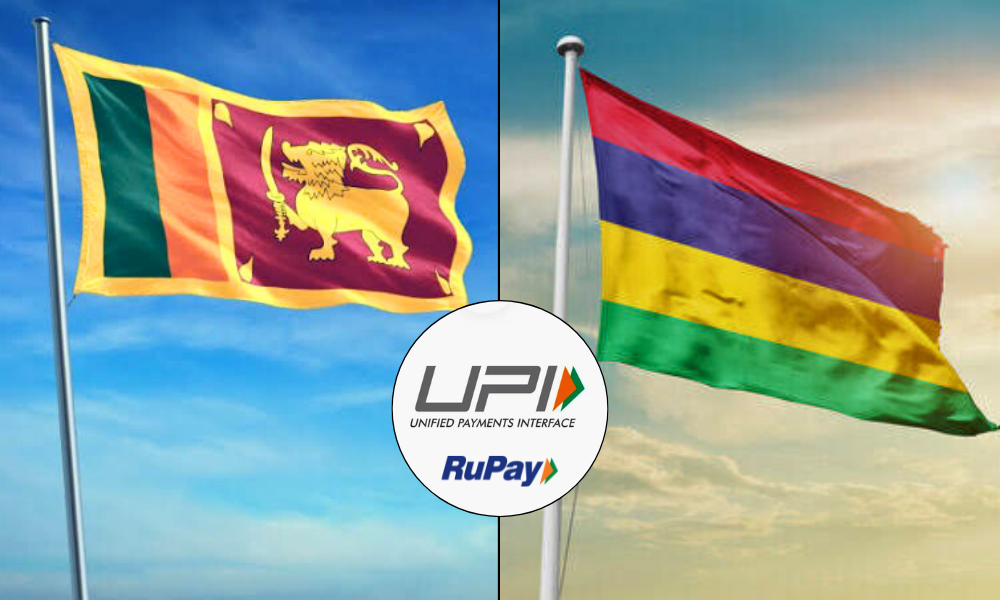
India Launches RuPay Cards and UPI Connectivity in Mauritius and Sri Lanka

India Launches RuPay Cards and UPI Connectivity in Mauritius and Sri Lanka
  • PM jointly inaugurates UPI services with Mauritius PM & Sri Lankan President
  • India’s policy is ‘Neighborhood First’. Our maritime vision is SAGAR i.e. Security And Growth for All in the Region
  • By connecting with UPI both Sri Lanka and Mauritius will benefit and digital transformation will get a boost”
  • After Nepal, Bhutan, Singapore and UAE in the Gulf in Asia, now from Mauritius, RuPay card is being launched in Africa. 
The Prime Minister, Mr Narendra Modi, on Monday, along with the President of Sri Lanka, Mr Ranil Wickremesinghe and the Prime Minister of Mauritius, Mr Pravind Jugnauth jointly inaugurated the launch of Unified Payment Interface (UPI) services in Sri Lanka and Mauritius, and also RuPay card services in Mauritius via video conferencing.

Mauritius PM, Mr Pravind Jugnauth, informed that co-branded Rupay card will be designated as domestic card in Mauritius. This launch will greatly facilitate the citizens of both countries said the PM.

With this UPI services connectivity, an Indian traveller to Mauritius will be able to pay a merchant in Mauritius using UPI. Similarly, a Mauritian traveller will be able to do the same in India using the Instant Payment System (IPS) app of Mauritius.

Further, with the adoption of RuPay technology, the MauCAS card scheme of Mauritius will enable banks in Mauritius to issue RuPay cards domestically which can be used at ATMs and PoS terminals locally in Mauritius as well as in India. With this, Mauritius becomes the first country outside Asia to issue cards using RuPay technology. Indian RuPay cards would also be accepted at ATMs and PoS terminals in Mauritius.

The digital payments connectivity with Sri Lanka will enable Indian travellers to make QR code-based payments at merchant locations in Sri Lanka using their UPI apps.

These projects have been developed and executed by NPCI International Payments Limited (NIPL) along with partner banks / non-banks from Mauritius and Sri Lanka, under the guidance and support of Reserve Bank of India. The Bank of Mauritius and the Central Bank of Sri Lanka have also played an important role in making these possible. The above facilities have been made operational through select banks / non-banks / Third Party Application Providers in India, Mauritius and Sri Lanka. Going forward, these facilities will be scaled up.

The collaborations on India's digital payments connectivity with Mauritius and Sri Lanka through UPI and RuPay will deepen financial integration and strengthen the long historical, cultural, and economic relations of India with Mauritius and Sri Lanka.

CWIT, An Adani’s JV in Sri Lanka To Get $553 Mn Fund from U.S. Development Finance Institution (DFC)

CWIT, An Adani’s JV In Sri Lanka To Get $553 Mn Fund from U.S. Development Finance Institution (DFC)
  • U.S. fund will support development of deepwater shipping container terminal in the Port of Colombo
  • Will facilitate private sector-led growth and attract crucial foreign exchange to Sri Lanka to aid in its economic recovery
  • U.S., Sri Lanka and India to foster an enduring legacy of cooperation in the development of sustainable infrastructure, like smart and green ports
  • U.S. International Development Finance Corporation (DFC) has announced that it will be funding Colombo West International Terminal Pvt. Ltd. (CWIT) – a consortium of India's largest port operator Adani Ports and SEZ Ltd., Sri Lanka's leading enterprise John Keells Holdings (JKH) and the Sri Lanka Ports Authority – to the tune of USD 553 million. 
The U.S. International Development Finance Corporation (DFC) today announced it has committed more than half a billion dollars i.e. USD $553 million, to support the development of a deepwater shipping container terminal in the Port of Colombo, Sri Lanka, that will provide critical infrastructure for the South Asian region.

This is the first time that the U.S. government, through one of its agencies, is funding an Adani project, which is as a ringing endorsement of the Adani Group. It shows their confidence in the Group’s ability to invest and to create a world class container facility in Colombo Port.

DFC will be funding Colombo West International Terminal Pvt. Ltd. (CWIT) – a consortium of India's largest port operator Adani Ports and SEZ Ltd., Sri Lanka's leading enterprise John Keells Holdings (JKH) and the Sri Lanka Ports Authority – to the tune of USD 553 million.

“We welcome the association of the U.S. International Development Finance Corporation (DFC), the U.S. government’s development finance institution, in funding the Adani project – and we see this as a reaffirmation by the international community of our vision, our capabilities and our governance,” said Mr Karan Adani, Whole Time Director and CEO, Adani Ports and Special Economic Zone. “As one of the world’s largest port developers and operators, APSEZ brings to this project not only our proven world-class expertise but also our deep experience in infrastructure creation. When completed, Colombo West International Terminal project will transform the socio-economic landscape, not just in Colombo but across the island, through thousands of direct and indirect new employment opportunities and by massively boosting Sri Lanka’s trade and commerce ecosystem.”

The Port of Colombo is the largest and busiest transshipment port in the Indian Ocean. It has been operating at more than 90% utilization since 2021, signalling its need for additional capacity. The new terminal will cater to growing economies in the Bay of Bengal, taking advantage of Sri Lanka’s prime position on major shipping routes and its proximity to these expanding markets.

“DFC works to drive private sector investments that advance development and economic growth while strengthening the strategic positions of our partners. That’s what we’re delivering with this infrastructure investment in the Port of Colombo,” said DFC CEO Mr Scott Nathan. “Sri Lanka is one of the world’s key transit hubs, with half of all container ships transiting through its waters. DFC’s commitment of $553 million in private-sector loans for the West Container Terminal will expand its shipping capacity, creating greater prosperity for Sri Lanka – without adding to sovereign debt – while at the same time strengthening the position of our allies across the region.”

U.S. Ambassador to Sri Lanka Ms Julie Chung said, “The $553 million investment by DFC for the long-term development of the Port of Colombo’s West Container Terminal will facilitate private sector-led growth in Sri Lanka and attract crucial foreign exchange inflows during its economic recovery. Sri Lanka regaining its economic footing will further our shared vision for a free and prosperous Indo-Pacific.”

Mr Krishan Balendra, Chairperson, John Keells Holdings, said” DFC’s investment is an endorsement of the potential of the West Terminal project and a boost for investor confidence as Sri Lanka’s economy recovers”.

The Adani Group is expanding its global footprint through strategic investments in emerging markets. Adani Ports has positioned itself as the market leader in the transport logistics and energy utility portfolio businesses, focusing on largescale infrastructure development in India with operations and management practices benchmarked to global standards. Through its continued commitment to creating stellar and sustainable assets, the Group is playing a vital role in building a better future for India and the world.

The Port of Colombo is the largest and busiest transshipment port in the Indian Ocean. It has been operating at more than 90 percent utilization since 2021, signaling its need for additional capacity. The new terminal will cater to growing economies in the Bay of Bengal, taking advantage of Sri Lanka’s prime position on major shipping routes and its proximity to these expanding markets.

Market Reports

Market Report & Surveys
IndianWeb2.com © all rights reserved