Showing posts with label Social Media. Show all posts

Prophecy or Entertainment?: Origins & Historical Evolution of Tarrot Card Reading

Prophecy or Entertainment?: Origins & Historical Evolution of Tarrot Cards and Reading

Tarot began as a 15th‑century Italian playing‑card tradition and only became a divination system in the 18th–19th centuries; since the 2010s tarot content—especially on YouTube—has transformed readings into mass entertainment, wellness content, and creator‑driven micro‑businesses, including a fast‑growing Indian creator scene.

The word Tarot comes from Italian tarocchi (singular tarocco), adopted into French as tarot in the 16th century; its ultimate origin is uncertain, with scholars proposing possible links to Arabic or other medieval terms.

The cards themselves first appear in northern Italy as a special set of playing cards used for trick‑taking games (early names included trionfi). By the early 1500s the Italian term tarocchi was established for the special cards and the whole pack. In late 18th century, the association of tarot with occultism and fortune‑telling emerges; before that, tarot was primarily a game.

Tarot’s global visibility and commercial footprint rose sharply after 2020, driven mainly by short‑form social video and e‑commerce; key measurable signals are large TikTok hashtag volumes, sustained Google search interest, industry market forecasts (~3% CAGR), and survey evidence that roughly one‑third of U.S. adults engage with astrology/tarot at least occasionally.

Social media signals: the hashtag #tarot and related tags register millions of posts on short‑form platforms, with aggregate view counts in the billions for related content formats such as “pick‑a‑card.”

Platform growth driver: short‑form video virality (TikTok) is the primary amplifier since about 2020–2021, producing rapid follower growth for creators and frequent viral formats.

Origins and historical evolution

15th century — Playing cards

Tarot cards first appear in northern Italy as trick-taking playing cards (tarocchi/trionfi). Early decks were luxury, hand-painted items for nobility.

18th–19th centuries — Occult reinterpretation

Occultists and mystics reinterpreted tarot imagery for cartomancy and esoteric systems, shifting tarot from game to divination.

Early 20th century — Standardization

The Rider–Waite deck (1909) and similar publications standardized much of modern symbolism used by readers today.

Late 20th century onward — Therapeutic & creative uses

Tarot is used in psychological reflection, art, and spiritual coaching, not only fortune-telling.

Evolution on social media and YouTube

Prophecy or Entertainment?: Origins & Historical Evolution of Tarrot Card Reading
  • Early adopters (mid-2000s) — Individual readers posted tutorials and sample readings; video format allowed live interaction and longer narrative readings.
  • 2010s–2020s — Format diversification — Pick‑a‑card videos, live readings, deck unboxings/reviews, tutorials, and short‑form clips became common and algorithm-friendly.
  • Monetization & community — Creators monetize via ads, memberships, Patreon, paid private readings, and deck affiliate sales.
  • Localization (India relevance) — Indian creators blend astrology, local spiritual practices, and bilingual content to expand regional reach.

Key impacts and trends

  • Democratization — Access widened; expertise varies widely.
  • Hybrid wellness framing — Tarot often presented as self-help prompts rather than deterministic prophecy.
  • Visual culture shapes meaning — Deck art and on-camera persona influence which interpretations go viral.

Practical next steps

  • Academic history — Start with encyclopedias and scholarly works on European card games and occultism.
  • Contemporary practice — Use YouTube playlists for pick‑a‑card, deck reviews, and live streams; evaluate creators by transparency and community feedback.

Risks, limitations, and ethics

  • Misinformation & overclaiming — Verify historical claims with reliable sources.
  • Commercial exploitation — Paid readings and memberships can exploit vulnerability; check credentials and refund policies.
  • Cultural sensitivity — Some decks borrow symbols from living cultures without context.

Summary table

Topic Core point Timeframe
Origins Started as Italian playing cards; later used for divination. 15th–19th centuries
Standardization Rider–Waite and similar decks set modern symbolism. Early 20th century
Social media evolution YouTube popularized pick‑a‑card, live readings, and short clips. 2000s–2020s
Impact Democratization, wellness framing, and visual-driven virality. Contemporary

Most tarot creators by region

Most tarot creators by region

Most tarot content creators are concentrated in English‑speaking markets—primarily North America—followed by rapidly growing creator pools in South Asia (India) and Latin America. North America hosts the largest absolute number of creators due to platform maturity and English reach.

Regional snapshot (why numbers skew this way)

  • North America (US/Canada, UK, Australia) — Highest creator count; platform origin, English reach, and monetization infrastructure.
  • South Asia (India) — Rapid growth; bilingual creators blend tarot with astrology and local spiritual practices.
  • Latin America (Brazil, Spanish‑speaking LATAM) — High regional density; strong Portuguese/Spanish creators focused on witchcraft and tarot.
  • Europe (Western EU, UK) — Moderate; active English and local‑language creators with festival/occult community crossover.
  • Other regions (Africa, SE Asia) — Smaller but growing; emergence tied to smartphone and short‑form adoption.

Key reasons North America leads

  • Platform maturity and monetization — YouTube, TikTok, and Instagram scale creators into sustainable channels.
  • English as lingua franca — English content reaches global audiences, inflating counts for Anglophone creators.

India and Brazil: notable growth patterns

  • India — Bilingual delivery (Hindi/English) and astrology crossovers accelerate reach across South Asia.
  • Brazil/LATAM — High engagement around witchcraft and tarot; creators build tight community bonds.

Risks and caveats

  • Data volatility — Follower counts and rankings change rapidly; use live lists for exact numbers.
  • Quality vs quantity — High creator numbers in a region don’t guarantee quality or ethical practice.

Regional overview table

Region Relative creator count Why it leads / notes
North America (US/Canada, UK, Australia) Highest Platform origin, English reach, monetization infrastructure.
South Asia (India) Rapidly growing Bilingual creators; tarot + astrology crossovers.
Latin America (Brazil, LATAM) High regional density Strong Portuguese/Spanish creators; high engagement.
Europe (Western EU, UK) Moderate Active local‑language creators; festival and occult community crossover.

Representative creators and platforms (quick table)

Region Representative creators / examples Top platforms Why follow
North America Established teacher‑brands; high‑reach English readers YouTube; Instagram; TikTok Long tutorials, deck reviews, paid courses and high production value
South Asia (India) Munisha Khatwani; Tarot Pooja Verma (examples) Instagram; YouTube Bilingual readings, astrology crossovers, culturally contextual content
Latin America (Brazil) Pri Ferraz / Diario da Bruxa (regional examples) Instagram; YouTube Witchcraft + tarot content, strong community engagement
Europe (Western EU, UK) Local readers and English creators (examples on influencer lists) YouTube; Instagram Niche decks, historical/contextual content, festival and occult community crossover

Scientific Evidence & Reports

Prophecy or Entertainment?: Origins & Historical Evolution of Tarrot Card Reading

There is no robust, reproducible scientific evidence that tarot cards provide paranormal predictions; most controlled studies and psychological research treat readings as psychological or entertainment phenomena rather than verified prophecy.

What the research shows

  • Controlled experiments comparing “real” tarot readings with randomized/control readings generally find no reliable ability to distinguish meaningful accuracy beyond chance; results are interpreted within psychological frameworks (suggestion, cold reading, subjective validation).
  • Academic investigations place tarot within broader studies of magical thinking, ritual, and meaning‑making; these works treat divination as a cultural and psychological practice rather than a validated predictive technology.
  • Recent reviews emphasize psychological effects (comfort, narrative framing, decision support) and call for more rigorous methods if claims of paranormal efficacy are to be tested.

Quick comparison table

Claim What evidence exists Interpretation
Tarot predicts future (paranormal) No reproducible, peer‑reviewed evidence showing consistent predictive power in controlled tests. Not supported by current scientific standards.
Tarot offers psychological insight Empirical and theoretical studies show effects on meaning‑making, reflection, and decision framing. Supported as a therapeutic/reflective tool (non‑paranormal).
Tarot as entertainment/performance Ethnographic and media analyses document performative, community, and entertainment roles on social platforms. Supported — many users treat readings as entertainment or guidance.

How to evaluate claims yourself

  • Ask for testable evidence: documented predictions with timestamps and verifiable outcomes.
  • Look for controlled studies (double‑blind, randomized) rather than anecdotes. Anecdotes are not proof.
  • Assess intent: many creators frame readings as entertainment, coaching, or spiritual practice rather than scientific forecasting.

Practical guidance

  • Treat readings as reflective prompts: use them to surface options and feelings, not as deterministic forecasts.
  • If paying for readings, prefer readers who explain methods, limits, and refund policies and who avoid absolute predictive claims.

Risks and caveats

  • Emotional vulnerability: people seeking certainty can be exploited; verify credentials and avoid high‑pressure upsells.
  • Confirmation bias: people remember hits and forget misses; this inflates perceived accuracy.

Annotated reading list

There is no reproducible scientific evidence that tarot predicts the future; the strongest empirical work treats tarot as psychological, cultural, or performative rather than a validated predictive tool.

  1. Ivtzan, I. & French, C. — “Testing the validity of Tarot cards: Can we distinguish between a real and a control reading?”
    Ivtzan & French — Testing the validity of Tarot cards (ResearchGate)
    Key point: Participants did not reliably rate “real” readings as more relevant than randomized controls; results support non‑paranormal explanations (suggestion, cold reading, subjective validation).
  2. Hofer, Gigi — Tarot Cards: An Investigation of their Benefit as a Tool for Self‑Reflection (MA thesis, University of Victoria)
    Hofer — Tarot Cards: Benefit as a Tool for Self‑Reflection (thesis)
    Useful for: qualitative and mixed‑methods exploration of tarot’s role in self‑reflection and meaning‑making rather than paranormal forecasting.
  3. Mehta, Kabir — “The Psychological Impact of Tarot Card Readings: A Systematic Review of Empirical Studies” (Indian Journal of Astrology and Occult, 2024)
    Mehta — Psychological Impact of Tarot (IJAO, 2024)
    Note: Synthesizes empirical work showing tarot’s effects on meaning‑making, emotional regulation, and decision framing; check inclusion criteria and journal standards.
  4. Richard Wiseman — writings and resources on cold reading and psychic claims
    Richard Wiseman — research and articles
    Useful for: background on cold reading and cognitive techniques that create impressions of paranormal insight.
  5. Overview and historical context
    Tarot — Wikipedia
    Useful for: historical origins and how tarot shifted from playing cards to divination practice; good contextual background.

How to use these sources

  • Start with the experimental papers (Ivtzan & French) to see controlled methods and null results.
  • Read theses and reviews (Hofer, Mehta) for qualitative nuance and synthesis of smaller studies.
  • Use Wiseman’s materials to learn about cold reading and cognitive biases that explain perceived hits.

Conclusion 

Treat online tarot readings primarily as symbolic prompts, entertainment, or reflective tools rather than literal forecasts. Short‑form platforms amplify dramatic, repeatable formats that feel convincing but often rely on cold‑reading techniques, suggestion, and selective memory; use readings to surface feelings, options, and questions rather than to make irreversible decisions. Look for transparency from readers about methods and limits, sample free content before paying, and prefer those who explain their approach, offer clear refund policies, and avoid absolute predictive claims.

Be mindful of cognitive biases and emotional vulnerability: confirmation bias makes hits memorable and misses easy to forget, and high‑pressure upsells are a common red flag. If you want verifiable claims tested, ask for documented, time‑stamped predictions and independent verification; otherwise treat paid readings as coaching or creative guidance. For practical use, combine short readings with your own judgment, seek professional advice for legal/medical/financial matters, and follow creators whose ethics and methods you can evaluate from their public work.

TikTok Surpasses YouTube and Instagram in News Reach

TikTok Surpasses YouTube and Instagram in News Reach

TikTok has officially overtaken YouTube and Instagram as the leading social app for news among young people in 2025. According to fresh Pew Research data, 43% of U.S. adults aged 18–29 now regularly get their news from TikTok, compared to 41% from YouTube and Facebook, and 40% from Instagram.

Key Findings

  • TikTok leads the pack: For the first time, TikTok is the top social media platform for news among young Americans.
  • Close competition: YouTube and Facebook are tied at 41%, while Instagram follows at 40%.
  • Other platforms lag: X (formerly Twitter) sits at 21%, and Reddit at 18%.
  • Social media dominance overall: 67% of young adults say they often or sometimes rely on social media for news, compared to 60% who use traditional news websites.

Why TikTok is Winning

  • Short-form video appeal: TikTok’s algorithm delivers bite-sized, engaging news clips that match young audiences’ consumption habits.
  • Community-driven content: Users often encounter news through creators, commentary, and stitched videos rather than traditional outlets.
  • Platform investment: TikTok has rolled out tools for publishers and community fact-checking, making it more credible as a news source.
  • Cultural relevance: TikTok’s meme-driven, fast-moving style resonates with younger audiences who prefer conversational and visual formats over long articles.

Risks & Challenges

  • Misinformation: TikTok’s viral nature means false or misleading content can spread quickly.
  • Algorithmic bias: News exposure depends heavily on TikTok’s recommendation system, which may skew perspectives.
  • Credibility gap: While TikTok is popular, traditional outlets still hold more trust among older demographics.
  • Regulatory scrutiny: Governments are increasingly concerned about TikTok’s influence on public opinion and its role in shaping political discourse.

Comparison Table

Platform % of Young Adults (18–29) Using for News Strengths Weaknesses
TikTok 43% Engaging short-form video, cultural relevance, creator-driven Misinformation risk, algorithm bias
YouTube 41% Long-form depth, established creators Less immediacy, slower trend adoption
Facebook 41% Broad reach, community groups Declining youth engagement, credibility issues
Instagram 40% Visual storytelling, lifestyle + news blend Less focus on hard news
X (Twitter) 21% Real-time updates, breaking news Toxic discourse, declining trust
Reddit 18% Niche communities, in-depth discussion Fragmented, not mainstream

TikTok’s rise marks a seismic shift in how younger generations consume news — away from traditional outlets and even away from older social platforms, toward algorithm-driven, creator-led ecosystems.

From Gully to Global: How Digital Platforms are Reshaping India's Sporting Game

From Gully to Global: How Digital Platforms are Reshaping India's Sporting Game

For generations, the sound of leather on willow in a dusty field defined Indian sports. Today, it's competing with the digital pings of fantasy league notifications, live-stream alerts, and esports tournaments. India's relationship with sports games is undergoing a radical, tech-driven transformation, moving far beyond the boundary ropes of cricket into a dynamic, multi-sport digital ecosystem.

While the passion for the game remains, the way Indians consume, engage, and participate in sports is being rewritten by startups, streaming services, and a smartphone-savvy generation. This isn't just a change in content; it's a fundamental shift in culture.

The Digital Pitch: Fantasy Sports and the New Age of Fandom

The most significant disruptor has been the fantasy sports platform. Apps like Dream11 have done the unthinkable: they've made a fan the virtual manager of their own team. This has had a ripple effect:

  • Deepened Engagement: A match between two mid-table teams suddenly has high stakes for millions of users who have players from both sides in their fantasy XI.

  • Democratized Knowledge: Success in fantasy leagues requires deep statistical analysis and knowledge of players beyond the superstars, making fans more informed than ever.

  • Bridged the Gap with Non-Cricket Sports: The model has successfully been applied to kabaddi (PKL), football (ISL), and basketball (BNL), driving viewership and interest in these leagues.

This analytical, data-driven approach to fandom has created a new breed of sports enthusiast. For those looking to deepen their strategic edge in this arena, platforms like Crorebet India provide crucial insights and analysis, becoming an integral part of the modern fan's toolkit.

The Streaming Revolution: Accessibility Creates Stars

The rise of OTT (Over-the-Top) platforms like Disney+ Hotstar, SonyLIV, and JioTV has been a game-changer. Earlier, access to non-cricket sports was limited. Now, anyone with a smartphone and a data connection can watch live badminton, wrestling, or volleyball.

This accessibility is crucial for building sporting culture. It allows a budding athlete in a small town to watch and learn from P.V. Sindhu or an emerging kabaddi player to study the moves of Pardeep Narwal. By bringing a diverse array of sports directly to the consumer, streaming services are building the stars and narratives that fuel the next wave of participation.

The Rise of Esports: When the Game Itself is Digital

No discussion of sports games in modern India is complete without esports. What was once dismissed as a mere pastime is now a serious career path with organized leagues, professional teams, and massive prize pools. Games like BGMI (Battlegrounds Mobile India), Valorant, and Dota 2 are drawing viewership numbers that rival traditional sports.

The infrastructure is formalizing rapidly, with:

  • Dedicated leagues like the ESL India Premiership.

  • Investment from major team owners from the IPL and ISL.

  • Recognition from official bodies, paving the way for it to be considered a "mainstream" sport.

This represents the ultimate fusion of India's tech prowess and its sporting passion, creating a completely new arena for competition.

The Social Media Play: Building Communities in Real-Time

Social media platforms like Instagram, Twitter, and YouTube have become the de facto "digital stadium stands." They provide:

  • Unfiltered Access: Fans can interact directly with their favourite athletes.

  • Behind-the-Scenes Content: Building a personal connection that TV never could.

  • Viral Moments: A spectacular goal or a record-breaking throw trends nationally within minutes, amplifying the sport's reach exponentially.

This constant, real-time connection keeps the conversation around sports games alive 24/7, far beyond the 90 minutes of play.

The Final Whistle: A Connected Sporting Future

The landscape of sports games in India is no longer just about what happens on the field. It's a complex, interconnected digital ecosystem comprising fantasy apps, streaming wars, esports leagues, and social media chatter. This digital revolution is not replacing the raw emotion of sports; it's amplifying it, creating a more engaged, knowledgeable, and diverse sporting community.

The future promises even deeper integration with technologies like VR and AR, potentially offering immersive viewing experiences. One thing is clear: in the playing fields of India, the digital and the physical have merged for good, creating a thrilling new game for fans and athletes alike.

#Unplugged: How Vodafone’s Digital Wellbeing Campaign in EU Can Inspire Telcos Across Asia

#Unplugged: How Vodafone’s Digital Wellbeing Campaign in EU Can Inspire Telcos Across Asia

In an era of hyperconnectivity, the Vodafone Foundation’s new pan-European initiative, #Unplugged, offers a timely and replicable blueprint for promoting digital wellbeing among young people. Launched this week across six European countries, the campaign is a social-first movement designed to foster healthier digital habits—without preaching abstinence. For telecom operators and digital foundations in Asia, #Unplugged presents a compelling model for engagement, education, and impact.

What Is #Unplugged?

#Unplugged is an 8-week social media campaign targeting teenagers and young adults across Albania, Germany, the Netherlands, Portugal, Romania, and Spain. It’s hosted on Vodafone Foundation’s Kliick feeds and delivered by local content creators in native languages. The tone is playful, relatable, and challenge-driven—designed to resonate with Gen Z on platforms like TikTok, Instagram, and YouTube.

Rather than advocating for digital detoxes, the campaign encourages:
  • Mindful screen time
  • Offline engagement
  • Self-reflection
It’s about balance, not restriction.

Why It Matters

Vodafone Foundation’s study in Germany revealed:
  • 69% of youth spend over 2 hours daily on social media
  • 29% feel stressed by their usage
  • 26% feel guilty about it
These numbers echo trends across Asia, where smartphone penetration is high and digital stress is rising. From Seoul to Mumbai, Jakarta to Manila, young people are navigating the same pressures—constant notifications, algorithmic addiction, and blurred boundaries between online and offline life.

Why Asia’s Telcos Should Pay Attention

Asia is home to some of the world’s most digitally active youth populations. Telcos here are not just connectivity providers—they’re cultural influencers, content distributors, and digital educators. By adapting #Unplugged, they can:
  • Build trust with younger audiences through authentic, wellbeing-focused messaging
  • Support national digital literacy goals and mental health initiatives
  • Strengthen ESG credentials with measurable social impact
  • Collaborate with educators, creators, and NGOs to localize content and amplify reach

How to Localize #Unplugged in Asia

Component European Model Asian Adaptation
Platform TikTok, Instagram, YouTube Add WhatsApp, LINE, WeChat, and regional platforms like Moj or ShareChat
Content Creators Local influencers in native languages Partner with youth icons, educators, and mental health advocates
Tone Humorous, challenge-based Blend humor with cultural sensitivity and local storytelling
Policy Linkage Vodafone’s Skills Upload Junior + Save the Children Align with national digital literacy programs, school curriculums, and CSR mandates
Measurement Reach, engagement, sentiment Add mental health surveys, school partnerships, and community feedback loops

A Call to Action for Asia’s Telcos

The digital wellbeing of young people is no longer a fringe issue—it’s central to the future of inclusive, responsible connectivity. Campaigns like #Unplugged show that telcos can lead with empathy, creativity, and impact. By adapting this model, Asian telecom companies can move beyond infrastructure and into influence—shaping healthier digital cultures for the next generation.

God of Cricket Sachin Tendulkar Joins Reddit as Brand Ambassador

God of Cricket Sachin Tendulkar Joins Reddit as Brand Ambassador

Cricket legend Sachin Tendulkar has teamed up with Reddit as their new brand ambassador. That’s right—the man who ruled the pitch is now part of the internet’s favorite hangout spot.

Tendulkar 99 has his own Reddit account, u/SachinTendulkar, where he’ll post personal thoughts, match memories, and behind-the-scenes stories. He’ll also join discussions in popular cricket communities like r/IndiaCricket and r/SachinTendulkar, giving fans a chance to hear directly from him.


Reddit's Vice President of International Growth, Durgesh Kaushik, said, "Sachin Tendulkar, a name synonymous with cricket excellence, possessed a remarkable ability to transcend boundaries and unite people through his extraordinary talent. His presence on the field fostered a powerful sense of community among fans, who were drawn together by their shared admiration for the "Master Blaster".

"This unifying community spirit is precisely what we aim to empower and cultivate at Reddit. We envision Reddit's cricket communities becoming vibrant digital spaces where fans from every corner of the globe can come together, connect, and share their passion for the sport, and most importantly, engage directly with the legendary Sachin Tendulkar. We are immensely proud and excited to officially welcome the "Master Blaster" as Reddit's Brand Ambassador. We believe that his participation will enrich the experience for cricket fans worldwide, offering them unprecedented opportunities for interacting and connecting with one of the game's greatest icons."

Reddit chose Sachin as part of its push to grow its sports audience—especially in India. In the past year alone, cricket discussions on Reddit got 3.7 billion views and 32 million interactions. Overall, sports content has grown 30% on the platform.

Sachin said he loves how passionate Reddit’s communities are and is excited to interact with fans in a more personal way. It’s a modern twist on fan connection—where he isn’t just admired but gets to be part of the conversation too.

Not everyone missed a chance to joke about it though. Comedian Rohan Joshi joked that Sachin has "touched too much grass" to truly fit in with Reddit users, who are known for staying indoors. But that’s part of the charm—bringing cricket’s biggest icon into Reddit’s unique, chatty world.

In short, it’s a smart move for both sides: Reddit gets a national hero, and fans get closer to the game’s greatest. Let’s see how many sixes he hits in this digital innings.

How Social Media Affects Your Brain Chemistry

How Social Media Affects Your Brain Chemistry

You check your phone without thinking, scroll endlessly, and suddenly—hours vanish. But what’s happening in your brain during this digital trance? Social media isn’t just shaping how we interact—it’s rewiring your neurochemistry in ways you might not expect.

The Dopamine Trap: Addiction by Design

Every notification, like, or comment triggers dopamine, the “feel-good” neurotransmitter. Platforms are engineered to keep you hooked, creating a reward cycle like gambling. Studies show that each scroll or swipe delivers micro-doses of dopamine, conditioning your brain to crave more, and often at the expense of real-world interactions.

How Social Media Affects Your Brain Chemistry

The Stress Spiral: Anxiety and the Comparison Game

Social media amplifies stress. Constant exposure to highlight reels of others’ lives can make yours feel inadequate. This fuels cortisol, the stress hormone, leading to heightened anxiety, especially among younger users. Studies confirm that excessive screen time correlates with depression and self-esteem issues.[Report]

Attention Hijacking: The Shorter Span Phenomenon

Struggling to focus? Social media may be why. Platforms fragment your attention, making deep concentration harder. Frequent interruptions increase “switch-costs,” meaning your brain wastes energy shifting between tasks. Over time, this rewiring makes sustained focus nearly impossible.

Sleep Disruptions: Blue Light vs. Melatonin

The glow of your screen can suppress melatonin, the hormone regulating sleep. Late-night scrolling tricks your brain into staying alert, leading to poorer sleep quality and cognitive fatigue. Research warns that excessive phone use before bed reduces REM sleep, affecting memory and emotional regulation.

Escaping the Cycle: Reclaiming Your Brain

The good news? You can rewire your brain for balance:
  • Curate your feed: Follow content that enriches, not drains, your mind.
  • Set time limits: Reduce endless scrolling with intentional habits.
  • Digital detox: Scheduled screen-free time resets your dopamine cycle.
  • Mindful consumption: Engage actively—don’t just passively absorb.
Social media isn’t inherently bad—it’s about how you use it. Understanding its effects empowers you to take control, making it a tool rather than a trap.

Oracle in Advanced Talk With White House to Take Over TikTok's U.S. Operations

Oracle in Advanced Talk With White House to Take Over TikTok's U.S. Operations

Oracle is currently in advanced discussions with the White House to take over TikTok's U.S. operations. This move is part of ongoing efforts to address national security concerns related to TikTok's Chinese ownership by ByteDance. The proposed deal, referred to as "Project Texas 2.0," aims to store U.S. user data on Oracle's servers in Texas and ensure that ByteDance employees in China cannot access it.

However, there are still concerns about whether this arrangement would fully mitigate security risks, especially since ByteDance might retain control over TikTok's core algorithm. The deal's finalization also depends on approval from the Chinese government, which has been resistant to any forced sale of TikTok.

Oracle's potential acquisition of TikTok's U.S. operations is unique compared to other tech acquisitions due to its focus on addressing national security concerns. Unlike typical acquisitions aimed at expanding market share or technological capabilities, this deal is heavily influenced by geopolitical factors and regulatory scrutiny. The U.S. government is playing a significant role in shaping the terms of the acquisition, which is not common in most tech deals.

For example, in contrast to Oracle's situation, Microsoft's acquisition of LinkedIn in 2016 was primarily a strategic move to integrate professional networking with its enterprise software ecosystem. Similarly, IBM's acquisition of Red Hat in 2019 was aimed at strengthening its position in the cloud computing market. These deals were driven by business synergies rather than external pressures.

Oracle's involvement also highlights its strategic pivot towards data security and cloud services, as it aims to oversee TikTok's U.S. user data and algorithms. This aligns with Oracle's broader focus on enterprise solutions but adds a layer of complexity due to the political and regulatory challenges involved.

China in Early Talks to Sell Tiktok US to Elon Musk

China in Early Talks to Sell Tiktok US to Elon Musk

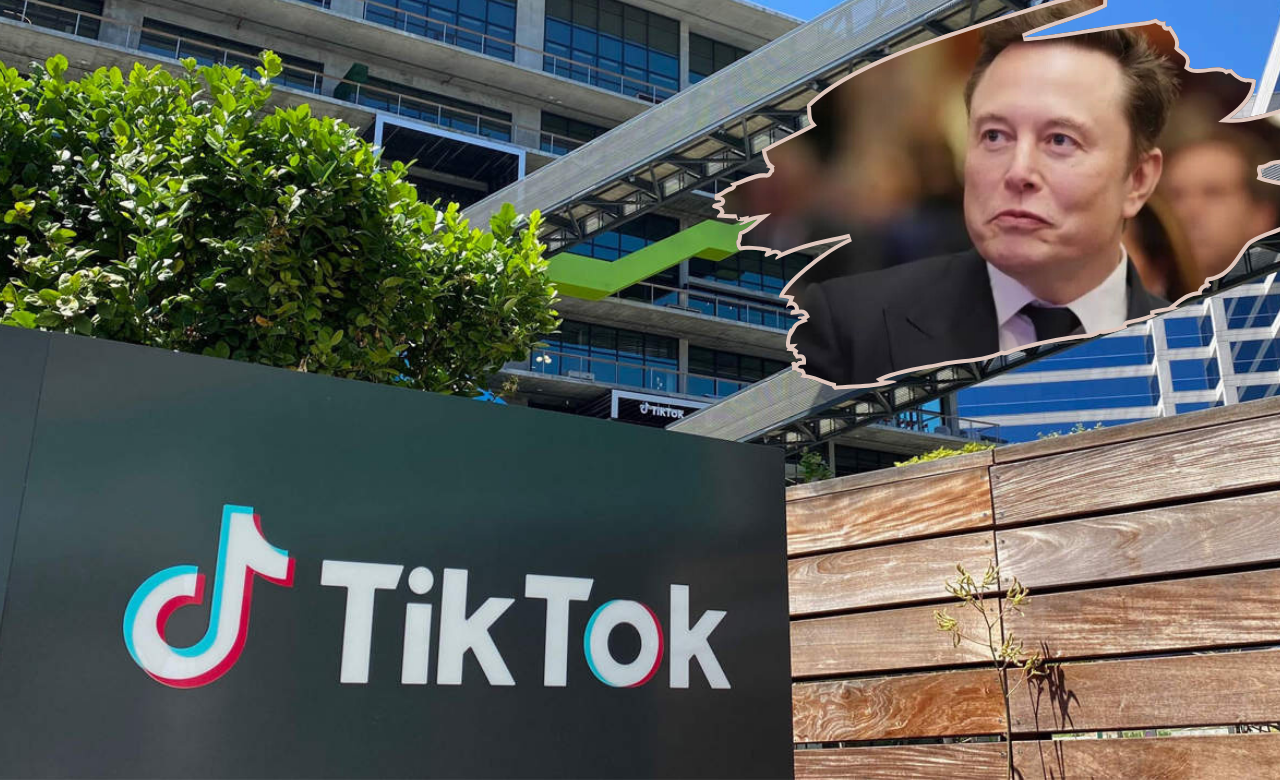
China is reportedly considering selling TikTok's US operations to Elon Musk if the platform faces a potential ban in the United States, said a Bloomberg News reported on Monday. The discussions are still in the preliminary stages, and Chinese officials are evaluating various contingency plans.

Summarized Points:

Potential Buyer: Elon Musk, who recently rebranded Twitter as "X," is being considered as a potential buyer.

Reason for Sale: The US government has passed a law requiring TikTok's parent company, ByteDance, to either sell the platform or shut it down due to national security concerns.

Geopolitical Factors: The sale is seen as a strategic move to maintain TikTok's presence in the US while navigating complex geopolitical and financial factors.

Musk's Stance: Musk has expressed his opinion that TikTok should remain available in the US, citing freedom of speech and expression.

The situation is still evolving, and it remains to be seen how the negotiations will unfold.

TikTok's presence in the US has been a topic of significant debate and legal scrutiny.

The US government passed a law requiring TikTok's parent company, ByteDance, to either sell its US operations or shut down the app due to national security concerns. The law is set to take effect on January 19, 2025.

TikTok has challenged the ban, arguing that it violates the First Amendment's free speech protections. However, the US Supreme Court appears poised to uphold the legislation.

It is to be noted that, TikTok has dismissed reports of a potential sale to Elon Musk as "pure fiction". The company has stated that it cannot comment on speculative discussions.

TikTok has over 170 million users in the US, making it a significant platform for content creators and advertisers.

The potential sale could have broader implications for US-China relations and the global tech industry.

Researchers Develop AI Model That Creates Invisible Digital Masks for Personal Photos

Researchers Develop AI Model That Creates Invisible Digital Masks for Personal Photos

There's an innovative Al model called Chameleon, developed by researchers at Georgia Tech, that creates invisible digital masks for personal photos to protect against unwanted facial recognition.

This breakthrough innovation is a significant advancement in the digital privacy , offering a robust way to protect personal identity in a world where facial recognition is becoming increasingly prevalent.

The P3-Mask
The P3-Mask
Integrating P-3 Mask technology into smartphone cameras could allow users to automatically protect their photos as they are taken. Individuals concerned about privacy can use the P-3 Mask to anonymize their images in public surveillance footage. Companies can protect employee and client photos from being misused or recognized by unauthorized systems. Brands can use the P-3 Mask to ensure that images used in campaigns do not compromise the privacy of the people featured.

This model generates a personalized privacy protection (P-3) mask for all of a user's facial photos, making them unrecognizable to facial recognition scans while preserving the image quality.

The Chameleon Al model was developed by researchers at Georgia Tech University. The team, led by Professor Ling Liu, includes Ph.D. students Sihao Hu and Tiansheng Huang, along with Ka-Ho Chow, an assistant professor at the University of Hong Kong.

Researchers Develop AI Model That Creates Invisible Digital Masks for Personal Photos

Researchers Develop AI Model That Creates Invisible Digital Masks for Personal Photos

Researchers Develop AI Model That Creates Invisible Digital Masks for Personal Photos


Chameleon creates an innovative single, personalized Personalized Privacy Protection (P-3) Mask for all of a user's facial photos, making them unrecognizable to facial recognition tools.

Unlike physical masks, the P-3 Mask is a digital layer applied to images, making it invisible to the naked eye but effective against facial recognition algorithms. The model is designed to be resource-efficient, requiring minimal processing power.

Further, Chameleon uses a perceptibility optimization technique to ensure that the visual quality of the protected photos is maintained.

A paper on Chameleon, Personalized Privacy Protection Mask Against Unauthorized Facial Recognition, was presented earlier this month at ECCV 2024.

The researchers aim to release the Chameleon code publicly on GitHub soon, allowing developers to integrate this technology into various applications.

Usage

The Chameleon AI model can be applied in various everyday applications to enhance privacy and security. Here are some potential uses:

1. Personal Privacy: Individuals can use Chameleon to protect their personal photos from unauthorized facial recognition scans, ensuring their images remain private and secure.

2. Social Media: Social media platforms can integrate Chameleon to automatically apply privacy masks to user-uploaded photos, safeguarding users' identities.

3. Smartphone Security: Mobile devices can incorporate Chameleon to provide real-time facial recognition protection, preventing unauthorized access and enhancing user privacy.

4. Public Surveillance: In public spaces, Chameleon can be used to anonymize individuals in surveillance footage, protecting their identities while still allowing for security monitoring.

5. Marketing and Advertising: Companies can use Chameleon to anonymize images used in marketing campaigns, ensuring that individuals' privacy is maintained while still showcasing products or services.

These applications demonstrate how Chameleon can be a valuable tool for protecting privacy in various aspects of daily life.

6 Countries that Implemented or Considering Ban on Social Media for Users Under Certain Age

6 Countries that Implemented or Considering Ban on Social Media for Users Under Certain Age

Recently, Australia has passed a bill to ban children under 16 from using social media platforms like TikTok, Facebook, Instagram, and others. The legislation aims to address concerns over online safety and the negative impact of social media on young people's mental health.

This legislation, which was approved by the Australian Senate on November 29, 2024, imposes fines of up to 50 million Australian dollars (approximately Rs 275 crore) on social media companies that fail to prevent underage users from creating accounts. Messaging apps and online gaming platforms are exempt from this ban.

Besides Australia, more countries have implemented or are considering age restrictions for social media use to protect young people from potential online harms.

Here are some examples:

1. United Kingdom:

While the UK does not currently have plans for an Australia-style ban, it has passed the Online Safety Act, which sets stricter standards for social media platforms, including age-appropriate restrictions. The UK is considering a similar ban for individuals under 16. The Online Safety Act aims to enforce the removal of detrimental posts and protect young people from harmful content.

2. France:

In France, children under 15 cannot create a social media account without parental consent. The government requires legally documented parental consent for accessing social media platforms.

Social media firms that fail to comply with these regulations face fines of up to 1% of their global revenues. France is also advocating for an EU-wide adoption of similar regulations, urging other European countries to follow its lead.

3. United States:

The Children's Online Privacy Protection Act (COPPA) mandates that children under 13 cannot legally have a social media account. Some states, like Ohio and Florida, have required parental permission for minors to use social media.

In a proposed Federal Legislation, the Protecting Kids on Social Media Act would set a minimum age of 13 for social media use and require parental consent for users aged 13 to 17.

Montana has banned TikTok within the state. New Jersey has established a commission to study the effects of social media on adolescent.

4. South Korea:

South Korea had a "shutdown law" that limits children under 16 from accessing gaming sites after midnight. However, this law has faced challenges with enforcement.

Initially introduced in 2011, the Cinderella Law or shutdown law banned children under 15 from playing online games between midnight and 6 a.m. to prevent tiredness in school. However, it was replaced in 2021 with a "choice permit" system, allowing parents to set approved playing times.

In August this year lawmakers in South Korea proposed a bill aimed at regulating use of social media by under-16.

5. Norway:

Norway is set to enact a strict age minimum of 15 for social media use following a government campaign against social media giants.

The current minimum age limit to use social media in Norway is 13, which is in line with the requirements of TikTok, Instagram and Snapchat’s terms of service.

Last month, Norway has announced plans to raise the minimum age for social media use from 13 to 15. This decision aims to protect children from harmful online content and data collection practices. Social media platforms will need to implement age verification measures to ensure that users are at least 15 years old.

In India, the country has Digital Personal Data Protection Act, 2023, requires data fiduciaries to collect verifiable parental consent from parents of children under the age of 18 for processing their data online.

In 2023, the Karnataka High Court suggested to the Union Government to implement an age limit of 21 for accessing social media, citing concerns about excessive addiction among schoolchildren and its negative impact.

In the EU, parental consent is required for processing personal data for children under the age of 16, although member states can lower this limit to 13.

These measures reflect a growing global effort to protect young people from the potential negative effects of social media.

e-Curse: 5 Kids in Bihar Learning To Make Bomb By Watching YouTube Got Injured by Explosion

e-Curse: Bihar Kids Learning To Make Bomb By Watching YouTube Got Injured by Explosion

In an incident that is truly tragic and concerning for the society, some children in Muzaffarpur, Bihar, aged between 7 to 12 years were trying to make a bomb after watching a YouTube video when tragically the bomb accidentally exploded, injuring five children.

Unfortunately, the bomb explosion resulted in injuries to five children. The incident has sparked widespread concern and has gone viral on social media.


Local authorities have emphasized the need for parents to monitor their children’s online activities more closely. They also highlighted the importance of educating children about the dangers of attempting to replicate hazardous activities seen online. This tragic event underscores the critical need for better digital literacy and safety measures to protect children from such risks.

This highly concerning incident highlights the critical need to monitor children's online activities. It is essential to ensure that children are safe and aware of what they are watching and learning on the internet.

To prevent such incidents, social media platforms can play a crucial role in preventing incidents like the one in Muzaffarpur by implementing several key measures such as Proactive Monitoring wherein the online video platforms use advanced algorithms and AI to detect and remove harmful content, such as videos showing how to make dangerous items like bombs.

These platforms must also encourage users to report inappropriate or dangerous content and ensure that reported content is reviewed and acted upon promptly.

Besides, parents should also keep an eye on what their children are watching online. Use parental control settings on devices and platforms like YouTube to restrict access to inappropriate content. Parents must teach children about the dangers of attempting to replicate dangerous activities seen online. Encourage open communication so they feel comfortable discussing what they watch.

Need for School and Community Programs:

Safety Workshops: Schools and community centers can organize workshops to educate children about online safety and the potential risks of imitating dangerous activities.

Digital Literacy: Incorporate digital literacy into the curriculum to help children understand how to use the internet safely and responsibly.

Flagging Dangerous Content

From April to June 2024, YouTube received over 23 million flags from human users. This indicates a high level of community engagement in reporting inappropriate content.

The most common reasons for flagging videos include spam or misleading content, hateful or abusive content, sexual content, violent or repulsive content, and harmful or dangerous acts.

A significant portion of flagged content is reviewed and acted upon. For instance, from October to December 2017, 75.9% of all automatically flagged videos were removed before they received any views.

Improvements in automated flagging systems have also helped detect and review content even before it is flagged by the community. More than 80% of auto-flagged videos were removed before receiving a single view in the second quarter of 2019.

Reportedly, YouTube employs trained human reviewers who evaluate flagged content 24/7 to ensure it violates the Community Guidelines before taking action. This helps maintain a balance between automated systems and human judgment.

By taking required steps, both by parents are and social media platforms, a safer online environment can be created which would help prevent such tragic incidents. 

With Personalization & AI Algorithms, Social Media Platforms Are Fast Becoming Mere Echo Chambers

With Personalization & AI Algorithms, Social Media Platforms Are Fast Becoming Mere Echo Chambers

Echo chambers are social environments where individuals are exposed primarily to information, opinions, and ideas that reinforce their existing beliefs or ideologies. These chambers can occur both online (such as on social media platforms) and offline (within specific communities or groups). Here's how echo chambers form and their effects:

Formation of Echo Chambers:

Selective Exposure: People tend to seek out information that aligns with their preconceived notions. On social media, algorithms often show content based on users' past behavior, creating a feedback loop.

Confirmation Bias: When individuals encounter information that confirms their existing beliefs, they are more likely to accept it without critical evaluation.

Homophily: People naturally associate with others who share similar interests, values, and ideologies. This leads to the reinforcement of existing viewpoints.

Social Media Platforms

With Personalization, AI Algorithms Social Media Are Fast Becoming Mere Echo Chambers

Social media platforms are significant enablers of echo chambers. Algorithms personalize content based on users' interests and history, leading to selective exposure. Users primarily see information that reinforces their pre-existing views, while dissenting opinions are often disregarded.

» Algorithmic Personalization

Social media platforms use algorithms to tailor content to individual users. If you engage with certain types of posts (e.g., political content), the algorithm learns your preferences and shows you more of the same.

Users tend to interact with content that aligns with their existing beliefs. As a result, they see more of it, creating an echo chamber effect.

For instance, feeds on Facebook/Instagram/YouTube can become epistemic bubbles, where users get all their news and political arguments from like-minded friends, reinforcing their existing beliefs.

Facebook, Twitter, and Reddit exhibit varying degrees of echo chamber effects. Facebook's algorithmic personalization leads to higher segregation, while platforms like Reddit allow users more control over what they see. 

Effects of Echo Chambers:

Reinforcement: Echo chambers reinforce existing beliefs, making them more entrenched. Users become less open to alternative perspectives.

Polarization: When people are exposed only to like-minded opinions, polarization occurs. Extreme views become amplified, leading to societal divisions.

Closed-Mindedness: Echo chambers discourage critical thinking and intellectual curiosity. Users may dismiss dissenting opinions without considering their merit.

False Consensus: Individuals within echo chambers overestimate the prevalence of their beliefs. They assume everyone agrees with them, which can distort reality.

Hostility Toward Outsiders: Echo chambers often foster an "us vs. them" mentality. Those outside the chamber are seen as adversaries.

Resistance to Change: Echo chambers hinder adaptability and growth. New information is filtered through existing biases, preventing learning.

Mitigating Echo Chambers:

Diverse Exposure: Actively seek out diverse viewpoints. Follow people with different perspectives on social media, read varied news sources, and engage in respectful discussions.

Critical Thinking: Encourage critical evaluation of information. Fact-check, consider multiple angles, and be open to changing your mind based on evidence.

Media Literacy: Understand how algorithms work and recognize when you're in an echo chamber. Be aware of emotional manipulation and misinformation.

Bridge Building: Engage with people who hold different beliefs. Constructive dialogue can break down barriers and promote understanding.

Remember that echo chambers are natural tendencies, but being aware of their effects allows us to counteract their negative impact.

Instagram Launching Creator Marketplace in India and 7 More Countries

Instagram Launching Creator Marketplace to India and 7 More Countries

Meta, the parent of Facebook and Instagram, is expanding the creator marketplace to eight new markets including India. Over the next few weeks, the social media giant plans to invite creators and brands based in Canada, Australia, New Zealand, United Kingdom, Japan, India and Brazil to join Instagram’s creator marketplace.

Besides the above seven markets, Meta said that Chinese export brands will also be invited to connect with onboarded creators but in countries outside of China.

Instagram is touted as one of the best places for brands and creators to collaborate. Introduced in 2022, Meta began testing the creator marketplace in the US, a tool for brands and creators to connect and collaborate around partnership opportunities. This was followed by introducing new features and onboarding thousands of creators and brands in the US to creator marketplace.

Creator marketplace

Brands join Instagram’s creator marketplace in Meta Business Suite. Creators join from their professional dashboard in the Instagram app. Creators can indicate brands and interests relevant to them. Creators can also create a portfolio to highlight what makes them unique.

Machine Learning for the Right Match Recommendation

A screen capture of machine learning-powered creator recommendations.

Meta said that it is testing new custom, machine learning-powered creator recommendations for each brand to help match the right creators and brands for campaigns. Brands can also search for creators, filtering for creator and audience attributes. They can also see a list of creators who have expressed interest and check out creator portfolios.

The new machine learning-based recommendations use Instagram data to help brands more easily discover creators who are the best fit for their campaigns. Eligible brands can access these recommendations over the coming months on Instagram’s creator marketplace in Meta Business Suite.

Instagram’s creator marketplace helps brands find the right creators and helps creators get discovered by brands.

A phone screen showing a designated Partnership messages folder

Creators receive brand messages in a dedicated Partnership Messages folder at the top of the Primary tab. Brands can reach out to creators directly or create and send a project to multiple creators outlining the branded content or partnership ad opportunity. Creators can review the details and requirements of the opportunity, as well as the rate, all within the Instagram app.

Once brands and creators come to an agreement, they are ready to create. Advertisers can boost organic Instagram content as partnership ads, including branded content with the paid partnership label, or they can create new partnership ads in Ads Manager.

A screenshot of a phone showing branded content with the paid partnership label


X's (Formerly Twitter) India, South Asia Govt Affairs Head Resigns

X's (Formerly Twitter) India, South Asia Govt Affairs Head Resigns – Report

Samiran Gupta, Head of Government Affairs & public policy at X (formerly Twitter) has reportedly resigned, according to his latest update on the LinkedIn profile.

Samiran Gupta, who joined X in February 2022 before Elon Musk acquired the social media platform, will serve at X till September, said his LinkedIn profile,

The LinkedIn profile further mentioned that he "enabled transition leadership for Twitter post acquisition by Elon Musk led X-Corp."

Mr Gupta was the most senior India employee for X, and he was responsible for "key content-related policy issues" and "defending Twitter's position with new policy developments and support in-country sales organization," according to his LinkedIn profile.

Notably, Mr Gupta step down from the social media platform at time ahead of India's General Elections and amid the company's legal battle with the Government of India over content removal.

Before joining X, Samiran Gupta was the Head of India for ICANN, a non-governmental organisation responsible for allocation of Internet domain names. Prior to that, Mr Gupta was the Senior Director with APCO Worldwide responsible for counselling clients in business and public affairs strategy.

Mr Gupta was also a founder and managing director of a leading management consulting and business advisory practice known for working on distinctive projects for a range of corporations from Fortune 500 clients to top Indian businesses and mid-sized entities.

Driving Business Growth: 4 Ways Small Businesses Can Utilize Social Media Management Tools

Driving Business Growth: 4 Ways Small Businesses Can Utilize Social Media Management Tools

Starting a business requires support. Business owners are looking for the easiest ways to market their companies. How can a minor firm deal with ROI when it has a limited budget and resources? This is when digital technology becomes a solution. As everyone uses social media platforms daily, it has become a channel for instantly advertising companies. Furthermore, adopting the right social media marketing tools is an excellent approach to making it easy to navigate accounts. These solutions enable users to watch, post, and manage all accounts from a single dashboard.
What is social media management?

Social media management is the method of managing a company's social media activities. It includes providing content and communicating with users. Some businesses manage this informally with staff posting on social media sites. Others hire a social media manager. They handle social media postings and manage social media profiles across several websites. Companies can also employ social media management organizations. They specialize in social media marketing. Social media managers, whether staff or independent contractors are responsible for all parts of social media strategy. They are responsible for idea generation, scheduling, and uploading the material that appears on the platform.

Benefits of managing social media:

Engaging in social media management services might benefit you as a small company owner. You profit in three ways when your staff manages marketing across social media networks:
  1. You contact customers where they spend most of their time. Engaging people on social media networks can help you reach more customers because that is where they spend most of their time.
  2. You educate those who are willing to know about your items. Some customers use social media to investigate a product, while others purchase directly through a social media site. Some of these customers may not bother visiting your website to learn more about your company. You may gain from teaching them through social media.
  3. You discover what the general people are thinking. You understand market trends and can watch user-generated material from your target demographic. You may also track reactions to your social media efforts to determine what the public thinks about your products and services.
Top four ways small businesses can use social media tools:

Now let's look into four ways small businesses can use social media management tools to boost their business and profits.


1. Increase your search engine ranking:

Social networking can help your search engine ranking. When your website's social media sharing rate rises, so does its domain authority. This improves the search engine rating of your sites. But it goes beyond that and many customers will check your social media pages before visiting your website. In this way, they can better understand your business before making a purchase. More visits to social media profiles will ultimately improve their rating and chances of being among the top-rated sites.

2. Drive traffic:

Small companies generally use social media to drive customers to their websites. You will get organic visitors if you have a solid social media presence. It means your traffic consists of the same small group of individuals already following you. Moreover, you must broaden your brand's reach to attract more traffic. So, how do you drive traffic? What is the most efficient method? Create an appropriate social media profile for your small company on each social media network. Then, capitalize on these platforms by distributing customized content to each. A solid social media presence may motivate your fans to follow you through your lead funnel. It would finally lead to your product purchase page. Second, make it easy for people to share your material by showing off social sharing icons on your website. You may also include a Click to Tweet option on a catchy statistic, statement, or other pieces of information to make it more shareable. Moreover, readers can share your articles with a single click.

3. Keep an eye on competitors:

Social media is an excellent method to watch your competition. It allows you to observe and gain inspiration from their performance. You can observe what kind of stuff they post and how they connect with their fans. You may also learn from your competitors by using social media. There must be a simple reason why your competitors are outperforming you. Learn their methods, but do more than copy and paste them. What works best for them may work better for you, instead of modifying their concepts and make them your own. In addition, competitive analysis on social media is all about learning from your competitors. Conducting a self-analysis to determine where you are with your competitors is beneficial. You may undertake competition analysis using a variety of tools. The technology you use should fit the unique needs of your marketing team. Before you select which tool to use, see if the firm has a free trial period.

4. Build brand recognition:

Raising awareness should be a primary priority for any small business. This is usually the case since we know that consumers like to buy from familiar brands. However, this is where social media comes into play. Compared to conventional media, social media can bring your brand in front of your target audience more quickly and easily. Furthermore, it makes your target audience consider your organization. So, make an effort to create and share relevant information. Create cover pictures and user profile photographs on social media networks. Moreover, you can place your brand strategically to have a long-lasting effect on your customer. But don't put your brand anywhere that will be intrusive or overbearing, and remember to pay attention to your brand's aesthetic aspects.

Note: Apart from these things, paying attention to digitizing your business using tools is vital. For instance, many payroll management software offers paystub templates to understand functions before making a final purchase.

The bottom line:

Social media marketing (SMM) uses social media platforms to communicate with customers. It helps to establish brands and drive website traffic. As social media use develops worldwide on computers & mobile devices, the potential to generate revenue is a booming business with fierce competition for views and clicks.


Market Reports

Market Report & Surveys
IndianWeb2.com © all rights reserved