Showing posts with label NSIL. Show all posts

ISRO, IN-SPACe & NSIL Achieve Milestone of 75 Technology Transfer Agreements Signed With Private Co.s Post Space Reforms

ISRO, IN-SPACe & NSIL Achieve Milestone of 75 Technology Transfer Agreements Signed With Private Co.s Post Space Reforms

ISRO, IN-SPACe and NSIL have achieved the significant milestone of 75 Technology Transfer Agreements being signed with Non Government Entities (NGEs).

Five Technology Transfer Agreements (TTAs) were signed on 20th September 2024 at IN-SPACe, Bengaluru bringing the total number of TTAs signed post space reforms to seventy-five. The five TTAs signed today were with M/s Anabond Ltd., M/s Salvo Industries Pvt Ltd., M/s Micropack Pvt Ltd., and M/s Astra Microwave Products Ltd.

ISRO, IN-SPACe & NSIL Achieve Milestone of 75 Technology Transfer Agreements Signed With NGEs Post Space Reforms

Post space reforms in India, a significant number of collaborations have taken place between ISRO and various Non-Governmental Entities (NGEs). The Technology Transfer Agreements (TTAs) aim to give private players the opportunity to access the developed technologies available with ISRO, enabling them to use space-related technology for commercial applications in space as well as other sectors such as agriculture, energy, infrastructure, defence, telecommunications, and cybersecurity.

Dr Pawan Goenka, Chairman, IN-SPACe said “The milestone of achieving 75 Technology Transfer Agreements marks a significant step forward in empowering India’s space private sector to harness cutting-edge space technologies for not just commercial applications, but also applications beneficial to society. This reflects our effort at IN-SPACe in facilitating successful collaborations between ISRO, NSIL and non-governmental entities, supporting them in driving innovation and contributing to the growth of a thriving space economy in India. Our focus will continue to be on enabling greater participation, fostering new ventures, and strengthening India’s position in the global space ecosystem.”

This move reflects India's growing focus on promoting private participation in the space sector, encouraging innovation, and boosting the development of a robust space industry ecosystem. It highlights the increasing collaboration between the government and private players, contributing to advancements in space technology and expanding opportunities in sectors like satellite communication, launch services, and space exploration.

IN-SPACe was constituted in June 2020 following the Central Government’s decision to open up the space sector and enable the participation of Indian private sector in the gamut of space activities. The Indian National Space Promotion and authorization Centre (IN-SPACe), acts as a single-window, independent, nodal agency which functions as an autonomous agency in Department of Space (DOS).

IN-SPACe is responsible for the promotion, enabling, authorization, and supervision of various space activities of the Non-Governmental Entities (NGEs) that include, among others, the building of launch vehicles & satellites and providing space-based services; sharing of space infrastructure and premises under ISRO; and establishment of new space infrastructure and facilities. The functions of IN-SPACe are being carried out by three Directorates viz., Promotion Directorate (PD), Technical Directorate (TD), Program Management and Authorization Directorate (PMAD), and Administration, Finance & Legal Wing.

ISRO's NSIL to Provide GSAT-16 and GSAT-18 Satellite Capacity to Telangana, Andhra Pradesh, and Kerala

ISRO's NSIL to Provide GSAT-16 and GSAT-18 Satellite Capacity to Telangana, Andhra Pradesh, and Kerala

NSIL (NewSpace India Limited), a commercial arm of ISRO, has recently signed agreements to provide satellite capacity from GSAT-16 and GSAT-18 to the state governments of Telangana, Andhra Pradesh, and Kerala. This initiative aims to broadcast educational content and benefit approximately 1.25 crore students in Andhra Pradesh, 1.5 crore students in Telangana, and 0.5 crore students in Kerala.

GSAT-16 and GSAT-18 are Indian communication satellites launched by the ISRO in December 7, 2014 and October 2016 respectively.

GSAT-16 provides communication services, including broadcasting, telecommunication, and data transmission. It carries 24 transponders in the C-band, 12 in the extended C-band, and another 12 in the Ku-band. Its coverage extends over India and neighboring regions.

GSAT-18 also serves communication needs and has 24 C-band, 12 extended C-band, and 12 Ku-band transponders. It covers India and parts of the Middle East. GSAT-18 enhances telecommunication, broadcasting, and broadband services.

Both satellites play crucial roles in expanding connectivity, broadcasting educational content, and supporting various communication services across India.

NSIL manages satellite capacity allocation through a structured process that involves coordination, agreements, and efficient utilization. NSIL collaborates closely with the ISRO, which operates and maintains a fleet of communication satellites (e.g., GSAT series). NSIL works with ISRO to allocate transponder capacity from these satellites.

Further, the entities (government departments, private companies, broadcasters) express their requirements for satellite capacity. NSIL negotiates agreements with these users. Agreements specify the duration, bandwidth, and other terms.

In the allocation process, NSIL allocates transponders based on users' service areas (e.g., state governments, educational institutions) and Frequency Band — C-band, Ku-band, etc.

NSIL balances commercial interests (leasing capacity to private entities) with social objectives (broadcasting educational content, rural connectivity). For example, providing GSAT-16 and GSAT-18 capacity to state governments for educational broadcasting.

NSIL monitors transponder usage, ensuring optimal resource allocation. It adjusts capacity based on changing demands and priorities.

Essentially, the Satellite capacity allocation involves distributing available transponder resources on a satellite to various users or service providers. Satellites have transponders, which are communication channels that receive signals from Earth, amplify them, and retransmit them back. Each transponder operates within a specific frequency band (e.g., C-band, Ku-band).

Different frequency bands serve different purposes. For instance, C-band is used for broadcasting, telecommunications, and data services. Ku-band is commonly used for direct-to-home (DTH) TV broadcasting and broadband internet.

Organizations (telecom companies, broadcasters, etc.) lease transponder capacity from satellite operators. They pay for the right to use a specific transponder or a portion of its bandwidth.

ISRO's Commercial Arm NSIL and Space Machines Company Ink Historic Launch Service Agreement for Next Optimus Spacecraft Onboard SSLV

ISRO's Commercial Arm NSIL and Space Machines Company Inks Historic Launch Service Agreement for Next Optimus Spacecraft Onboard SSLV

NewSpace India Limited (NSIL) and Space Machines Company announce the signing of historic Launch Service Agreement for next Optimus spacecraft onboard Small Satellite Launch Vehicle (SSLV).


NewSpace India Limited (NSIL), a Govt. of India company under the Department of Space and the commercial arm of the Indian Space Research Organisation (ISRO)  and Space Machines Company, an Australian-Indian in-space servicing firm, have signed a landmark Dedicated Launch Service Agreement.

This pioneering collaboration sets the stage for the launch of Space Machines Company’s second Optimus spacecraft weighing 450kg, the largest Australian-designed and built spacecraft so far. Slated for a Dedicated launch on-board NSIL/ISRO’s Small Satellite Launch Vehicle (SSLV) in 2026, this mission will mark a defining moment for both nations in the area of space collaboration.

At the India Space Congress 2024 held in Delhi, Rajat Kulshrestha, CEO and Co-Founder of Space Machines Company, and Mr Radhakrishnan Durairaj, Chairman and Managing Director of NSIL, formally announced the signing of the Launch Service Agreement.

“This collaboration with Space Machines Company exemplifies the spirit of international cooperation in space and highlights the strategic partnership between Australia and India,” said Mr Radhakrishnan Durairaj, NSIL Chairman and Managing Director. “As a Launch service provider for the Optimus spacecraft, we are not only fostering the growth of our respective space industries but also contributing to the sustainable exploration and utilisation of space.”

The Space MAITRI mission and our collaboration with NewSpace India Limited represents a significant leap forward for Australia’s space industry. By combining our innovative spacecraft capabilities with India’s proven launch expertise, we are not only strengthening the ties between our nations’ space sectors but also demonstrating our shared commitment to sustainable space operations,” said Rajat Kulshrestha, CEO and Co-Founder of Space Machines Company.

This mission, named Space MAITRI मैत्री (Mission for Australia-India’s Technology, Research and Innovation), marks a significant milestone in the strategic partnership between Australia and India in the space domain, fostering closer ties between commercial, institutional, and governmental space organisations from both nations. By focusing on debris management and sustainability, the mission aligns with the core values and objectives of both countries, promoting responsible space operations and mitigating the growing threat of space debris.

Notably, SMC established a research and development office in Bangalore, India, close to the Indian Space Research Organisation (ISRO). This strategic move allows them to collaborate with Indian partners, including Ananth Technologies, across missions, integration, testing, tech developments, and supply chain.

Space Machines Company (SMC) was founded by Rajat Kulshrestha and George Freney in 2018. These visionary space machinists are on a mission to revolutionize the space economy by providing cost-effective and flexible transportation services for satellites.

The space company is building a future where space works for everyone, addressing the lack of satellite servicing infrastructure and ensuring that satellites no longer have to "fend for themselves" in space. Key Executives at SMC include Rajat Kulshrestha (CEO & Co-Founder), Mark Ramsey (Chief Operating Officer), and George Freney (Co-Founder).

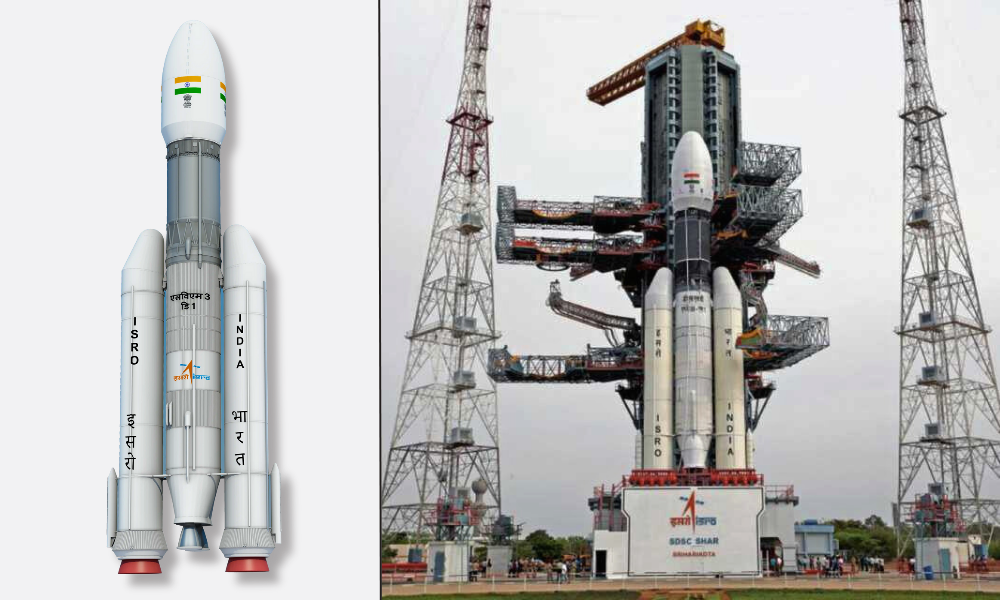
NSIL of ISRO To Partner Indian Pvt Cos. for Manufacturing the Heaviest Launcher LVM-3, Under PPP Partnership

NSIL of ISRO To Partner Indian Pvt Cos. for Manufacturing the Heaviest Launcher LVM-3, Under PPP Partnership

NewSpace India Limited (NSIL) and ISRO convene Stakeholders’ Conference for manufacturing the Heaviest Launcher LVM-3 of ISRO, under a PPP partnership with Indian Industry to meet the emerging Global Launch Service market needs

The proposed partnership model with NSIL aims to empower Indian industry to manufacture ISRO’s LVM-3 in increased numbers for a longer period and being the risk sharing and investment partner for the programme

On 16 January in Bengaluru, NewSpace India Ltd (NSIL), the commercial arm of ISRO held “Stakeholders’ Conference to explore the partnership options between NSIL and Indian Industry for manufacturing ISRO’s heaviest launcher LVM3”.

The conference brought together nearly 70 plus participants from over 30 companies to discuss and debate business partnership options. The initiative was undertaken by NSIL and ISRO in light of the emerging global commercial Launch Service market needs especially for the LVM3 class of launch vehicle. LVM3 presently has the capability to launch satellite of 4 tonne class in GTO and 8 tonne in LEO.

Aligned with the space sector reforms announced by Government of India, during June 2020, NSIL has assumed a pivotal role in empowering and enabling Indian industries in end-to-end manufacturing of ISRO’s operational rockets. NSIL's engagement with HAL and L&T consortia during 2022, for realizing five nos of PSLV laid the foundation for the Indian Industries to graduate from being a mere supplier/ vendor of sub-systems and systems to ISRO to assuming the bigger role of being the system integrator for end-to-end realisation of PSLV.

The need for PPP mode of partnership with Indian Industry for realising more number of LVM3 to meet the global launch service demand is essential to stay competitive and relevant in the market. Towards this effort of NSIL and ISRO, Indian Industries should come forward and become the risk sharing and investment partner as part of the programme.

Global Launch service market assessment for the decade clearly indicates that there is enough demand for launching communication satellites in GTO and satellites for Mega constellations in LEO. LVM3 has a great potential and opportunity to capture this niche global launch service market in the coming years.

NSIL has engaged the services of M/s IIFCL Projects Limited (IPL) to explore the potential PPP partnership options for LVM3 production through Indian Industry. 

ISRO Transfers Optical Imaging System Technology to Optimized Electrotech, A Gujarat based Defence Tech Startup

ISRO Transfers Optical Imaging System Technology to Optimized Electro tech, A Gujarat based Defence Tech Startup

Ahmedabad, Gujarat-based Optimized Electrotech Pvt Ltd (OEPL), a leading imaging surveillance technology company, is pleased to announce a significant milestone in its mission to advance surveillance capabilities with the successful technology transfer of the Optical Imaging System (OIS) from NewSpace India Limited (NSIL), the commercial arm of Indian Space Research Organisation (ISRO).

The agreement was formalised in September and was facilitated under the distinguished guidance of Dr. Pawan Kr Goenka, Chairperson of IN-SPACe, Rajeev Jyoti, Director of IN-SPACe, and A. Arunachalam, Director of NewSpace India Limited (NSIL).

ISRO Transfers Optical Imaging System Technology to Optimized Electrotech, A Gujarat based Defence Tech Startup

The Optical Imaging System (OIS) developed by ISRO represents a significant leap in technology. It empowers long-distance surveillance across visible and near-infrared spectra of the electromagnetic spectrum. Notably, it operates seamlessly during twilight and mid-day lighting conditions, employing a single sensor and a consistent setup. This revolutionary advancement holds immense potential, particularly in coastal and desert areas and various applications where precision surveillance is critical.

The Optical Imaging System was developed by Space Applications Centre (SAC) of ISRO with capabilities to image in visible and near-infrared regions of the EM Spectrum. The technology application is useful under twilight as well as mid-day lighting conditions. It has sampling resolution of 2 cm at 5000 meters altitude and FOV of –  0.46° X 0.46°.

The technology has been transferred through a Technology Transfer Agreement, facilitating the advancement, production, and commercialisation of an Optical Imaging System in both India and overseas. This initiative has garnered significant backing from the Prime Minister’s Office (PMO). Furthermore, ISRO’s expertise and innovation in space technology will be complemented by Optimized Electrotech’s cutting-edge imaging capabilities, creating a synergy that promises to revolutionise surveillance capabilities.

Sandeep Shah, Co-Founder and Managing Director at Optimized Electrotech, expressed saying, “We are extremely proud to be a part of this landmark technology transfer agreement with ISRO. With the surveillance systems market in India poised to reach $2.5 billion and annual growth rates of 25-30%, this collaboration is a game-changer. OIS promises to revolutionise security and surveillance in demanding environments, aligning perfectly with the current market demand. This landmark technology transfer agreement solidifies Optimized Electrotech’s position as an industry leader, and we eagerly anticipate the transformative impact it will have on their product offerings.”

About Optimized Electrotech Pvt Ltd (OEPL):

Optimized Electrotech Pvt Ltd is an imaging surveillance technology company, manufacturing indigenously designed and developed Electro- Optical Infra-Red based systems. Company is Headquartered at Ahmedabad, Gujarat, and prototyping and R&D facility at Bengaluru, Karnataka.

The Company is winner of IDEX competitions twice, and has products approved by PR&D as well as RITES. The product portfolio is split across Long Range Automated Surveillance and civilian surveillance systems. “Vision” series of products are aimed at Border Security, Weapons Guidance, Critical Asset protection, and integration into C4ISR systems. Edge Analytics enabled products have capabilities for automatic discovery of threats thereby supporting the soldier with clear insights instead of only images. With proven DRI ranges upto 30 Kms, and future products for 50 Kms, the Vision series of products make the best fit for Situational awareness at borders. Applications such as Counter UAV, Anti-Aircraft systems, and passive surveillance can be easily satisfied using these products.

The Company is registered with Startup India, MSME and is a venture funded startup. The OEPL founding team has 32 patents and the company has filed for 4 patents of which 2 have been granted. 

ISRO To Launch Satellites for 4 Countries during 2021-23 and Earn $149 Million

Representative Image [credits - Pexels]

Indian space agency ISRO's commercial arm, New Space India Limited (NSIL), has signed six agreements with four countries for launching foreign satellites during 2021-2023.

With these foreign satellites launches, about 132 million Euros (about US$148.88) would be earned on a commercial basis. NSIL as on date has signed six Launch Service Agreements with customers from four countries for launching foreign satellites into space on-board PSLV during 2021-2023.

A total number of 124 indigenous satellites including 12 student satellites have been put into Earth's orbit.

The information was conveyed in Rajya Sabha by Dr Jitendra Singh, who is Union Minister of State (Independent Charge) Science & Technology; Minister of State (Independent Charge) Earth Sciences; MoS PMO, Personnel, Public Grievances, Pensions, Atomic Energy and Space.

He informed that from 1999 till date, a total of 342 foreign satellites belonging to 34 countries have been successfully launched on board Indian Polar satellite Launch Vehicle (PSLV) on a commercial basis. 

The Minister said that through launching of foreign satellites on-board Indian launch vehicle, India has earned a Foreign Exchange revenue of approx. 35 Million USD and 10 Million Euros during last 3 years (i.e., 2019- 2021).The type of foreign satellites that were launched through Indian Launch Vehicle includes satellites primarily for Earth Observation, Scientific and Technology demonstration purposes.

ISRO's Commercial Arm NSIL to Launch "India’s 1st Private" Remote Sensing Satellite

Representative

Bengaluru-based space technology startup Pixxel has entered into an agreement with ISRO's newly established commercial arm, NewSpace India Ltd (NSIL), also a Government of India company under the Department of Space (DoS), to launch the startup’s first remote-sensing satellite and India's first private remote-sensing satellite on an ISRO PSLV rocket in early 2021.

DoS and Pixxel will collaborate to enhance utilization and maximize the benefits of space assets for India. 

Though IRS-1A was India's first of the series of indigenous state-of-art operating remote sensing satellites that were launched in 1988. Pixxel's satellite will be India's first private remote-sensing satellite to be launched by Indian space agency ISRO. The ISRO-Pixxel agreement comes after recently established IN-SPACe, the authorization and regulatory body under the Department of Space (DoS) for enabling private players including startups to undertake space activities in India.

K.Sivan, Secretary of DoS, said - 
With the establishment of IN-SPACe we will also be partnering with other private players, that can help India achieve more milestones in the future.

"This first-of-a-kind private earth-observation mission will help provide solutions to many pressing environmental and agricultural issues among others and help make the world a better and more sustainable place," Pixxel said in a media statement.

Pixxel is building a constellation of earth imaging small satellites that will provide global coverage every 24 hours once fully deployed. The satellites will collect high-throughput information-rich data that will be analyzed using Artificial Intelligence and Machine Learning models to help make organizations more efficient in a plethora of sectors ranging from agriculture to urban monitoring among others.

Awais Ahmed, CEO, Pixxel, said "We are elated with the fact that India’s first commercial private satellite will now launch on an Indian rocket. This is not only a proud moment for us as an organisation but also as citizens to work with our nation’s capabilities."

Earlier in November last year, Pixxel had also inked an agreement with Italian firm Leaf Space for launching the first of its 24 earth imagery satellites, which was scheduled in July this year. 

Started by BITS Pilani alumni, Awais Ahmed and Kshitij Khandelwal, in February 2019, Pixxel was Asia's only Space Startup to qualify for the 2019 Techstars Starburst Space Accelerator in Los Angeles.

ISRO's 'Space 2.0' Program - Pvt Co.s Now be Allowed to Build Rockets; New Space Body IN-SPACe Formed


Last month, Indian space agency ISRO had announced that private companies including start-ups will be allowed to take part in India's space activities including planetary exploration, outer space travel among others and now, in a major announcement, ISRO Chairman Dr K.Sivan revealed the next phase a.k.a "Space 2.0" strategies including incorporation of new organization to implement the same. Dr Sivan, in a recent (separate) interaction with NDTV, said that private sector will now be allowed to build rockets too.


Even for ISRO's ongoing Gaganyaan mission, the agency has invited participation from private players for the new technologies that will have to be developed. ISRO is inviting private firms to participate in activities including building their own launchpads, launch vehicles, satellites and providing commercial services.

By allowing private firms to participate in all space activities at ISRO, the Indian space agency wants to focus on more advance technology development, indigenisation of technologies, and capacity building.

Beside, the Indian union cabinet, on Wednesday, has approved the formation of a new organisation called "Indian National Space Promotion and Authorisation Centre (IN-SPACe) ", which will provide private firms with equal opportunities in the space sector.


IN-SPACe will have members from the Space Commission as well as industry representatives on its board.

Dr Sivan, who is also Secretary of the Department of Space (DoS), while interacting with media personnels through video-conferencing, further said on IN-SPACe that a majority of start-ups have shown interest in space applications.


While many start-ups have already shown interest to participate in the space sector that has now been opened up for private players, big corporates are yet to come forward.said Dr. K. Sivan


The IN-SPACe will also hand-hold, promote and guide the private industries in space activities through encouraging policies and a friendly regulatory environment,” the government said in a statement. ‘New Space India Limited (NSIL)’ would endeavour to reorient space activities from a ‘supply driven’ model to a ‘demand driven’ one, thereby ensuring optimum utilisation of the nation’s space assets, it stated.


Market Reports

Market Report & Surveys
IndianWeb2.com © all rights reserved