Showing posts with label Lithium ion. Show all posts

IndianOil and Panasonic Energy To Form JV for Manufacturing Lithium-Ion Cells in India

IndianOil and Panasonic Energy To Form JV for Manufacturing Lithium-Ion Cells in India

Indian Oil Corporation Limited and Japan's Panasonic Energy Co. Ltd., a Panasonic Group company, have signed a binding term sheet to form a joint venture (JV) for manufacturing cylindrical lithium-ion cells in India.

This initiative is driven by the anticipated expansion of demand for batteries for two- and three-wheel vehicles and energy storage systems in the Indian market. Cylindrical lithium-ion batteries are commonly used in consumer electronics, power tools, and electric vehicles.

The two companies are engaging in a feasibility study regarding the utilization of battery technology to facilitate the transition to clean energy in India.

IndianOil and Panasonic Energy To Form JV for Manufacturing Lithium-Ion Cells in India

State-owned IOCL aims to achieve net-zero carbon emissions by 2046, aligning with the Indian government's plan to achieve net-zero for the country as a whole by 2070.

Through its partnership with IndianOil, Panasonic Energy aims to address environmental challenges, such as reducing CO2 emissions, as well as to contribute to establishing a complete supply chain ecosystem for improving India's self-reliance and fortifying India's position in the global energy landscape. This will also lead to the growth of India's battery industry by enhancing cell technology and creating domestic demand for raw materials and new entrants.

Leveraging its expertise in battery development and manufacturing, Panasonic Energy strives to contribute to the growth of the lithium-ion battery industry and India's energy transition, while pursuing its mission of helping to build a sustainable society.

Established in April 2022, Panasonic Energy provides battery technology-based products and solutions globally.

IndianOil aims to address environmental challenges, such as reducing CO2 emissions, through its partnership with Panasonic Energy. Leveraging Panasonic Energy’s expertise in battery development and manufacturing, both companies will strive to contribute to the growth of the lithium-ion battery industry and to India's energy transition, while pursuing its mission of helping to build a sustainable society.
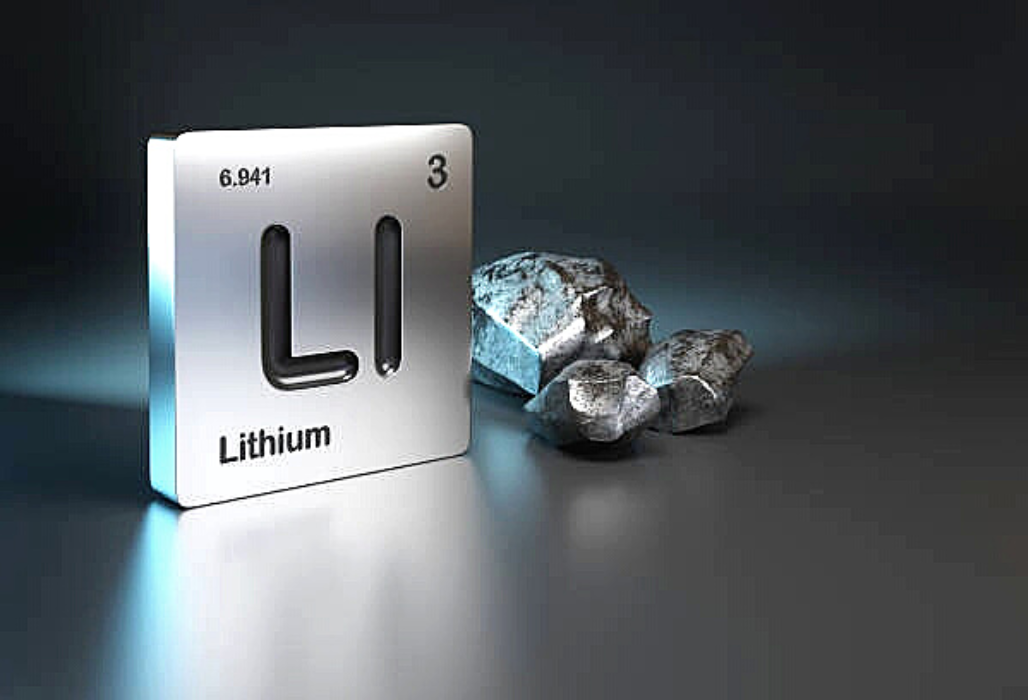
World’s 7th Largest Lithium Reserve Found in Jammu-Kashmir, Crucial for EV Manufacturing

World’s 7th Largest Lithium Reserve Found in Jammu-Kashmir, Crucial for EV Manufacturing

India has announced its first significant discovery of reserves of Lithium, a rare alkali metal, in the mountains of the area of Salal-Haimana area of Reasi District of Jammu & Kashmir (UT)

The government of India announced on Thursday that 5.9 million tonnes of the lithium had been discovered in Jammu and Kashmir.

The newly discovered lithium, found by Geological Survey of India, estimated at 59 lakh tonnes and according to the current market price it is worth INR 3400 billion. Russia is believed to have invaded Ukraine to gain unbroken reserves of lithium!

In 2021, much smaller deposits of lithium were found in the southern state of Karnataka.

Lithium is a rare element crucial for manufacturing electric vehicles. It is a key component in rechargeable batteries that power numerous gadgets like smartphones and laptops, besides just electric vehicles.

With a total of 8 million tons, Chile has the largest known reserves of lithium in the world. This puts it ahead of other countries with significant reserves, such as Australia (2.7 million tons), Argentina (2 million tons), and China (1 million tons).

Pratik Kamdar, Co-Founder of Neuron Energy, a Mumbai-based startup which provides lead-acid and lithium-ion technology batteries for E-Bike, E-Rickshaws, and Golf Carts, said, "With the increased adoption of electric mobility in recent years, there is a huge demand for Li-ion batteries. The recent finding of 5.9 million tonnes of lithium in Jammu & Kashmir will significantly boost the sector. Currently, India is also progressing into cell manufacturing of batteries and it will provide the much-needed impetus to the sector as it will reduce the dependence on imports while also solving the supply-chain challenges as the country will have its own reserves of lithium. There will also be a cost impact as the cells, when manufactured indigenously, will become cheaper."

Currently, India is depended on Australia and Argentina for lithium imports.

Bolivia has by far the world’s largest lithium reserves however most of it remains in the ground as the country does not have the developed infrastructure to excavate it. Due to this, Bolivia does not rank anywhere near the top in actual lithium production.

India imports many important metals such as lithium, nickel and cobalt. With the new discovery of lithium reserves in Jammu and Kashmir, battery and EV manufacturers will not have to depend on imports. Local lithium reserves will help reduce the price of batteries in India, which will further reduce the price of EVs.

One ton of lithium is priced at INR 57.36 lakhs. India has got 59 lakh tonnes of lithium Reserves. That is, its value today will be Rs 33,84,31,021 lakh rupees (3,384 billion ) This price is at current market rate. With the global market, its price varies all the time.

Bootstrapped EV Batteries Startup Neuron Energy Investing INR 50 Cr in Lithium-Ion Battery Pack Segment

Neuron Energy Investing INR 50 Cr in Lithium-Ion Battery Pack Business Vertical

The investment is planned owing to an increase in the demand for Li-Ion Batteries

Large OEM orders will account for 40 percent of the investment

Neuron Energy Private Limited, a manufacturer of lithium-ion for electric 2W and 3W in India, plans to invest INR 50 Crore in the Li-Ion battery pack segment. The investment will be split between 35 crores of working capital financing and 15 crores of equity from the promoters and strategic partners. This move by the company is to cater to the increasing demand in their order book. The increase in demand for Li-Ion batteries is a testament to the fact that there is a substantial increase in demand for electric mobility owing to the rising eco-consciousness among consumers. Neuron also has plans for backward integration into stocking raw materials and handling production along with a contract manufacturer in the near future.

Besides increasing capacity, 40 per cent of the investment will be used to fulfil orders from large OEMs. As part of their growth strategy, the company intends to focus on the battery pack business. The investment is also expected to increase cash flow considering Neuron has always been a profitable company.

Commenting on this funding, Pratik Kamdar, Co-Founder of Neuron Energy Private Limited says, “At Neuron Energy, we are committed to facilitating the transition to a sustainable and eco-friendly future for India's automobile sector. Towards our mission of transforming the EV industry, we are planning to expand our production capacity and enhance research and development. Also, in order to further the EV 2W and 3W segment in the country, we have always been focused on producing high-quality, user-friendly batteries. This investment will help us equalise the demand-supply ratio for batteries. We are confident to fulfil the increase in demand in our order book through this financing at the designated time.”

Among the advantages of Neuron's Li-ion battery product line are the microprocessor-based BMS, the 4 temperature sensors, the appropriate cell spacing for thermal management, and the Neuron App for remote assistance.

The Depot network is expected to remain the same for the next six months in Mumbai, Delhi, Chennai, and Kolkata. In the near future, Neuron may venture into battery research for deep technology as a result of the increase in its R&D team. As part of its expansion plans, Neuron has planned to construct a mega-plant by 2025 that will serve the EV2W and EV3W segments.

About Neuron:

Neuron Energy was incorporated in the year 2018, having headquarters in Mumbai, Maharashtra. Neuron Energy intends to contribute significantly to the electric mobility landscape. Neuron provides lead-acid and lithium-ion technology batteries for E-Bike, E-Rickshaws, and Golf Carts. Neuron Energy has a large export and domestic network for sales in E-Bike batteries. Our Promoters, Mr. Pratik Kamdar, and Mr. Raj Shah have spearheaded our growth story. Neuron Energy has grown from having a presence only in Mumbai to having multiple Depots & Distributors across India. Neuron Energy has increased its export footprint to the Middle East, Europe, and South-East Asia.

Natural Battery Technologies Announces Li-ion Inverter Batteries with a Solar Power Storage Function


India’s leading battery manufacturer, Natural Battery Technologies has announced the launch of lithium-ion (Li-ion) based inverter batteries for home and commercial use that also doubles up as a solar-energy storage system. Headquartered in Rajasthan, Natural Battery Technologies is spearheading the Li-ion battery and clean energy segment, their latest product is a versatile inverter capable of optimizing energy storage for various use cases; hence, it can function as a small home inverter to a large-scale grid energy storage system. This is touted to be the future of energy storage business that aligns with the clean energy and sustainable business.

Natural Battery Technologies’ lithium-ion-based inverter batteries store high volumes of power with a range of steady output that ranges from 1kVA to 50kVA; thus, they are ideal for use as UPS (Uninterrupted Power Supply). They are safe to keep in any setting and can last up to ten times longer than Lead Acid alternatives. Li-ion batteries are also leakproof and spill-proof; they work efficiently as Telecom Tower Energy Storage, GIS Backup batteries, etcetera; They offers customization with respect to the battery storage capacity as desired by the client.


According to Puneet Jain, Founder of Natural Battery Technologies, “The ideology of Natural Battery Technologies since inception has been to create sustainable and clean energy that does not compromise performance output. Our breakthrough innovations in Li-ion technology have been a major differentiator for us in this space.

In the words of Saurabh Patawari, Co-founder Natural Battery Technologies, “Our new inverter batteries have been developed as a safer alternative to lead-acid batteries that are not hazardous to the environment and have a very short life span than our Li-ion batteries, which last five times longer. Made for both home and commercial use, these are lean machines of solar energy storage with optimal power outflow.

India’s lithium-ion battery market is expected to reach USD 4.85 billion by 2027 and projected a CAGR of 17.23% during the forecast period of 2022-2027. The increasing recycling activities of lithium-ion batteries in the country are expected to secure the supply of raw materials and reduce the reliance on extracting materials from natural resources. Our breakthrough innovations in the Li-ion technology segment have been a major differentiator for us.

Natural Battery Technologies is a leading Lithium-Ion Battery manufacturer in India, located out of Rajasthan. The company provides wide range of products such as Lithium-Ion Batteries, Lithium-Ion Cells, LiFePO4 Cells, Battery management System, Solar Home Lighting System, Battery Packs for Solar Street Light, Solar Home Lighting System, Energy Storage System (UPS & Inverter) & other portable devices, thus customizing the technology for various uses.

Natural Battery Technologies work collaboratively with Electric Vehicle companies and other users on enhancing range, design, and safety of the vehicles.

IIT Hyderabad Researchers Developed Alternative for Conventional Lithium-ion Batteries

This more sustainable and low-cost Dual carbon battery may find potential uses in high voltage applications, sophisticated battery-run medical devices, regenerative braking systems in electric vehicles, and stationary grids.


Hyderabad April 05, 2021: Electrochemical Energy Storage (EES) Lab at IIT Hyderabad, under the supervision of Dr. Surendra Kumar Martha (Associate Professor, Department of Chemistry) has developed a 5V Dual Carbon Battery utilizing self-standing carbon fiber mats as both electrodes (cathode and anode). This new model sets aside the requirement of toxic, costly, and heavy transitional metals.

Energy economy based on renewable sources has been put forward as a way out to shrug off the dependence on fossil fuel. Rechargeable Lithium-ion batteries (LIBs) are projected to meet future electric mobility, electric aviation, and stationary grid energy storage targets within 2030. However, LIBs need toxic and costly metals like cobalt, nickel, manganese, etc., for functioning. Geologically unsymmetrical distribution of Lithium and cobalt along with geopolitics and unethical child labor centered on mining causes havoc fluctuations in raw material cost. It affects the market price stability of large LIB packs used in electric vehicles. In the dual-carbon battery, both the electrodes consist of carbonaceous materials, and the ions from the electrolyte intercalate and de-intercalate into the electrode matrix.

Dr. Surendra Kumar Martha

The novel dual carbon battery consisting of zero transition metal is environmentally benign. It may cut down the overall battery cost by 20-25% and is expected to curb the unpredictability in market price. The use of ubiquitous carbon as electrode active material as well as current collector replacing heavy metals brings in the aspects of lightness and flexibility. The fabricated 5.0 voltage (nominal voltage 4.6 V) cell provides an energy density of 100-watt hour per kilogram approximately and can be extended up to 150-watt hour per kilogram with further modifications. The research team believes that developed cells may find potential uses in high voltage applications, sophisticated battery-run medical devices, regenerative braking systems in electric vehicles, and stationary grids.


The leader of the investigation team, Dr. Surendra Kumar Martha, said, “The study will be extrapolated to push the energy density limits further, and their broad vision includes introducing the dual carbon system as a cheaper LIB alternative to the Indian Market.”

The research was carried out by Mr. Shuvajit Ghosh and Ms. Udita Bhattacharjee, PhD students at IIT Hyderabad, under the supervision of Dr. Surendra K. Martha, in collaboration with Oak Ridge National Laboratory (USA) and Naval Materials Research Laboratory (Mumbai, India). Naval Research Board (DRDO) supported this project.

The detailed experiments and discussions can be found in the article entitled ‘Multifunctional Utilization of Pitch‐Coated Carbon Fibers in Lithium‐Based Rechargeable Batteries - Ghosh, S., Bhattacharjee, U., Patchaiyappan, S., Nanda, J., Dudney, N.J. and Martha, S.K.’ published in Advanced Energy Material, 2021, 2100135 (DOI: 10.1002/aenm.202100135).

Nexcharge To Light Up Delhi with India's 1st Grid-connected Li-ion Battery-based Community Energy Storage System (CESS)


- Exide Leclanche Energy Pvt. Ltd. brand is an exclusive JV in India between Exide Industries Limited and Leclanché, Switzerland

- The 0.52 Megawatt hour grid-connected system, set up in collaboration with Tata Power DDL will provide the path for wider adoption of grid-scale energy storage technology across India


NEW DELHI, March 30, 2021 /PRNewswire/ -- Exide Leclanche's Nexcharge in collaboration with Tata Power Delhi Distribution Ltd (TPDDL) today inaugurated India's first Grid Connected Li-ion battery-based Community Energy Storage System at Rani Bagh, Delhi. The 0.52 MWh Battery energy storage system at TPDDL's Rani Bagh substation will provide peak shaving, var compensation, and deviation settlement mechanism based on frequency response at substation level with power backup to preferential consumers in case of a grid outage.

Exide Leclanche Energy Pvt. Ltd. brand is an exclusive joint venture in India between Exide Industries Limited, the country's largest-selling battery company, and Leclanché SA, the Swiss large-format lithium-ion cell conglomerate executed the project; utilizing a Global Project Team approach wherein teams from US, Europe, and India collaborated towards the project. The 0.52-Megawatt hour grid-connected system owned by Exide Industries Limited and Leclanché SA will provide the path for wider adoption of grid-scale energy storage technology across India.

Speaking about the initiative, Stefan Louis, Chief Executive Officer, and Chief Technology Officer, Exide Leclanche Energy Pvt. Ltd. said, "Battery-based energy storage (BESS) provides the agility to better integrate intermittent solar and wind energy resources into India's electric grid and ensure high-quality power for consumers. A Community Energy Storage System like this will ensure consumers get to experience better levels of stability, reliability, quality, and control. Both customers and distributors will benefit from this service. We are very happy to partner with Tata Power DDL to set up this new 0.52 MWh grid-connected system, which will pave a new path for wider adoption of grid-scale energy storage technology across India. It's another step towards all Indians accessing smart sources of energy."

The storage facility was inaugurated by Shri Satyendar Kumar Jain, Hon. Minister of Power, PWD, Health & FW, Industries and Gurudwara Elections, Govt. of NCT of Delhi in the presence of Stefan Louis, Chief Executive Officer, and Chief Technology Officer -Nexcharge and Ganesh Srinivasan - Chief Executive Officer - Tata Power Delhi Distribution Limited.

Commenting on the launch, Mr. Ganesh Srinivasan, Chief Executive Officer - Tata Power Delhi Distribution Limited said, "We are proud to associate with Nexcharge for setting up country's first Grid Connected Community Energy Storage Systems (CESS) at the community level. This will further strengthen our network and ensure reliable and quality power supply to our consumers at all times. Instead of building a humungous infrastructure of transformers and electric equipment, CESS can be used to meet peak demand while storing surplus power. I believe wider adoption of such 'CESS' will help in balancing the load curve of discoms and make them future-ready."

Talking about the multi-MNC joint venture to create Nexcharge, Gautam Chatterjee, Chief Executive Officer, Exide Industries Limited said, "We have long endeavored to develop alternate state-of-the-art technologies such as lithium-ion batteries and energy storage solutions as an important step in tackling the impact of climate change on the environment. Leclanché SA has proven to be an apt partner in this cause bringing superior technology, modules, and battery management systems, as well as immediate access to engineering resources to build market-ready products and solutions."

Anil Srivastava, Chief Executive Officer - Leclanché SA further added, "It is a huge honor that Leclanché has been chosen by Exide Industries, India's largest battery manufacturer, to partner them in their quest to help India achieve its zero-emissions goals and reduce the country's dependence on fossil fuels. We look forward to delivering the best that Leclanché SA has to offer: superior cell technologies, IP, and knowhow that combines high-quality German engineering and Swiss precision with deep experience in the design and implementation of battery storage solutions."

Battery storage systems are emerging as a potential solution for integrating solar and wind renewables in power systems across the globe. In light of the ongoing climate change crisis, renewable and sustainable sources of energy are the need of the hour, especially when India's commitment to the contribution has been touted at 175 GW by 2022.

About Nexcharge

Nexcharge, an Exide Leclanche Energy Pvt. Ltd. brand began its operations in 2018, as a Joint Venture (JV) between India's largest lead-acid storage battery manufacturers, Exide Industries Limited, and one of the leading Lithium-ion (Li-on) battery manufacturers based in Switzerland, Leclanché SA (Leclanché). Nexcharge envisions to fast-track the world's transformation towards sustainable energy solutions and aims to become the leading supplier of E-transport solutions that will power the electrification of transport in the form of efficient and reliable energy storage solutions. Nexcharge also aims to cater to the diverse segments of Industry & Utility markets with state-of-the-art products and end-to-end solutions made available through Li-ion batteries of different chemistry viz. NMC, LFP, LTO, etc. In order to fulfill its mission, Nexcharge has built the India's largest factory equipped with fully automated assembly lines of Li-ion battery packs, modules (Pouch/ Prismatic/ Cylindrical), and cell testing labs at Prantij, Sabarkantha, Gujarat. Nexcharge is also supported by a state-of-the-art, in-house R&D facility in Bangalore. A well-resourced team of engineers works to design battery packs as per the customer's requirements and offers high-quality products at competitive prices.

About Tata Power Delhi Distribution Ltd (TPDDL)


Tata Power Delhi Distribution is a leading power distribution company that distributes electricity to a populace of over seven million in North Delhi. The company has transformed the power distribution scene in the capital city with a record reduction in AT&C Losses and advanced technology adoption across verticals. It is a Public-Private Partnership, Joint Venture Company, between Tata Power, India's largest integrated power company, and the Government of National Capital Territory of Delhi.


For more information, please visit: www.tatapower-ddl.com

About Exide Industries Limited

Exide Industries Ltd is the country's largest manufacturer of lead acid storage batteries and power storage solutions provider. With seven international standard factories spread across the nation for producing batteries, the company offers one of the widest ranges of batteries for every conceivable application in automotive as well as industrial segments. To complete the entire value chain, the company has two captive lead smelting units and two UPS manufacturing facilities. Exide also has manufacturing facilities in Sri Lanka and does business globally through its subsidiaries and international affiliates.

Exide's products are sold globally, particularly in developed markets like Australia, Japan and Western Europe, under its own brand names.

Exide's strong brand pull, established in India for about a hundred years, is supplemented by its nationwide dealer network and a very strong R&D center. With the help of its collaborators – Shin Kobe and Furukawa of Japan and East Penn of the US - Exide has consistently remained at the cutting-edge of international battery technology and introduced various pioneering products and power storage solutions in the Indian and global markets.

Exide's vast product range, that includes everything from the smallest UPS batteries to the giant submarine batteries, find applications in automotive, two-wheelers, inverters, UPS, power, telecom and railways, among others. Exide is also present in the non-conventional energy business where it designs and integrates solar and wind power solutions for use in remote areas of the country.
Exide's customer list includes some of the top most international names in industries as diverse as automotive, earth moving equipment, telecom and UPS manufacturers.


With an annual total income of Rs 9920 crore (as on 31st March 2020), the company is the largest among the branded lead acid storage battery businesses in India. The company has been consistently profitable and paying dividend every single year since its inception.

For more information visit www.exideindustries.com

About Leclanché

Headquartered in Switzerland, Leclanché SA is a leading provider of high-quality energy storage solutions designed to accelerate our progress towards a clean energy future. Leclanché's history and heritage are rooted in over 100 years of battery and energy storage innovation and the Company is a trusted provider of energy storage solutions globally. This coupled with the Company's culture of German engineering and Swiss precision and quality, continues to make Leclanché the partner of choice for both disruptors, established companies, and governments who are pioneering positive changes in how energy is produced, distributed and consumed around the world. The energy transition is being driven primarily by changes in the management of our electricity networks and the electrification of transport, and these two end markets form the backbone of our strategy and business model. Leclanché is at the heart of the convergence of the electrification of transport and the changes in the distribution network. Leclanché is the only listed pure-play energy storage company in the world, organized along with three business units: stationary storage solutions, e-Transport solutions, and specialty battery systems. Leclanché is listed on the Swiss Stock Exchange (SIX: LECN).


India's 1st Technology Hub to Develop Lithium-ion Cells Opens in Tirupati

Amar Raja Battery's Plant at Tirupati [Image - amararajabatteries.com]

India's first technology hub to develop lithium-ion cells has been launched in Tirupati, Andhra Pradesh, by Amara Raja Batteries, the country’s second largest automotive battery maker, known for brand AMARON. The company has opened the country’s first tech hub to develop Li-ion cells at its factory in Tirupati.

Named as "Advanced Lithium-Ion Technology Research Center", the hub is the pilot project located at its the company's headquarters in Tirupati. According to S Vijayanand said. , CEO of Amara Raja Batteries, the hub will become the country’s first private-sector lithium-ion cell manufacturing plant in the coming years.

To recall, in August last year, Mumbai-based firm Epsilon Carbon has had set up India's first manufacturing facility for Li-ion battery component, that is to produce graphite anode materials for Li-ion batteries.

Amara Raja Batteries has also entered into a technology transfer agreement with the Indian Space Research Organization (ISRO) -- since early 2019 -- for the lithium-ion cell technology transfer. Amar Raja Batteries is among 10 companies that got the technology licence and the company have to pay only the bidding fees and technology transfer fees that have already been paid by Amara Raja.

It was in June 2018 when ISRO invited bids from local startups and suitable firms for its in-house indigenously made technology of large-scale production of lithium ion batteries.


According to a report, Lithium-ion based battery technology companies received the most VC funding in 2020, with $649 million. Other categories that received funding included Solid-state batteries, Energy storage downstream, Energy storage systems, and Flow batteries.

Market Reports

Market Report & Surveys
IndianWeb2.com © all rights reserved