


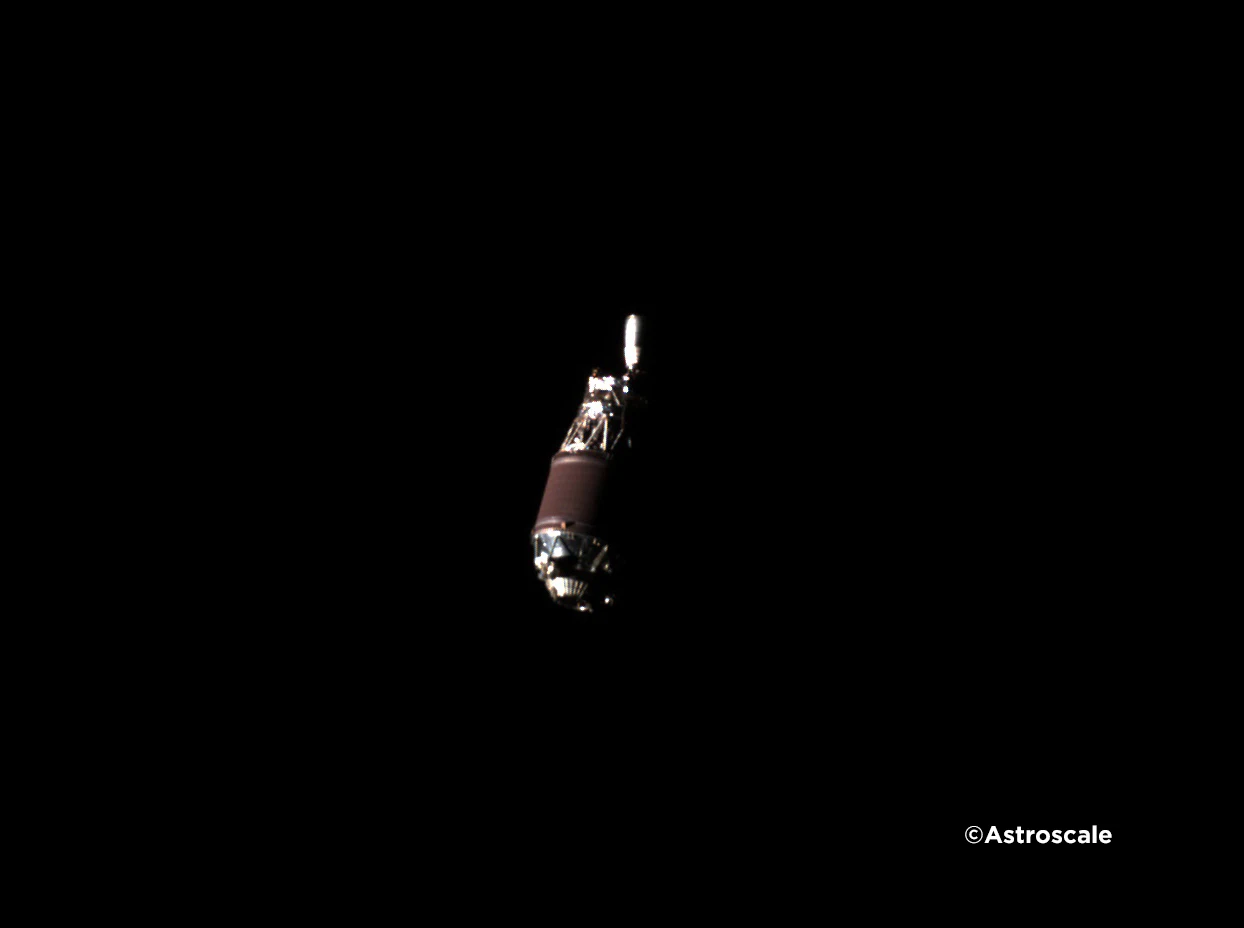
This historic image was taken by their commercial debris inspection demonstration satellite called Active Debris Removal by Astroscale-Japan (ADRAS-J).
The ADRAS-J spacecraft was selected by Japanese space agency JAXA for Phase I of its Commercial Removal of Debris Demonstration (CRD2) program. Astroscale Japan is responsible for the design, manufacture, test, launch and operations of ADRAS-J.
ADRAS-J is designed to demonstrate the feasibility of capturing and removing space debris from orbit. Its primary goal is to test technologies and techniques for safe and efficient debris removal.
The ADRAS-J spacecraft successfully approached a rocket upper stage, which is a piece of space debris, from several hundred meters behind it. This achievement marks a crucial step toward understanding and addressing the challenges posed by space debris, driving progress toward a safer and more sustainable space environment.
ADRAS-J uses advanced sensors, navigation systems, and robotic arms for its operations. These technologies are crucial for safe and precise maneuvers around space debris.
Astroscale collaborates with space agencies, industry partners, and international organizations to promote responsible space practices and develop effective debris removal strategies.
1. Rendezvous and Proximity Operations (RPO)
ADRAS-J approaches the target space debris object using precise navigation and control systems. It performs close flybys to inspect the debris and assess its condition.
2. Capture Mechanism
ADRAS-J spacecraft is equipped with a robotic arm or a net system. The robotic arm can grapple onto the debris, securing it for removal. Alternatively, the net system envelops the debris, capturing it.
3. Deorbit Maneuvers
Once captured, ADRAS-J initiates deorbit maneuvers. These maneuvers alter the debris' orbit, gradually bringing it closer to Earth.
Eventually, the debris re-enters Earth's atmosphere and burns up.
4. Safe Disposal
ADRAS-J ensures that the debris re-enters over uninhabited areas (such as oceans) to minimize risk. The controlled re-entry prevents the debris from becoming additional space junk.
While active debris removal is still an ongoing challenge, there have been some notable efforts and achievements. The RemoveDEBRIS mission, led by the University of Surrey in collaboration with industry partners, successfully demonstrated several debris removal technologies. In 2018, it deployed a net to capture a simulated piece of space debris and used a harpoon to pierce a target panel. These tests validated the feasibility of capturing and deorbiting debris.
Elon Musk's SpaceX Starlink Satellite actively manages its satellites to avoid collisions and reduce space debris. When a defunct Starlink satellite (Darksat) was no longer operational, SpaceX intentionally deorbited it to prevent it from becoming space junk.
Similarly, the European Space Agency (ESA) is planning the e.Deorbit mission. e.Deorbit aims to capture a defunct satellite and safely deorbit it. The mission will demonstrate key technologies for active debris removal.
International organizations, space agencies, and private companies are increasingly working together to address space debris.
Initiatives like the Space Data Association (SDA) facilitate coordination among satellite operators to prevent collisions.
ADRAS-J uses advanced sensors, navigation systems, and robotic arms for its operations. These technologies are crucial for safe and precise maneuvers around space debris.
Astroscale collaborates with space agencies, industry partners, and international organizations to promote responsible space practices and develop effective debris removal strategies.
How ADRAS-J capture and remove space debris?
The ADRAS-J spacecraft employs innovative techniques to capture and remove space debris as depicted below —1. Rendezvous and Proximity Operations (RPO)
ADRAS-J approaches the target space debris object using precise navigation and control systems. It performs close flybys to inspect the debris and assess its condition.
2. Capture Mechanism
ADRAS-J spacecraft is equipped with a robotic arm or a net system. The robotic arm can grapple onto the debris, securing it for removal. Alternatively, the net system envelops the debris, capturing it.
3. Deorbit Maneuvers
Once captured, ADRAS-J initiates deorbit maneuvers. These maneuvers alter the debris' orbit, gradually bringing it closer to Earth.
Eventually, the debris re-enters Earth's atmosphere and burns up.
4. Safe Disposal
ADRAS-J ensures that the debris re-enters over uninhabited areas (such as oceans) to minimize risk. The controlled re-entry prevents the debris from becoming additional space junk.
While active debris removal is still an ongoing challenge, there have been some notable efforts and achievements. The RemoveDEBRIS mission, led by the University of Surrey in collaboration with industry partners, successfully demonstrated several debris removal technologies. In 2018, it deployed a net to capture a simulated piece of space debris and used a harpoon to pierce a target panel. These tests validated the feasibility of capturing and deorbiting debris.
Elon Musk's SpaceX Starlink Satellite actively manages its satellites to avoid collisions and reduce space debris. When a defunct Starlink satellite (Darksat) was no longer operational, SpaceX intentionally deorbited it to prevent it from becoming space junk.
Similarly, the European Space Agency (ESA) is planning the e.Deorbit mission. e.Deorbit aims to capture a defunct satellite and safely deorbit it. The mission will demonstrate key technologies for active debris removal.
International organizations, space agencies, and private companies are increasingly working together to address space debris.
Initiatives like the Space Data Association (SDA) facilitate coordination among satellite operators to prevent collisions.



 IndianWeb2.com is an independent digital media platform for business, entrepreneurship, science, technology, startups, gadgets and climate change news & reviews.
