Showing posts with label Human-Computer Interface. Show all posts

Delhi Defence Conference Charts Future of Brain‑Computer Interface

Delhi Defence Conference Charts Future of Brain‑Computer Interface

India’s defence establishment has formally entered the global race on Brain‑Computer Interface (BCI) technologies, with the Chief of Defence Staff (CDS) General Anil Chauhan inaugurating a landmark conference in New Delhi on May 5, 2026. The event underscored BCI’s potential to reshape warfare, human‑machine teaming, and national security, while situating India alongside countries like the U.S., China, Russia, and Israel that are already advancing military neurotechnology.

Highlights from the Delhi Conference

  • Organisers: HQ Integrated Defence Staff (IDS) and Centre for Joint Warfare Studies (CENJOWS)
  • Leadership: CDS Gen. Anil Chauhan, Air Marshal Ashutosh Dixit (CISC), Vice Admiral Arti Sarin, Maj Gen (Dr) Ashok Kumar (Rtd.), IIT Delhi’s Dr. T.K. Gandhi
  • Focus Areas: Current status of BCI research, strategic defence applications, ethical and neuro‑security challenges, indigenous innovation
  • Participants: Senior military officials, scientists, DRDO, NIMHANS, C‑DAC, IIT Delhi, and ten start‑ups showcasing devices. 
In the event yesterday a panel discussion involving senior defence officials, scientists, and industry leaders explored the military applications of BCI, particularly its potential in augmenting cognitive capabilities, improving human performance, and strengthening command-and-control systems.

The event also witnessed participation of ten start-ups, which displayed and demonstrated innovative devices, products, and technologies related to Brain-Computer Interface systems.

What is Brain‑Computer Interface (BCI)?

  • Definition: A system that translates neural signals into digital commands
  • Forms: Non‑invasive (EEG headsets) or invasive (implanted electrodes)
  • Civilian Uses: Rehabilitation, prosthetics, treatment of neurological disorders
  • Military Uses: Controlling drones, enhancing cognition, silent communication, monitoring stress and fatigue

Global Military Developments in BCI

CountryKey InitiativesApplications
United StatesDARPA & DoD funding; Neuralink & Synchron breakthroughsDrone control, cognitive load reduction, PTSD treatment, prosthetics
ChinaCivil‑military integration; NHSA guidelines for invasive BCIsNormalising implants, dual‑use spillovers into defence
RussiaResearch into neuro‑enhanced soldiersCognitive augmentation, battlefield coordination
IsraelAdvanced neurotech R&DHuman‑machine teaming, situational awareness
IndiaDefence‑academia‑industry collaboration (CENJOWS, DRDO, IIT Delhi)Operational efficiency, rehabilitation, indigenous innovation

Strategic Implications

  • Operational Efficiency: Faster decision‑making in hyperwar scenarios
  • Command & Control: Augmented cognitive capabilities for battlefield coordination
  • Ethical & Legal Risks: Raises questions under international humanitarian law
  • National Security: Neuro‑security challenges include hacking neural signals and misuse by non‑state actors

Conclusion

India’s BCI conference marks a strategic leap into neurotechnology, aligning with global powers already experimenting with mind‑machine warfare. By fostering collaboration between the Armed Forces, academia, and industry, India aims to harness BCI for both national defence and societal benefit, while navigating ethical and legal complexities.

Amazon Developing Game To Study Human-Robot Interaction

Amazon Developing Game To Study Human-Robot Interaction

Tech giant Amazon is developing a computer game called Alexa Arena which involves users interacting with virtual robots to train machines on how to behave around humans. The game involves getting virtual robots to do tasks for you and will gather data on robot-human interactions.

With this computer game, Amazon can train the machines on how best to go about their duties in offices and homes.

Qiaozi Gao, Applied Scientist of the Amazon Alexa AI team, describes Alexa Arena as an initiative supporting the development of gamified robotic tasks readily accessible to general human users.

According to a recent paper prepared by Gao and his team, the game will become publicly available in order to conduct a widespread study related to the creation of such embodied assistants like robots.

The game, yet to be launched, will feature “user-friendly” graphics and control mechanisms. Gao and his team claim that the game will open a new venue for high-efficiency HRI data collection and Embodied AI system evaluation. Embodied AI relates to AI systems which control a physical object, such as a robotic arm or autonomous vehicle.

Last month, Amazon had organised Alexa Prize SimBot Challenge BootCamp in the US, wherein 10 university teams were selected to participate in the live interactions phase of the Alexa Prize SimBot Challenge. These university teams competed to develop a bot that best responds to customer commands in a virtual world.

At last year’s International Conference on Intelligent Robots and Systems (IROS), Gao and his team presented two papers that advance Embodied artificial intelligence (EAI).

In the first paper published, “DialFRED: Dialogue-enabled agents for embodied instruction following”, the team presented DialFRED, an embodied-instruction-following benchmark containing 53,000 human-annotated dialogues that enables an agent to — (1) to engage in an active dialogue with the user and (2) use the resulting information to better complete tasks. 

Last year in August, Amazon unveiled its “first fully autonomous mobile robot” called Proteus, in its industrial robots category. 

Notably, besides having industrial robots for its vast warehouses, Amazon also develops consumer robots such as the Astro home robot, which was launched in late 2021. 

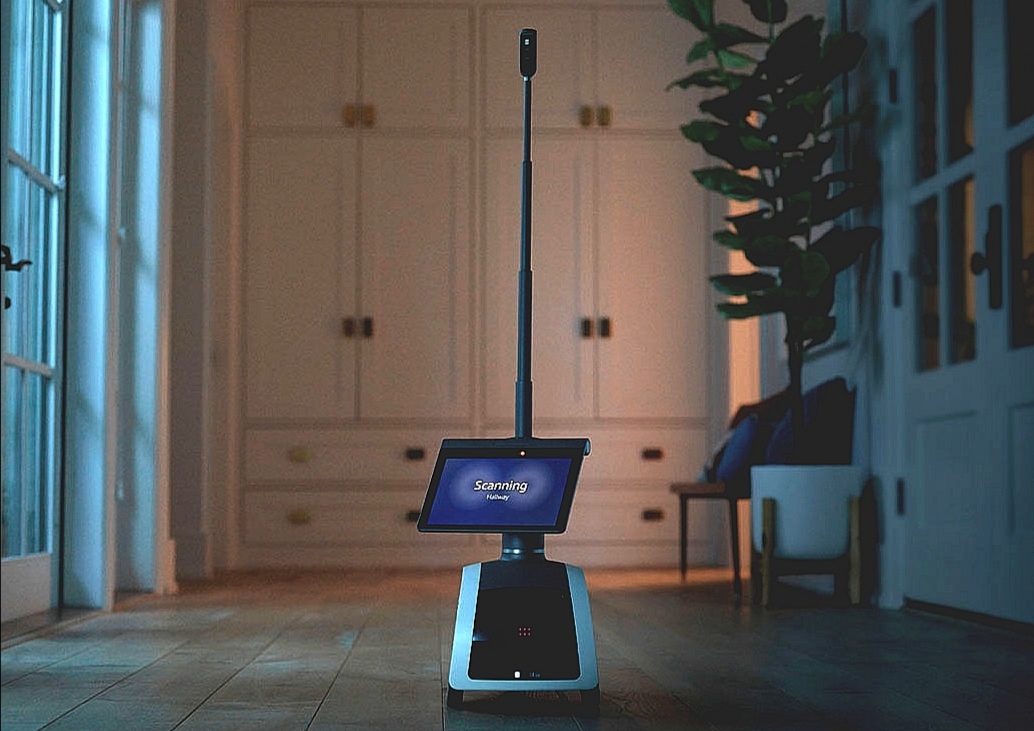
Astro
Astro home robot

Astro Home robots are Household robot for home monitoring, with Alexa. With Astro robot, users can monitor home, while away from home, using its Astro app that allows to see a live view of users' home, check in on specific areas, and get activity alerts. When you're home, Astro can follow you from room to room playing your favorite music, podcasts or shows, and find you to deliver calls, reminders, alarms, and timers set with Alexa.

Coming back to the computer game, Alexa Arena will be made publicly available to facilitate research in building generalisable and assistive embodied agents such as virtual assistants and robots.

Elon Musk's Brain-Chip Company Caused Needless Sufferings and Deaths of 1,500 Animals

Elon Musk's Brain-Chip Company Neuralink Caused Needless Sufferings and Deaths of 1,500 Animals

Elon Musk’s company Neuralink Corporation is being investigated after 1,500 animals reportedly died in testing.

Founded by Elon Musk in 2016, Neuralink is a neurotechnology company that develops implantable brain–computer interfaces and
is in the process of developing a controversial brain implant.

According to the news agency Reuters, the company staff have complained that animal testing is being rushed and is causing needless suffering and deaths.

Citing sources familiar with the investigation and internal company documents, Reuters reports that the company has killed about 1,500 animals since 2018 including pigs, sheep and monkeys.

The company however states that it hopes to help paralyzed people walk again. Musk has also claimed that he is “confident” that Neuralink will cure blindness and other conditions.

On the other hand, Neuralink employees claim that they were consistently hurried and pressured to conduct animal testing that resulted in needless deaths.

In one of the examples highlighted in the report, it sates that 25 pigs die after being fitted with implants of the wrong size. Staff claimed that this would not have happened had they been given enough time to prepare properly. In an another incident, multiple monkeys were said to have been killed as a result of using a substance called BioGlue, to affix chips to their brains.

In February 2022, Neuralink acknowledged that macaque monkeys died and were euthanized after experimentation, denying that any animal abuse had occurred. 

Besides, there are numerous reports, that claims that Musk is pressurizing staff to produce faster results. Earlier this year, he allegedly emailed Neuralink staff, saying: “In general, we are simply not moving fast enough. It is driving me nuts!”. This was accompanied by a news article about a Swiss tech development that helped a paralyzed man to walk.

Following the Reuters report, the U.S. House Representatives Earl Francis Blumenauer and Adam Schiff want further U.S. Department of Agriculture (USDA) scrutiny of Elon Musk's Neuralink. 

Neuralink was founded by Elon Musk along with Max Hodak, Dongjin "DJ" Seo, Paul Merolla, Ben Rapoport, Philip Sabes, Tim Gardner, Tim Hanson and Vanessa Tolosa. 

The company is headquartered in the Pioneer Building in San Francisco sharing offices with OpenAI, which is also Elon Musk backed company. 

In September 2020, it was reported that only three of the eight founding scientists remained at the company due to "years of internal conflict in which rushed timelines have clashed with the slow and incremental pace of science.". 

As of January 2022, of the eight cofounders, only two remain at the company

Human-Computer Interface Developing Firm Wispr AI Gets $4.6 Mn from NEA and 8VC to Build Thoughts-Powered Neural Interface

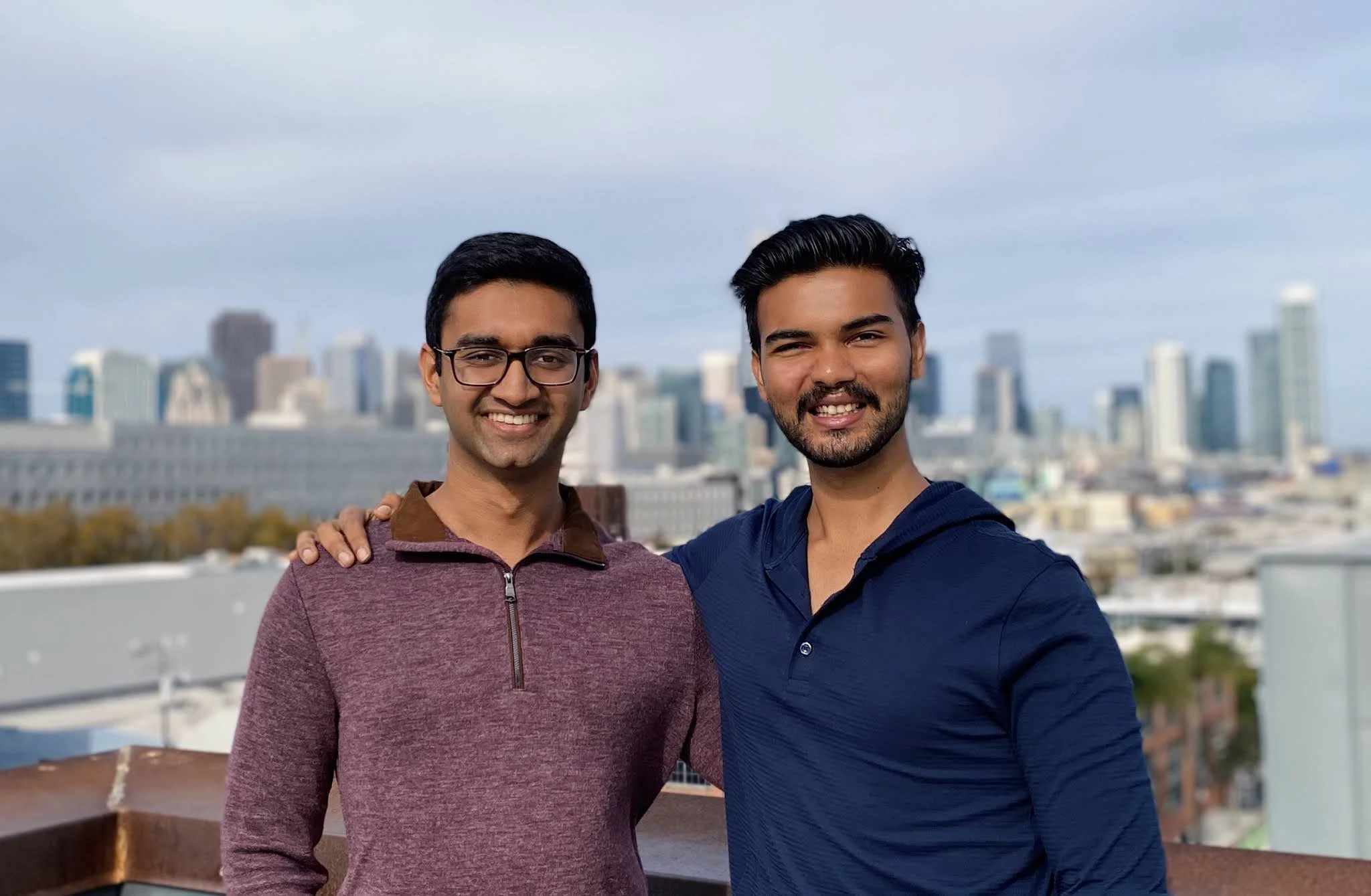
(Left to Right) Sahaj Garg (CTO) and Tanay Kothari (CEO)

Wearable Device Will Decode Deliberate Thought for Seamless Interactions with Immersive Technology

Wispr AI, the neurotechnology company aimed at developing the next generation of human-computer interfaces, today announced it has closed $4.6 million in seed funding co-led by New Enterprise Associates (NEA) and 8VC. Additional participants in the financing include CTRL-Labs CSO & Co-founder Josh Duyan, Berkeley Neuroscience Professor & iota Biosciences Co-CEO Jose Carmena, Warby Parker CEO Dave Gilboa, Stanford NLP Professor Chris Manning, Salesforce Chief Scientist Richard Socher and Nesos CTO Vivek Sharma. Wispr AI plans to use the funding to accelerate development of the first functional thought-powered digital interface. The company is bringing together a formidable team of world-class neuroscientists, hardware engineers, ML engineers and product engineers who are passionate about changing the world.

Wispr AI is building a wearable that can convert deliberate thought into action and high-bandwidth digital input. By combining the latest advancements in deep learning, electrical interfaces and neuroscience, the company will allow users to interface with our increasingly immersive digital world in truly seamless fashion.

Wispr AI was co-founded by Tanay Kothari and his Stanford roommate, Sahaj Garg. Kothari, CEO of Wispr AI, previously led engineering and product at Cerebra Technologies after founding FeatherX, which Cerebra acquired. Kothari, an International Olympiad in Informatics (IOI) medalist, has been building personal assistants for the last twelve years. He studied computer science at Stanford where he published research with Andrew Ng at the Stanford Artificial Intelligence Laboratory (SAIL).

“The technologies we use are evolving at an unprecedented pace,” said Kothari. “We have moved from phones to smartwatches, VR headsets and immersive augmented experiences. How we interact with this technology will be one of the biggest questions to shape this decade. As we move away from keyboards and voice, the next generation of interfaces are going to be more natural, seamless and private. Our mission is to bring these interfaces to every single person in India and around the globe.”

Wispr AI’s CTO, Sahaj Garg, previously led the AI team at Luminous Computing, a deep-tech startup building photonic computer hardware. Garg graduated at the top of his Stanford engineering class as a Henry Ford II Scholar and is a published researcher with SAIL, Google Research and Harvard Medical School.

“Most people think that interpreting thoughts requires a direct interface with the brain," said Sahaj Garg. “But it’s possible to capture these deliberate intentions by looking at the rest of your body. For example, even when you think about lifting your leg without actually moving it, your brain still sends electrical signals to the muscles in your leg. One way to detect these signals is with electromyography, or EMG sensors, similar to the EKG in your Apple watch."

“What this means is that Wispr’s technology would be akin to wearable devices people are already used to and would inconspicuously fit into their lives,” said Alex Kolicich, Founding Partner at 8VC. “It’s brilliant how Sahaj and Tanay are looking at solving this problem. It’s rare to find a combination of founders who are deeply technical and at the same time so focused on developing a product that is consumer-centric.”

Wispr’s advisory team includes neurotechnology veterans like Ben Jones, the former COO of CTRL-Labs (acquired by Meta, formerly known as Facebook). Jones said, “The work we did at CTRL-Labs was the first step toward an emerging ecosystem of neurotechnology that will inspire new ways for people to communicate, create, learn, work and play. Wispr's unique approach to decoding the brain and the body is going to expand and enrich that ecosystem in exciting ways.”

Also on the advisory team is David Eagleman, a Stanford neuroscientist, founder of several companies and CEO at Neosensory. Eagleman added, “Wispr AI is tackling an idea that is straightforward to describe, requires deep skills to build and will change the landscape of our interactions with machines. That’s the sweet spot for a neurotech company to live in.”

Sergey Stavisky, co-director of the UC Davis Neuroprosthetics Lab and an advisor to Wispr AI, said, “Wispr’s approach in the situation where the user can make (at least some) muscle movements is a promising alternative to more invasive approaches, like those that require surgical implants. Recent advancements in EMG sensors, signal processing and machine learning approaches to deciphering these signals make it an exciting time to bring this neurotechnology to market.”

“What Wispr AI has already accomplished in the development of its thought-powered digital interface is nothing short of mind-blowing,” said Greg Papadopoulos, Venture Partner at NEA. “Tanay and Sahaj’s talent, vision and groundbreaking application of neurotechnology have the potential to not only change the way people interface with technology, but to set future technologies on a new course—with everything controlled from the mind."

About Wispr AI

Founded in 2020, Wispr AI is innovating to bring the next generation of wearable neural interfaces to every human on the planet. Its vision is to replace existing interfaces of communication with one powered directly by thought, erasing the final dividing line between people and the technologies they interact with. Wispr AI is a scientifically-grounded, product-focused company headquartered in San Francisco. For more, visit https://wispr.ai.

About NEA

New Enterprise Associates, Inc. (NEA) is a global venture capital firm focused on helping entrepreneurs build transformational businesses across multiple stages, sectors and geographies. With nearly $24 billion in cumulative committed capital since the firm's founding in 1977, NEA invests in technology and healthcare companies at all stages in a company's lifecycle, from seed stage through IPO. The firm's long track record of successful investing includes more than 250 portfolio company IPOs and more than 425 mergers and acquisitions. www.nea.com.

About 8VC

8VC is a leading technology investment firm backing visionary teams and industry-transforming companies. The partners have a proven track-record as founders, engineers, and operators of successful companies including Palantir, Resilience Bio, Epirus, Addepar, Affinity, and OpenGov, among others. The firm was founded in 2016 and manages $5B+ in committed capital. 8VC invests in smart enterprise platforms across industries including financial services, healthcare, defense, logistics and others as well as in Bio-IT. For more information, please visit https://8vc.com.

Market Reports

Market Report & Surveys
IndianWeb2.com © all rights reserved