Showing posts with label Gamified Learning. Show all posts

Amazon Developing Game To Study Human-Robot Interaction

Amazon Developing Game To Study Human-Robot Interaction

Tech giant Amazon is developing a computer game called Alexa Arena which involves users interacting with virtual robots to train machines on how to behave around humans. The game involves getting virtual robots to do tasks for you and will gather data on robot-human interactions.

With this computer game, Amazon can train the machines on how best to go about their duties in offices and homes.

Qiaozi Gao, Applied Scientist of the Amazon Alexa AI team, describes Alexa Arena as an initiative supporting the development of gamified robotic tasks readily accessible to general human users.

According to a recent paper prepared by Gao and his team, the game will become publicly available in order to conduct a widespread study related to the creation of such embodied assistants like robots.

The game, yet to be launched, will feature “user-friendly” graphics and control mechanisms. Gao and his team claim that the game will open a new venue for high-efficiency HRI data collection and Embodied AI system evaluation. Embodied AI relates to AI systems which control a physical object, such as a robotic arm or autonomous vehicle.

Last month, Amazon had organised Alexa Prize SimBot Challenge BootCamp in the US, wherein 10 university teams were selected to participate in the live interactions phase of the Alexa Prize SimBot Challenge. These university teams competed to develop a bot that best responds to customer commands in a virtual world.

At last year’s International Conference on Intelligent Robots and Systems (IROS), Gao and his team presented two papers that advance Embodied artificial intelligence (EAI).

In the first paper published, “DialFRED: Dialogue-enabled agents for embodied instruction following”, the team presented DialFRED, an embodied-instruction-following benchmark containing 53,000 human-annotated dialogues that enables an agent to — (1) to engage in an active dialogue with the user and (2) use the resulting information to better complete tasks. 

Last year in August, Amazon unveiled its “first fully autonomous mobile robot” called Proteus, in its industrial robots category. 

Notably, besides having industrial robots for its vast warehouses, Amazon also develops consumer robots such as the Astro home robot, which was launched in late 2021. 
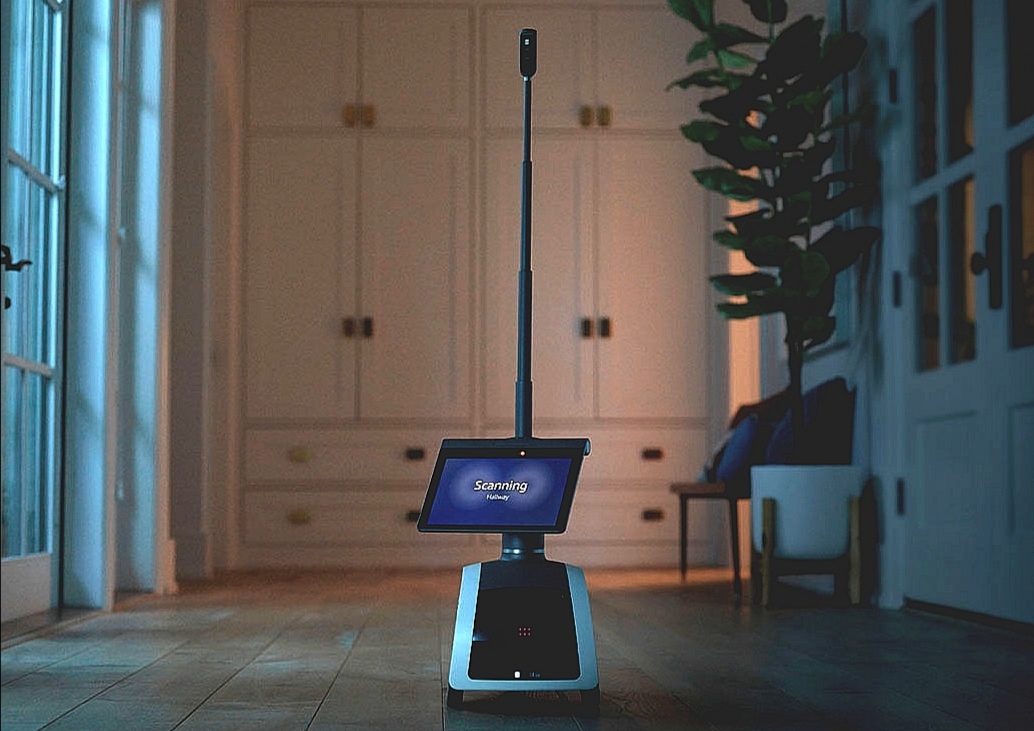
Astro
Astro home robot

Astro Home robots are Household robot for home monitoring, with Alexa. With Astro robot, users can monitor home, while away from home, using its Astro app that allows to see a live view of users' home, check in on specific areas, and get activity alerts. When you're home, Astro can follow you from room to room playing your favorite music, podcasts or shows, and find you to deliver calls, reminders, alarms, and timers set with Alexa.

Coming back to the computer game, Alexa Arena will be made publicly available to facilitate research in building generalisable and assistive embodied agents such as virtual assistants and robots.

Gamification of Education: Digital Twin Technology Is Set to Turn Over New Leaf in Learning

Gamification of Education: Digital Twin Technology Is Set to Turn Over New Leaf in Learning

The article is authored by Dr. Nachiket Bhatia, CEO, Dr. Bhatia Medical Coaching Institute & E-Gurukul

Gamification of Education

Elements of games added to conventional learning to make it more engaging is the gamification of education. These elements could be point systems, challenges, social connections, player control, goals, rewards, feedback, etc. They are applied while teaching to increase student engagement.

Gamification of education allows for “fun while you learn”. The way players interact in virtual gaming is one of the key motivations for the education industry to implement gamification in education. Games trigger emotions and engage us better. Such learning relieves the pressure on learners and simultaneously encourages them to participate.

Games are also effective because they are competitive and competition gives rise to mental toughness, better collaboration, and enhanced social and emotional learning. Efficiency is gained through such learning because the learner is in charge of their own learning journey.

Digital twin technology

A digital twin is a ‘virtual clone’ of any real-world object. It makes real-time judgments using real-time data, simulations, algorithms, and machine learning. Students can walk through the universe from the ease of their schools or homes. The use of this technology can help in better understanding of Model building, surgical training, and other practical instructions. Whereas real-world simulations can replace chemical labs and hands-on dissection labs.

The use of digital twin technology in education will allow students to participate, compete and learn in a simulation environment. Also, combining and visualising data using digital twin technologies will improve decision-making, give rise to immersive learning experiences and enable effective planning as well as action. Its use will also allow us to correct any shortcomings of a decision before making it a reality.

How will gamification of education using digital twin technology benefit learners?

Having disrupted learning all over the world, the pandemic has led us to not only rethink how education could be improved in isolation but also how we can foster immersive learning experiences. Virtual reality has answers to it.

Self-learning apps are already using gamification to engage the learners. But, a nascent idea of gamifying digital twins is gaining momentum. Digital twin technology is one of the growing technologies related to industry 4.0. It paves way for experiential learning by combining game elements, data and technology and is especially relevant to higher engineering, manufacturing and medical education.

Today, the use of simulations is common in education. But now, more and more simulations are being upgraded from static scenarios to real-world scenarios. Simulators alone aren’t as effective as they are with the use of gamification techniques because gamification engages the learners for a longer time and motivates them to get more involved. Therefore, gamification approaches such as the liberty to make mistakes, practice, repeat and collect awards are also getting integrated into simulations.

Universities like Stanford and Copenhagen school have already adopted this technology in higher education. Researchers suggest virtual game-based learning encourages immersive learning, cognitive development, creativity and better decision making. Even NASA used digital twin technology to explore the unexplored in space. Similarly, a platform named digital twin studios designs safety training video games using digital twin technology for the workers in the Oil and Gas industry.

The use of digital twin technology has recently also aroused the interest of healthcare practitioners as a possible solution to overcome healthcare limitations and expand the possible treatment options. Researchers at the University of Miami Miller School of Medicine, for example, are working on a project to create a "digital twin" of an individual using data collected from in-home and on-body sensors. Its development will enable future health care practitioners to employ artificial intelligence for evaluating various treatments and their potential outcomes on a patient's digital twin before executing them in the physical world.

The digital twin reform in healthcare is still underway but soon, it is likely to revolutionize the ways of treating and diagnosing the patients. It has high potential in higher education as well. Medical students will be able to use digital twins of animal and human dead bodies to perform dissections and analyses. Concepts of virtual organs, genomes, anatomy and medical procedures can also be well understood with its use.

According to research, games can help to develop complex cognitive skills and metacognitive skills for deep learning. Simulators assist students to relate theoretical topics to real-world events and improve analytical abilities by allowing them to compare different points of view, build arguments, reflect, and evaluate circumstances. Their combined use in education can become a powerful learning tool.

Conclusion

Gamification of digital twins for an enhanced learning experience will allow the learners to take lead in experiential learning. However, this concept has a lot of scope that is yet to be explored. It is a viable option because it is sustainable and effective. Large-scale application is important to turning digital twins' potential into genuine impact. It aims to reform the understanding of complex systems and subjects that need practical learning. Technology is all into our lives. We have adopted technology to make our lives easy. There are challenges to this but with its help, the students will be better prepared for real-life situations in near future.

LEAD School Acquires AI-Powered Gamified Student Assessment Platform QuizNext


LEAD School, a major EdTech player in India's K-12 education segment, today announced the strategic acquisition of QuizNext, an AI-powered gamified student assessment and practice platform.

With this acquisition LEAD School will further enhance its overall product offerings and help schools maintain their high standards of education and deliver a 100% Complete School experience. Integration of QuizNext will bring new features for schools to serve their assessment needs while building practice habit in students through gamified elements and personalised recommendations.

LEAD School Co-founder and COO Smita Deorah said, "COVID-19 has brought in a seismic shift in school education. Beyond online classes, students need a lot of support in a remote learning environment for a full schooling impact. LEAD School is committed to providing complete, seamless schooling irrespective of whether schools are physically open or shut. Integration of QuizNext into our platform is another step in this direction. I am delighted to welcome the QuizNext team to LEAD School and look forward to working closely with them in offering excellent learning to every student."

QuizNext Co-founder and CEO Guruprasad Holla said, "We look forward to joining hands with LEAD School and fulfilling our vision of making learning engaging and effective. With an integrated system like LEAD, Quiznext can become more effective in serving students' practice needs."

The acquisition of QuizNext follows LEAD School's recent completion of a $28-million Series C funding round led by WestBridge Capital along with existing investor Elevar Equity.

LEAD School Integrated System (IS) is a one-of-its-kind solution to transform school quality in India. It currently serves over 4 lakh students and 16,000 teachers through 1,000+ partner schools in 400+ cities across the country. With LEAD School IS, schools can continue teaching – online, offline or hybrid – while maintaining the best teaching standards and learning outcomes.

About LEAD School

LEAD School is promoted by Leadership Boulevard, one of the fastest growing EdTech companies in India. It combines technology, curriculum and pedagogy into an integrated system of teaching and learning, thus improving student learning and teacher performance in schools across the country. LEAD School partners with 1,000+ schools with an estimated 4 lakh+ students in more than 400 cities, including tier 2 to tier 4 cities, in 20 States.

STEPapp, the gamified learning app for school students soon to be relaunched in all subjects

In the situation where most of the sectors are at standstill in terms of new innovations and expansion, lockdown has inadvertently catalyzed growth for edu-tech industry. Following the growing demands and needs, tech-education player continues to introduce develop their business horizon. From promptly making of the app at discounted price, grading up the courses to adding the new elements, the supplementary edu- tech players are going beyond to beat the competition during crisis.

STEPapp one of the emerging players in the edu – tech has sensed this opportunity through the growing figure of users and downloads. STEPapp which is a gamified learning app, has seen an increase of more than 3 lakh users from March 15th. In last four months, the app has a total of 2 million downloads on Play Store and App Store.

During the lockdown period, STEPapp has turned out to be a popular solution for students to learn Math & Science concepts in a gamified format mapped as per the CBSE, ICSE and SSC boards.

Based a strong popularity of the gamified learning format in last few months. STEPapp has decided to relaunch the app by introducing new subjects. With an effective approach of Artificial Intelligence, the app will be adding Social Science and language subjects as per the education board guidelines. The newly introduced subjects will be soon available for CBSC board students. The app is in process to prepare the course for other education boards as well.

The additional feature of the app, such as segregated topics of each chapters that allow students revise and grasp the concepts easily, simplified testing methodology to track the progress of students and dashboard that collects data on each subscribed students will also be added to the newly introduced subjects.

“As a part of the education sector for the last 22 years, our aim is to ensure that students receive the best quality of education. After seeing the amazing response on our app in the past few months, it is our responsibility to introduce all the subjects and made it available to students and teachers in the neediest time. Hence, even when the situation is not in our favour, our team continue to work, improvise and innovate the app with the use of the best technology.” Said Praveen Tyagi, Managing Director, Pace- IIT & Medical, CEO and Founder, EduIsFun Technologies (STEPapp)

About STEPapp

STEPapp is a gamified, personalized, interactive and adaptive learning app which makes learning Math & Science fun and interesting for school students from grades 1st to 12th.

STEPapp is an innovative way to learn concepts while ensuring that all the stakeholders (parents, principals, teachers and policymakers) are aware of the learning outcomes at all times.

It is created by a team of 400+ IITians and Doctors after over 10 years of extensive research, STEPapp is a unique gamified learning software product that provides conceptual clarity.

STEPapp was implemented in the 14 Eklavya Residential Model School a year ago and it has helped the students to improve their performance in their school exams and 15 students from EMRS got selected for the NTSE exam’s first round for the first time. Based on the student and teacher feedback they have offered to implement STEPapp further in 11 EMRS. The central government of India has issued a letter recommending STEPapp to all Eklavya Model Residential Schools across India.

“Our students have always had a phobia with Math and Science subjects, but after using Eduisfun app (STEPapp), they really feel that these subjects are very easy. They can go through the content very easily, very clearly, very precisely. They are using this technology for studying, for performing better in competitive exams. This technology is really helping make teaching more effective.” - Principal, EMRS Chikhaldhara.

STEPapp has also signed an agreement with Tamil Nadu government to provide STEPapp for 10 lakh students in the government schools. STEPapp has also signed an MoU with Podar schools to implement STEPapp as homework and revision app, benefiting 1.5 lakh students.

Every child deserves access to quality learning and education. The motto is to ensure that STEPapp reaches every child in the country irrespective of their socio-economic status.

Gamified EdTech Startup PlayAblo Raises $600,000 Funding by ABI-Showatech (India) Ltd

ABI-Showatech (India) Ltd, a company that traces its origins to the Brakes India Group, and companies associated to ABI, have invested about $600K in GoSharp Technology & Consulting -- parent company of -- PlayAblo, a Bangalore based Ed-Tech startup that specializes in providing engaging, gamified learning solutions to different consumer segments in India by offering "Edutainment" - a healthy amalgamation of fun and learning.

The company was started in May 2016 by NIT Calicut alumnus Dheeraj Sharma and AnanthaKrishnan G has 3 product lines for people of distinct age groups. The potential reach and the impact that PlayAblo can have in the way education at the primary level can be improved is the reason the group has decided to invest in this venture commercially.

The Chairman of the board of ABI-Showatech India Ltd, said "PlayAblo’s vision is to drive a fundamental change in grassroots education levels in our country through the use of game elements & technology. The gamified learning market in India is a blue ocean and we believe Dheeraj and his team are poised to disrupt this space. We are excited to be a part of this journey.”

​Dheeraj Sharma, CEO, Playablo added, "I see Gamified Learning being exactly where e-commerce in the country was 10 years ago - Nascent but with massive latent potential. This infusion of capital from investors who share our vision is the reinforcement that we needed to make our next leap of growth. PlayAblo can make a substantial impact on the entire education ecosystem at Primary School level as well as for Skill Development of young adults. We will leverage this investment for two key purposes: Building our sales, technology teams and investments in product & technology."

The company would be on-boarding schools across India once the next academic year begins in June 2017.

Market Reports

Market Report & Surveys
IndianWeb2.com © all rights reserved