Showing posts with label Food Processing. Show all posts

BL Agro To Set Up World-Class Agro-Processing Plant in Bareilly; Plans to Invest ₹1,660 crores

BL Agro To Set Up World-Class Agro-Processing Plant in Bareilly; Plans to Invest ₹1,660 crores
  • A large-scale Green Field integrated agro-processing project- fully automated rice milling unit, edible oil extraction and refining plant will be set-up in Bareilly, UP.
  • The project will create 3,500 direct and indirect employment opportunities.
  • The company signs MoU with Ministry of Food Processing Industries (MoFPI).
BL Agro, India’s leading FMCG player inked a Memorandum of Understanding (MoU) with the Ministry of Food Processing Industries (MoFPI), Government of India, which is a strategic and investment B2G partnership to build an export-oriented integrated agro-processing hub, advancing India’s food security and global trade leadership.

The MOU was signed between Mr Ashish Khandelwal, Managing Director, BL Agro Group and Hon'ble Shri Preet Pal Singh, Joint Secretary, Ministry of Food Processing Industries, Government of India, in the presence of Shri A.P. Das Joshi, Secretary and Shri Shyam Singh Negi, Senior Economic Advisor, Ministry of Food Processing Industries (MOFPI), GoI.

As a part of this MOU, BL Agro will be investing Rs. 1,660 crore (USD 200 Mn) over the next 5 years in establishing a large-scale green field integrated agro-processing project in Bareilly, Uttar Pradesh. This would include setting up of a fully automated rice milling unit for premium basmati rice varieties, a 500 TPD edible oil extraction and refining plant under the renowned Bail Kolhu and Nourish brands, advanced packaging lines, sugar storage and sourcing solutions, and 40,000 MT grain storage capacity to support food security and exports.

Construction will begin in 6 months with Phase I completion targeted for 2027. The unit would be generating over 3,500 direct and indirect employment opportunities, significantly boosting rural livelihoods and driving inclusive economic growth.

Speaking on the occasion, Ashish Khandelwal, Managing Director, BL Agro Industries Ltd, said, "This collaboration with MoFPI reflects BL Agro’s commitment to building world-class agro-processing infrastructure in India. The partnership between BL Agro and MoFPI is designed to enhance food security, increase exports and also create sustainable value chains for farmers and rural communities. We would be integrating circular economy practices into our operations—such as utilizing by-products in cattle feed and renewable energy systems. This would set new benchmarks in sustainable food processing."

Commenting on the MOU, Shri Preet Pal Singh, Joint Secretary, A.P. Das Joshi, Secretary, Ministry of Food Processing Industries (MoFPI), said, “We are extremely delighted to say that this initiative underscores the Government of India’s focus on attracting large-scale private investment into food processing and agri-value chains. By promoting modern infrastructure and sustainable practices, the collaboration will enable greater farmer linkages, expand export opportunities, and reinforce India’s position in global agri-trade.

The Ministry of Food Processing Industries (MoFPI) will extend facilitation support for statutory clearances and approvals to expedite project execution, with construction expected to commence within six months and Phase I completion targeted for 2027. This partnership is an excellent step towards boosting agro-processing infrastructure, creating robust linkages between farmers and rural enterprises, and driving export growth.

About BL Agro Group

The BL Agro Group is a diverse conglomerate driving quality and sustainability across food products, agri-tech, earth sciences, and agri-genetics innovation. BL Agro Group includes BL Agro Industries, Leads Connect, Leads NexTech, and Leads Agri Genetics.

BL Agro Industries Ltd, its flagship company, was originally a mustard trading business. Now, it is a major FMCG with one of India’s biggest networks for edible oils and food products, known by their brand names Bail Kolhu and Nourish.

Leads Connect is an agri-technology firm specializing in data analysis, risk management, and creating a sustainable agri-business ecosystem. Leads NexTech, a leader in EarthTech Analytics, offering human-centric, sustainable solutions through next-gen technologies. Leads Agri Genetics is committed to strengthening the agricultural ecosystem through advanced science and technology, driving innovation in both crop improvement and cattle genetics.

Together, BL Agro Group is committed to revolutionizing the agri-food ecosystem and making the entire food journey profitable.

Visit for more details: https://blagro.org/

Over 1 Lakh Micro Food Processing Enterprises Funded Under PMFME Scheme, in Last 5 Years

Over 1 Lakh Micro Food Processing Enterprises Funded Under PMFME Scheme, in Last 5 Years

Under central government-sponsored PM Formalization of Micro Food Processing Enterprises (PMFME) Scheme across the country, a total of 1,08,580 micro food processing enterprises have been approved for assistance under PMFME Scheme till 31st October, 2024. The scheme is operational from 2020-21 to 2025-26 with total outlay of Rs. 10,000 crores.

Union Minister of State for Food Processing Industries, Shri Ravneet Singh Bhittu, shared this information in a written reply to Loksabha.

He informed that the Ministry of Food Processing Industries (MoFPI) in India has been actively supporting small and medium-scale food processing entrepreneurs through various schemes. Here are some key initiatives:

Central Sector Pradhan Mantri Kisan SAMPADA Yojana (PMKSY) Scheme

  • Objective: To incentivize food processing entrepreneurs for setting up or expanding related industries.
  • Financial Assistance: Provides mostly credit-linked financial assistance (capital subsidy) to entrepreneurs.
  • Projects: Includes 41 Mega Food Parks, 399 Cold Chain projects, 76 Agro-Processing Clusters, 559 Food Processing Units, and more.

Production Linked Incentive Scheme for Food Processing Industry (PLISFPI)

  • Objective: To support the creation of global food manufacturing champions and promote Indian brands in international markets.
  • Implementation Period: From 2021-22 to 2026-27.
  • Outlay: Rs. 10,900 crores.

Centrally Sponsored PM Formalization of Micro Food Processing Enterprises (PMFME) Scheme

  • Objective: To provide financial, technical, and business support for setting up or upgrading micro food processing enterprises.
  • Operational Period: From 2020-21 to 2025-26.
  • Outlay: Rs. 10,000 crores.
  • Approved Enterprises: Over 1,08,580 micro food processing enterprises have been approved for assistance under this scheme.
These schemes, which are not region or state specific but demand driven, aim to boost the food processing industry, enhance operational efficiency, and support the transition to sustainable and modernized food processing practices.

FarMart Opens Its Own ERP Tech to All Food Businesses: Launches Saudabook

FarMart Opens its Technology to All Food Businesses: Launches Saudabook, India’s 1st Tech Solution for the Food Processors

FarMart, India’s fastest-growing intelligent food supply network, is proud to announce the launch of its tech platform, Saudabook. In a bold step towards the modernization of the country’s food sector, FarMart is opening its own ERP (FarMartOS) to all food processors and manufacturers in India. Saudabook is India’s first and only technology solution that caters specifically to the food processing and manufacturing sector.

India's food manufacturing sector has faced persistent challenges such as limited automation, complex supply chains, and distribution issues. With over 3 million food processing businesses, many of which are multi-generational family-owned enterprises, this sector contributes significantly to a $500 billion market. Despite the industry's growth driven by rising domestic consumption and expanding export opportunities, there has been limited tech adoption and automation.

FarMart's Saudabook aims to transform this scenario by offering its easy-to-use platform, facilitating the digitization of the entire workflow for food processors. By adopting intelligent procurement processes through Saudabook, businesses can achieve enhanced quality and delivery controls, enabling them to keep pace with the dynamic industry demands.

As an industry leader, FarMart has built data and commerce products to establish a direct farm-to-business supply chain of high-quality and verified agri-produce. It boasts a robust network of 3.2 million farmers, 250,000 village-level aggregators who sell produce on the platform, and 2000+ processors and large food businesses that purchase from the platform. With Saudabook these linkages between India’s food manufacturing industry and India’s farming communities become even stronger.

On this launch, Alekh Sanghera, Co-founder and CEO, FarMart said “With SaudaBook, we envision an inclusive and prosperous food economy, where every stakeholder benefits from technological advancements. We firmly believe that digitization holds the key to doubling the food and agriculture contribution to our economy, elevating farmer incomes, and ensuring the world's access to safe and nutritious food.”

Dharmendra Jain, President, UP Roller Flour Millers Association said "The food processing industry is presently highly fragmented and is gradually moving towards digital adoption. I am eagerly looking forward to Saudabook, as this technology has the potential to unlock immense value and make our industry more globally competitive. Given FarMart's impressive track record in establishing a pan-India sourcing network, Saudabook will undoubtedly elevate their commitment to Make in India to new heights."

About FarMart:

FarMart is an intelligent food supply network connecting farming communities to food businesses globally. We build digital products & commerce solutions that modernize food value chains. Our mission is to make them more resilient, reliable and rewarding for humanity; at FarMart, we are building The Good Food Economy. In 2022, FarMart was recognized by Deloitte and ranked #1 as the fastest-growing tech company in India. FarMart is proud to have partnered with and backed by renowned VCs like General Catalyst, Matrix Partners, Omidyar Network and Avaana Capital that invest in leading tech companies that are sustainable and purposeful.

For more information please visit: www.farmart.co

Ministry Announces Tomato Grand Challenge Hackathon

Ministry Announces Tomato Grand Challenge Hackathon
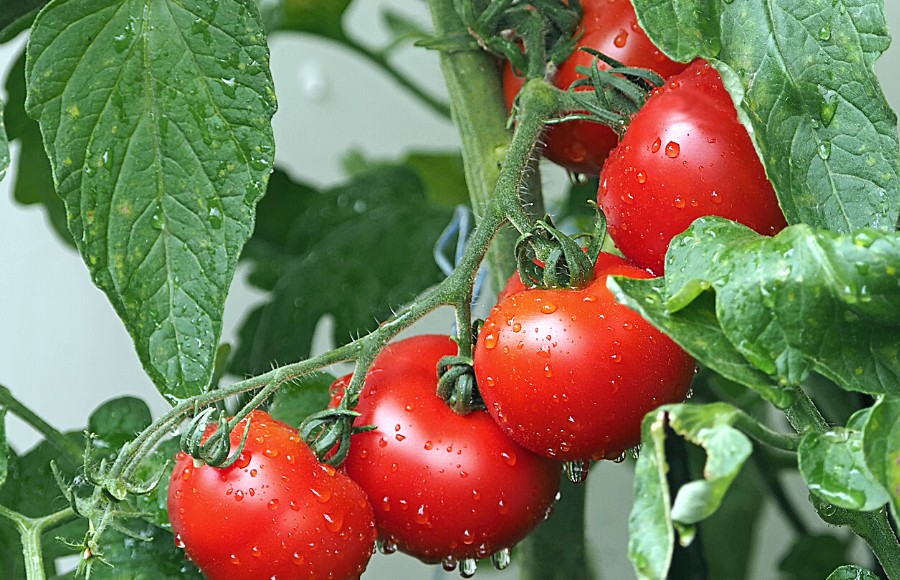
Government announces Tomato Grand Challenge Hackathon to generate innovative ideas to enhance Tomato value chain and ensure its availability at affordable prices.

Students, Research Scholars, Faculty Members, Industry, Start-ups, MSMEs, LLPs, and Professionals urged to participate in the Hackathon.

Tomato Grand Challenge (TGC) Hackathon has been announced by the Secretary, Department of Consumer Affairs, Mr. Rohit Kumar Singh, to invite innovative ideas at various levels of the tomato value chain to ensure availability of tomato to the consumers at affordable prices and help tomato farmers get value for the produce.

India is the second largest producer of Tomatoes in the world and studies estimates that about 20-22% of fresh tomatoes and 5% of processed tomatoes are wasted every year. Moreover, Tomatoes are highly susceptible to price volatility as slight disruptions in supply chain or damage due to heavy rains leads to spike in prices.

The prices of tomatoes can be brought back to normal levels by improving storage and processing. To ensure prices remain stable, innovation at the seed level, primary storage, post-harvest and crop information is necessary and this hackathon is announced for the public to share ideas for reducing tomato prices that have currently skyrocketed in several cities across the country.

The Hackathon has been formulated by the Department of Consumer Affairs in collaboration with Ministry of Education (Innovation Cell).

The Grand Challenge invites ideas on comprehensive and focused area interventions in tomato value chain - from cropping and market insights for the farmers, appropriate cultivars (OP varieties or hybrids) with higher shelf-life of the fruits for fresh marker, cultivars specifically suitable for processing, value-addition through interventions that can increase shelf-life, improve transportation of fresh and processing products, innovative packaging and storage.

The entry of participants for the TGC are invited under two tracks, namely —
  1. Students, Research Scholars
  2. Faculty Members, Industry individuals, Indian start-ups, Micro, Small & Medium Enterprises (MSMEs), Limited Liability Partnership (LLPs), Professionals.
The winning ideas will be evaluated by Experts followed by prototype development and field implementation for ensuring its usability/scalability on a large scale and price of the product.

Interested participants can apply at –https://doca.gov.in/gtc/index.php

Tomato is produced almost in all the states in India, though in varying quantities. Maximum production is in southern and western regions of India, contributing 56%-58% of all India production. Southern and Western regions being surplus states, feed to other markets depending on production seasons.

The production seasons are also different across regions. The peak harvesting season occurred in December to February. The periods during July-August and October-November are the lean production months of tomato. July coinciding with monsoon season, adds to further challenges related to distribution and increased transit losses adding to price rise.

The cycle of planting and harvesting seasons and variation across regions are primarily responsible for price seasonality in Tomato. Apart from the normal price seasonality, temporary supply chain disruptions and crop damage due to adverse weather conditions etc. often led to sudden spikes in prices. Conversely, glut in the production of at local levels have also led to dip in prices causing huge loss to the farmers.

Govt To Setup and Upgrade 2 Lakh Micro Food Processing Enterprises from 2020-21 to 2024-25


MoFPI has so far approved 41 Mega food Parks, 353 Cold Chain projects, 63 Agro Processing Clusters, 292 Food Processing Units

Sanctioned projects are estimated to benefit about 34 lakh farmers on completion

Union Minister of State for Food Processing Industries Shri Prahlad Singh Patel today said that as part of the Aatmanirbhar Bharat Initiative, Ministry of Food Processing Industries (MoFPI) is implementing a Centrally Sponsored Scheme for setting up/upgradation of 2 lakh micro food processing enterprises. 

The MoFPI is a ministry of the Government of India responsible for formulation and administration of the rules and regulations and laws relating to food processing in India

The enterprises can be set up or upgraded through credit linked subsidy during five years from 2020-21 to 2024-25 with an outlay of Rs. 10,000 crores. In a written reply to a question in the Rajya Sabha, Shri Patel said, the Central Scheme-PM Formalization of Micro Food Processing Enterprises Scheme (PMFME) provides financial, technical and business support for these enterprises.

Moreover, the MoFPI has been implementing Central Sector Umbrella Scheme - Pradhan Mantri Kisan SAMPADA Yojana (PMKSY) since 2016-17 for overall growth and development of food processing sector, including processing of agro- products and thus increasing the income of the farmers.
  1. The component schemes of PMKSY are - Mega Food Park, 
  2. Integrated Cold Chain and Value Addition Infrastructure, 
  3. Creation /Expansion of Food Processing & Preservation Capacities, 
  4. Infrastructure for Agro-Processing Clusters, 
  5. Creation of Backward & Forward linkages, 
  6. Food Safety and Quality Assurance Infrastructure,
  7. Human Resource and Institutions, 
  8. Operation Greens. Under component schemes of PMKSY, MoFPI provides mostly credit linked financial assistance (capital subsidy) in the form of grants-in-aid to entrepreneurs for setting up of food processing / preservation industries.
So far, Ministry has approved 41 Mega food Parks, 353 Cold Chain projects, 63 Agro Processing Clusters, 292 Food Processing Units, 63 Creation of Backward & Forward Linkages Projects & 6 Operation Green projects across the country under corresponding component schemes of PMKSY.

These sanctioned projects are estimated to benefit about 34 lakh farmers on completion. In the evaluation study of Integrated Cold Chain and Value Addition Infrastructure Scheme conducted by M/s NABARD Consultancy Limited (NABCONS) in Year 2020, it has been estimated that captive projects under the scheme have resulted in increase in farm-gate prices by 12.38 % and each project is estimated to benefit more than 9500 farmers.

Market Reports

Market Report & Surveys
IndianWeb2.com © all rights reserved