‏إظهار الرسائل ذات التسميات Coinbase. إظهار كافة الرسائل

Base Launches Upgrade to Make Transactions Faster and More Reliable

Base Launches Upgrade to Make Transactions Faster and More Reliable

Introducing Base Denim

Base’s fourth upgrade, Denim, is now live on mainnet. Denim brings native 200ms blocks to Base that replaces flashblocks: five complete canonical blocks every second. Contracts can now read time to the millisecond onchain, and B20 gets safer transfers and simpler compliance controls.

Base’s north star is to bring the world onchain, starting with trading, financing, and payments. Those use cases need a chain that updates state often and lets builders reason about time precisely. Denim changes the block cadence of Base itself: instead of one block every two seconds with a pending-state preview in between, Base now produces a full canonical block every 200 milliseconds.

What’s in Denim?

Denim delivers three changes:
  • Native 200ms blocks: five complete canonical blocks per second, replacing Flashblocks
  • BaseTime: millisecond-resolution time for contracts and RPC clients
  • B20 improvements: safer transfers and reusable compliance policies

Native 200ms blocks

Before Denim, Base produced one canonical block every two seconds. Flashblocks filled the gap by streaming incremental pending-state updates for the block being built, so apps could show a preview of state before the block landed.

Base now produces five canonical blocks per second, and each one is a real block, not a preview. Once your transaction is in a 200ms block, it is in. There are no preconfirmations that can be walked back, there is no pending state to reconcile, and there is no separate stream to subscribe to. Block production is simpler, more consistent, and more reliable.

Blocks cannot skip slots. Each block’s full timestamp is exactly 200ms after its parent’s, and the protocol validates that progression, so the cadence is a property of the chain rather than of the sequencer’s wall clock.

Why native blocks beat Flashblocks

No preconfirmation reorgs. A Flashblock was a preview of a block still being built, and a preview can be dropped from the block that finally lands. Apps that showed Flashblock state had to be ready to walk it back. A 200ms block is not a preview of anything: it is the canonical block, with the same guarantees as every other block on Base. Reorgs caused by Flashblocks are gone, along with the separate Flashblocks stream that could degrade while block production continues.

Every standard RPC just works. Sub-second state no longer lives behind a special subscription or a "pending" tag with Flashblocks-aware semantics. eth_subscribe("newHeads"), eth_getLogs, eth_call, eth_getTransactionReceipt and every other standard JSON-RPC method return 200ms state out of the box, so viem, ethers, Foundry and existing indexers work without a Flashblocks client or a reconciliation layer.

Faster canonical inclusion. Before Denim, a transaction waited up to two seconds for the next canonical block. Now the next canonical block is never more than 200ms away. Payments confirm in the block, trades settle in the block, and the app reads the receipt from the block, with no preconfirmed state to reconcile later.

Finer-grained time for DeFi. Five blocks per second give lending, trading and rewards protocols five opportunities per second to react: liquidations can execute in the first block after a price update rather than the next two-second block, and oracles and keepers can act on a 200ms cadence. With BaseTime, contracts also get the millisecond clock to match, so interest accrual, reward streaming and yield calculations can run at 200ms resolution instead of once per second.

Flashblocks is retired

Denim replaces Flashblocks. Base no longer produces Flashblocks streams, and the "pending" block tag no longer returns a preconfirmed state. Applications that consumed Flashblocks need to move to canonical block and RPC streams:
Before DenimAfter Denim
eth_subscribe("newFlashblocks")eth_subscribe("newHeads")
eth_subscribe("pendingLogs")eth_subscribe("logs")
eth_subscribe("newFlashblockTransactions")eth_subscribe("newHeads"), then fetch each block's transactions
eth_getBalance, eth_call, eth_getBlockByNumber with "pending"The same methods against the latest canonical block


The full mapping is in Migrate From Flashblocks.

block.number advances ten times faster

Because Base now produces ten times as many blocks per second, any contract or offchain system that treats a block count as a duration will see that duration shrink to one tenth of its intended length. block.timestamp is unaffected and still advances in whole seconds.

Review any logic of this shape:
  • Timelocks, cooldowns and exit delays written as block.number - start >= N
  • Vesting, emission and difficulty schedules measured in blocks
  • Per-block rate limits or caps that reset when block.number changes
  • Deadlines set as expirationBlock = block.number + N
  • Governance voting delay and period in blocks, including ERC20Votes with the default block-number clock()
  • Fixed-cardinality TWAP oracles, which now cover roughly half as much wall-clock history before observe() reverts
Where you can redeploy or upgrade, replace block-count durations with block.timestamp comparisons. Where a block count is governance-tunable, divide it by ten. The 200ms Native Blocks spec has the full table.

BaseTime

With BaseTime, your app can measure elapsed time and check deadlines with millisecond precision, whether you’re running an auction, expiring an order or calculating rewards.

Ethereum block headers store timestamps in whole seconds, and Denim keeps that unchanged: block.timestamp in the EVM and the timestamp field in JSON-RPC responses are still seconds. With five blocks per second, five consecutive blocks share the same block.timestamp. A contract that accrues interest, streams rewards or expires orders by comparing timestamps sees zero elapsed time between four of every five blocks, then a full second jump.

BaseTime supplies the missing milliseconds, so time onchain moves with every block instead of stepping once per second.

Every Denim block carries a BaseTime metadata update at transaction index 1, right after the L1 info deposit, that writes the block’s sub-second part (0, 200, 400, 600 or 800) to the BaseTime predeploy at 0x4200000000000000000000000000000000000030. Because the deposit executes before user transactions, any contract in the block can read the block’s full millisecond timestamp.

Code Example

Use case: a contract that needs sub-second time, such as an auction or order-expiry check:
interface IBaseTime {
    function timestampMillisPart() external view returns (uint16); // 0, 200, 400, 600 or 800
    function timestampMs() external view returns (uint64);         // full Unix time in milliseconds
}

IBaseTime constant BASE_TIME =
    IBaseTime(0x4200000000000000000000000000000000000030);

function isExpired(uint64 expiresAtMs) internal view returns (bool) {
    return BASE_TIME.timestampMs() >= expiresAtMs;
}

Millisecond timestamps over RPC

Tooling gets the same precision without calling the predeploy. Block and header responses (eth_getBlockByHash, eth_getBlockByNumber, eth_getHeaderByHash, eth_getHeaderByNumber, eth_subscribe("newHeads")) add an optional timestampMs field, and mined transactions, logs and receipt logs add an optional blockTimestampMs.

For example, a block at 42.200 seconds returns:
{
  "timestamp": "0x2a",
  "timestampMs": "0xa4d8"
}
These values come from the authenticated BaseTime metadata in each block, not from an estimate based on the seconds field. The existing timestamp field is unchanged, so clients that ignore the new fields keep working. Pre-Denim blocks omit the new fields.

B20 improvements

Denim makes B20 tokens safer for users and gives issuers stronger and simpler compliance controls. These changes help prevent accidental sends to the token’s own address, enforce issuer transfer rules consistently, and reuse compliance lists. Existing integrations keep working unless noted below.

PolicyRegistry gains one view, invertedPolicyId. The token interface gains no new functions, events or errors.

Reusable compliance lists

Cobalt lets issuers combine policies with AND and OR operators. Denim adds NOT. Any policy ID can be inverted by setting a reserved bit, and isAuthorized returns the opposite of the base policy’s result. Members live on the base policy and are shared, not copied, so an issuer can use one address list to mean “only these addresses” in one scope and “exclude these addresses” in another, with no second list to keep in sync.

Example breakdown
  • A compliance provider maintains one sanctioned allowlist whose members are sanctioned addresses.
  • The issuer builds a composite transfer policy, KYC AND NOT sanctioned, passing invertedPolicyId(sanctioned) as the second child.
  • A transfer to Alex, who is KYC-verified and not on the sanctions list, settles. If the provider adds Alex to the sanctions list, the next transfer to him fails. Nothing else changes, because the inverse reads the same list.


Stronger transfer controls for regulated assets

Issuers of restricted securities often require every transfer to be initiated by an approved party, such as a transfer agent. B20’s TRANSFER_EXECUTOR_POLICY is the allowlist for that pattern, but before Denim it only applied to transferFrom calls made by someone other than the holder. A holder could bypass it by calling transfer directly.

After Denim, TRANSFER_EXECUTOR_POLICY is checked on msg.sender for every transfer path, matching how the sender and receiver policies already work. B20 tokens launched with TRANSFER_EXECUTOR_POLICY set will automatically inherit the new behaviour noted above. Tokens that never set an executor policy keep the always-allow default and see no change.

Example breakdown
  • A fund’s token sets TRANSFER_EXECUTOR_POLICY to an allowlist containing only its transfer agent.
  • The agent calls transferFrom(alice, bob, 500) after Alice has approved it. The transfer succeeds.
  • Alice calls transfer(bob, 500) directly. Before Denim this succeeded; after Denim it reverts with PolicyForbids, because Alice is not an allowlisted initiator.


Note: The issuer chooses whether to set an executor policy and who is on it; Base does not decide who may initiate transfers.

Protection against lost funds

Users sometimes paste the token’s own address as the recipient. A B20 token is a precompile with no holder key, so tokens credited to it were stuck unless the issuer seized them back.

After Denim, any transfer, mint or seizure whose recipient is the token’s own address reverts with the existing InvalidReceiver error, the same error wallets already handle for address(0).

Example breakdown
  • Alex copies the wrong address from an explorer and tries to send 500 tokens to the token contract itself.
  • The transfer reverts with InvalidReceiver. Alex’s balance is unchanged, and the wallet shows the same error it shows for a send to the zero address.
  • Self-sends, sends to other B20 tokens, approvals and burns are unaffected. An issuer can still recover a balance that reached the token address before Denim with seizeWithMemo(address(token), treasury, amount, memo) if they have opted into seize functionality for their token.


For technical details and migration steps, see the Denim B20 changelog:

How Denim impacts you

Users

No action needed. Transactions land in canonical blocks that arrive every 200ms, and mistaken sends to a B20 token’s own address now fail instead of locking funds.

App and wallet developers

If you consume Flashblocks or use the "pending" block tag, migrate to canonical block subscriptions and the latest block: see Migrate From Flashblocks.

If you need sub-second time, read timestampMs from block responses or call the BaseTime predeploy.

Contract developers

Audit any logic that converts block counts to time. block.number now advances ten times faster in wall-clock time; block.timestamp is unchanged.

See Block-Number-Based Contract Logic.

Trading teams and market infrastructure

You now observe a canonical state every 200ms, the next block is never more than 200ms away, and blocks, transactions and logs carry millisecond timestamps.

There is no pending-state stream to reconcile against canonical blocks and no preconfirmation that can be dropped from the final block.

DeFi protocols

Lending, DEX and rewards protocols get five blocks per second to liquidate, rebalance and update, and can read BaseTime.timestampMs() to accrue interest, stream rewards and expire orders at 200ms resolution instead of once per 2 seconds.

Review block-count timing assumptions before relying on the new cadence.

RPC providers, indexers and explorers

Expect ten times the block count per unit time, and the new optional timestampMs and blockTimestampMs fields on block, transaction, log and receipt responses.

Flashblocks streams have stopped.

Bridges and proof flows that read historical block hashes or beacon roots retain the same number of values, but that history now covers one tenth of the elapsed time.

Issuers

If your token sets a restrictive TRANSFER_EXECUTOR_POLICY, add holders (or a policy covering them) to the executor allowlist if you want holder-initiated transfers to keep working.

Treat the token’s own address as an invalid recipient in your tooling.

Use invertedPolicyId to replace mirrored allow and block lists.

If there's something we can do better, we want to hear it. Reach us on X, Discord, or GitHub.

Disclaimer

Base is open-source, permissionless blockchain infrastructure. Base provides neutral protocol infrastructure only and does not control the persons, applications, or assets that use it.

B20 tokens are deployed, configured, and administered solely by their respective issuers; issuer-controlled features such as minting, burning, freezing, and seizure are exercised at the issuer's sole discretion.

References to third-party issuers or assets are informational and not an endorsement.

Except with respect to assets that Coinbase or its affiliates expressly issue (which are offered only in eligible jurisdictions and governed by their own terms and disclosures), Coinbase, including Base, is not the issuer, investment adviser, broker, dealer, underwriter, promoter, distributor, or transfer agent for any B20 token or transaction, and nothing here is investment advice or a recommendation to buy or sell any digital asset.

Forward-looking statements about future upgrades, features, or performance are subject to change and are not commitments to deliver.

Illustrative examples are hypothetical and are provided solely to demonstrate potential use cases for new functionality.

They are not exhaustive and do not constitute a recommendation, solicitation, or representation that any particular use case, strategy, application, asset or outcome will be available, suitable, profitable or successful.

Coinbase Wins India’s Nod for $2.45B CoinDCX Stake

Coinbase Wins India’s Nod for $2.45B CoinDCX Stake
India’s antitrust regulator has officially approved Coinbase’s acquisition of a minority stake in CoinDCX, valuing the Indian crypto exchange at $2.45 billion. This marks a major regulatory milestone for Coinbase as it rebuilds its presence in India after exiting in 2023 due to compliance and payment challenges.


Key Highlights

  • Approval Authority: The Competition Commission of India (CCI) cleared Coinbase’s minority stake acquisition in DCX Global Ltd, the parent company of CoinDCX.
  • Valuation: CoinDCX confirmed the deal values the exchange at $2.45 billion, underscoring its position as one of India’s largest digital asset platforms.
  • Strategic Intent: Coinbase aims to expand operations in India and the Middle East, strengthening its long-term partnership with CoinDCX.
  • Background: Coinbase had exited India in 2023 after regulatory and payment gateway hurdles but is now re-entering with a more cautious, regulator-approved approach.
  • History of Investment: Coinbase has been an investor in CoinDCX since 2020, participating in earlier funding rounds. This latest move extends its commitment.

Why This Matters

  • For Coinbase:
    • Re-establishes credibility in India’s tightly regulated crypto market.
    • Provides a foothold in Asia’s fastest-growing digital asset ecosystem.
    • Signals resilience after setbacks, including a $44 million security breach earlier in 2025.
  • For CoinDCX:
    • Boosts legitimacy with global backing.
    • Enhances ability to scale operations and attract new users.
    • Positions itself as a bridge between Indian retail investors and global crypto liquidity.

Risks & Challenges

  • Regulatory Uncertainty: India’s crypto regulations remain fluid, with taxation and compliance burdens still heavy.
  • Market Volatility: Crypto valuations can swing sharply, making long-term stability uncertain.
  • Trust Factor: Coinbase must rebuild trust after its abrupt 2023 exit and recent security breach.

Comparison Snapshot

AspectCoinbase (Global)CoinDCX (India)
Market ReachUS, EU, AsiaIndia, Middle East
Valuation ImpactStrengthens Asia presence$2.45B valuation confirmed
Regulatory StatusApproved by CCIGains legitimacy via global partner
Strategic GoalRe-entry into IndiaExpansion with global capital

Bottom Line: Coinbase’s approved minority stake in CoinDCX is more than just an investment—it’s a strategic re-entry into India’s crypto market, with potential ripple effects across Asia. The move strengthens CoinDCX’s valuation and credibility, while giving Coinbase a second chance to establish itself in one of the world’s most dynamic digital asset markets.

Coinbase Relaunches in India: Crypto-to-Crypto Trading Resumes, INR Support Delayed Until 2026

Coinbase Relaunches in India: Crypto-to-Crypto Trading Resumes, INR Support Delayed Until 2026

Coinbase, the world’s largest publicly listed cryptocurrency exchange, has officially reopened its services in India after a two-year hiatus. The relaunch, announced quietly in December, allows Indian users to register and trade crypto-to-crypto pairs. However, fiat deposits in Indian rupees (INR) will not be available until 2026, marking a cautious re-entry into one of the world’s fastest-growing digital asset markets.

A cautious return

Coinbase first entered India in April 2022 but quickly suspended Unified Payments Interface (UPI) support after the National Payments Corporation of India (NPCI) distanced itself from crypto transactions. By 2023, the exchange had fully off-boarded Indian users.

This time, Coinbase is taking a compliance-first approach. The company has registered with India’s Financial Intelligence Unit (FIU), signaling its intent to align with local anti-money laundering and reporting requirements. At India Blockchain Week, Coinbase APAC Director John O’Loghlen confirmed that fiat on-ramps will be introduced in 2026.

Current limitations

  • Crypto-to-crypto trading only: Indian users can trade pairs like BTC/ETH but cannot deposit or withdraw INR.
  • Fiat integration delayed: INR deposits and withdrawals are expected in 2026.
  • Regulatory uncertainty: India’s 30% tax on crypto gains and 1% TDS per transaction remain significant hurdles.

Competitive landscape

Coinbase’s delayed fiat rollout places it behind local rivals:
Feature Coinbase (India, 2025 relaunch) WazirX CoinDCX
Fiat Support (INR) Not available until 2026 Full INR deposits/withdrawals Full INR deposits/withdrawals
Trading Options Crypto-to-crypto pairs only Spot, P2P, futures Spot, margin, futures
Fees Globally competitive, INR fees TBD ~0.2% trading fee ~0.1% trading fee
Liquidity Global liquidity, limited INR access Strong local liquidity Moderate liquidity
Regulatory Status FIU registered Indian compliance Indian compliance

Strategic outlook

Coinbase’s India relaunch is less about immediate retail dominance and more about long-term positioning. By securing FIU registration and promising INR integration in 2026, the company is betting on regulatory clarity and institutional adoption.

Yet, the trust gap remains. Coinbase’s abrupt 2023 exit left many Indian users wary, and its delayed fiat support risks ceding ground to entrenched rivals. Success will depend on whether Coinbase can rebuild credibility and leverage its global brand to attract Indian traders once INR deposits go live.

The bottom line

  • Near-term practicality: Indian users seeking INR access will find WazirX and CoinDCX more practical.
  • Coinbase’s proposition: Global liquidity and compliance assurances, but patience required until 2026.
  • Market watch: The coming year will determine whether Coinbase can reclaim relevance or remain secondary until regulatory clarity arrives.

Coinbase Invests in CoinDCX, Valuing Indian Crypto Exchange at $2.45 Billion

Coinbase Invests in CoinDCX, Valuing Indian Crypto Exchange at $2.45 Billion

Coinbase has deepened its commitment to the Indian crypto market by investing further in CoinDCX, valuing the exchange at $2.45 billion post-money. Here's a quick breakdown of what this recent development in Indian cryptocurrency market:

Investment Highlights

  • Investor: Coinbase Ventures (the investment arm of Coinbase)
  • Recipient: CoinDCX, one of India’s leading crypto exchanges
  • Valuation: $2.45 billion post-money
  • Funding Type: Extension of a previous round; exact amount undisclosed
  • Purpose:
    • Expand CoinDCX’s product suite
    • Drive user growth and innovation
    • Strengthen presence in India and the Middle East
    • Introduce new on-chain use cases tailored for India
  • Strategic Moves:
    • CoinDCX recently acquired BitOasis, a crypto exchange in the Middle East and North Africa
    • The company now serves over 20 million users across India and the UAE

Coinbase’s Perspective:

Shan Aggarwal, Chief Business Officer at Coinbase, emphasized the potential of India and the Middle East as dynamic regions for crypto adoption and innovation

CoinDCX Valuation Timeline

Date Round Amount Raised Post-Money Valuation Key Investors
Sep 2020 Series B $13.9M $36.3M Block.one, Polychain, Jump Capital
Jun 2021 Series C $90.2M $779M Coinbase, Bain Capital, Polychain
Mar 2022 Series D $135M $1.51B Pantera Capital, Steadview, Coinbase
Oct 2025 Extension Undisclosed $2.45B Coinbase Ventures

Coinbase Reboots in India: FIU Nod, Trading Pause, and Possible CoinDCX Buyout

Coinbase Reboots in India: FIU Nod, Trading Pause, and Possible CoinDCX Buyout

Coinbase, a leading centralized cryptocurrency exchange founded in 2012 by Brian Armstrong, has grown into one of the most trusted platforms for buying, selling, and storing digital assets. It serves over 245,000 ecosystem partners across 100+ countries, with more than $425 billion in assets on its platform.

Headquartered in the U.S. (though now remote-first), Coinbase, has made a notable comeback in India after a period of regulatory turbulence. Here's a breakdown of its current status and activities:

Re-entry into the Indian Market

  • Coinbase has officially registered with India’s Financial Intelligence Unit (FIU), allowing it to operate under local compliance frameworks.
  • This marks a strategic shift from its earlier exit in 2022, when it halted services due to issues with UPI integration and regulatory uncertainty.

What’s Now Available

  • Indian users can reportedly send, receive, convert, and store supported cryptocurrencies on Coinbase.
  • Full trading services (buy/sell) are expected to roll out later this year, following further regulatory alignment.

Security & Compliance

  • Coinbase emphasizes high security standards including 2FA, cold storage, and insurance protection.
  • Its FIU registration ensures anti-money laundering (AML) compliance, making it a safer option compared to unregulated platforms.

Limitations & Challenges

Trading is still restricted for Indian users as of now—no direct buying/selling of crypto.

Transaction fees on Coinbase tend to be higher than local exchanges like CoinDCX or Binance India.

Strategic Vision

Coinbase sees India as a key hub for onchain innovation, citing the country’s growing developer base and startup ecosystem.

The company aims to empower local builders through tools like Base, its Ethereum Layer 2 platform.

Crypto Exchange Comparison

Feature Coinbase 🇺🇸 CoinDCX 🇮🇳 Binance India 🌏
Founded 2012 (US) 2018 (India) 2017 (Global)
Regulatory Status FIU-registered in India FIU-registered Operates via WazirX (unclear FIU status)
Trading Access (India) Limited (no buy/sell yet) Full access Full access
Fees High (up to 3.99%) Low (0.04%–0.1%) Very Low (0.015%–0.1%)
Security 2FA, cold storage BitGo-backed, recently hacked 2FA, SSL, cold storage
Mobile App iOS & Android iOS & Android iOS & Android
Referral Bonus ₹750 in BTC ₹100 in ETH Varies (BNB discounts)
User Experience Global UX, beginner-friendly Localized UX, beginner-friendly Advanced UX, pro tools
Recent News Re-entered India, may acquire CoinDCX Recovering from $44M hack Stable, high liquidity

Key Insights
  • Coinbase is re-entering India with FIU registration and may acquire CoinDCX to accelerate local presence. Talks are ongoing but not confirmed. 
  • CoinDCX offers low-cost trading and full access but is recovering from a major security breach. CoinDCX recently suffered a $44M hack.
  • Binance India remains dominant for advanced traders, though its regulatory clarity is still in question.

Coinbase CEO Co-founded Startup Focussed on Increasing Human Lifespan Raises $40 Mn

Coinbase CEO Co-founded Startup Working on Increasing Human Life Raises $40 Mn

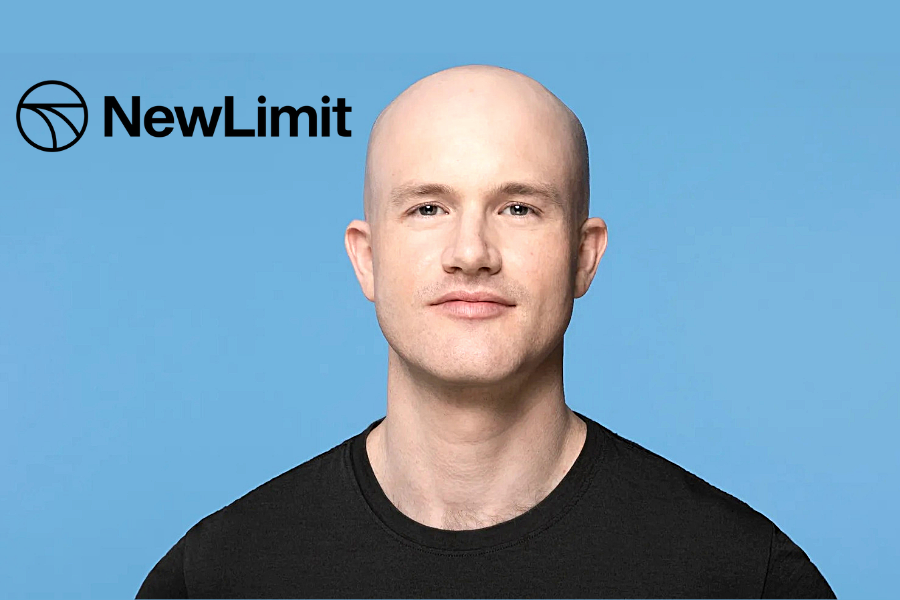
Coinbase founder & CEO Brian Armstrong has raised $40 million for NewLimit, a startup focused on increasing human longevity, and was launched in December 2021.

NewLimit raised $40 million in Series A Round of funding from Dimension, Founders Fund, and Kleiner Perkins with participation from former Google CEO - Eric Schmidt, Elad Gil, Garry Tan, and Fred Ehrsam.

The funds raised is in addition to the founders’ original $110 million commitment to the company.

The San-Francisco based startup is inventing medicines composed of epigenetic reprogramming factors that restore youthful function in old cells. It leverage functional assays, single cell multi-omics, and machine learning to reveal epigenetic features of aging and discover rejuvenating interventions.

The team of NewLimit is composed of experts across cell biology, genomics, computational biology, machine learning, and operations.

Founded by Brian along with Blake Byers, Greg Johnson and Jacob Kimmel, NewLimit reprogram the epigenome to restore the instructions that each cell had when we were young.

Science behind NewLimit's Approach to increase human lifespan

NewLimit is focused on epigenetic causes of aging, which are driven by an individual's conduct and their environment, as opposed to their genetic code. The startup is not seeing it as a cure-all for the aging process, but they're encouraged by the ability to take old skin cells from mice and actually turn those into a newborn mouse, with no side effects. Understanding how those cells change and can be reborn could help improve existing immune systems or the wear-and-tear on brain cells.

Epigenetics is the study of how human behaviors and environment can cause changes that affect the way our genes work. Unlike genetic changes, epigenetic changes are reversible and do not change our DNA sequence, but they can change how our body reads a DNA sequence.

Nature has already created complex molecular machines that can achieve this task, and biotechnology now allows to design entirely new epigenetic reprogramming tools from first principles.

NewLimit combine single cell profiling with new cell reprogramming methods that take advantage of molecular barcoding and CRISPR technology to test thousands of hypotheses in a single experiment.

In a simple language, NewLimit leverage functional assays (investigative Lab tests/procedures), single cell multi-comics (integrated perspective to power discovery across multiple levels of biology), and machine learning to reveal epigenetic features of human aging and discover rejuvenating interventions.

Coinbase To Ramp Up Its Investment in Indian Startups; Hire 1,000 for India Hub this Year

Coinbase To Grow Its Investment in Indian Startups; Hire 1,000 this Year for India Hub

American cryptocurrency exchange platform, Coinbase, will ramp up its investment in India and the Nasdaq-listed company will be hiring 1,000 people in the India hub this year, besides continuing investments in Indian startups through its investment arm Coinbase Ventures.

Coinbase CEO Brian Armstrong, announced in a blog post, "Coinbase Ventures has already invested $150 million in home-grown Indian technology companies in the crypto and web3 space, and is constantly identifying new opportunities to help Indian founders scale."

Coinbase’s Indian tech hub was launched last year and currently has over 300 full time employees.

Notably, Coinbase is the largest cryptocurrency exchange in the US by trading volume, and is said to be a distributed company wherein all employees operate via remote work and the company lacks a physical headquarters.

Brian mentions that the company has ambitious plans for India and seek to hire over 1,000 people in the company’s India hub this year alone. Brian is in India since the beginning of this month and will be interacting with crypto community founders, evangelists and even students

In addition to above, Coinbase will be hosting a crypto community event in Bangalore to discuss the future of crypto and web3 in India. "We will have many special guests", he said. Registration of same is here.

Recently, Coinbase Ventures, the investment arm of Coinbase, in partnership with Indian Incubator, and Buidlers Tribe, launched a Startup Pitch Session wherein Startups stand a chance to pitch and win up to $1 million in funding from Coinbase Ventures and $25K in grants and mentorship to select founders from BeliefDAO.

Recently, in response to the 2022 Russian invasion of Ukraine, Coinbase blocked 25,000 cryptocurrency wallet addresses related to Russia, believing them to have engaged in illicit activity. 

Coinbase Ventures and Buidlers Tribe Join Hands to Fund Web3 Innovations in India


Coinbase Ventures and Buidlers Tribe unite to foster Web3 innovation in India 

Startups stand a chance to pitch and win up to $1Million in funding from Coinbase Ventures and $25K in grants and mentorship to select founders from BeliefDAO

Coinbase Ventures, the investment arm of Coinbase, the world’s most trusted platform from which to access the cryptoeconomy, has partnered with Indian Incubator, Buidlers Tribe, to launch a Startup Pitch Session to propel the thriving Web3 ecosystem in India. Registrations are now open for Web3 startups from across India to send in their pitches, and the top 5 shortlisted startups will present live on April 8, 2022, to an esteemed panel of experts from Coinbase Ventures and Buidlers Tribe. The startups can apply for this event here.

A cohort of the top twenty-five shortlisted startups will pitch via video entries and the top five will get a chance to win from a prize pool of up to $1 million from Coinbase Ventures and an additional $25K in grants along with mentorship support from Belief DAO.

The web3 startup ecosystem has expanded considerably in recent years and has garnered significant interest. The space saw a record $17 billion in funding last year and has already crossed $3 billion this year. Being the third-largest startup ecosystem globally, India has been recognised as a technology hub with several global names hoping to tap into developer talent.

“ At Coinbase, we are extremely excited about Web3 innovation happening in India and look forward to continuing our ongoing support of the Indian crypto/Web3 ecosystem. The Web3 community in India is quickly becoming a global force, and with our initiative with Buidlers Tribe, we are demonstrating our commitment to fostering this talent, ” Shan Aggarwal, VP, Coinbase Ventures.

Registration for the pitch event is open for Indian Web3 startups. A select twenty-five innovative startups with sustainable ideas will be granted the opportunity to submit video pitches for review by the Coinbase Ventures team, and a shortlist of the top entries will be invited to pitch live on April 8th. The Pitch Session will include expert panelists namely Shan Aggarwal (VP, Coinbase Ventures), Surojit Chatterjee (Chief Product Officer, Coinbase), Manish Gupta (EVP Engineering, Coinbase), Pankaj Gupta (VP Eng and Site Lead, Coinbase India), Justin Mart (Chief Crypto Advisor), Raghu Mohan (Co-founder, Buidlers Tribe), and Pareen Lathia (Co-founder, Buidlers Tribe), who will be guiding the startups and providing them with valuable insights to enhance their solutions further.

“Buidlers Tribe’s aim has always been to support Web3 innovation in all its forms and give the innovators the right platform. This partnership with Coinbase Ventures is a step in this direction. We are glad that Coinbase Ventures has made a commitment the Indian Web3 ecosystem and to support and foster innovation among these startups. India has been at the forefront of the Web3 boom globally and has been bullish on the potential of this technology. We see a huge influx of global Web3 players recognizing this potential of the Indian developer ecosystem and are incredibly proud to stand with our fellow Web3 pioneers. We look forward to interesting projects that are building a sustainable decentralized space for all.” Pareen Lathia, Co-founder, Builders Tribe

The winning startups will stand to receive up to $1 million from Coinbase Ventures and select founders will receive up to $25K in grants along with mentorship support additionally, from Belief DAO. Belief DAO is a grants program that provides grant amounts of $5K - $25K with a quick disbursement period to help push founders, developers, and startups to meet their short-term goals.

The applications to apply for this event are open - https://coinbase.buidlerstribe.com/#

About Coinbase:

Coinbase is building the cryptoeconomy – a more fair, accessible, efficient, and transparent financial system enabled by crypto. Coinbase started in 2012 with the radical idea that anyone, anywhere, should be able to easily and securely send and receive Bitcoin. Today, Coinbase offers a trusted and easy-to-use platform for accessing the broader cryptoeconomy.

About Buidlers Tribe:

Buidlers Tribe is an incubator that takes founders/startups from idea/proof-of-concept/MVP stage and works with them to build companies. They focus on Web3 companies and are platform agnostic. They vet appropriate startups for investors according to the investor’s needs and have access to various experts in the blockchain field. For more details, visit: https://buidlerstribe.com/

PayPal Plans to Roll Out Direct Sales of Cryptocurrency

PayPal, along with Venmo - its mobile payment service, is reportedly planning to offer direct sales of Bitcoin and other cryptocurrencies to its 300 million+ users globally, said a report by Coindesk, citing three people privy to the matter. Notably, PayPal has a longstanding business relationship with Coinbase.

According to the report, PayPal is looking to offer buying and selling of crypto and said the service could be expected "in the next three months, maybe sooner.".

Citing a well-placed industry source, the report said that Paypal is going to allow "buys and sells of crypto" directly from PayPal and Venmo and may have some sort of a built-in wallet functionality so one can store cryptocurrencies in there.

About Paypal subsidiary, Venmo, it alone handled US$12 billion in transactions in the first quarter of 2018. Venmo is a type of peer-to-peer (P2P) payment platform with a mobile app that enables sending money easily among friends. It required No credit card, no wallet, no fees besides just linking the app to a debit card and to spend'em.

It is unclear which or how many cryptocurrencies would be available, said the report further.The industry source, as per Coindesk, said they expected PayPal "would be working with multiple exchanges to source liquidity."

As of the end of 2019, PayPal had 305 mmillion active users, whereas Coinbase, one of the largest crypto exchanges in the U.S., has 11.7 million users. And Binance, one of the world’s largest, has only 15 million.

Notably, in October last year Paypal had withdrew itself from Libra Association, the Facebook-initiated crypto project, to instead “continue to focus on advancing our existing mission and business priorities as we strive to democratize access to financial services for underserved populations."

With Coinbase, which is also a crypto-exchange, PayPal has a partnership that allows users (in North America and Europe) to withdraw and deposit cash between the two platforms.

In an interview with CoinDesk earlier this year, PayPal Chief Technology Officer Sri Shivananda said the company wanted its own “perspective and view on [blockchain] technology itself to see how it can help us contribute to the concept of creating an open digital payments platform that can serve everyone.”

Coinbase Becomes First Bitcoin Based ‘Unicorn’ Startup

Becoming a $1 billion startup and attaining the "unicorn" prefix is on the vision board of almost every startup. But, it takes a lot of hard work and determination to achieve this feat and enter the Magna cum laude club for startups.

San Francisco-based Coinbase has recently become the first Bitcoin startup to enter the unicorn startup club after it successfully raised a whopping $100 million at a private valuation of $1.6 billion that includes the capital raised. The investment round saw the participation of Draper Associates, Greylock Partners, Battery Ventures, Section 32 and Spark Capital, and was led by venture capital firm Institutional Venture Partners.

Starting its journey in 2012, Coinbase achieved its unicorn status in just five years. During its half a decade journey, the startup which began as a simple Bitcoin wallet service has progressed on and ventured into brokerage space, opening online exchanges where traders can sell or swap crypto coins.

In previous funding rounds, the startup, which claims to have served over 9.2 M customers across 32 countries, had raised $117 million at a private valuation of about $500 million. This figure alone had made Coinbase the third most well financed Bitcoin startup in the world, after Circle and 21. And now, with its latest funding round and achieving the Unicorn startup feat, there's no stopping Coinbase when it comes to the Bitcoin space.

So far 2017 has proven to be an exceptional one for cryptocurrencies. The year saw Bitcoin making a comeback in big way and Ethereum, a rival cryptocurrency network, going down the slope. Bitcoin is currently trading at more than $3,400 per Bitcoin, a figure which is well above its previous 2013 highs in the $900 range.

According to Fortune, the total market value for cryptocurrencies and tokens combined has increased from just under $20 billion at the beginning of the year to more than $120 billion in just over 7 months.

Coinbase plans to invest its newly raised money towards strengthening its engineering and customer support teams, and opening a new office in New York for its professional trading operations. It also plans on using a part of the capital for further developing its Ethereum-based messaging and wallet app, Toshi that it launched last year.

Cryptocurrencies have caught the attention of investors like never before. Investment firms like Sequoia, Andreessen Horowitz, anf Union Square Ventures have recently seen a spurt in activity in backing so-called crypto hedge funds, like Metastable and Polychain Capital, that primarily invest in cryptocurrencies and digital tokens. Recently, Blockchain, a London-based cryptocurrency wallet provider, raised $40 million in a round led by GV, the venture capital arm of Alphabet.

Market Reports

Market Report & Surveys
IndianWeb2.com © all rights reserved