Showing posts with label COAI. Show all posts

PM Modi Launching 5G Services in India Tomorrow

PM Modi Launching 5G Services in India on 1 October

Prime Minister to launch 5G Services in India at 6th India Mobile Congress 2022

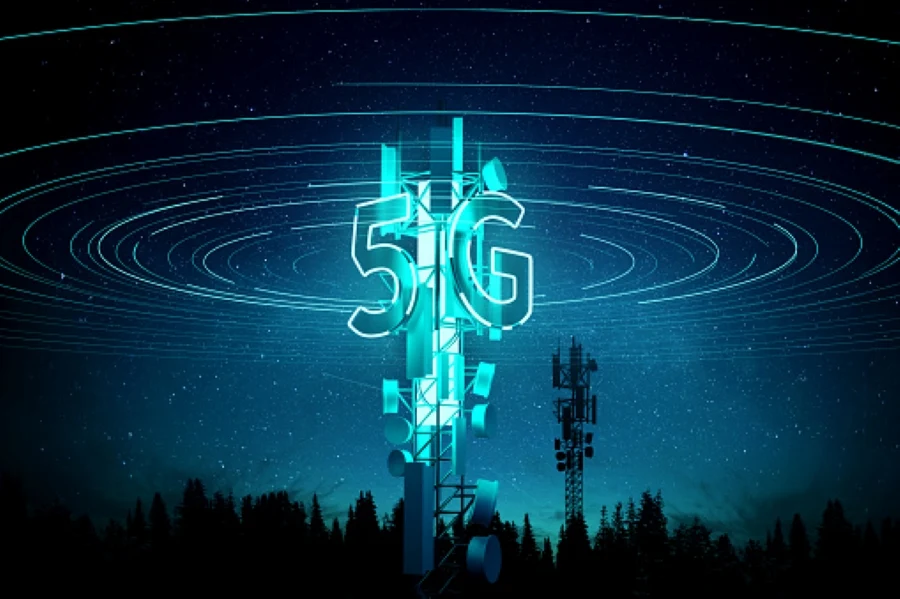
Ushering in a new technological era, Prime Minister Shri Narendra Modi will launch 5G services on 1st October at 10 AM in Pragati Maidan, New Delhi. 5G technology will provide seamless coverage, high data rate, low latency, and highly reliable communications. It will increase energy efficiency, spectrum efficiency and network efficiency.The Prime Minister will also inaugurate the 6th Edition of India Mobile Congress 2022 (IMC-2022) to be held from October 1-4, 2022, at Pragati Maidan, New Delhi.

The launch of 5G services follows years of intense preparation. Recently, 5G spectrum auctions were conducted successfully and 51,236 MHz was allocated to Telecom Service Providers with a gross revenue of Rs. 1,50,173 Crores. The auction aggregated the demand for a robust 5G ecosystem that can cater to its use cases involving IoT, M2M, AI, Edge Computing, Robotics etc.

5G can unleash new economic opportunities and societal benefits giving it the potential for being a transformational force for Indian society. It will help the country leapfrog the traditional barriers to development, spur innovations by startups and business enterprises as well as advance the ‘Digital India’ vision. The cumulative economic impact of 5G on India is expected to reach $450 Billion by 2035.

DoT has amended Right of Way (RoW) Rules 2016 in August 2022, wherein the charges for RoW permissions have been made reasonable and a ceiling for RoW charges for installation of 5G small cells and optical fibre cable on street furniture has been fixed.

DoT has set up a 5G Testbed with help of IITs, IISc Bengaluru and SAMEER to develop technology in 2018. A 5G Hackathon was commenced in 2020, to trigger ideation and prototyping of use-cases by startups and has led to spurring innovative products. An inter-ministerial committee on 5G use-cases has been functioning since 2021 in coordination with 12 Central Ministries, enabling setting up of 5G use-case labs. Consultations with Industry have been held enabling the 5G ecosystem to make 5G handsets available. A roundtable was held in Mumbai with Investors, Bankers and Industry on 5G Business opportunities and to identify key interventions by the Government.

C-DOT has developed an indigenous 5G Non-Stand Alone (NSA) core. C-DOT is also developing 5G Radio Access Network (RAN) in collaboration with local industry and start-ups. C-DOT has already tested its 4G Core in collaboration with TCS and Tejas Networks successfully.

All these will help in answering the Prime Minister’s clarion call on “Jai Anusandhan”. All these efforts are game-changers for India’s manufacturing and Telecom ecosystem leading to domestic 5G enterprise carrier grade stacks as well as innovative impactful 5G use-cases.

The 5G to be launched by the Prime Minister in select cities will progressively cover the entire country over the next couple of years.

The theme of the IMC-2022, the leading digital event in Asia is ‘Encapsulate, Engage and Experience a New Digital Universe’ and has the main objective of promoting new technologies, particularly the indigenous ones and letting Citizens experience the usages and applications of 5G. The other objectives are promoting local manufacturing, fostering international regional cooperation, inspiring inclusive & sustainable development, promoting entrepreneurship and innovation, driving foreign and local investments, amongst others. It is expected to attract over 5,000 CXOs and Delegates, 250+ Exhibitors, 100+ Start-ups, 300+ Speakers, with an expected footfall of 70,000+ participants and visitors.

State IT Secretaries have also been invited to the IMC-2022 and a roundtable conference with State IT Ministers is also planned during the IMC-2022 to discuss with them about the role of States and UTs in the rollout of 5G, business opportunities, need for skill development and for interaction with potential start-ups and investors.

The launch of 5G services follows years of intense preparation. Recently, 5G spectrum auctions were conducted successfully and 51,236 MHz was allocated to Telecom Service Providers with a gross revenue of Rs. 1,50,173 Crores. The auction aggregated the demand for a robust 5G ecosystem that can cater to its use cases involving IoT, M2M, AI, Edge Computing, Robotics etc.

5G can unleash new economic opportunities and societal benefits giving it the potential for being a transformational force for Indian society. It will help the country leapfrog the traditional barriers to development, spur innovations by startups and business enterprises as well as advance the ‘Digital India’ vision. The cumulative economic impact of 5G on India is expected to reach $450 Billion by 2035.

DoT has amended Right of Way (RoW) Rules 2016 in August 2022, wherein the charges for RoW permissions have been made reasonable and a ceiling for RoW charges for installation of 5G small cells and optical fibre cable on street furniture has been fixed.

DoT has set up a 5G Testbed with help of IITs, IISc Bengaluru and SAMEER to develop technology in 2018. A 5G Hackathon was commenced in 2020, to trigger ideation and prototyping of use-cases by startups and has led to spurring innovative products. An inter-ministerial committee on 5G use-cases has been functioning since 2021 in coordination with 12 Central Ministries, enabling setting up of 5G use-case labs. Consultations with Industry have been held enabling the 5G ecosystem to make 5G handsets available. A roundtable was held in Mumbai with Investors, Bankers and Industry on 5G Business opportunities and to identify key interventions by the Government.

C-DOT has developed an indigenous 5G Non-Stand Alone (NSA) core and is also developing 5G Radio Access Network (RAN) in collaboration with local industry and startups. C-DOT has already tested its 4G Core in collaboration with TCS and Tejas Networks successfully.

All these will help in answering the Prime Minister’s clarion call on “Jai Anusandhan”. All these efforts are game-changers for India’s manufacturing and Telecom ecosystem leading to domestic 5G enterprise carrier grade stacks as well as innovative impactful 5G use-cases.

The 5G to be launched by the Prime Minister in select cities will progressively cover the entire country over the next couple of years.

The theme of the IMC-2022, the leading digital event in Asia is ‘Encapsulate, Engage and Experience a New Digital Universe’ and has the main objective of promoting new technologies, particularly the indigenous ones and letting Citizens experience the usages and applications of 5G. The other objectives are promoting local manufacturing, fostering international regional cooperation, inspiring inclusive & sustainable development, promoting entrepreneurship and innovation, driving foreign and local investments, amongst others. It is expected to attract over 5,000 CXOs and Delegates, 250+ Exhibitors, 100+ Start-ups, 300+ Speakers, with an expected footfall of 70,000+ participants and visitors.

State IT Secretaries have also been invited to the IMC-2022 and a roundtable conference with State IT Ministers is also planned during the IMC-2022 to discuss with them about the role of States and UTs in the rollout of 5G, business opportunities, need for skill development and for interaction with potential start-ups and investors.

To know more about the event, as well as to register for the same, one can visit:

www.indiamobilecongress.com/.

Industrial 5G to Drive Industry 4.0 Revolution in India

5G technologies promise to bring along immense opportunities to revolutionize our lives, it also holds special importance for Industries as 5G can play a key role in achieving goals of Industrial Automation. In view of the potential ahead, COAI in partnership with the 5G Alliance for Connected Industries and Automation (5G-ACIA) and 5G India Forum (5GIF) today organized a joint webinar on "Making Industry 4.0 Happen With 5G" to discuss the Industrial Automation landscape and opportunities. The event witnessed presentations from Dr. Andreas Mueller (Bosch), General Chair of 5G-ACIA and Dr. Afif Osseiran (Ericsson), General Vice-Chair of 5G-ACIA on "5G for Industrial IoT - An overview and Industrial use cases and requirements".

The webinar also witnessed a panel discussion on making Industry 4.0 happen with 5G, the panel included Dr. Nagahanumaiah, Director, CMIT; Ms. Monika Gupta, Vice President, Global 5G Engineering Lead, Capgemini; Mr. Jayant Moghe, Senior VP - Network Solutions, Mavenir; Mr. Ankit Bhargava, Principal Consultant-Industry 4.0, Tech Mahindra and Dr. Sunil Jha, Automation Lab, Dept. Mech Engg., IIT. The session was moderated by Dr. Sendil Devar, Ericsson.

Automation with industrial IoT is the ability to connect sensors, devices, equipment, software applications, manufacturing production processes, workers, and end consumers and 5G technologies will be even more significant for enterprises to support the rigorous requirements of critical communications.

The event brainstormed to identify the requirement of industry verticals and readiness of Indian ecosystem partners to provide the reliable connectivity, infrastructure and services. The event witnessed participation from TSPs, Telecom OEMs, Manufacturing industry players, System Integrations who will play critical role in furthering Industry 4.0 in India to stimulate and accelerate the digitization road map of the industries.

Speaking at the event, Lt. Gen Dr. SP Kochhar, Director General, COAI said, "We at COAI are delighted to have this partnership with 5G-ACIA. To make Industry 4.0 Happen with 5G, there is a need to collaborate across verticals with telecom operators and manufacturers to see how 5G gets commercially deployed in the country and to ensure that all possible industry verticals and Government work in sync for developing the ecosystem."

During the event Dr. Andreas Mueller (BOSCH), General Chair, 5G-ACIA, shared his opinion stating, "5G may lift Industry 4.0 to the next level and enable unprecedented degrees of flexibility, productivity and efficiency in industrial manufacturing. 5G-ACIA is happy to collaborate with COAI to jointly pave the way for the success of Industrial 5G in India and around the globe."

Sharing his thoughts during the event, Dr. Afif Osseiran (Ericsson), General Vice Chair, 5G-ACIA, stated "India is one of the top 10 manufacturing globally. Efforts have recently been made to accelerate the progress in Industry 4.0 both by the government and industries in cities like Pune, Chennai. 5G-ACIA alliance hopes by having a closer collaboration with COAI and 5GIF, this will further raise awareness about industrial 5G and how manufacturing use cases can leverage from 5G. Further, in order to deliver a vital 5G ecosystem for automation industries major stakeholders including vertical industries, MNOs and regulators have an important role to play."

5G-ACIA is the central global forum for shaping 5G in the industrial domain. On one platform, various industries from all over the world jointly create a new ICT and OT ecosystem and set the frameworks for a highly attractive emerging market.

About 5GIF

5G India Forum (5GIF) - an industry collaborative forum, was established to enable synergizing the national efforts and play a significant role in shaping the strategic, commercial and regulatory development of the 5G ecosystem in India.

About COAI

COAI was constituted in 1995 as a registered, non-governmental society. COAI's vision is to establish India as the global leader of innovative mobile communications infrastructure, products and services and achieving a national teledensity of 100%, including broadband. The association is also dedicated to the advancement of modern communication and towards delivering the benefits of innovative and affordable mobile communication services to the people of India.

About 5G-ACIA

The 5G Alliance for Connected Industries and Automation (5G-ACIA) is the central global forum for shaping industrial 5G standards. 5G-ACIA members jointly prepare for the disruptive change 5G will bring, promote a better understanding of industrial needs, and gain insights into a highly attractive emerging market. 5G-ACIA provides a unique global platform for OT and ICT companies, academia, and all relevant stakeholders to influence 5G development and deployment in line with industrial imperatives. They make the results of their work directly available to 3GPP, the main standardization body for developing 5G. 5G-ACIA is a market representation partner of 3GPP and has the formal status of a working party of ZVEI e.V.

For more information, please visit: www.5g-acia.org.

Indian Mobile Industry Cry Foul Over Blockchain Implementation, Here're Few Benefits, Cost Savings To Comprehend

It all started in May-June this year when telecom regulator TRAI (Telecom Regulatory Authority of India) moved a proposal to utilize blockchain technology for curbing irritating telemarketing spam call.

Thereafter, in last month TRAI notified the new guidelines for curbing spam calls and messages including the use of blockchain technology to ensure that all necessary regulatory pre-checks are carried out to control the flow of commercial communication

Under TRAI's new stringent unsolicited commercial communication rules, an individual can revoke permission that they have granted to any commercial entity for a service. In one of its guidelines, TRAI also permit mobile subscribers to set preference about days and time bands on which they would like to receive commercial communications as well as indicate preferred modes of communication -- call or SMS.

Now, within few days after the guidelines were issued, the Cellular Operators’ Association of India (COAI) -- as expected -- crying foul over cost of implementation, time-frame etcetera, etcetera.

According to COAI Director Rajan S Mathews, the new blockchain-based system has not been implemented elsewhere in the world, so it is difficult to quantify the exact investment or the time involved. He then roughly estimated that it will be in excess of Rs 200-400 crore investments for tailoring of such system with onvovement of blockchain technology.

Related Reading - COAI Demands Level Playing Field and Rules for 'Ease of Doing Business'

COAI, the industry body which represents Indian Mobile Service Providers (MSPs) including the "Big-4" (Pre-Jio) - Bharti Airtel Ltd, Idea Cellular Ltd and Vodafone India Ltd. Idea, and Vodafone, who together have had spent around Rs 1,000 crore in advertising, is unaware of the fact that a Mobile Service Provider can actually save whopping cost -- if not billions -- by implementing blockchain technology.

Benefits of Blockchain Implementation


Below are few long-term benefits of Blockchain usage in telecom/ mobile service provider industry, which may or may NOT fall in the purview of recent guidelines mandated by TRAI. But then again, its shouldn't be the case that an industry or sector should implement the emerging technologies only when mandated by government or regulatory body.

The impact of blockchain tech for telecom industry ultimately depends on how actively the adoption of use cases is driven by Mobile service providers. Although, there may be a need to facilitate blockchain benefits and to overcome the challenges that MSPs.


  • A blockchain 'enabled' trust improves coordination between various partners, due to a shared view of transactions and liabilities. This in turn permits the elimination of third parties, resulting in cost savings.


  • Implementation of smart contracts in roaming and other cases allows for near-instantaneous charging, thus leading to improved revenue assurance and fraud reduction.


  • Potential to facilitate new business models for revenue generation for Communication Service Provider who are looking for new avenues to increase both top and bottom lines.


Benefits To IoT Ecosystem -

A blockchain can act as the ledger that enables, for example, an M2M economy to prosper based on the common platform available, in which M2M transactions can be recorded. It can thus act as the enabler for an IoT
ecosystem.

In conclusion, the benefits of adopting a blockchain in the core and auxiliary operations of a Communications Service Provider are plenty, as highlighted above. MSPs should take a long term view of blockchains and their potential to add value to the enterprise in both their current and new business models.

Losses Due To Spam Calls in India


According to Truecaller Insights 2017 report, a Truecaller user in India, on an average, receives 22.6 spam calls per month, which is the highest compared to 20 other countries plagued by spam calls. The report also highlighted that spam calls in India mostly originate from operators providing telecom services followed by companies providing financial services

The report further stated that Indian mobile users can save approximately 63 million hours a year by skipping spam calls, in turn saving India $414 million every year, which is Rs. 2,836 crore -- a far bigger amount then Rs.400 crore estimated by COAI Director Rajan S Mathews.

Conclusive Advice


Under recent TRAI guidlines, the regulator has raised the penalty cap on telecom operators by 10 folds to Rs 50 lakh in a month from Rs 5 lakh in previous regulations for violations of the norms, which is one of the main reasons the Indian mobile industry is crying foul. However, despite COAI defending the MSPs, the evidently visible truth is that India is indeed the world’s most spam-call plagued country so much so that just one (unnamed) telecom operator allowed jaw-dropping 31 Million telemarketing calls in 2017, according to the Truecaller report.

The spam hit country with largest mobile consumer base in the world can only be managed and consolidated to an ethical system of telecommunication when emerging technologies are being infused periodically and more sooner. The last regulation on spam calls and messages was mandated in 2010, so in this whole 8 years no mobile service provider adopted new technologies that could benefit the consumers; except and of course putting only mobile wallets and AI chatbots, in the name of new tech implementation or say evolution.

As with any new technology that holds the promise of significant disruption, there may be challenges to adoption of the blockchain tech. However, MSPs and industry body would do well to work together to enable the full realization of the blockchain benefits, just as many of the global financial institutions are currently doing (e.g. in the R3 Consortium). Working in a solo will limit the potential of blockchain.

References - Hindustan Times | Deloitte Report

[Top Image - ElevenNews.com]

Telecom Startups Demand Level Playing Field and Rules for 'Ease of Doing Business'

Cellular Operators Association of India (COAI) just had a round table on ease of doing business in telecom sector in the country. The association raised concerns over high levies and low return for telcos, reports ET Telecom.

In the discussion, telecom startups in the country also voiced their opinion and raised their issue before government representative demanding that they should be given opportunity to participate in public projects.

Telecom startups said that government needs to provide them a level playing field in public projects and lower levies for 'ease of doing business'.

They also sought permits in a time-bound manner, COAI Director General Rajan S Mathews told reporters after the round table.

"They said that tender conditions ask for high turnover and experience which they are unable to meet," he added.

The COAI Director General said that startups also demanded that low cost finance be made available to them and the government help to ease financial compliance rules.

Besides, established players like Vodafone also raised concerns over high levies and low return for telcos.

Telecom Secretary Aruna Sundararajan and Department of Industrial Policy and Promotion (DIPP) Secretary Ramesh Abhishek represented the government at the meeting that was co-hosted by Invest India and India Mobile Congress.

Related Reading - 68-Yr-Old Indian Telecom Firm Now Wants Rebirth With Help of Startups and IoT

The COIA director general, Mathews, further said, "The draft of National Digital Communications Policy 2018 proposes to address most of the telecom operators issue to achieve US $100 billion investment but operators want to know by when will it be implemented."

Telecom secretary Sundararajan assured the telecom association that the issues of telecom sector will be addressed in time bound manner by 2022 as mentioned in the draft.

While, DIPP secretary said that the government is now strictly looking to push Indian companies under 'Make in India', 'Start-up India' and taking action on tenders that are leaving them unnoticed.

Both the secretaries said that all the issues that have been raised by companies will be looked at.

Constituted in 1995, the Cellular Operators Association of India (COAI), is an industry association of mobile service providers, telecom equipment, internet and broadband services providers in India. Internet giant Facebook became an associate member of COAI, in August 2014.

Notably, draft policy branded as National Digital Communications Policy 2018 was unveiled by the government on 1st May. The draft policy, which is likely to launched next month, aims to attract $100 billion or about Rs 6.5 lakh crore investments in the digital communications sector by 2022 with the help of reforms.

Besides telecommunication, the new yet-to-be-launched telecom policy has tried to cover areas such as Internet of Things, M2M, Cloud Computing, 5G and electronics manufacturing. Not only that, the National Telecom Policy 2018 also includes guidelines for IPR, artificial intelligence, foreign investments, job creation and cyber and digital security.

Last September, the then Union Telecom Minister Manoj Sinha revealed that the National Telecom Policy 2018 is expected to provide affordable internet access to 1.3 billion Indians, which is precisely India’s total population.

Telecom Startups Demand Level Playing Field and Rules for 'Ease of Doing Business'

Cellular Operators Association of India (COAI) just had a round table on ease of doing business in telecom sector in the country. The association raised concerns over high levies and low return for telcos, reports ET Telecom.

In the discussion, telecom startups in the country also voiced their opinion and raised their issue before government representative demanding that they should be given opportunity to participate in public projects.

Telecom startups said that government needs to provide them a level playing field in public projects and lower levies for 'ease of doing business'.

They also sought permits in a time-bound manner, COAI Director General Rajan S Mathews told reporters after the round table.

"They said that tender conditions ask for high turnover and experience which they are unable to meet," he added.

The COAI Director General said that startups also demanded that low cost finance be made available to them and the government help to ease financial compliance rules.

Besides, established players like Vodafone also raised concerns over high levies and low return for telcos.

Telecom Secretary Aruna Sundararajan and Department of Industrial Policy and Promotion (DIPP) Secretary Ramesh Abhishek represented the government at the meeting that was co-hosted by Invest India and India Mobile Congress.

Related Reading - 68-Yr-Old Indian Telecom Firm Now Wants Rebirth With Help of Startups and IoT

The COIA director general, Mathews, further said, "The draft of National Digital Communications Policy 2018 proposes to address most of the telecom operators issue to achieve US $100 billion investment but operators want to know by when will it be implemented."

Telecom secretary Sundararajan assured the telecom association that the issues of telecom sector will be addressed in time bound manner by 2022 as mentioned in the draft.

While, DIPP secretary said that the government is now strictly looking to push Indian companies under 'Make in India', 'Start-up India' and taking action on tenders that are leaving them unnoticed.

Both the secretaries said that all the issues that have been raised by companies will be looked at.

Constituted in 1995, the Cellular Operators Association of India (COAI), is an industry association of mobile service providers, telecom equipment, internet and broadband services providers in India. Internet giant Facebook became an associate member of COAI, in August 2014.

Notably, draft policy branded as National Digital Communications Policy 2018 was unveiled by the government on 1st May. The draft policy, which is likely to launched next month, aims to attract $100 billion or about Rs 6.5 lakh crore investments in the digital communications sector by 2022 with the help of reforms.

Besides telecommunication, the new yet-to-be-launched telecom policy has tried to cover areas such as Internet of Things, M2M, Cloud Computing, 5G and electronics manufacturing. Not only that, the National Telecom Policy 2018 also includes guidelines for IPR, artificial intelligence, foreign investments, job creation and cyber and digital security.

Last September, the then Union Telecom Minister Manoj Sinha revealed that the National Telecom Policy 2018 is expected to provide affordable internet access to 1.3 billion Indians, which is precisely India’s total population.

Facebook joins Cellular Operators Association of India as an associate member

Facebook joins Cellular Operators Association of India

Facebook, the internet giant has now become an associate member of the Cellular Operators Association of India (COAI). The association primarily represents GSM telcos such as Idea Cellular, Vodafone India and Bharti Airtel.

According to Ankhi Das, public policy director- India & South Asia, Facebook, joining COAI as an associate member will reflect the company’s focus on mobile technologies, access and their continued desire to work in collaboration with the industry in order to increase connectivity.

The association also represents telecom equipment manufacturers and other communication products and services companies in India.

This announcement has been made at a time when the Indian telcos are lobbying with the Telecom Regulatory Authority of India (TRAI)  so as to regulate over-the-top (OTT) service providers, such as Facebook, Viber and Whatsapp.

The Telcos main complaint is that the OTT players make use of their own network and end up earning money from subscribers. They don’t pay a single penny to the mobile operators in this process.

In response to this, OTT players contest that the internet facility should be free for all, without any restrictions. They also support “net neutrality”.

A seminar was conducted by TRAI on Monday in order to discuss a probable framework for OTT services. The seminar also discussed key issues related to impact of these OTT on telecom service providers and their counter measure, regulatory and legal framework for OTT.

This was an initial discussion which could result in bringing OTT providers and companies of apps under a regulatory framework.  The OTT players might even end up paying the connectivity charges to telecom companies and share revenue with the government as well.

According to Rajan S Mathews, director general at COAI, social networking has changed the way in which Indians play, work, communicate, do business and socialize. He also thinks that Facebook’s active participation in the association’s activities could result in mutual value addition and bring synergy of functioning between the content/VAS players and the service providers.

Facebook, the social networking giant currently has 1.32 billion monthly active users globally out of which 100 billion are Indians.

The association’s associate members are the ones who manufacture or support the functioning, research development, promotion and evolution of mobile communication services.


Facebook joins Cellular Operators Association of India as an associate member

Facebook joins Cellular Operators Association of India

Facebook, the internet giant has now become an associate member of the Cellular Operators Association of India (COAI). The association primarily represents GSM telcos such as Idea Cellular, Vodafone India and Bharti Airtel.

According to Ankhi Das, public policy director- India & South Asia, Facebook, joining COAI as an associate member will reflect the company’s focus on mobile technologies, access and their continued desire to work in collaboration with the industry in order to increase connectivity.

The association also represents telecom equipment manufacturers and other communication products and services companies in India.

This announcement has been made at a time when the Indian telcos are lobbying with the Telecom Regulatory Authority of India (TRAI)  so as to regulate over-the-top (OTT) service providers, such as Facebook, Viber and Whatsapp.

The Telcos main complaint is that the OTT players make use of their own network and end up earning money from subscribers. They don’t pay a single penny to the mobile operators in this process.

In response to this, OTT players contest that the internet facility should be free for all, without any restrictions. They also support “net neutrality”.

A seminar was conducted by TRAI on Monday in order to discuss a probable framework for OTT services. The seminar also discussed key issues related to impact of these OTT on telecom service providers and their counter measure, regulatory and legal framework for OTT.

This was an initial discussion which could result in bringing OTT providers and companies of apps under a regulatory framework.  The OTT players might even end up paying the connectivity charges to telecom companies and share revenue with the government as well.

According to Rajan S Mathews, director general at COAI, social networking has changed the way in which Indians play, work, communicate, do business and socialize. He also thinks that Facebook’s active participation in the association’s activities could result in mutual value addition and bring synergy of functioning between the content/VAS players and the service providers.

Facebook, the social networking giant currently has 1.32 billion monthly active users globally out of which 100 billion are Indians.

The association’s associate members are the ones who manufacture or support the functioning, research development, promotion and evolution of mobile communication services.


Market Reports

Market Report & Surveys
IndianWeb2.com © all rights reserved