Showing posts with label Bitcoin. Show all posts

India’s ED Seizes $900K in Assets from Iceland‑Registered Bitcoin Fraud, Exposing $24M Crypto Laundering Trail

India’s ED Seizes $1M in Assets from Iceland‑Registered Bitcoin Fraud, Exposing $24M Crypto Laundering Trail

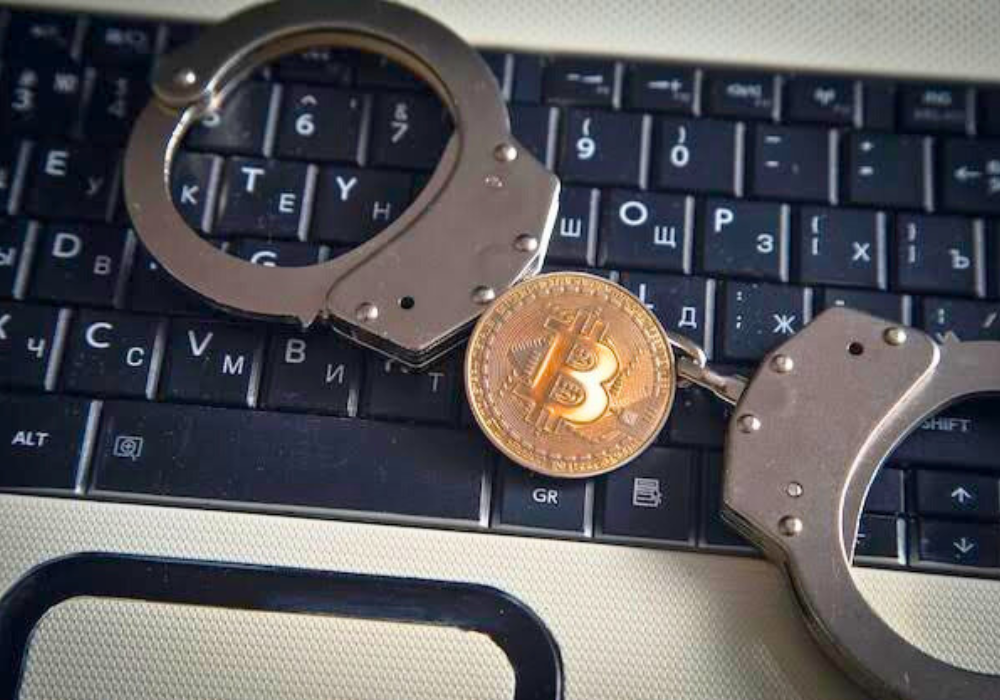
India's law enforcement and economic intelligence agency, Enforcement Directorate (ED), in Dehradun has provisionally attached assets worth ₹8.54 crore (Nearly US$ 900,000) belonging to Hemant Ishwar Sharma, accused of running a fraudulent Bitcoin investment scheme through his Iceland-registered website BTCFUND.IS. The scam defrauded investors of nearly ₹200 crore between 2014–2018.

BTCFUND.IS was an Iceland‑registered website operated by Hemant Ishwar Sharma between 2014–2018, used to lure Indian investors into a fraudulent Bitcoin investment scheme that defrauded them of nearly ₹200 crore (~856 BTC). The Enforcement Directorate (ED) has since attached assets worth ₹13.10 crore and arrested Sharma.

ED’s action under PMLA signals growing scrutiny of crypto fraud in India.

ED Attaches Assets in Bitcoin Scam

Key Details of the Case

  • Scam Operator: Hemant Ishwar Sharma
  • Fraudulent Platform: BTCFUND.IS (registered in Iceland)
  • Period of Operation: 2014–2018
  • Amount Defrauded: ~₹200 crore (856.23 BTC identified as proceeds of crime)
  • Assets Attached (Latest Order): ₹8.54 crore (real estate, vehicles, luxury properties)
  • Total Assets Attached So Far: ~₹13.10 crore
  • Lifestyle Funded by Scam: Two BMW cars, a bungalow on Rajpur Road (Dehradun), multiple immovable properties
  • Current Status: Sharma is under arrest and lodged in Siddhowala Prison, Dehradun. Prosecution complaint filed in May 2026, cognizance taken in July 2026

How the Scam Worked

  • False Promises: Investors were lured with promises of high returns on Bitcoin investments
  • Credibility Tactics: Sharma falsely claimed foreign nationals were associated with BTCFUND.IS to project legitimacy
  • Abrupt Exit: After collecting substantial funds, the website was shut down, leaving investors helpless
  • Money Laundering: Proceeds were laundered via crypto exchanges into real estate, vehicles, and luxury renovations

Broader Context

  • Crypto Fraud Risks in India: This case highlights the growing danger of unregistered crypto platforms promising unrealistic returns
  • Legal Action: ED’s use of the Prevention of Money Laundering Act (PMLA), 2002 shows increasing regulatory scrutiny on crypto-linked fraud
  • Investor Warning: Authorities urge caution against schemes that lack regulatory oversight or promise guaranteed profits

Visual Overview

Scam OperatorFraudulent WebsiteAssets AttachedCrypto Laundering
Hemant Ishwar SharmaBTCFUND.IS (Iceland-registered)₹8.54 crore (latest), ₹13.10 crore total856.23 BTC (~₹200 crore)

Binance Marks Bitcoin Pizza Day in Bengaluru with 2,000+ First‑Time Learners in Immersive Blockchain Education Drive


  • Interactive learning activation focuses on responsible digital asset literacy amid growing regional interest
Binance, the world’s largest digital asset exchange and leading blockchain ecosystem, marked Bitcoin Pizza Day with an educational activation at Forum Mall, Bengaluru, that drew more than 2000 participants eager to learn about blockchain technology and digital asset fundamentals, with 88% attending their first-ever digital asset education event.

Held on 23-24 May, the initiative transformed a high-footfall shopping destination into an immersive blockchain learning zone aimed at demystifying Web3 through gamified and easy-to-understand activities. The activation featured a Binance engagement booth strategically placed within the mall, where visitors participated in quizzes, educational missions, and onsite mini-games designed to make blockchain and digital asset concepts more accessible to everyday users. Through the initiative, Binance aimed to address the growing knowledge gap as global digital asset adoption accelerates and interest in blockchain technology continues to rise in India.

Binance Bitcoin Pizza Day Draws 2000 Indians to Blockchain Education Experience in Bengaluru

Binance Bitcoin Pizza Day Draws 2000 Indians to Blockchain Education Experience in Bengaluru

Education must come before adoption," said SB Seker, Head of APAC at Binance. "In markets across South Asia, we see tremendous curiosity about blockchain, but limited access to reliable, responsible information. We're focused on ensuring communities have the knowledge and resources they need particularly in markets where awareness is growing faster than understanding.

Attendees engaged with a series of interactive experiences including live blockchain quizzes, educational challenges, guided learning missions, and onsite games designed to make Web3 concepts more accessible to everyday users. To mark Bitcoin Pizza Day and raise awareness of one of the most iconic milestones in digital asset history, attendees participated in community activities, received Binance Swags, and enjoyed complimentary pizza treats inspired by the transaction that helped demonstrate Bitcoin’s real-world utility. The activity covered blockchain basics, risk awareness, and scam prevention, with attendees completing the full educational journey in an average of 8 minutes.

SB Seker, Head of APAC at Binance, added, “Bitcoin Pizza Day has become one of crypto’s most celebrated traditions because it captures something essential: innovation happens when someone is willing to try something new, even if it seems impractical at the time. In 2010, Laszlo Hanyecz used Bitcoin to buy pizza because he believed digital currency should have use cases not just sit in a wallet. Today, we are seeing that vision materialize at scale. Stablecoins are processing trillions in monthly volume and users globally are discovering crypto’s practical applications from everyday transactions to wealth creation and preservation. Bitcoin Pizza Day celebrates the moment crypto moved from theory to practice, and reminds us that the real work is making that utility accessible to everyone.

Binance continues to advance blockchain literacy and responsible digital asset adoption across South Asia through Binance Academy, which offers accessible educational resources on blockchain technology, Web3, digital assets, and online safety. Complementing these efforts are localized content, media and community engagement initiatives including Binance Blockchain Yatra, the Binance Case Challenge and Binance Square that help build awareness and make Web3 education more accessible for emerging digital-first audiences across India and the broader region.

New York Times Links Bitcoin’s Mystery Founder to Adam Back — He Denies It

New York Times Links Bitcoin’s Mystery Founder to Adam Back — He Denies It

The New York Times has published a major investigation claiming that British cryptographer Adam Back, CEO of Blockstream and inventor of Hashcash, is the most likely person behind the pseudonym “Satoshi Nakamoto,” the creator of Bitcoin. Back has strongly denied the claim, calling it “confirmation bias” and reiterating that he is not Satoshi.

Key Details from the NYT Investigation

  • Reporter: John Carreyrou led the investigation for The New York Times.
  • Claim: Adam Back’s background, writing style, and early cryptography work (notably Hashcash) align closely with Satoshi Nakamoto’s emails and the 2008 Bitcoin white paper.
  • Evidence:
    • Similar phrasing and technical references in Nakamoto’s emails and Back’s writings.
    • Back’s role as a Cypherpunk and early advocate of digital cash systems.
  • Denial: Adam Back publicly rejected the claim, stating he is not Satoshi and has denied similar allegations in the past.

Context: Why Adam Back?

Factor Adam Back Satoshi Nakamoto
Cryptography background Invented Hashcash (1997), a proof-of-work system later referenced in Bitcoin Bitcoin white paper cites Hashcash
Cypherpunk ties Active in privacy and cryptography communities Nakamoto’s writings align with Cypherpunk ideals
Writing style NYT claims stylistic similarities in emails Nakamoto’s emails analyzed for linguistic overlap
Denial Consistently denies being Satoshi True identity remains unconfirmed

Risks & Controversies

  • Lack of definitive proof: No cryptographic signatures or verifiable evidence link Back to Nakamoto.
  • Confirmation bias concerns: Critics argue the NYT investigation selectively interprets circumstantial evidence.
  • Industry division: Some in the crypto community still point to other candidates, such as Hal Finney.

Why This Matters

  • Financial stakes: Satoshi Nakamoto is believed to control over 1 million Bitcoins, worth tens of billions of dollars today.
  • Cultural impact: The mystery of Bitcoin’s creator remains one of the most enduring questions in finance and technology.
  • Geopolitical resonance: Identifying Satoshi could reshape narratives around decentralization, privacy, and the origins of the crypto economy.
Bottom line: The NYT’s claim that Adam Back is Satoshi Nakamoto has reignited global debate, but without hard cryptographic proof, the mystery remains unsolved. Back’s denial underscores that the identity of Bitcoin’s creator is still one of the most elusive puzzles in modern finance.

Rise of Women Crypto Investors in India

Rise of Women Crypto Investors in India

India’s crypto landscape is undergoing a profound transformation, with women emerging as one of the fastest-growing investor segments. Recent reports from CoinDCX and CoinSwitch, released ahead of International Women’s Day 2026, highlight a surge in female participation that signals both financial inclusion and a structural shift in digital asset adoption.

The Numbers Tell the Story

  • 116.8% Growth: CoinDCX reported that women investors on its platform grew by 116.8% year-on-year.
  • 15% User Base: Women now account for 15% of India’s crypto investors.
  • Diversification: On average, women hold four different digital assets, balancing Bitcoin with Ethereum, Polygon, Solana, Cardano, and XRP.
  • Future Intent: CoinSwitch’s nationwide survey found that 85% of women plan to invest in crypto soon, with 62% “very likely” to do so within the next 6–12 months.

Regional & Demographic Shifts

  • Beyond Metros: Growth is strong not only in urban hubs but also in Tier-2 and Tier-3 cities.
  • Mobile-First Access: Women are increasingly using smartphone trading apps to enter the market.
  • Long-Term Focus: Female investors lean toward research-driven, diversified portfolios.

Exchange-Level Insights

Exchange Female Participation Key Features Driving Adoption
CoinDCX ~18% of active traders SIPs in crypto, DCX Learn education hub
CoinSwitch 120% rise in female sign-ups Simplified INR-based trading, strong Tier-2/3 adoption
WazirX ~15% of user base P2P trading, stablecoin use, women-led webinars

What’s Driving the Rise

  • Education-first approach: Tutorials, webinars, and simplified dashboards build confidence.
  • Security & Trust: Strong compliance and authentication features attract cautious investors.
  • Diversification Tools: SIPs, auto-invest options, and curated portfolios appeal to women seeking stability.
  • Community Building: Women-led initiatives and peer groups foster inclusivity.

Risks & Considerations

  • Regulatory Uncertainty: India’s evolving crypto regulations mean investors must stay alert to taxation and compliance.
  • Volatility: Diversification helps, but crypto remains a high-risk asset class.
  • Fraud & Scams: Rising participation makes vigilance against Ponzi schemes and phishing essential.

The Bigger Picture

The rise of women crypto investors in India is more than a demographic trend—it’s a structural shift in financial participation. With 15% of the user base now female and a strong pipeline of new entrants, 2026 could mark a turning point in gender representation in India’s digital asset ecosystem.

Exchanges are expected to compete aggressively by tailoring products for women investors, focusing on financial literacy, risk management, and community support. This momentum not only strengthens India’s crypto market but also advances the broader narrative of financial empowerment and inclusion.

ZebPay Launches SIPs to Champion Disciplined Bitcoin Investing in India

ZebPay Launches SIPs to Champion Disciplined Bitcoin Investing in India

ZebPay, one of India’s pioneering Bitcoin exchanges, has announced the launch of its Systematic Investment Plan (SIP) feature, allowing users to avail the benefit of automated, recurring crypto investments. The new feature is designed to promote a disciplined, long-term approach to crypto investing, especially Bitcoin, helping Indian investors manage market volatility with consistency and confidence.

Reinforcing its long-standing Bitcoin-first philosophy, ZebPay has designed its SIP offering with a clear emphasis on systematic Bitcoin investing, while also extending access to a curated set of 15 crypto investing pairs. Anchored in the brand’s “Bitcoin Mein Pro” ethos, the initiative underscores ZebPay’s belief that long-term value in crypto is built through discipline, consistency, and informed participation rather than short-term speculation.

Sharing his views on the launch, Rahul Pagidipati, CEO of ZebPay, said, “Bitcoin investing, like any long-term financial journey, rewards discipline and consistency. While market volatility is inevitable, systematic investing can help users navigate these cycles with greater confidence. Through the launch of SIPs, we aim to make it easier for Indian investors to adopt a long-term mindset, leverage rupee-cost averaging, and participate in the crypto ecosystem in a more structured and responsible manner.”

By enabling regular investments at fixed intervals, ZebPay SIPs help users reduce reactionary decision-making and build disciplined investing habits focused on long-term participation in the crypto ecosystem. The feature is suited for both first-time investors beginning their crypto journey and experienced users seeking a more structured investment approach. Furthermore, ZebPay SIPs enable users to automate their crypto investments on a daily, weekly, or monthly basis through the platform’s Quick Trade feature. Investments are executed automatically at prevailing market prices, allowing for hands-free investing while helping users average their purchase costs over time. Users also retain full flexibility, with the option to pause, resume, or cancel their SIPs at any time, without lock-ins or penalties.

Raj Karkara, COO of ZebPay, mentioned, “Over the years, we’ve seen growing interest from users seeking simpler, more automated ways to invest in crypto without the need to constantly track the markets. ZebPay SIPs are designed to offer users control and transparency while reducing the friction associated with manual investing. This launch marks another step in our ongoing efforts to build intuitive, compliant, and investor-first solutions for India’s evolving crypto community.”

Setting up a SIP on ZebPay is designed to be simple and transparent. Users can select a crypto asset of their choice, set a fixed investment amount in INR, and choose an investment frequency aligned with their financial goals. Each SIP execution is carried out through Quick Trade market orders, with the purchased crypto credited directly to the user’s account. Investors also have clear visibility into their investment amounts, applicable fees, and execution history at all times.

In line with ZebPay’s commitment to accessible and responsible investing, SIPs follow the same fee structure as Quick Trade. As a special benefit, users making their first-ever Bitcoin transaction, even if via SIP, will enjoy a zero-fee experience, making it easier for new investors to take their first step toward systematic Bitcoin investing. On that note, ZebPay SIPs are available to KYC-compliant users, with investments executed only when sufficient wallet balance is present. The feature has been live on Android and web platforms from January 8, 2026, and has also become available on iOS since January 12, 2026.

With this launch, ZebPay reinforces its position as a platform focused on long-term value creation. The SIP offering embodies the company’s broader philosophy of promoting disciplined investing, setting ZebPay apart from platforms primarily focused on active or high-frequency trading.

About ZebPay

ZebPay is one of India’s oldest Bitcoin exchanges, with over 6 million registered users. Founded in 2014, it strives to be the leading blockchain asset solution provider and the #1 financial advisor for Indians in the crypto space. The company’s mission is to help its members achieve financial freedom in the Web3 economy. ZebPay is an FIU-registered digital asset exchange, accessible via zebpay.com/in/ as well as the Android Play Store and Apple App Store. Customers can invest in Bitcoin, Ethereum, BAT, and 400+ other crypto pairs, trading both crypto-fiat and crypto-crypto. ZebPay OTC, a bespoke trading desk for high-volume clients, serves both individual and institutional investors.

For more details, please visit: https://zebpay.com.

For details related to ZebPay’s security measures, please visit the security page.

Global Crypto Market Lost $100 Billion in 24 Hrs: What’s next?

Global Crypto Market Lost $100 Billion in 24 Hrs: What’s next?

The global crypto market has just suffered a staggering $100 billion wipeout, sending shockwaves through investors and institutions alike.

Bitcoin slipped below the critical $90,000 mark, Ethereum dropped over 3%, and altcoins followed suit — raising urgent questions about whether this is a temporary shakeout or the start of a deeper downturn.

The crash in numbers

  • Market cap decline: Total crypto market capitalization fell from $3.15 trillion to $3.05 trillion, erasing roughly $100 billion in value.
  • Bitcoin breakdown: Bitcoin failed to hold the $94K–$95K range, plunging to $89,614.
  • Ethereum and altcoins: Ethereum dropped 3.14% to $3,031, BNB fell to $884.76, XRP slid to $2.03, and Solana dropped nearly 3% to $132.81.
  • Liquidations: In late November, over $2 billion in leveraged positions were liquidated within 24 hours, underscoring the fragility of sentiment.

Why it happened

  • Leverage unwinding: Heavy margin trading triggered cascading liquidations once Bitcoin broke support.
  • ETF outflows: Bitcoin ETFs saw $3.79 billion in redemptions last month, with BlackRock alone losing $2.47 billion.
  • Extreme fear: The Crypto Fear & Greed Index plunged to 11, its lowest since the FTX collapse in 2022.
  • Macro pressures: Global liquidity tightening and regulatory uncertainty continue to weigh on risk assets.

Recovery scenarios

Short-term bounce (relief rally)

  • Oversold conditions: Extreme fear often tempts contrarian buyers.
  • Support levels: If Bitcoin holds above $90K, a rebound toward $94K–$95K is possible.
  • Catalysts: Short covering, easing macro fears, or slowing ETF outflows could spark a rally.

Prolonged downturn (bearish continuation)

  • Institutional retreat: Persistent ETF outflows suggest big players are pulling back.
  • Macro headwinds: Tight liquidity and looming regulation may keep risk appetite low.
  • Risk scenario: A break below $88K could trigger another liquidation wave, dragging market cap toward $2.9 trillion.

The takeaway

This $100 billion wipeout highlights how fragile crypto’s bullish momentum really was.

With leveraged positions unwinding, ETF outflows accelerating, and fear at panic levels, the market stands at a crossroads.
If Bitcoin stabilizes above $90K, a relief rally could follow. But if it breaks lower, brace for a deeper correction.

The coming days will reveal whether this is a temporary shakeout or the start of a longer bearish phase — and all eyes are on institutional flows and regulatory signals to decide the market’s fate.

Bitcoin Goes Mainstream: Morgan Stanley Tells Advisors to Buy In

Bitcoin Goes Mainstream: Morgan Stanley Tells Advisors to Buy In

Morgan Stanley has made a landmark move in the crypto space that could significantly reshape mainstream investment strategies.

In its latest guidance, the firm’s Global Investment Committee (GIC) recommended that financial advisors and clients maintain a 2%–4% Bitcoin allocation. According to the analysts, BTC is like digital gold, calling it “scarce.”

Here's the essence of their "huge" Bitcoin call:

Allocation Guidance

  • Global Investment Committee (GIC) recommends a 2%–4% allocation to Bitcoin across client portfolios:
    • 2% for balanced growth
    • 3–4% for opportunistic or market-driven returns
  • This guidance reaches 16,000 financial advisors managing $2 trillion in client assets.

Why It Matters

  • Morgan Stanley views Bitcoin as “digital gold”—a scarce, long-term asset with diversification benefits.
  • Institutional ownership of Bitcoin ETFs has climbed to 25% in H2 2025, up from 21.9% in Q1.
  • Morgan Stanley holds $187 million in BlackRock’s iShares Bitcoin Trust (IBIT), ranking among the top five holders.

Potential Impact

  • Bitwise CEO Hunter Horsley called the update “huge,” noting it could open the floodgates to $2 trillion in potential crypto exposure.
  • Partnership with ZeroHash aims to bring crypto access to retail clients via E-Trade by 2026.
  • ETF inflows have helped push Bitcoin to a new ATH of $125K, with further advisor-driven demand expected to amplify the rally.
Bitwise CEO Hunter Horsley called it “huge” and posted on X, saying - “GIC guides 16,000 advisors managing $2 trillion in savings and wealth for clients. We’re entering the mainstream era.”

Mr. Raj Karkara, COO, ZebPay, said “Bitcoin’s record-breaking surge past $125,000 marks a defining moment for the digital asset ecosystem, driven by sustained institutional inflows into spot ETFs, declining exchange reserves, and a pronounced macro shift toward the ‘debasement hedge’ narrative. This rally isn’t fueled by short-term momentum alone; it reflects a structural tightening of supply amid robust on-chain activity and renewed investor conviction. As liquidity migrates towards regulated venues and Bitcoin cements its place among the world’s most valuable assets, we’re witnessing a pivotal evolution in market maturity and capital efficiency within the crypto economy. These developments highlight not only Bitcoin’s resilience as a store of value but also the growing sophistication of participants navigating this dynamic landscape.”

Taiwan’s First Public Bitcoin Treasury Signals Asia’s Corporate Crypto Shift

Taiwan’s First Public Bitcoin Treasury Signals Asia’s Corporate Crypto Shift

In a landmark move for Taiwan’s corporate crypto landscape, Top Win International, originally a luxury watchmaker, has become Taiwan’s first publicly traded corporate Bitcoin treasury. It has successfully raised $10 million to launch the country’s first corporate Bitcoin treasury. The company is rebranding as AsiaStrategy, positioning itself as a regional counterpart to U.S.-based MicroStrategy.

The funding round, completed on August 15, was led by WiseLink, a Taiwan-listed zipper manufacturer and software firm, which contributed $2 million via three-year convertible notes. Additional backing came from U.S. investor Chad Koehn and four unnamed private investors.

AsiaStrategy plans to use the capital to:
  • Accumulate Bitcoin at current market prices (~$42,500 per BTC)
  • Invest in other listed Bitcoin treasury firms
  • Avoid classification as a traditional investment company, sidestepping regulatory hurdles like SEC oversight
The move follows a strategic alliance with Sora Ventures, which previously helped launch Japan’s first Bitcoin treasury firm, Metaplanet. Taiwan’s July 2025 rollout of a blockchain-based payment system further underscores its ambition to become a regional crypto innovation hub.

Global Context: How Taiwan’s Strategy Compares

Region/Country Strategy Type Key Players / Examples Funding Mechanism Regulatory Climate Unique Traits
Taiwan Corporate Treasury (Public) AsiaStrategy (Top Win) $10M via convertible notes Pro-crypto, innovation-focused First public BTC treasury in Taiwan
United States Corporate + Government Reserve MicroStrategy, U.S. Treasury Equity, debt, asset forfeiture Mixed; evolving federal stance Largest BTC holder via seizures
Japan Corporate Treasury (Public) Metaplanet Convertible debt, equity Supportive, ETF approvals Fastest-growing BTC firm in Asia
Bhutan Sovereign Treasury Druk Holdings Mining + strategic purchases Quiet but active BTC mining via hydroelectric surplus
El Salvador Sovereign Treasury Government of El Salvador Direct purchases Fully legalized BTC First country to adopt BTC as legal tender
UK & Europe Corporate Treasury (Public) Smarter Web Co., Blockchain Group IPO + BTC treasury model Varies by country BTC as base layer for equity growth

Strategic Takeaway

Taiwan’s AsiaStrategy is adopting a cautious yet symbolic approach—leveraging convertible debt and public market transparency to build its Bitcoin reserves.
Unlike MicroStrategy’s aggressive accumulation or El Salvador’s sovereign adoption, Taiwan’s model is corporate-first and regulation-aware, signaling a maturing crypto strategy in Asia.

As Bitcoin continues to gain traction as a treasury asset, AsiaStrategy’s pivot could inspire a wave of publicly listed firms across Asia to follow suit—blending traditional business models with digital asset innovation.

Bitcoin’s Phantom Founder Joins Billionaire Elite – Still No Face, No Trace

Bitcoin’s Phantom Founder Joins Billionaire Elite—Still No Face, No Trace

In a world obsessed with fame and followers, one name stands out by disappearing: Satoshi Nakamoto. The mysterious creator of Bitcoin—who launched a financial revolution and then vanished—has quietly climbed to the 11th spot on the global rich list, boasting a jaw-dropping estimated net worth of $129 billion. Yet, not a single photo, interview, or tweet exists to prove he, she, or they were ever here.

The inclusion of Satoshi Nakamoto in the global rich list was primarily reported by Arkham Intelligence, a blockchain analytics firm. The firm estimated Nakamoto’s net worth at $128.92 billion, based on holdings of approximately 1.096 million BTC.

Thanks to an untouched stash of over 1.096 million BTC mined in the early days, Nakamoto now outranks billionaires like Michael Dell and nearly catches up to Warren Buffett. If Bitcoin continues its historic pattern of 50% annual growth, analysts project Nakamoto could become the second-richest person in the worl by 2026, trailing only Elon Musk.

But who is this shadowy figure?

Who Might Be Satoshi? Theories That Just Won’t Die

1. Hal Finney

A cryptographic pioneer and the first person to receive Bitcoin, Finney's deep technical knowledge and early involvement make him a prime suspect. Some theorists believe he may have worked solo—or as part of a clandestine team.

2. Nick Szabo

Inventor of “Bit Gold,” a conceptual precursor to Bitcoin. Linguistic analysis has linked his writing style to Nakamoto’s, though he denies the connection.

3. Len Sassaman

A privacy advocate whose death in 2011 curiously aligns with Nakamoto’s last known public messages. Conspiracy or coincidence?

4. A Team Effort?

Given the sophistication of Bitcoin’s code and its philosophical depth, some posit that Nakamoto wasn’t one person, but a group—possibly cypherpunks, cryptographers, and digital rights activists.

Names That Missed the Mark

  • Craig Wright: The Australian scientist who infamously declared himself Nakamoto—only to be legally debunked in 2024.
  • Dorian Nakamoto: A Californian physicist wrongly outed due to name confusion, sparking a media frenzy and sympathetic crypto donations.
  • Peter Todd: A Bitcoin developer featured in HBO’s Money Electric: The Bitcoin Mystery. He denies being Satoshi, though whispers continue.

Fringe Theories That Keep the Internet Buzzing

  • Arthur Britto: A Ripple co-founder who emerged in 2025 and coincidentally sparked movement in dormant “Satoshi-era” wallets.
  • NSA/CIA Experiment: Bitcoin uses SHA-256, a cryptographic function developed by the NSA—fueling theories that the U.S. government is behind it all.
  • Mob Strategy: A far-fetched narrative links Bitcoin’s decentralized ethos to legacy finance tactics from criminal mastermind Meyer Lansky.

The Man, Myth, or Mirror?

Perhaps the best encapsulation of Nakamoto’s legacy isn’t found on a blockchain, but in Budapest—where a bronze statue stands faceless, hooded, and polished to reflect whoever looks at it. A symbolic reminder that “We Are All Satoshi.”

No interviews. No appearances. Just a silent digital titan sitting on a crypto mountain—and reshaping the future from behind the curtain.

India To Release Crypto Regulation Discussion Paper Next Month: Report

India To Release Crypto Regulation Discussion Paper Next Month: Report

India is gearing up to release a discussion paper on crypto regulation in June. According to reports, the paper is expected to outline policy framework options, drawing insights from the International Monetary Fund (IMF) and the Financial Stability Board (FSB). It will invite public feedback to shape India's broader regulatory approach to crypto assets.

India has maintained a cautious stance on cryptocurrencies, imposing a 30% tax on gains from virtual digital assets while requiring crypto exchanges to register with the Financial Intelligence Unit. However, taxation does not equate to legal recognition, and the government is taking a calibrated approach based on national priorities.

The discussion paper comes at a time when global attitudes toward crypto are shifting, with the US moving toward pro-crypto legislation and establishing a strategic bitcoin reserve. India’s stance will likely be influenced by these developments, but officials emphasize that no knee-jerk decisions will be made. 

This could be a pivotal moment for India's crypto landscape.

Key points that might be covered in the discussion paper

India's upcoming crypto regulation discussion paper is expected to cover several key areas:
  • Legal Status of Cryptocurrencies: Clarifying whether crypto assets will be treated as commodities, securities, or a separate asset class.
  • Consumer Protection Measures: Proposals to safeguard investors from fraud, including mandatory disclosures for exchanges and stricter penalties for violations.
  • Taxation Framework: Addressing concerns around the 30% tax on crypto gains and the 1% TDS on transactions, with potential revisions to encourage domestic trading.
  • Regulatory Oversight: Exploring registration requirements for exchanges and compliance with the Financial Intelligence Unit.
  • Global Best Practices: Drawing insights from IMF and FSB recommendations, as well as regulatory approaches in the US, EU, and Singapore.
  • Central Bank Digital Currency (CBDC): Positioning India's digital rupee as a regulated alternative to decentralized cryptocurrencies.
  • Stakeholder Feedback: Inviting public and industry input to shape India's long-term crypto policy.
India is taking a calibrated approach, ensuring that regulations align with national priorities while keeping pace with global trends.

What is American Bitcoin, A Trump Family-backed BTC Mining Co. That's Now Going Public?

What is American Bitcoin?, A Trump Family-backed BTC Mining Co. That Now Going Public

American Bitcoin is a Bitcoin mining company backed by Eric Trump and Donald Trump Jr. It was launched in March 2025 and is majority-owned by Hut 8 Corp. The company is set to go public through a merger with Gryphon Digital Mining, with shares expected to trade on Nasdaq under the ticker symbol ABTC.

The company aims to become the largest pure-play Bitcoin mining operation while maintaining a strategic Bitcoin reserve. Eric Trump, who serves as the chief strategic officer, has stated that the goal is to create the most investable Bitcoin accumulation platform. The Trump family will retain 98% ownership of the combined entity after the merger.

This move is part of the Trump family's broader involvement in cryptocurrency, which includes ventures like World Liberty Financial and meme coins $TRUMP and $MELANIA.

The merger is expected to be completed by Q3 2025, unlocking new capital for expansion. After the merger, American Bitcoin shareholders will retain 98% ownership of the combined entity, with Hut 8 continuing as its exclusive infrastructure and operations partner.

The Trump family has a significant stake in Hut 8 through its involvement in American Bitcoin. Currently, Hut 8 owns 80% of American Bitcoin, while Eric Trump and Donald Trump Jr. hold the remaining 20%.

The Trump family’s broader crypto ventures include World Liberty Financial, a crypto exchange, and the $TRUMP meme coin, which surged in value following promotional events.

Hut 8 Corp. is a Bitcoin mining and digital infrastructure company that integrates power, computing, and high-performance data solutions. It operates across 15 sites in the U.S. and Canada, including Bitcoin mining facilities, high-performance computing data centers, and power generation assets.

Hut 8 is also building a $2.5 billion AI and Bitcoin data center in Louisiana, known as the River Bend Campus. This facility will support 300MW of power and is designed for AI workloads and Bitcoin mining.

The company aims to scale low-cost Bitcoin accumulation while maintaining exposure to Bitcoin's long-term value.

Beyond mining, Hut 8 is also exploring AI hosting and high-performance computing (HPC), positioning itself as a key player in the evolving digital infrastructure landscape.

All About Trump's New US 'Bitcoin Reserve' To Strengthen Digital Asset Holdings

All About Trump's New US 'Bitcoin Reserve' To Strengthen Digital Asset Holdings

The Strategic Bitcoin Reserve and United States Digital Asset Stockpile was established through Executive Order 14233 signed by President Donald J. Trump on March 6, 2025. This initiative aims to position the United States as a leader in government digital asset strategy, ensuring Bitcoin and other digital assets are managed strategically. 

The simplified explanation of the new "Strategic Bitcoin Reserve and Digital Asset Stockpile" is — the U.S. government has decided to keep Bitcoin (BTC) in a special reserve, instead of selling it whenever it gets Bitcoin through legal processes (like when criminals' Bitcoin is seized). This is because Bitcoin is valuable, like gold, and the government wants to hold onto it for the future.

At the same time, the U.S. is also managing a Digital Asset Stockpile-which means the government is collecting other digital currencies that are taken from illegal activities. But these non-Bitcoin assets might be sold or used differently, depending on the government's plans.

The goal of these reserves is to make sure the U.S. strategically manages digital assets, instead of just selling them quickly. It helps the government stay prepared financially as digital currencies become more important.
This initiative centralizes the US government’s digital asset holdings, ensuring strategic management and long-term value preservation.

Here’s a deeper look into the Strategic Bitcoin Reserve and United States Digital Asset Stockpile, based on official sources:

Strategic Bitcoin Reserve

The U.S. Treasury will maintain Bitcoin (BTC) holdings as reserve assets, ensuring they are not sold but instead used to meet governmental objectives.
  • Agencies holding forfeited Bitcoin must transfer them to the Strategic Bitcoin Reserve, consolidating BTC holdings under a single custodial framework.
  • The Secretary of the Treasury and Secretary of Commerce are authorized to develop budget-neutral strategies for acquiring additional BTC, ensuring no incremental costs for taxpayers.

United States Digital Asset Stockpile

This stockpile includes non-BTC digital assets forfeited through criminal or civil asset forfeiture proceedings.

Unlike the Bitcoin Reserve, the Treasury retains discretion over how these assets are managed, allowing for strategic liquidation or retention.

The Stockpile does not acquire new assets beyond those obtained through forfeiture, ensuring a controlled approach to digital asset management.

Policy and Implementation

The Executive Order 14233 establishes these reserves to strategically manage federally owned digital assets.

The initiative aligns with the January 23 Executive Order, which directed the President’s Working Group on Digital Asset Markets to evaluate the feasibility of a national digital asset stockpile.

The Treasury Department will oversee custodial accounts, ensuring proper tracking and utilization of digital assets.
Secretary of the Treasury will oversees the Strategic Bitcoin Reserve and Digital Asset Stockpile, ensuring proper custodial management. Secretary of Commerce will work alongside the Treasury to develop budget-neutral strategies for acquiring additional Bitcoin.

Key Synopsis:
  • Strategic Bitcoin Reserve: The U.S. government will maintain Bitcoin (BTC) holdings as reserve assets rather than selling them, recognizing Bitcoin’s scarcity and security as a unique store of value.
  • United States Digital Asset Stockpile: This stockpile will include other digital assets forfeited through criminal or civil asset forfeiture proceedings, ensuring orderly and strategic management.
  • Treasury Oversight: The Secretary of the Treasury will oversee custodial accounts for both reserves, ensuring proper tracking and utilization.
  • Government BTC Policy: Agencies holding forfeited Bitcoin will transfer them to the Strategic Bitcoin Reserve, preventing premature sales that could negatively impact taxpayers.
This move reflects a shift in U.S. policy toward digital assets, recognizing their role in global financial stability.

SEBI Open To Overseeing Crypto Trade

SEBI Open To Overseeing Crypto Trade

India's market regulator, Securities and Exchange Board (SEBI) has shown openness to the idea of overseeing cryptocurrency trade, which is a contrast to the Reserve Bank of India's (RBI) stance, reported Reuters citing a document seen by the news agency.

SEBI has suggested that multiple regulators should oversee activities linked to cryptocurrencies that fall under their respective domains, and that a single unified regulator for digital assets should be avoided. This recommendation has been made to a government panel tasked with formulating policy for the finance ministry to consider.

The concerns around cryptocurrency regulation are multifaceted and stem from the unique characteristics of digital currencies. Cryptocurrencies are known for their high price volatility, which can lead to significant financial risk for investors and traders.

SEBI's approach includes monitoring cryptocurrencies that take the form of securities as well as new offerings called Initial Coin Offerings (ICOs). They have also mentioned the possibility of issuing licenses for equity market-related products. On the other hand, the RBI maintains a cautious stance, viewing private digital currencies as a macroeconomic risk and favoring a ban on stablecoins.

This development indicates a significant shift in India's regulatory approach towards cryptocurrencies and could lead to a more structured and formalized framework for crypto trading in the country. The panel plans to firm up its report as early as June 2024.

In 2021, the government prepared a bill that would have banned private cryptocurrencies though it has not been introduced. Last year, when it was president of the G20, India called for a global framework to regulate such assets.

Globally, there are several successful models for cryptocurrency regulation that have been developed by the respective countries. The EU introduced the Markets in Crypto-Assets Regulation (MICA) in May 2023, which is considered the world's first comprehensive cryptocurrency regulation. MICA aims to provide legal clarity and ensure consumer protection, market integrity, and financial stability.

The US has seen developments such as the Financial Innovation and Technology (FIT) for the 21st Century Act and the Blockchain Regulatory Certainty Act. These bills aim to define when a cryptocurrency is a security or a commodity and expand oversight of the industry.

The International Organization of Securities Commissions has laid out 18 recommendations for global rules on managing crypto and digital assets. The World Economic Forum's Digital Assets Regulatory (DAR) initiative analyzes outcomes of different national approaches to digital asset regulation.

1,800 Bitcoin Wallets Suspected of Engaging in Transactions Linked to Child Sexual Exploitation or Human Trafficking

1,800 Bitcoin Wallets Suspected of Engaging in Transactions Linked to Child Sexual Exploitation or Human Trafficking

According to a recent report by the wired, US senators have called for fresh scrutiny of cryptocurrencies' role in paying for child sexual abuse imagery online, a problem that they say has worsened.

"These are deeply troubling findings revealing the extent to which cryptocurrency is the payment of choice for perpetrators of child sexual abuse and exploitation," wrote US senators Elizabeth Warren and Bill Cassidy. They called for the United States' Department of Justice and Department of Homeland Security to redouble efforts to stop the use of cryptocurrency to pay for child sexual abuse material (CSAM) online.

Citing data from the US Treasury's Financial Crime Enforcement Network as well as research from Chainalysis, a company that specializes in tracing crypto transactions, and the Internet Watch Foundation, a CSAM-focused charity, the letter asserts that the "use of cryptocurrency in the illicit trade of CSAM appears to be increasing."

Between January 2020 and December 2021, the U.S. Treasury Department's Financial Crimes Enforcement Network (FinCEN) identified over 1,800 unique Bitcoin wallet addresses related to suspected online child sexual exploitation (OCSE) and human trafficking offenses. This alarming trend highlights the use of cryptocurrency, particularly Bitcoin, in criminal activities involving the exploitation of vulnerable individuals.

Child Sexual Exploitation (CSE) refers to victimizing minors for sexual gratification or other purposes. In this context, Bitcoin has been used to pay for child sexual abuse material (CSAM). The overlap between OCSE and human trafficking within the realm of cryptocurrency transactions underscores the need for vigilance and collaboration among financial institutions, law enforcement agencies, and nonprofit organizations to combat these heinous crimes.

It's essential to continue monitoring and addressing such illicit activities to protect the most vulnerable members of our society.

Catching perpetrators using crypto currencies for illegal transactions

While the use of cryptocurrencies can provide anonymity and challenges for law enforcement, there have been notable successes in catching perpetrators involved in criminal activities.

The Silk Road, an infamous dark web marketplace, facilitated illegal transactions using Bitcoin. In 2013, the FBI arrested Ross Ulbricht, the alleged founder of Silk Road, and seized approximately 144,000 Bitcoins (worth over $1 billion at today's prices). This case demonstrated that even pseudonymous transactions on the blockchain could be traced back to individuals.

Law enforcement agencies collaborated internationally to identify the site's operator, Alexandre Cazes. Cazes was arrested in Thailand, and authorities seized his assets, including cryptocurrencies.

In some cases, investigators have traced ransom payments to specific wallets and identified the perpetrators. For instance, the Colonial Pipeline ransomware attackers were tracked down, and part of the ransom was recovered.

Companies specializing in blockchain analytics provide tools to track transactions. These tools help law enforcement agencies follow the money trail and identify suspicious addresses.

Cryptocurrency exchanges cooperate with authorities by sharing information on suspicious transactions. This collaboration has led to the identification of criminals using exchanges for cashing out illicit gains.

Remember that while these success stories demonstrate progress, challenges remain. Criminals adapt, and privacy-focused cryptocurrencies continue to emerge. Law enforcement agencies must stay vigilant and adapt their strategies to combat crypto-related crimes effectively.

PayPal Held Over Half A Billion in Bitcoin, Ethereum Last Quarter

PayPal Held Over Half A Billion in Bitcoin, Ethereum Last Quarter

Payments platform Paypal held over half a billion dollars worth of the two largest cryptocurrencies — Bitcoin & Ethereum — as of December 31, 2021, according to its year-end report to the Securities and Exchange Commission (SEC).

It was in October 2020 when PayPal entered the cryptocurrency market, announcing that its customers will be able to buy and sell Bitcoin and other virtual currencies using their PayPal accounts.

As per SEC filings, PayPal Held $291 million in Bitcoin (BTC), and $250 million in Ethereum (ETH). Besides, another $63 million in assets were held in both Bitcoin Cash (BCH) and Litecoin (LTC), bringing PayPal's total crypto held on behalf of its customers to $604 million.

The amount is less than the previous quarter's figures, which logged $694 million in crypto as of September 31, back when Bitcoin traded at $19,400. That was also before the collapse of crypto exchange FTX, which resulted the Bitcoin's price went down to $16,600 by the end of the year.

PayPal mentions in the filing, "We allow our customers in certain markets to buy, hold, sell, receive, and send certain cryptocurrencies as well as use the proceeds from sales of cryptocurrencies to pay for purchases at checkout. These cryptocurrencies consist of Bitcoin, Ethereum, Bitcoin Cash, and Litecoin. We engage third parties, which are licensed trust companies, to provide certain custodial services, including holding our customers’ cryptographic key information, securing our customers’ crypto assets, and protecting them from loss or theft, including indemnification against certain types of losses such as theft.

"Our third-party custodian holds the crypto assets in a custodial account in PayPal’s name for the benefit of PayPal’s customers. We maintain the internal recordkeeping of our customers’ crypto assets, including the amount and type of crypto asset owned by each of our customers in that custodial account. Given that we currently utilize one third-party custodian, there is concentration risk in the event the custodian is not able to perform in accordance with our agreement. ", mentions the filing by PayPal.

In June last year, PayPal started allowing users to withdraw their crypto astets to external wallets however just as a host of centralized exchanges and lending firms began to freeze user assets, PayPal too followed the knack. 

Besides these, recently it was reported that Paypal is exploring the creation of a stablecoin.“We are exploring a stablecoin,” a Paypal executive told reporters at the time. "If and when we seek to move forward, we will, of course, work closely with relevant regulators."

Nasdaq Establishes New Digital Biz, To Offer Custody Services for Cryptocurrencies including Bitcoin and Ethereum

Nasdaq Establish New Digital Biz, To Offer Custody Services for Cryptocurrencies including Bitcoin and Ethereum

American stock market exchange Nasdaq has announced the launch of “Nasdaq Digital Assets,” a new business that will power the digital asset ecosystem. 

With this new digital business, Nasdaq has indicated that it is ready to offer custody services for cryptocurrencies including Bitcoin and Ethereum following increased institutional demand. Nasdaq Digital Assets Will Provide a Proprietary Custody Solution with Liquidity and Execution Services for Financial Institutions.

According the Nasdaq's press release, Nasdaq Digital Assets will initially develop an advanced custody 
solution that will incorporate liquidity and execution services to address industry challenges around connectivity, availability, and efficiency.

Nasdaq’s custody solution will bring together the best attributes of hot and cold crypto wallets through an innovative technology offering, which will provide a high degree of accessibility and scalability without compromising security. Nasdaq’s offering is subject to regulatory approval in applicable jurisdictions.

Custody services provided typically include the settlement, safekeeping, and reporting of customers' marketable securities and cash. The custodian (Nasdaq, in this case) is responsible for the safety of the financial products. With this crypto holders may make additional income on custody assets by loaning cryptos on a short-term basis. In 2022, Wall Street has increasingly taken an interest in cryptocurrencies despite the slump in prices.

Nasdaq, which is the second largest U.S. stock market exchange, has announced the introduction of custody services among its many products. According to a press release by the stock market operator, this move was motivated by increasing institutional interest. Although the post has not specified the digital assets the operator will offer, two obvious coins have captured the attention of institutional investors in the last couple of years- Bitcoin (BTC), and Ethereum (ETH).

For most institutional investors, the two largest cryptocurrencies offer the most network security, price stability, and liquidity to act as introductory investments in the crypto space.

Tal Cohen, head of North American markets at Nasdaq, expressed confidence in the latest venture, noting — "Demand among institutional investors for engaging in digital assets has increased in recent years, and Nasdaq is well-positioned to accelerate broader adoption and drive sustainable growth."

Bloomberg has since reported that while the company is open to working with native crypto firms, there were no immediate plans to acquire a crypto firm.

Europe’s 1st Bitcoin ETF To Be Launched on Euronext Amsterdam By Jacobi Asset Management


First exchange-traded equity instrument for institutional investors to access Bitcoin in Europe

Largest exchange to list a Bitcoin spot ETF globally

First primary listing of a Crypto fund in the Netherlands

In a first for Europe, Jacobi Asset Management (Jacobi) announces the launch of the Jacobi Bitcoin ETF (the “ETF”) (BCOIN, ISIN: GG00BMTPK874) which will be listing on Euronext Amsterdam, part of Euronext, the leading pan-European marketplace from July.

The Jacobi Bitcoin ETF, which received regulatory approval from the Guernsey Financial Services Commission (GFSC) in October 2021, will begin trading in July on the Euronext Amsterdam Exchange under the ticker BCOIN. Custodial services will be provided by Fidelity Digital AssetsSM with Flow Traders and DRW facilitating trading as market makers.

CEO Jamie Khurshid said: “The Jacobi Bitcoin ETF will enable investors to access the underlying performance of this exciting asset class via a well-established and trusted investment structure. Our goal at Jacobi is to make digital asset investments simpler and more familiar for institutional and professional investors. We are delighted to be working with all our premier partners including Fidelity Digital Assets and Flow Traders who have supported us from inception and are an integral part of this European first as we list on Euronext Amsterdam”.

He added: “This is a significant step forward for Jacobi Asset Management. We have an ambitious vision and look forward to bringing an innovative product pipeline to the market very soon.”

“We are excited to be acting as lead market maker for Europe’s first Bitcoin ETF, which is another milestone in the development of the institutional digital assets space. This is also aligned with the growing demand from institutional investors who are looking to diversify their portfolios by adding Bitcoin and other digital assets. Flow Traders has been a longstanding supporter of enabling exposure in digital assets and we are delighted to be working with Jacobi Asset Management on this launch.” commented Edd Carlton, Institutional Digital Asset Trader at Flow Traders.

Legal support through the regulatory and listing process was facilitated by independent Dutch law firm Kennedy Van der Laan.

Emanuel van Praag, Attorney from Kennedy Van der Laan commented: “The first listed crypto ETF in the EU is indeed a proud achievement and we are happy that we were able to assist Jacobi Asset Management to achieve this goal.”

Jacobi Asset Management will provide European institutional and professional investors with access to the Jacobi Bitcoin ETF via a simple investment vehicle for a 1.5% annual management fee.

For further information, visit Jacobiam.com

Geopolitics Has Put Bitcoin to the Test – What Happens Next?


Geopolitical issues, including the heightening Ukraine-Russia tensions, will drive Bitcoin’s increasing mass adoption and higher values this year – despite a 5% drop over the weekend.

The prediction from Nigel Green of deVere Group, the CEO of one of the world’s largest independent financial advisory, asset management and fintech organisations, comes as more than 100,000 Russian troops mass on the border with Ukraine and global leaders try diplomatic efforts to avoid war between the two countries.

He comments: “Serious geopolitical risks in recent weeks are demonstrating real life use cases for Bitcoin and cryptocurrencies in extremely volatile times.

“Research shows that Bitcoin donations are flooding into Ukrainian non-governmental organisations and volunteer groups. The crowdfunding activities are, say experts, being used to equip the Ukrainian army with military and medical supplies.

“Meanwhile, Ukraine’s adversary, Russia, is planning to regulate cryptocurrencies, with crypto legislation, including tax standards, expected as soon as next week.

“Both these rivals know that Bitcoin and cryptocurrencies can circumnavigate traditional financial institutions that might block transactions as in crypto there’s no central authority that can block payments.”

He continues: “Elsewhere, we’ve recently seen the advantage of raising funds in cryptocurrencies is that it’s a lot harder to confiscate them.

“In what many have argued is down to political over-reach, a decision was made by GoFundMe this week to remove the donation campaign for the Canada ‘Freedom Convoy’ trucker protest from its site and return the millions of dollars back to the donors.

“But, in response, crypto enthusiasts set up a crowdfunding campaign on the platform Tallycoin as an alternative way to raise money for the protestors.”

Yet despite these high-profile examples of use cases, Bitcoin has dropped in value by 5% over the weekend. Why?

“This was triggered by a wider risk-off sentiment that also impacted many areas of global stock markets.

“Stock markets, like the crypto market, never move in a straight line, there are always peaks and troughs. Yet history teaches us that the long-term trajectories are predictable for both: they go up.”

On Wall Street on Friday, The Dow Jones Industrial Average dropped 1.4%, the broad-based S&P 500 fell 1.9%, while the tech-rich Nasdaq Composite Index tumbled 2.8%.

Nigel Green concludes: “Bitcoin is widely regarded as a store of value and medium of exchange.

“But geopolitical issues this week have tested its other core values of being a viable decentralised, tamper-proof, unconfiscatable monetary system.

“These real life use cases will further increase Bitcoin’s mass adoption and lead to higher prices this year.”

deVere Group is one of the world’s largest independent advisors of specialist global financial solutions to international, local mass affluent, and high-net-worth clients. It has a network of more than 70 offices across the world, over 80,000 clients and $12bn under advisement.

Amid IMF’s Call to Drop Bitcoin Use, El Salvador Govt Leverages AlphaPoint to Power Chivo, the World’s 1st National Bitcoin Wallet


AlphaPoint provides software infrastructure technology supporting Chivo and integrating its entire financial ecosystem.

Chivo, the world’s first national crypto wallet, is now operating with AlphaPoint white label infrastructure. AlphaPoint, which provides fast, scalable financial technology to institutions globally, is helping El Salvador to offer financial services and access to Bitcoin for nearly 4.5 million Salvadorans actively using the wallet.

In September, El Salvador became the first country to adopt Bitcoin as a legal tender, as the government launched the Chivo wallet to facilitate Bitcoin transactions in the country. The government deposited $30 in Bitcoin in every El Salvadorans’ Chivo wallet as ‘seed money’ to propel Bitcoin transactions. With every McDonalds, Starbucks, Walmart, major airport and government office in the country already accepting Bitcoin with Chivo, the project has aspirations in the next year to simplify payment of home utilities, taxes, and many other daily transactions in Bitcoin as well. Chivo is also in the process of deploying 1,500 Bitcoin ATMs around the country to more readily serve the Salvadoran population. By the end of 2021, around 75% percent of the population had downloaded Chivo.

AlphaPoint supports the frontend and backend infrastructure that powers the wallet and integrates the entire ecosystem including the mobile application, mobile point-of-sale processing, merchant website portal, call-center support software, and administrative console. Their build focuses heavily on wallet stability and uptime, scalability, and social impact, while also integrating user verification services leveraging machine-learning facial recognition and authentication tools. AlphaPoint also improved the Lightning integration for nearly instantaneous low-fee Bitcoin transactions via QR and Lightning addresses.

Chivo is the largest fintech application in the country and is providing infrastructure to bring the 70 percent unbanked population of the country into the financial ecosystem. The AlphaPoint-powered wallet facilitated over 2 million transactions last month alone, with more businesses enabling transactions every day. The wallet is free to use for all Salvadorans, with zero commissions.

“El Salvador and President Bukele are truly leading globally with this first major experiment in Bitcoin adoption at a country-wide level,” Igor Telyatnikov, Co-founder and CEO of AlphaPoint said. “No one else has attempted to execute a project of this size. We at AlphaPoint are honored to be involved in the process and provide the scalable and reliable solutions needed for this massive undertaking. The Chivo application is currently supporting millions of Salvadorans, many for their first time accessing financial services.”

AlphaPoint was the first white label marketplace provider in the cryptocurrency industry and has been a trusted solution for large-scale institutional-grade exchange infrastructure for more than eight years. It is considered a foundational member of the industry with focused priorities in scalability, security, and flexibility to serve clients around the world.

About AlphaPoint

AlphaPoint is a white-label marketplace software company powering digital asset exchanges worldwide. Through its secure, scalable, and customizable digital asset trading platform, AlphaPoint has enabled over 150 customers in 35 countries to launch and operate digital asset markets, as well as to digitize assets. AlphaPoint and its award-winning blockchain technology have helped startups and institutions discover and execute their blockchain strategies since 2013.

Safest Ways to Invest in Bitcoin


A cryptocurrency wallet is required if you wish to transmit, receive, or just keep Bitcoin. You must, however, maintain this Bitcoin wallet secure. Scammers, fraudsters, and burglars will always be attracted to your Bitcoin, whether you use hardware, mobile, or desktop wallet - especially if you're HODLing or dealing with significant sums.

Because Bitcoin is a decentralized asset, some people, particularly newcomers to the market, maybe lulled into a false feeling of security. What they should focus on is the fact that, because there is no centralized body managing the asset, Bitcoin holders must assume complete responsibility for securing and protecting their wallets.

What exactly is a Bitcoin wallet, and how does it function?

The first step in receiving, storing, or sending Bitcoins is to obtain a Bitcoin wallet that is compatible with your operating system or device. Because Bitcoin is a network with lists of immutable transactions, there are no actual Bitcoins saved in a wallet. A wallet instead holds a private key, which is a secure digital code that is only known by the owner.

This private key serves as a link between you, the owner, and a public key (or a group of public keys) (numeric codes associated with a certain amount of Bitcoins).

There are 11 different ways to keep your Bitcoin wallet safe.

1. Select a hardware wallet

Which Bitcoin wallet should you select among the plethora of alternatives available?

Cold storage may be the ideal alternative for those who are particularly worried about cyber dangers.

The use of a hardware wallet to store your Bitcoin is a secure option. Trezor and Ledger, for example, provide a variety of USB-like devices with pre-installed security layers and encryption capabilities. Because they are not connected to the internet, cyber attackers will have a difficult time accessing your private key.

2. Store your private key in a secure location.

Take your private key off the grid and store it in the real world' to secure your cash. Rather than keeping your private key on any electronic device, simply write it down on a piece of paper. To minimize degradation, store it in a cool, dry location away from heat and direct sunshine.

3. Always connect to the internet over a secure connection.

The number of public infrastructures is vulnerable and insecure. If you have a Bitcoin wallet on your laptop, try using your phone's hotspot instead, and stay away from public wifi at all costs.

Stick to private or well-known connections where you may be confident that your relationships aren't subject to security concerns. Most of the wallets use app shielding techniques to secure their source code.

4. Ensure that your antivirus software is current.

While Windows computers are more likely to be infected with a wider selection of viruses, malicious software may be found on any operating system. As a result, make sure you have up-to-date and reliable security software installed on your computer. Because the majority of cyber attacks employ viruses and malware to get connected to that and tamper with your device, it's critical to properly examine that before installing your wallet.

To stay secure out from forms of malware packages, keep your up-to-date.

5. Do not click on any links that are unfamiliar or questionable.

Keep an eye on your internet activities and check the link of the site you're on if something doesn't feel right. Scammers can clone whole websites and use URL addresses that are nearly identical to the real ones. If you use an online wallet or any service that requires you to enter your private key, double-check that the URL address is correct.

6. Protect your online wallet with a secure password.

If you use an online wallet, choose your password carefully. Phone numbers, birth dates, names, and favorite movies should all be avoided. Rather, use an alphanumeric combination that only you understand. According to statistics, 52 percent of consumers use the same password for several accounts. Make sure your wallet password is one-of-a-kind.

7. Never give out your private key to anyone.

Only you have access to the private keys. Don't give them out to anybody, and don't ask someone else to perform your transactions for you. Ignore any offers or requests that require you to share your private key with a third party or individual.

8. Keep your day-to-day transactions in a different wallet.

If you need to make minor daily transactions, using a second wallet that you can top up as needed is an excellent idea. You may create as many Bitcoin addresses or wallets as you like.

Sorting your transactions and keeping the most essential ones distinct will make your entire portfolio more secure.

9. For online wallets, use two-factor authentication.

Two-factor authentication is available in most online wallets, and you should always utilize it. It's a low-cost, high-impact security solution.

10. Double-check the Bitcoin address at all times.

Always pay special attention to the recipient's address while conducting transactions. When you copy and paste a Bitcoin address and modify the copied output to another address, malware programs can 'intervene.' You may wind yourself transmitting your Bitcoins to someone else if you are not careful.

11. Create a backup of your digital wallet

If you lose your smartphone or it malfunctions, you'll be able to access your wallet thanks to a backup. Make a backup copy of your data in a different or secure location. If your smartphone is stolen, you can use the backup file to regain access to your wallet. You might shift the cash to another wallet as a preventive step.

Conclusion

Finally, the security of your Bitcoin wallet is totally your responsibility. Because the cryptocurrency industry is always growing and security systems are improving, you should take all necessary steps and remain up to speed with the newest security enhancements and updates to keep your Bitcoin or another cryptocurrency wallet secure from ill-intentioned individuals. Same goes with other parts of crypto world, like Helium Mining.

Disclaimer: The author's thoughts and comments should not be construed as financial advice. We do not provide financial product advice.

Market Reports

Market Report & Surveys
IndianWeb2.com © all rights reserved